LED Dimming Explained: Compatibility, Flicker Issues & Dimmer Types
Last updated on March 4, 2026
LED dimming is no longer optional in modern lighting projects. From residential apartments and hotels to retail stores and commercial offices, smooth and stable dimming performance is now an expected standard.
However, LED dimming does not behave like halogen or incandescent dimming.
Most dimming failures — flicker, buzzing, dead travel zones, unstable low-end output — are not caused by defective lamps. They are caused by system incompatibility between:
Dimmer → Wiring → Transformer (if applicable) → LED Driver → LED Load
This guide provides a complete engineering-level overview of LED dimming, including compatibility principles, common failure mechanisms, and structured selection guidance for installers, designers, and procurement teams.
1. Why LED Dimming Is Different from Halogen Dimming
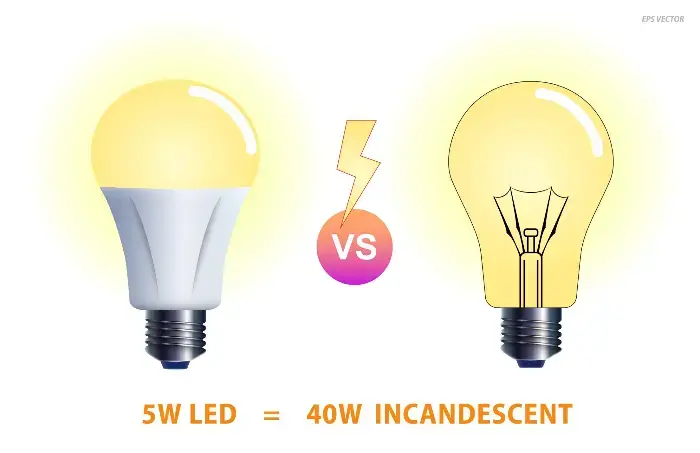
Visual comparison demonstrating how a 5W LED bulb can provide similar brightness to a traditional 40W incandescent bulb while using significantly less energy.
Traditional incandescent and halogen lamps dim simply by reducing voltage to the filament. Lower voltage → lower temperature → less light output.
LEDs do not work this way.
An LED lamp contains:
- LED chips (constant current devices)
- An electronic driver
- Filtering and protection circuitry
LED brightness is controlled by current regulation, not direct voltage reduction.
Most wall dimmers use phase-cut dimming, meaning they distort the AC waveform. The LED driver must interpret this waveform and convert it into stable current output.
If the driver cannot correctly interpret the waveform, problems occur.
For deeper waveform explanation, see:
[Leading Edge vs Trailing Edge Dimming Explained]
2. Common LED Dimming Problems (And Why They Happen)
Understanding failure mechanisms is critical for avoiding installation risk.
Flicker at Low Brightness
Causes:
- Dimmer minimum load not met
- Driver instability at low conduction angle
- Transformer incompatibility (MR16 systems)
- High Total Harmonic Distortion (THD)
Industry reference:
The IEEE 1789 standard provides guidance on acceptable flicker levels for human comfort and safety.
For detailed flicker engineering analysis:
👉 [PWM Dimming Frequency in LED Lighting]
Buzzing or Electrical Noise
Causes:
- Leading-edge dimmers interacting with electronic drivers
- Transformer coil vibration
- High inrush current
- Poor EMI filtering
Trailing-edge dimmers typically reduce acoustic noise in LED systems.
Narrow Dimming Range
Causes:
- Basic driver topology
- No low-end trim adjustment
- Dimmer not designed for electronic loads
Professional-grade drivers can achieve dimming down to 5% or lower.
Sudden Shutoff or Dead Travel
Causes:
- Total wattage below dimmer minimum load
- Incompatible dimmer waveform
- Mixed LED models on same circuit
3. Understanding Dimmer Types
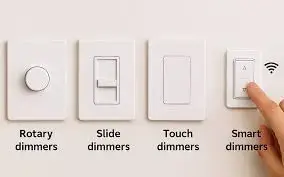
Display of rotary, slide, touch, and smart dimmers installed on a white wall, highlighting different modern lighting control options with user interaction.
Most retrofit installations use phase-cut dimming.
Leading-Edge (Forward Phase)
Originally designed for resistive loads:
- Higher electrical stress
- Higher noise
- Higher minimum load requirements
- Limited LED compatibility
Trailing-Edge (Reverse Phase)
Designed for electronic loads:
- Smoother waveform
- Lower noise
- Better low-end stability
- Preferred for modern LED drivers
For deeper TRIAC-based dimming analysis:
👉 [TRIAC Dimming for LED Bulbs: Technical Principles & Compatibility Risks]
4. Minimum Load & Maximum Load Calculations
Every dimmer operates within a load window:
Example:
- Minimum load: 20W
- Maximum load: 150W
If LED total wattage is below minimum load:
- Flimmern
- Shutoff
- Dead zone
Formula:
Max number of lamps = Dimmer maximum load ÷ Wattage per lamp
However, always confirm minimum load compliance.
Oversizing dimmers improves stability in LED systems.
5. The Role of the LED Driver
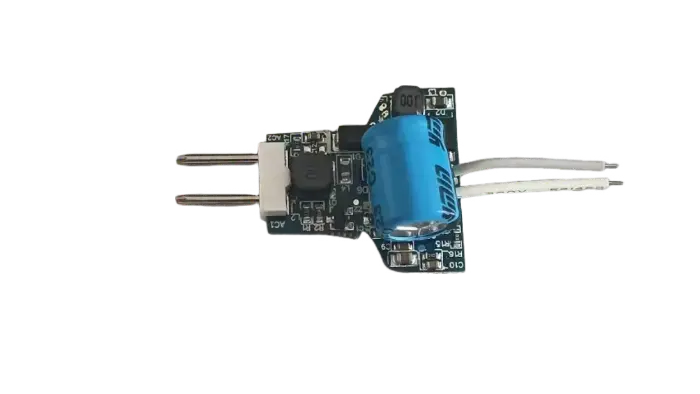
The driver is the most critical component in LED dimming performance.
High-quality drivers provide:
- Active current regulation
- Phase-cut optimization
- Thermal protection
- Wide compatibility window
- Stable output under distorted waveform
Low-quality drivers cause:
- Farbverschiebung
- Flimmern
- Inconsistent performance
- Early failure
In commercial projects, requesting driver technical data is a risk-control measure.
6. MR16 & Transformer Compatibility
Low-voltage MR16 systems introduce additional complexity.
Compatibility must exist across:
Dimmer → Transformer → LED Driver
Common issues:
- Transformer minimum load not met
- Electronic transformer incompatibility
- Audible transformer buzzing
- Reduced dimming depth
For transformer fundamentals:
👉 [What Is an Electronic Transformer?]
7. Phase-Cut vs PWM Dimming
Two major dimming approaches exist:
Phase-Cut Dimming
- Common in retrofit projects
- Works with wall dimmers
- Requires compatible drivers
PWM (Pulse Width Modulation)
- Used in DC or controlled systems
- Offers precise control
- May introduce flicker if frequency is too low
For engineering comparison:
👉 [What Is PWM Dimming in LED Lighting? ]
8. LED Dimming in Commercial & Hospitality Projects

Contemporary hotel reception area featuring an elegant illuminated counter, vertical wooden wall panels, glossy flooring, and inviting seating under soft ceiling lighting.
In hotels, retail chains, and multi-site installations, dimming failure multiplies risk.
Wichtige Überlegungen:
- Standardized driver models
- Compatibility testing before procurement
- Inrush current control
- Consistent dimming curve across batches
For structured selection guidance:
👉 [How to Choose Dimmable LED Spotlights: A Technical Buyer’s Guide]
9. LED Dimming & Energy Efficiency
Dimming reduces:
- Power consumption
- Thermal stress
- Driver wear
Energy reduction may reach 30–60% depending on control strategy and usage profile.
However, driver efficiency at partial load must be evaluated.
10. Frequently Asked Questions
Why do LED lights flicker on dimmers?
Because the driver cannot properly interpret the phase-cut waveform or the minimum load is not met.
Are all LED bulbs dimmable?
No. Only products with compatible drivers support dimming.
Can I use old halogen dimmers with LED?
Only if compatibility is confirmed. Most older leading-edge dimmers cause instability.
What is the best dimmer type for LED?
Trailing-edge dimmers are generally more stable for electronic loads.
Conclusion: LED Dimming Is a System-Level Engineering Decision
LED dimming performance is not determined by the lamp alone.
It depends on:
- Dimmer type
- Load calculation
- Driver topology
- Transformer compatibility
- Electrical environment
When specified correctly, LED dimming delivers:
- Smooth visual comfort
- Reduced energy consumption
- Extended system lifespan
- Lower maintenance risk
When mismatched, it causes callbacks, client dissatisfaction, and project loss.
Treat dimming as a system design decision, not a packaging feature.
Need Technical Support for LED Dimming Projects?
If you are working on:
- Hospitality fit-outs
- Retail rollouts
- Residential developments
- Multi-site standardization
Our engineering team provides:
- Dimmer compatibility validation
- Transformer matching
- Flicker performance analysis
- Driver technical review
- Pre-procurement risk assessment
Contact us for structured dimming system evaluation before installation.