Sind LED-Lampen recycelbar?

Many people are switching to LEDs, but confusion grows about what happens when they stop working. Can LED light bulbs really be recycled?
Yes, LED light bulbs are recyclable. They contain reusable glass, metal, and electronic parts that can be processed at specialized recycling centers.
LED recycling isn’t as simple as throwing them in the bin. Let’s explore what you really need to know.
The Truth About Recycling LED Light Bulbs
Old bulbs pile up fast. Tossing them into the trash feels easy, but it may harm the planet. So, what is the truth about recycling LEDs?
LED bulbs can be recycled, but they require special facilities that separate glass, metal, and electronic components safely.

Why LEDs Are Different from Traditional Bulbs
Incandescent and halogen bulbs usually go to landfill because they contain no reusable parts beyond glass and metal. CFLs, on the other hand, contain mercury and demand hazardous waste treatment. LEDs stand somewhere in between. They do not contain mercury, but they are classified as electronic waste (e-waste) due to their chips, drivers, and circuit boards.
This means curbside recycling is rarely an option. Instead, LEDs require special processing to extract valuable materials such as aluminum, copper, and rare earth phosphors.
How the Recycling Process Works
When an LED bulb arrives at a recycling plant, it undergoes several stages:
- Sorting and inspection – Bulbs are checked and separated from other e-waste.
- Manual dismantling – Glass, metal caps, and plastic housings are removed.
- Crushing and shredding – Remaining parts are processed into small pieces.
- Material recovery – Metals go to smelters, glass is melted for reuse, and electronics are processed for precious metals.
Here’s a simple overview:
| Birnentyp | Contains Mercury | Recyclable? | Notizen |
|---|---|---|---|
| Incandescent | Nein | Begrenzt | Mostly glass & metal |
| Halogen | Nein | Difficult | High heat risk, low reuse value |
| CFL | Ja | Ja | Hazardous waste category |
| LED | Nein | Ja | Requires e-waste handling |
Recycling Challenges
One challenge is that LED bulbs vary widely. Some have large heat sinks, while others have complex drivers. This makes dismantling labor-intensive. In many countries, the cost of recycling still exceeds the market value of recovered materials. This is why not all recycling programs accept LEDs yet.
But as production increases and waste grows, more facilities are adapting. For example, in Europe, WEEE (Waste Electrical and Electronic Equipment) regulations make LED recycling mandatory.
How to Safely Dispose of and Recycle LED Bulbs
Broken bulbs frustrate everyone. Many people toss them into the bin, thinking it’s harmless. But what is the safe way to dispose of them?
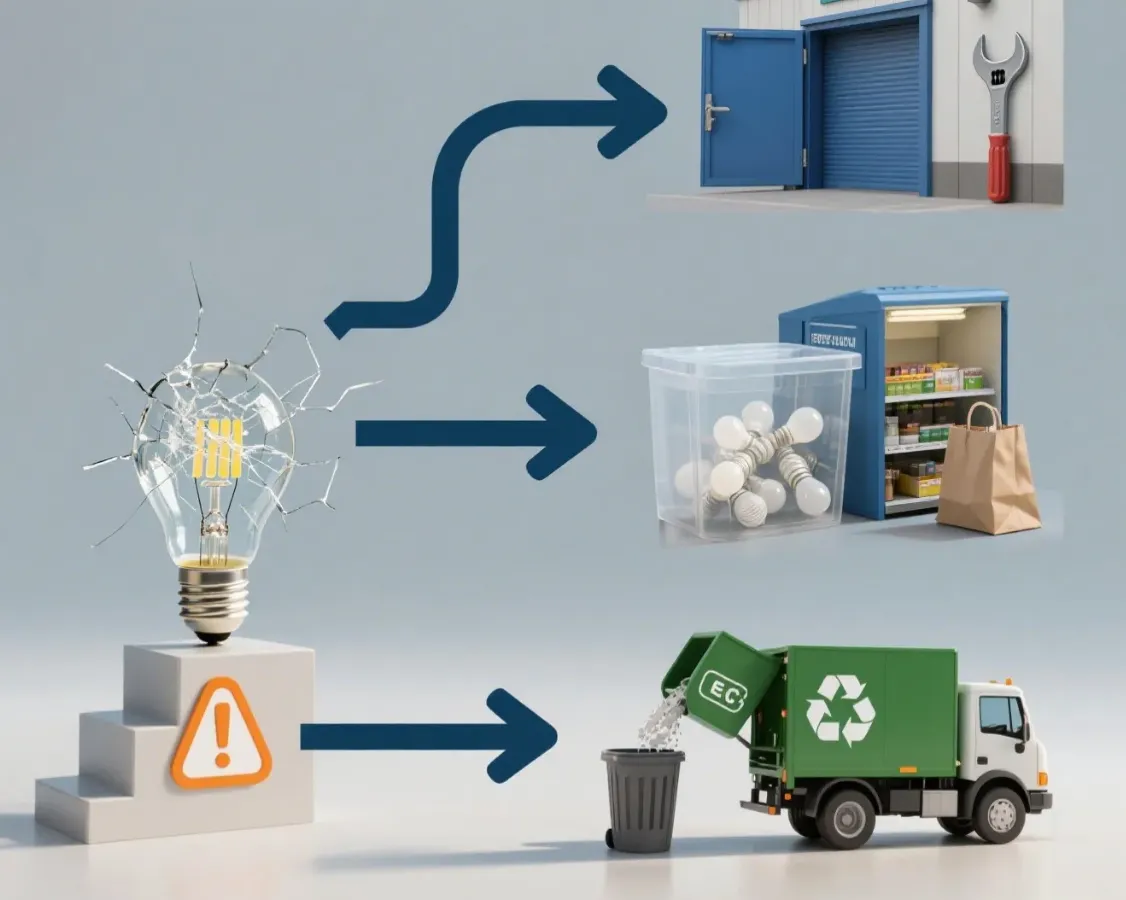
The safe way is to drop LED bulbs at e-waste recycling centers, collection bins in stores, or municipal recycling programs that accept electronics.
Disposal Options for Households
If you are a homeowner or small business, here are the best options:
- Retail store bins – Many hardware chains offer bulb take-back services.
- Municipal collection sites – Check your local government website for e-waste drop-off events.
- Mail-in recycling programs – Some companies let you ship old LEDs for recycling.
- Electronics repair shops – Some shops dismantle LEDs and reuse parts for repairs.
Disposal Options for Businesses
Large-scale projects such as hotels, offices, or shopping centers often replace hundreds of LEDs at once. In such cases, bulk e-waste services are the best option. Certified recyclers provide containers, collect the bulbs, and issue compliance certificates that help businesses prove sustainability efforts.
Here’s a simple comparison of disposal methods:
| Disposal Method | For Households | For Businesses | Kosten |
|---|---|---|---|
| Retail bins | Ja | Nein | Free |
| Municipal collection | Ja | Ja | Free/Low |
| Mail-in services | Ja | Ja | Paid |
| Bulk recycling contracts | Nein | Ja | Negotiated |
Safety First: Handling Broken LEDs
Although LEDs are safer than CFLs, their glass still poses risks:
- Wear gloves and sweep up broken pieces with cardboard, not your hands.
- Seal the remains in a bag before transporting to a recycling point.
- Avoid crushing bulbs intentionally—it complicates recycling and may release fine particles.
Why Safe Disposal Is Important for Businesses
Recycling is not only beneficial for the environment but also for organizations that must demonstrate sustainability practices. Many companies now include recycling performance in their audits. Providing safe disposal and recycling options supports corporate responsibility and strengthens compliance with environmental standards.
Why Recycling LED Bulbs Matters for the Environment
The world produces over 50 million tons of e-waste each year. LED bulbs are a small part of this mountain, but their numbers grow rapidly. Why should we care?
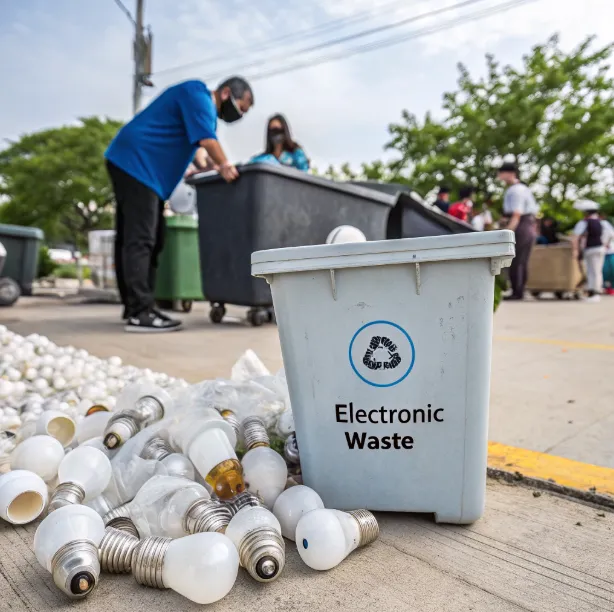
Recycling LEDs reduces landfill waste, saves rare materials, and lowers carbon emissions by reusing glass, aluminum, and semiconductors.
Resource Conservation
LEDs contain aluminum heat sinks, copper wiring, und semiconductors. Mining for these materials requires huge amounts of energy and water. Recycling them saves resources and reduces dependence on new mining. For example, recycling one ton of aluminum saves up to 95% of the energy needed to produce it from raw ore.
Reducing Waste and Pollution
When LEDs are dumped in landfills:
- Their plastic housings can take hundreds of years to break down.
- Circuit boards may release trace amounts of lead or arsenic into soil.
- Valuable materials are wasted, forcing industries to mine more.
By recycling, these outcomes are avoided and a shift toward a circular economy becomes possible.
The Carbon Footprint Factor
Producing new LEDs from scratch requires energy-intensive processes such as semiconductor chip fabrication, glass production, and aluminum smelting for heat sinks. Each of these steps consumes significant electricity, much of which still comes from fossil fuels in many regions. As a result, the overall carbon footprint of manufacturing brand-new LEDs is higher than many consumers realize.
Recycling plays a critical role in reducing this impact. When manufacturers use recycled aluminum instead of raw ore, energy savings can reach up to 95%, which translates directly into lower carbon emissions. Similarly, reusing glass and electronic components reduces the need for new resource extraction and helps cut the emissions associated with mining and processing.
On a larger scale, the cumulative effect is significant. With billions of LED bulbs now in circulation worldwide, recycling them could prevent millions of tons of CO₂ from entering the atmosphere annually. For businesses, especially in Europe and North America, proper recycling also ties into stricter carbon reporting regulations such as the EU Green Deal and the U.S. SEC’s climate disclosure rules. These frameworks encourage companies to account for their supply chain emissions, making sustainable recycling practices both an environmental responsibility and a compliance requirement.
Looking ahead, increasing the recycling rate of LEDs can help the lighting industry move closer to achieving net-zero carbon targets, while also lowering energy demand in raw material production. This makes LED recycling not just a waste management issue, but a central part of global climate strategy.
Global Regulations and Future Trends
Countries like Germany, the UK, and Japan already enforce strict e-waste laws. In China, recycling infrastructure is expanding rapidly due to the high volume of LED exports and domestic use. In the near future, we may see deposit systems, where consumers pay a small fee when buying LEDs and get it back when returning used bulbs.
FAQ: Common Questions About LED Recycling
Can LEDs go in the glass recycling bin?
No. Although they contain glass, LEDs also have electronics, so they belong in e-waste recycling, not the glass bin.
Do LED bulbs contain mercury?
No. Unlike CFLs, LEDs are mercury-free, which makes them safer to handle and recycle.
Where can I recycle LED bulbs?
You can take them to hardware stores with collection bins, municipal e-waste centers, or certified recycling companies.
Is it dangerous to throw LEDs in the trash?
Not immediately, but it contributes to landfill waste and wastes valuable materials. Over time, small amounts of heavy metals in circuits may leach into soil.
Do businesses benefit from recycling LEDs?
Yes. It lowers waste costs, improves sustainability scores, and strengthens trust with buyers who value eco-friendly practices.
Can dimmable LEDs be recycled the same way?
Yes. Dimmable LEDs have the same core components as non-dimmable ones. They follow the same e-waste recycling process.
What materials are recovered from LEDs?
Recycling plants recover aluminum, copper, rare earths, and glass. These materials go back into new electronics, construction, and manufacturing.
Where NOT to recycle LED bulbs?
Do not place them in household trash bins or mix them with glass bottle recycling. These methods cause contamination and prevent proper recovery of valuable materials.
Schlussfolgerung
LED light bulbs are recyclable, but only through proper e-waste facilities. Recycling saves resources, cuts emissions, and keeps waste out of landfills.