Analyse der Effizienz von dimmbaren LED-Lampen 220V für Hotels
In Hotelbeleuchtungsprojekten wird Effizienz oft missverstanden als einfacher Vergleich von Wattzahl oder Lichtstrom. In Wirklichkeit ist Beleuchtungseffizienz in Hotels ein mehrschichtiges Konzept, das direkt Betriebskosten, Wartungsaufwand, Renovierungszyklen, Gästezufriedenheit und langfristige Anlagenleistung beeinflusst.
Viele Hotels, die mit 220–240V-Stromsystemen betrieben werden, verlassen sich in Gästezimmern, Fluren und öffentlichen Bereichen immer noch auf veraltete Glüh- oder Leuchtstofflampen. Diese Systeme sind energieintensiv, schwer zu steuern und zunehmend nicht mit modernen Effizienzvorschriften und Nachhaltigkeitszielen vereinbar.
Dieser Artikel bietet eine Projektebene-Analyse der Effizienz von dimmbaren LED-Lampen, die für 220V-Hotelumgebungen konzipiert sind, mit Fokus auf echte Betriebsergebnisse statt auf Marketingaussagen. Die Diskussion behandelt Energieeffizienz, Dimmverhalten, Wartungseffizienz, Kostendeckung und anwendungsspezifische Überlegungen in verschiedenen Hotelbereichen.
Zusammenfassung der Effizienz von Hotelprojekten für die Geschäftsführung

Bevor technische Details geprüft werden, sollten Hotelbetreiber und Projektmanager verstehen, was “effizient” in der Praxis typischerweise bedeutet:
Energieeinsparung:
Bis zu 70–85 % im Vergleich zu Glühlampen und 30–50 % im Vergleich zu Kompaktleuchtstofflampen, abhängig von Betriebsstunden und Steuerungsstrategie12.Wartungseffizienz:
LED-Lebensdauern von 25.000–50.000 Stunden reduzieren die Lampenaustauschhäufigkeit in stark genutzten Hotelbereichen um mehr als 80%1.Amortisationszeit:
In der Regel 1–3 Jahre für Gästezimmer, Flure und Lobbys in Nachrüstungsprojekten3.Dimmwirkung:
Dimmen verbessert die Effizienz nur, wenn kompatible LED-Treiber und Dimmer korrekt abgestimmt sind und über längere Zeit unter Volllast betrieben werden.
Effizienzgewinne sind am bedeutendsten, wo die Beleuchtung viele Stunden läuft und wo das Dimmen mit Belegungsmustern übereinstimmt, nicht nur mit dekorativer Absicht.
Was definiert Effizienz in Hotelbeleuchtungssystemen?
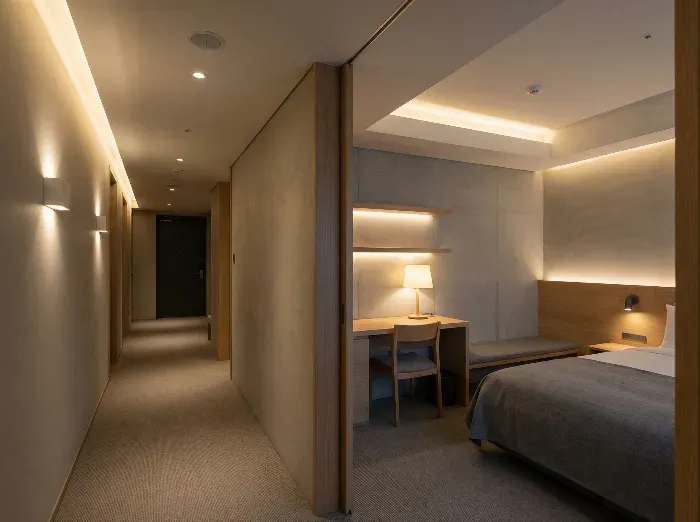
In Hotelprojekten sollte die Beleuchtungseffizienz in vier Dimensionen bewertet werden:
- Energieeffizienz – Stromverbrauch pro Einheit nutzbaren Lichts
- Betriebseffizienz – Wartungshäufigkeit, Ausfallzeiten und Arbeitsaufwand
- Steuerungseffizienz – wie effektiv die Beleuchtung sich an Belegung und Tageszeit anpasst
- Lebenszykluseffizienz – Leistungsstabilität über Renovierungszyklen
Dimmbare LED-Lampen beeinflussen alle vier Dimensionen, jedoch nur, wenn sie korrekt spezifiziert und implementiert werden.
Einschränkungen traditioneller Hotelbeleuchtungssysteme
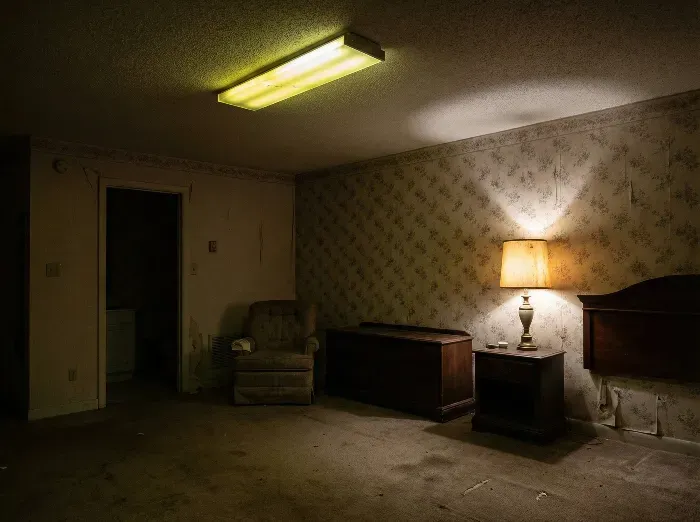
Energieeffizienz-Einschränkungen
Glühlampen wandeln etwa 90% der Eingangsenergie in Wärme, wobei nur etwa 10% sichtbares Licht erzeugen2. Kompaktleuchtstofflampen verbessern dieses Verhältnis, leiden aber immer noch unter Vorschaltverlusten und begrenzter Dimmfähigkeit.
In Hotelumgebungen mit 10–24 Stunden täglichem Beleuchtungsbetrieb führen diese Ineffizienzen direkt zu höherem Stromverbrauch und erhöhten Kühllasten.
Wartungsaufwand
Typische Nennlebensdauern:
- Glühlampe: ~1.000 Stunden
- Kompaktleuchtstoff: ~8.000–10.000 Stunden
- LED: 25.000–50.000 Stunden1
Häufigerer Lampenaustausch erhöht:
- Wartungspersonalkosten
- Unterbrechungen des Raumzugangs
- Gästestörung
Für große Hotels wird die Beleuchtungsinstandhaltung oft zu einem wiederkehrenden Betriebsaufwand statt zu einem geplanten Anlagenzyklus.
Regulatorischer Druck
Vorschriften wie die EU-Ökodesign-Richtlinie setzen den Ausstieg aus ineffizienten Lichtquellen fort und erhöhen die Compliance-Risiken für Hotels, die Upgrades verzögern4. Nachhaltigkeitszertifizierungen und ESG-Berichtsrahmen bewerten die Beleuchtungseffizienz zunehmend auch als Teil der Gesamtgebäudeleistung.
Energieeffizienz von dimmbaren LED-Lampen 220V
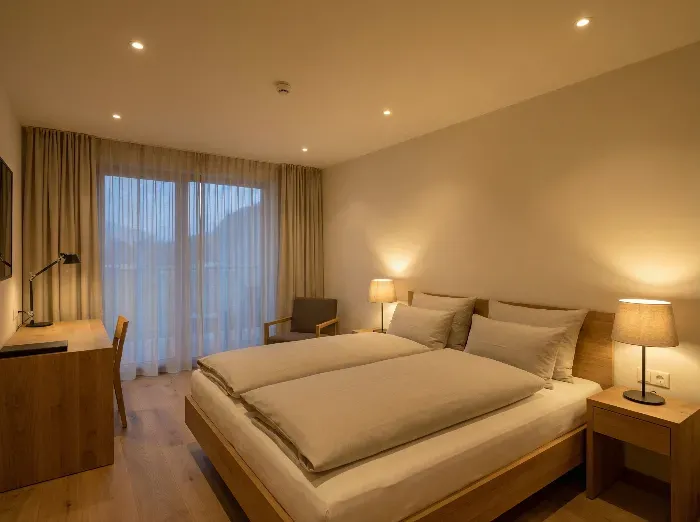
Baseline-Energieeinsparungen
LED-Beleuchtung verbraucht typischerweise 70–85% weniger Energie als Glühlampenbeleuchtung für äquivalente Lichtausbeute und 30–50% weniger als CFL-Alternativen12.
In 220V-Hotelsystemen werden diese Einsparungen ohne Transformatoren oder Spannungsumwandlung realisiert, was die Installationskomplexität in den meisten Regionen verringert.
Auswirkungen des Dimmens auf den Energieverbrauch
Dimmen reduziert den LED-Stromverbrauch etwa proportional zur Lichtausbeute, vorausgesetzt, dass:
- LED-Treiber sind für Phasenabschnitts- oder Trailing-Edge-Dimmung ausgelegt
- Dimmer sind kompatibel und korrekt installiert
Laut Studien der IEA und DOE treten bedeutende Energieeinsparungen durch Dimmen hauptsächlich auf, wenn Lichter betrieben werden durchgehend unter Volllast statt gelegentlich aus ästhetischen Gründen gedimmt zu werden.
Bereichsbasierte Effizienzanalyse in Hotels
Gästezimmer
Gästezimmer bieten das höchste Effizienzsteigerungspotenzial aufgrund von:
- Lange tägliche Betriebsstunden
- Häufiges Dimmen für Komfort
- Vorhersehbare Belegungszyklen
Dimmbare LED-Lampen ermöglichen:
- Geringere durchschnittliche Betriebsleistung
- Reduzierter Energieverbrauch während der Abend- und Nachtstunden
- Verlängerte Lampenlebensdauer aufgrund reduzierter thermischer Belastung
Flure und Treppenhäuser
Flure sind oft rund um die Uhr in Betrieb, was sie zu idealen Kandidaten für LED-Retrofits macht. Die Effizienz verbessert sich weiter, wenn Dimmen kombiniert wird mit:
- Zeitplanung
- Präsenz- oder Bewegungssensoren
Ohne Steuerungsstrategien bietet Dimmung allein in diesen Bereichen nur begrenzten Nutzen.
Lobbys und öffentliche Bereiche
Öffentliche Bereiche profitieren mehr von Steuerungseffizienz als reine Energieeinsparungen. Dimmen unterstützt:
- Tag-Nacht-Übergänge
- Ereignisbasierte Lichtszenen
Wenn die Beleuchtung jedoch die meiste Zeit nahe der Volllast bleibt, stammen die Effizienzgewinne hauptsächlich von der LED-Technologie selbst und nicht vom Dimmen.
Hinterhausbereiche
Personalbereiche und Dienstkorridore erreichen oft starke Effizienzverbesserungen durch:
- Reduzierte Wattzahl
- Vereinfachte Wartung
- Grundlegendes Dimmen oder Ein-/Ausschaltsteuerung
Wann Dimmen die Effizienz verbessert – und wann nicht
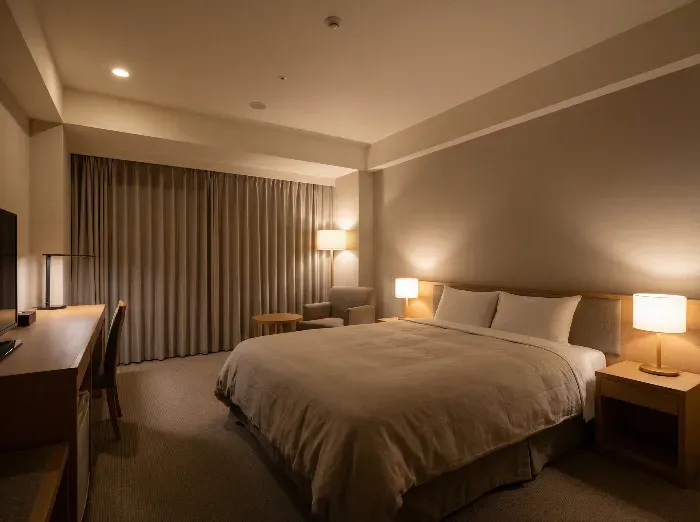
Dimmen verbessert die Effizienz, wenn:
- Lampen arbeiten über längere Zeiträume unter 70–80%-Ausgangsleistung
- Belegungsmuster sind vorhersehbar
- Kompatible Dimmer und Treiber werden verwendet
Dimmen bietet begrenzte Effizienz, wenn:
- Lichter bleiben bei oder nahe 100% Ausgangsleistung
- Dimmung wird nur für visuelle Effekte verwendet
- Inkompatible Dimmer verursachen Flackern oder Instabilität
In hotel projects, dimming should be evaluated as a control strategy, not an automatic efficiency upgrade.
Maintenance and Lifecycle Efficiency
LED service life directly improves hotel operational efficiency by:
- Reducing lamp replacement frequency
- Lowering maintenance labor costs
- Minimizing guest disruption
According to DOE data, LED systems can reduce lighting maintenance interventions by more than 80% compared with incandescent systems1.
Additionally, stable LED performance supports longer refurbishment cycles, reducing capital expenditure over time.
Cost Recovery and Payback Analysis
Energy Star and DOE analyses indicate that hotel lighting retrofits commonly achieve payback periods of 1–3 years, depending on:
- Operating hours
- Electricity tariffs
- Maintenance cost savings3
In high-usage hotel areas, payback may occur even faster when maintenance savings are included.
220V Dimming Compatibility Risks in Hotel Retrofits
Efficiency gains can be undermined by poor compatibility. Common risks include:
- Flicker at low dimming levels
- Audible noise from dimmers
- Reduced lamp life due to electrical stress
Older hotels often use legacy TRIAC dimmers not optimized for LEDs. Compatibility testing and pilot installations are essential to avoid efficiency losses and guest complaints.
Retrofit vs New-Build Efficiency Considerations
- Retrofit projects prioritize compatibility and quick payback
- New-build projects allow optimized dimming systems and centralized controls
Efficiency outcomes are generally higher in new builds, but well-planned retrofits still deliver substantial gains.
Schlussfolgerung
Dimmable LED bulbs 220V offer measurable efficiency advantages for hotel lighting projects when evaluated across energy, maintenance, control, and lifecycle performance.
Their true value lies not only in reduced wattage but in:
- Lower operational burden
- Improved lighting control
- Longer asset life
Hotels that approach LED dimming as part of a structured lighting strategy—rather than a simple lamp replacement—achieve the most reliable and sustainable efficiency outcomes.
Technical Support for Hotel LED Dimming Efficiency Projects
Improving lighting efficiency in hotels is rarely achieved by changing lamps alone.
Actual results depend on application zoning, operating hours, dimmer compatibility, and control strategy—factors that are often underestimated during retrofit planning.
For hotel owners, engineering teams, and procurement managers working with 220V systems, incorrect dimming or LED selection frequently leads to:
flicker or instability at low dimming levels
lower-than-expected energy savings
premature lamp failure
guest complaints after installation
If you are planning or evaluating:
guest room LED dimming upgrades
corridor or lobby lighting retrofits
220V TRIAC or trailing-edge dimmer compatibility
bulk procurement of dimmable LED bulbs for hotels
our team provides application-based technical support, including:
dimmable LED and dimmer compatibility evaluation
zone-by-zone efficiency assessment (guest rooms, corridors, public areas)
operating-hour–based payback estimation
SKU standardization recommendations for hotel projects
Share your hotel type, lighting areas, and control system details, and we can help you validate efficiency assumptions before installation—based on real operating conditions, not generic datasheets.
Contact: [email protected]
Website: https://www.tecolite.com
Fußnoten
U.S. Department of Energy (DOE), LED Lighting, https://www.energy.gov/energysaver/led-lighting ↩ ↩ ↩ ↩ ↩
U.S. Environmental Protection Agency (EPA), Energy Efficiency, https://www.epa.gov/energy/reduce-environmental-impact-your-energy-use ↩ ↩ ↩
ENERGY STAR®, Energy Use in Hotels, https://www.energystar.gov/buildings/benchmark/understand-metrics/what-eui ↩ ↩
European Commission, Ecodesign Directive for Lighting Products, https://energy-efficient-products.ec.europa.eu/ecodesign-and-energy-label_en ↩