Circadian Lighting for Homes and Hotels: How Light Improves Sleep and Well-Being
Feeling tired in the morning and restless at night is not always stress. It is often light working against your body, not with it.
Circadian lighting supports natural sleep and alertness by changing light intensity and spectrum throughout the day so the body stays in its normal biological rhythm.
Light that follows human biology sounds nice in theory. But most spaces still use static, cool light that fights our body’s rhythm. This guide explains why it matters, how it works, and what homes and hotels should change.
Introduction to Circadian Lighting?
Many buildings still use static white light. It looks fine, but it ignores how humans react to light biologically.
Circadian lighting changes spectrum and brightness across the day to support sleep, alertness, mood, and cognitive function.
[IMAGE PLACEHOLDER]
How circadian lighting works in practice
It does not need expensive systems. It needs light that moves with human needs. The most common pattern is:
| Time of Day | Light Spectrum | Farbtemperatur | Helligkeit | Zweck |
|---|---|---|---|---|
| Morgen | Blue-rich | 5000K–6500K | Hoch | Wake and alert |
| Nachmittag | Neutral | 3500K–4500K | Mittel | Focus, productivity |
| Abend | Low blue, warm | 2000K–3000K | Niedrig | Relax, prepare sleep |
| Nacht | Blue-free | <2000K (Red/Amber) | Sehr niedrig | Protect melatonin |
Natural light does this automatically. Indoor lighting rarely does.
Why does this matter?
Because people spend 90% of time indoors today
Our bodies evolved for outdoor light cycles. Most buildings ignore this.
Hotels and homes, ironically, are where light matters the most. That is where we sleep, wake, and reset biological clocks.
What Is Circadian Rhythm?

People talk about circadian rhythm as if it is a sleep timer. It is not. It is a full body operating system.
Circadian rhythm is a 24-hour biological cycle controlled by light that regulates sleep, mood, hormones, metabolism, and body temperature.
Light tells the body "time of day"
The brain does not tell the time. It reads light signals.
| Biological Function | Controlled by Circadian Rhythm |
|---|---|
| Sleep/wake cycles | Ja |
| Hormones (melatonin, cortisol) | Ja |
| Alertness and cognition | Ja |
| Digestion and metabolism | Ja |
| Immune function | Ja |
| Mood and emotional regulation | Ja |
Disruption is not a minor issue.
Harvard Medical School found that irregular circadian cycles increase risk of:
- depression
- metabolic disorders
- cardiovascular risk
- cognitive decline
Quelle: https://health.harvard.edu/staying-healthy/blue-light-has-a-dark-side
Indoor light can disrupt rhythm in the same way jet lag does.
Human Non-Visual Light Response?
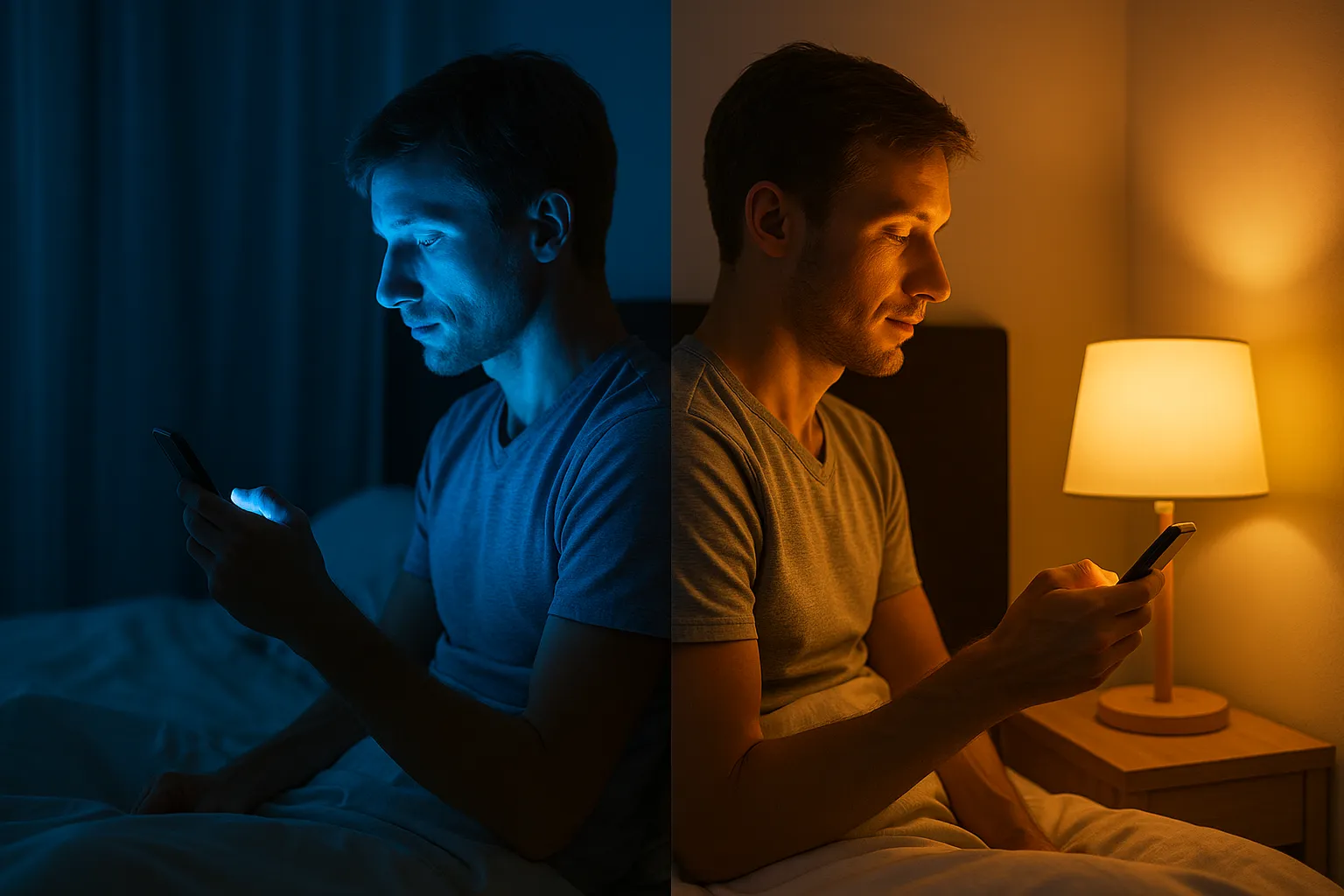
Most lighting standards were built around visual comfort.
The problem is humans don’t only see light. We feel it.
Non-visual light response means light influences physiology and emotions even when it is not consciously seen.
What detects this light?
Two systems in the eye:
| Sensor | Function | Sensitive to |
|---|---|---|
| Cones & Rods | Vision | Broad spectrum |
| ipRGC cells | Biological response | Blue light (460–480nm) |
Study: Berson, 2002 discovered ipRGC cells, proving light controls circadian rhythm independently of vision.
Why this matters for lighting design
A room that “looks fine” can still:
- suppress melatonin
- elevate cortisol
- cause nighttime alertness
- reduce daytime focus
So lighting design must consider two systems:
- Visual aesthetics (how light looks)
- Biological impact (how light affects us)
This is why circadian lighting is more than CCT.
Same color temperature can have opposite biological impact if spectrum differs.
How Light Affects Hormones?
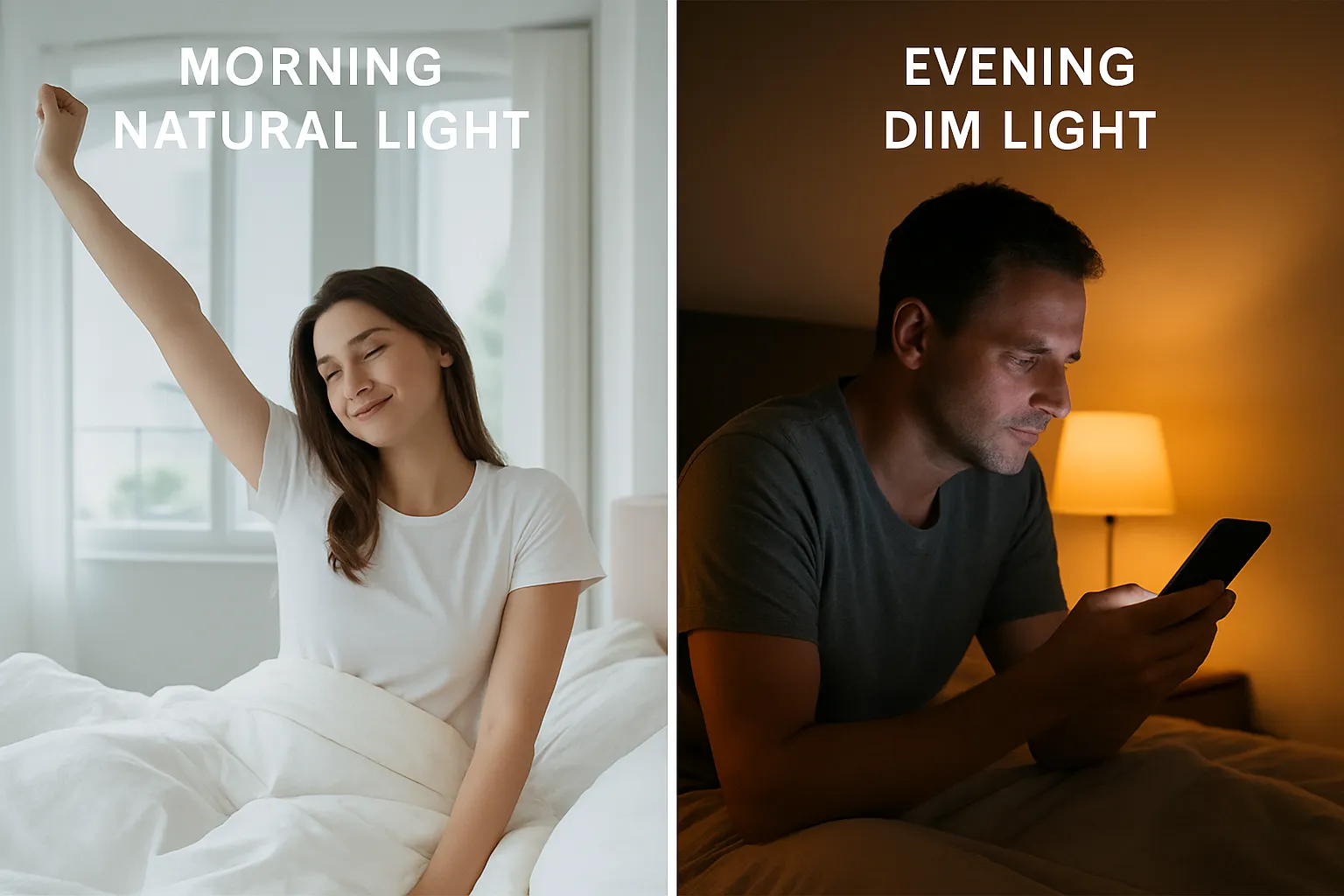
People underestimate how strongly light influences hormones.
A hotel room with bright white light at night is not just "bad design".
It is a biological stimulant.
Light controls melatonin, cortisol, and serotonin by influencing the brain’s central clock.
The two big actors
| Hormone | Trigger | Function |
|---|---|---|
| Melatonin | Darkness, no blue light | Sleep, recovery |
| Cortisol | Morning light, blue-rich light | Wake, alertness |
What light does to melatonin
Blue light exposure at night suppresses melatonin by up to 80%
Source: Harvard study, 2011 (https://health.harvard.edu/staying-healthy/blue-light-has-a-dark-side)Warm amber/red light does not suppress melatonin
Source: Brainard et al., 2001
This is why screen time keeps people awake.
And why bright hotel bathrooms ruin sleep.
What light does to cortisol
Morning light is good.
It boosts cortisol and dopamine.
It increases:
- Energie
- mood
- cognitive performance
So a bedroom light schedule needs both:
- strong blue-rich light early
- no blue light late
Static lighting cannot do both.
Why Homes and Hotels Need Circadian Lighting?

Most hotels still treat lighting like furniture: static, aesthetic, cheap.
Homes and hotels need circadian lighting to improve sleep, guest satisfaction, and daytime performance without medication or intervention.
Sleep is a business metric in hotels
Poor sleep means:
- bad reviews
- lower occupancy
- lower repeat customers
McKinsey found that sleep quality is now a top decision factor for hotel choice, beating breakfast and amenities.
What poor lighting does to guests
A standard cool-white downlight at night can:
- delay sleep onset by 1–3 hours
- reduce sleep quality
- increase morning fatigue
When a guest sleeps badly, they don’t think:
"the lighting was wrong".
They blame the hotel experience.
Homes are going through same shift
People now understand sleep is:
- health
- mood
- longevity
- performance
And lighting is the easiest intervention.
Not HVAC. Not diet.
Light.
Circadian vs Traditional Lighting?

People assume circadian lighting is a fancy marketing term.
It is actually a structural change in design logic.
Traditional lighting optimizes visibility. Circadian lighting optimizes both visibility and biological function through spectral tuning.
Two very different goals
| Lighting Type | Zweck | Spectrum | Intensity | Timing |
|---|---|---|---|---|
| Traditional | Sichtbarkeit | Static | Static | Keine |
| Circadian | Biology | Dynamic | Dynamic | Time-based |
Two very different questions
Traditional lighting asks:
- Is the light bright enough?
- Is the glare acceptable?
Circadian lighting asks:
- Does this light help guests wake easily?
- Does evening light support melatonin?
- Does morning light increase productivity?
Where the industry is moving
New building standards:
- WELL v2
- CIE S 026
- EN 12464-1
All require biological metrics, not just visual ones.
These standards will hit hospitality next.
Hotels that ignore it will look outdated fast.
Summary: Healthy Lighting as a New Standard?

Healthy lighting is not a luxury.
It is becoming baseline performance.
Circadian lighting helps humans wake easier, sleep deeper, and feel better by using biologically aligned light timing, spectrum, and intensity.
Hotels and homes that adopt it have an edge.
Those that ignore it will get left behind.
Schlussfolgerung
Circadian lighting uses timed light changes to support sleep, mood, and alertness, making indoor spaces healthier and more human-centered.
Teco manufactures high-quality dimmable LED spotlights designed for hospitality, residential, and premium project applications.
We work with B2B buyers who need stable performance, certification, and reliable delivery from a Chinese factory with four production lines.
If you are building a new product line or looking for OEM/ODM lighting solutions for Europe, Middle East, or Southeast Asia:
Email: [email protected]
Website: www.tecolite.com
We support private label, custom spectrum, and specialized optical designs.
Send me your project idea.
Let’s make light work better for humans.