Guía Completa sobre Lámparas PAR: Comprensión, Beneficios y Transición a LED
Última actualización el 2 de febrero de 2026
PAR lamps—short for Parabolic Aluminized Reflector lamps—have long been a cornerstone of professional and architectural lighting. Known for their focused beams and robust construction, PAR lamps are widely used in stage lighting, commercial spaces, and residential applications. This guide explains what PAR lamps are, why they matter, and why LED PAR lamps are rapidly becoming the new standard.
Defining PAR Lamps
PAR lamps are designed with an internal parabolic reflector that directs light into a controlled, well-defined beam. The parabolic shape plays a critical role in concentrating and shaping the light output.
PAR lamps are identified by numbers such as PAR16, PAR20, PAR30, or PAR38. These numbers represent the lamp diameter in eighths of an inch. For example:
- PAR16 ≈ 2 inches
- PAR20 ≈ 2.5 inches
- PAR30 ≈ 3.75 inches
- PAR38 ≈ 4.75 inches
Thanks to their directional beam control, PAR lamps are ideal for spotlighting, accent lighting, and floodlighting.
The Role of the PAR Can
El PAR Can is a simple cylindrical fixture designed to house PAR lamps and is widely used in stage and entertainment lighting. Despite its basic construction, the PAR Can is extremely versatile.
Common applications include:
- Highlighting specific areas on stage
- Creating dramatic lighting effects
- Providing wash or accent lighting
- Photography and film production
The combination of PAR lamps and PAR Cans has made this system a long-standing favorite in theaters, concerts, exhibitions, and live events.
Advantages of PAR Lamps
PAR lamps remain popular due to several key advantages:
Focused Lighting
The reflector design allows precise beam control, from narrow spot beams to wider flood patterns.Versatilidad
Available in multiple sizes, beam angles, wattages, and color options, PAR lamps adapt easily to different lighting needs.Durability
Their rugged construction makes them suitable for demanding environments, including touring productions and outdoor installations.
Making the Leap to LED PAR Lamps
The shift from traditional halogen PAR lamps to LED PAR lamps represents a major upgrade in performance and efficiency.
Key benefits of LED PAR lamps include:
Eficiencia energética
LED PAR lamps consume significantly less power while delivering comparable or higher light output.Vida Útil Extendida
LEDs last many times longer than halogen lamps, reducing maintenance and replacement frequency.Eco-Friendly Operation
Lower energy use and the absence of hazardous materials make LED PAR lamps a more sustainable choice.Lower Heat Emission
LEDs generate far less heat, improving safety and comfort—especially in stage and indoor environments.
Examples of LED PAR Lamps
PAR30 LED Spotlight Bulb
Suitable for commercial and architectural accent lighting, offering balanced beam control and efficiency.
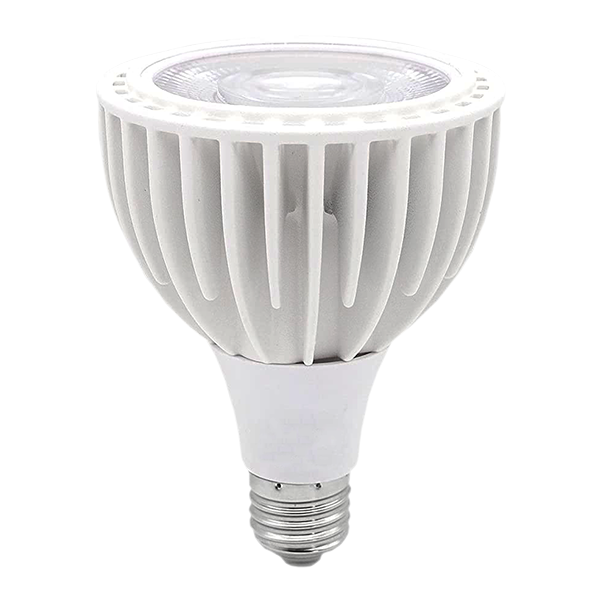
PAR38 LED Spotlight Bulb
Ideal for high-output applications such as outdoor lighting, retail displays, and large spaces.
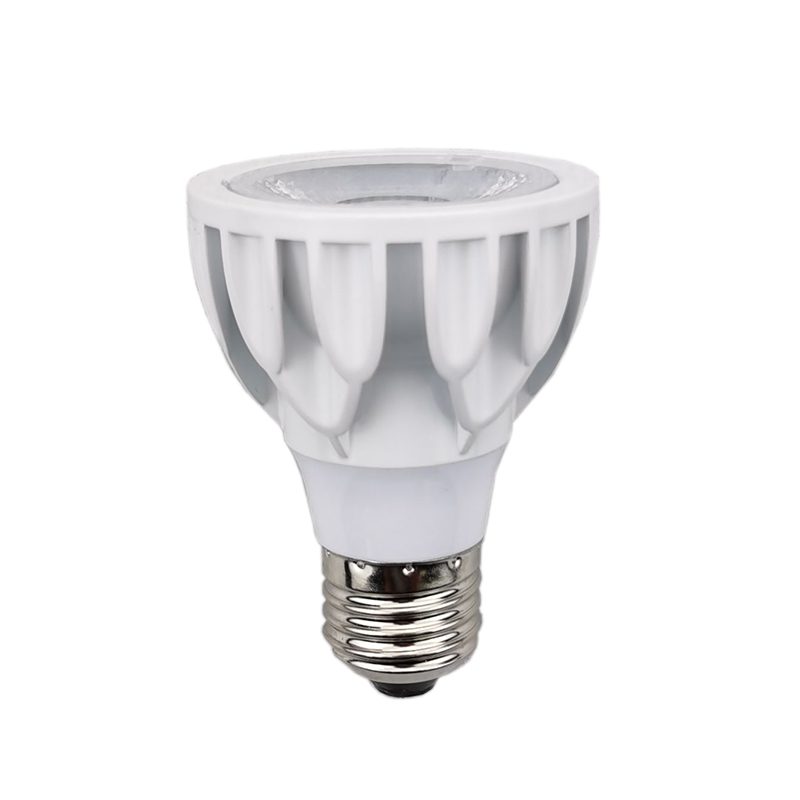
PAR20 LED Spotlight Bulb
Compact and efficient, well suited for track lighting, display cases, and residential accent lighting.
Wrapping Up: The Future Is Bright with LED PAR Lamps
The evolution from halogen to LED PAR lamps marks a significant advancement in lighting technology. LED PAR solutions deliver superior energy efficiency, longer lifespan, reduced heat output, and greater sustainability—without sacrificing beam quality or performance.
Whether used for stage lighting, architectural accents, retail displays, or residential applications, LED PAR lamps offer a future-ready solution that combines lighting quality, environmental responsibility, and long-term cost savings. As LED technology continues to advance, PAR lighting will only become more powerful, efficient, and versatile.