Cómo identificar bombillas LED de alta calidad para proyectos comerciales
Introducción
In commercial lighting environments such as hotel lobbies, corridors, and large office installations, selecting the wrong LED bulbs can create cascading operational failures. Common issues include flickering under dimming systems, premature color shift, inconsistent brightness across batches, and elevated return rates that can exceed 15% in poorly specified projects.
These failures are not just technical inconveniences—they directly translate into financial risk. Contractors face reinstallation costs that can exceed $500 per fixture, while facility operators deal with downtime, tenant dissatisfaction, and maintenance disruptions. For distributors, inconsistent product quality leads to warranty disputes and reputational damage.
The core challenge is not simply choosing an LED bulb—it is knowing how to identify high-quality LED bulbs that deliver stable, long-term performance in demanding commercial conditions.
Direct Answer: What Defines High-Quality LED Bulbs
High-quality LED bulbs are defined by four critical engineering pillars: thermal management (aluminum heat dissipation), optical precision (CRI >90 and SDCM ≤3), driver stability (low flicker, PF >0.9, THD <20%), and verified lifespan (LM-80 / TM-21 data).
Any product that lacks one or more of these elements is likely to experience reduced lifespan, unstable light output, or early system failure.
Quick Checklist: How to Identify High-Quality LED Bulbs
Before selecting LED bulbs for a commercial project, use this checklist to quickly evaluate product quality:
- CRI ≥ 90 (R9 > 50 for hospitality applications)
- Verified LM-80 / TM-21 lifespan reports
- Flicker-free performance (PstLM < 1, low modulation)
- Aluminum heat sink with efficient thermal path
- Power Factor (PF) > 0.9 and THD < 20%
- Certified by recognized standards (UL, DLC, CE, IEC 62560)
- Tight binning consistency (CCT ±100K, SDCM ≤3)
- Driver with surge protection and low ripple current
This checklist acts as a practical filter—if a product fails multiple criteria, it should not be used in professional installations.
The Biggest Misconception: Why Wattage and Price Don’t Define Quality
When evaluating how to identify high quality LED bulbs, many buyers rely on wattage and price as primary indicators. This is a fundamental mistake.
Real-World Impact
In hotel retrofits and office installations, low-cost LED bulbs frequently fail due to incompatible dimming systems or inadequate thermal design. These failures often occur within months, forcing costly replacements and increasing labor expenses.
Engineering Perspective
Wattage only reflects power consumption, not performance quality. Instead, engineers evaluate:
- Luminous efficacy (lm/W) for energy efficiency
- Power factor (PF) for electrical stability
- Total harmonic distortion (THD) for grid compatibility
High-quality LED bulbs typically deliver over 120 lm/W while maintaining stable electrical behavior.
What Really Determines LED Quality
To properly understand how to identify high quality LED bulbs, it is essential to evaluate both photometric and thermal performance.
Key Photometric Indicators
- CRI (Ra) above 90 for accurate color rendering
- R9 value above 50 for natural skin tones
- SDCM ≤3 (MacAdam ellipse) for color consistency
- Stable spectral power distribution
Standards from U.S. Department of Energy and DesignLights Consortium emphasize these parameters as critical for commercial lighting quality.
Thermal Performance
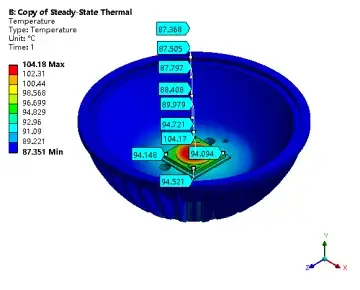
Thermal management is the most important factor affecting LED lifespan. Heat generated at the LED junction must be efficiently transferred through the PCB and housing into the surrounding air.
Poor thermal design is the cause of LED failure.
Cheap vs High-Quality LED Bulbs: Engineering Differences

Understanding the differences between cheap and high-quality LED bulbs is critical for proper evaluation.
Core Component Comparison
| Componente | Cheap LED Bulbs | High-Quality LED Bulbs |
|---|---|---|
| Driver Capacitor | 2,000 hours lifespan | 10,000+ hours |
| LED Source | Generic SMD | COB / MCOB |
| Thermal Design | Mínima | Optimized heat sink |
| Protection | Basic MOV | Surge + ESD protection |
Mecanismo de fallo
Cheap LED bulbs typically fail due to driver component degradation, not the LED chip itself. Low-grade capacitors and insufficient thermal control lead to rapid performance decline.
Hidden Problems in Low-Quality LED Bulbs
Low-quality LED bulbs often contain hidden risks that are not visible in basic specifications.
Common Issues
- High inrush current damaging control systems
- Electromagnetic interference causing noise
- Flicker affecting visual comfort and video environments
- Thermal runaway due to poor heat dissipation design
These problems frequently appear in commercial installations with long operating hours and enclosed fixtures.
Lifecycle Cost Comparison: Why Quality Saves Money
When evaluating how to identify high quality LED bulbs, it is important to consider total cost of ownership rather than initial price.
5-Year Cost Comparison (100 Fixtures)
| Cost Category | Cheap LEDs | High-Quality LEDs |
|---|---|---|
| Coste inicial | $2,000 | $4,000 |
| Energy Cost | $1,800 | $1,200 |
| Maintenance | $8,000 | $1,500 |
| Total Cost | $11,800 | $6,700 |
High-quality LED bulbs reduce maintenance frequency and energy consumption, resulting in up to 40% lifecycle cost savings.
Application-Based Selection: Matching LED Quality to Use Cases

Different applications require different performance priorities.
| Aplicación | Key Requirements | Recommended Type |
|---|---|---|
| Hotel Lobby | CRI ≥95, warm tone | AR111 |
| Corridor | Larga vida útil | GU10 |
| Minorista | Consistencia de color | COB spotlight |
| Oficina | Sin parpadeos | Panel LED |
For enclosed fixtures, always choose products with verified thermal testing and aluminum heat sinks.
Professional Evaluation: How Experts Identify High-Quality LED Bulbs
Lighting engineers follow strict validation processes:
- Review LM-79 photometric reports
- Analyze IES files for simulation
- Perform dimming cycle tests
- Measure junction temperature behavior
- Verify compliance with IEC and Energy Star standards
These steps ensure consistent performance across large installations.
FAQ: How to Identify High-Quality LED Bulbs
What is the most important factor in LED quality?
Thermal management. Without proper heat dissipation, LED lifespan drops significantly.
How can I verify LED lifespan claims?
Check for LM-80 and TM-21 reports, which provide tested and projected lifespan data.
Are high-priced LEDs always better?
Not always, but extremely low-cost LEDs often compromise on driver quality and thermal design.
Why do LED bulbs fail early?
Most failures are caused by driver components, especially capacitors, rather than LED chips.
Conclusion: Prioritize Quality to Reduce Long-Term Risk
High-quality LED bulbs are not defined by price—they are defined by engineering integrity.
By focusing on thermal design, driver stability, optical performance, and verified testing data, buyers can significantly reduce failure rates and maintenance costs.
In commercial projects, selecting the right LED product is not just a technical decision—it is a long-term investment in reliability and operational efficiency.
B2B Engineering Recommendation
Before finalizing procurement:
- Request thermal test data (junction temperature and case temperature)
- Verify compatibility with dimming systems
- Confirm compliance with international standards
A structured evaluation process ensures stable lighting performance and minimizes project risk.
If you are sourcing LED bulbs for commercial projects:
Solicitar un free technical evaluation and compatibility report
Ensure your lighting system meets long-term performance expectations
Contact: [email protected]