Recessed Lighting Guide: Layout, Spacing & Can vs Canless Explained
Last updated on March 2, 2026
Recessed lighting creates a clean, modern ceiling design while providing flexible illumination for kitchens, living rooms, and commercial spaces.
But most buyers struggle with practical questions like:
- How many recessed lights do I need?
- How far apart should recessed lights be?
- Should I choose can or canless fixtures?
- What size recessed light works best?
If you need a quick answer:
- 8 ft ceiling → space lights about 4 ft apart
- 12×12 room → typically 6–9 recessed lights
- Canless lights are easier for retrofit projects
- IC rating is required for insulated ceilings
This guide explains everything you need to know before buying recessed lighting.
1. Why Choose Recessed Lighting?
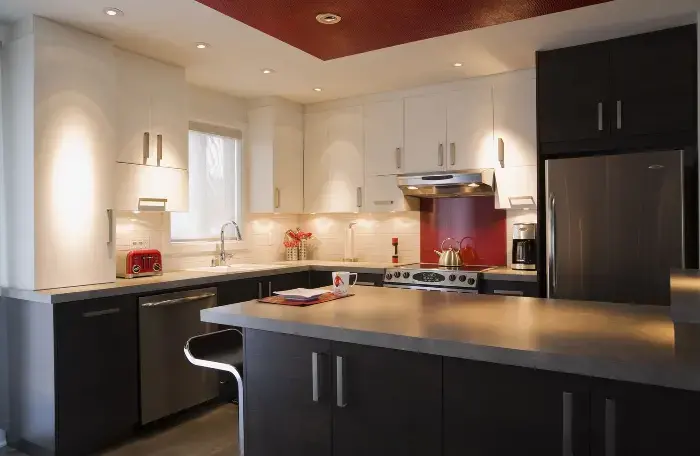
Recessed lighting sits flush with the ceiling, creating a minimalist and space-saving design.
Key benefits:
- Clean architectural appearance
- No visual clutter
- Flexible placement
- Works for ambient, task, and accent lighting
- Ideal for lower ceilings
Because the fixture is integrated into the ceiling, it preserves headroom and maintains an open feel.
2. How Many Recessed Lights Do I Need?
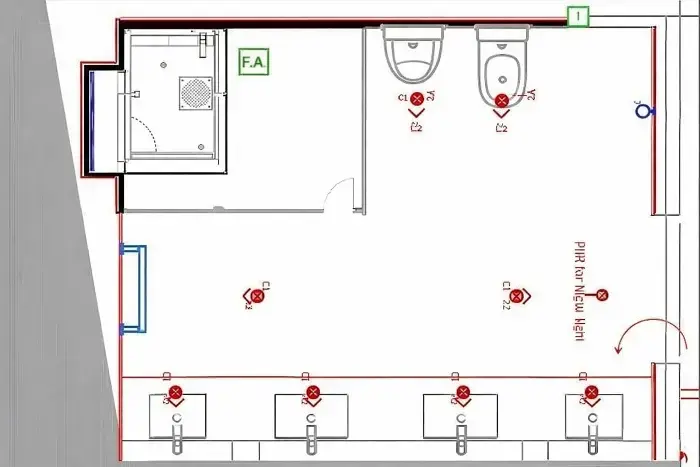
The number of recessed lights depends on:
- Room size
- Altura del techo
- Purpose of lighting
- Desired brightness
General Rule
A common guideline:
One recessed light per 4–6 square feet of ceiling space
Example: 12×12 Room
12 × 12 = 144 sq ft
Using the 4–6 sq ft rule:
- 144 ÷ 6 = 24 lights (too many for residential)
- A more practical method uses spacing logic instead.
Better estimate:
For an 8 ft ceiling:
- Space lights ~4 ft apart
- A 12×12 room typically uses 6–9 recessed lights
Exact layout depends on furniture placement and lighting purpose.
3. Recessed Lighting Spacing Chart
Spacing should relate to ceiling height.
Basic Spacing Rule
Spacing ≈ Half the ceiling height
| Ceiling Height | Approximate Spacing |
|---|---|
| 8 ft | 4 ft apart |
| 9 ft | 4.5 ft apart |
| 10 ft | 5 ft apart |
| 12 ft | 6 ft apart |
For wall lighting:
Place fixtures approximately 2–3 ft away from walls to avoid shadowing.
4. What Size Recessed Light Should You Choose?
Common sizes include:
4-inch
- Iluminación de acento
- Small spaces
- Modern minimal look
5-inch
- Balanced general lighting
- Kitchens and bedrooms
6-inch
- Larger rooms
- Higher ceilings
- Stronger general illumination
For residential spaces with 8–9 ft ceilings, 4-inch and 5-inch fixtures are most common.
5. Can vs Canless Recessed Lights
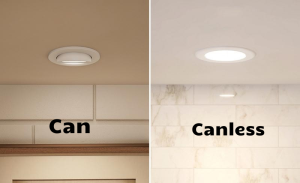
Choosing between traditional housing and integrated fixtures is a major decision.
Can (Traditional Housing)
- Requires metal housing inside ceiling
- Durable and long-established
- Best for new construction
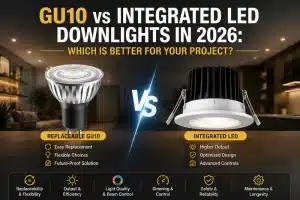
Canless (Wafer / Integrated LED)
- No large housing required
- Slim profile
- Ideal for shallow ceilings
- Easier retrofit installation
Comparison Table
| Característica | Can | Canless |
|---|---|---|
| Installation | More complex | Easier |
| Ceiling Depth | Requires more space | Slim profile |
| Retrofit Use | Limitado | Excelente |
| Cost | Moderado | Often lower |
For renovations, canless designs are often the practical choice.
6. Do You Need IC or AT Rating?
IC Rated (Insulation Contact)
Required if fixtures touch ceiling insulation.
Prevents overheating and reduces fire risk.
AT Rated (Air Tight)
Prevents air leakage between conditioned and unconditioned spaces.
Improves energy efficiency.
If your ceiling contains insulation, IC-rated fixtures are essential.
7. Recessed Lighting Layout Tips
Proper layout prevents dark spots and glare.
For Living Rooms
- Even grid layout
- Combine ambient and accent lighting
- Avoid placing lights directly above seating to reduce glare
For Kitchens
- Align lights over countertops
- Add focused lighting over islands
- Combine with under-cabinet lighting
For Hallways
- Place lights in a straight line
- Space evenly based on ceiling height
Layered lighting often produces better results than uniform spacing alone.
8. Beam Angle Matters
Recessed lights are available in different beam angles.
- Narrow beam → accent lighting
- Medium beam → task lighting
- Wide beam → general illumination
Ceiling height and distance to target surfaces affect beam spread.
Combining beam angles improves visual depth and balance.
9. Why Choose LED Recessed Lighting?
LED recessed lights provide:
- High energy efficiency
- Long lifespan (often 25,000–50,000 hours)
- Low heat output
- Multiple color temperature options
- Dimmable compatibility
Compared to halogen systems, LED significantly reduces maintenance and electricity costs.
10. Frequently Asked Questions
How far apart should recessed lights be?
Spacing is typically half the ceiling height.
For 8 ft ceilings → about 4 ft apart.
How many recessed lights for a kitchen?
A medium kitchen (12×12) usually requires 6–9 fixtures, depending on layout and brightness needs.
Are canless recessed lights better?
They are easier to install and ideal for retrofit projects, but both options can perform well when properly installed.
What size recessed light is best for living room?
4-inch or 5-inch fixtures are commonly used for residential living spaces.
Do recessed lights add value to a home?
Modern recessed lighting improves aesthetics and perceived space, which can enhance resale appeal.
11. Final Recommendation
When choosing recessed lighting, focus on:
- Room size and ceiling height
- Spacing and layout
- Fixture size
- Can vs canless design
- IC/AT safety rating
- LED efficiency and beam angle
By combining proper spacing, correct fixture type, and layered lighting design, recessed lighting can dramatically improve both function and atmosphere in residential or commercial spaces.
Careful planning ensures:
- Balanced illumination
- Reduced glare
- Eficiencia energética
- Long-term reliability