Tipos de luz en diseño de interiores: Aplicaciones prácticas de iluminación para espacios residenciales y comerciales modernos
Introducción
Lighting problems in interior projects rarely come from brightness alone. A room may meet a general lux target and still feel flat, uncomfortable, or commercially ineffective. The deeper issue is usually that the lighting has not been divided into functional layers: ambient light for orientation, task light for work surfaces, and accent light for visual hierarchy.
For B2B buyers, architects, lighting designers, distributors, and project contractors, this distinction is not academic. It affects fixture selection, beam angle, driver choice, thermal performance, dimming compatibility, installation cost, and long-term maintenance. A GU10 LED spotlight used as an accent spotlight has a different job from a linear profile used for ambient cove lighting. A PAR30 LED lamp in a retail ceiling has different thermal and optical requirements from an MR16 LED replacement lamp in a compact display fixture.
This guide explains the main types of light in interior design from a specification and procurement perspective. It keeps the familiar ambient, task, and accent framework, but connects each layer to practical LED product decisions: beam angle, CRI, driver stability, thermal management, enclosed fixture compatibility, and application logic for residential, retail, and hospitality projects.
❌ Falso
A room can meet the average lux target while the retail wall still looks dull, the hotel reception desk has glare, and the client asks for fixture changes after installation.
✔ Verdadero
Proper specification separates ambient, task, and accent lighting so each fixture supports a clear visual function before bulk order.
Resumen Ejecutivo
The three fundamental types of light in interior design are ambient lighting, task lighting, and accent lighting. In B2B lighting projects, each layer should be matched with the correct optic, color quality, control method, and thermal design.
Ambient lighting provides the base level of visibility. Task lighting supports specific activities such as cooking, reading, reception work, grooming, or checkout service. Accent lighting creates contrast and visual focus for artwork, merchandise, architectural details, and brand features.
For commercial LED specification, the key point is simple: do not select a lamp only by wattage or lumen output. A reliable lighting schedule should also confirm beam angle, CRI or TM-30 data, driver type, dimming compatibility, operating temperature limits, and whether the product is rated or specified by the manufacturer for enclosed or recessed use.
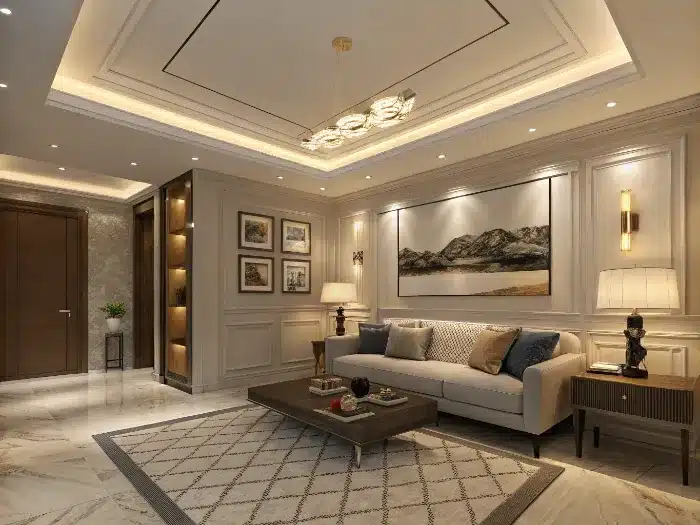
types of light in interior design layered lighting applications
If you remember only five specification rules, keep these:
- Do not choose lamps by wattage alone; confirm beam angle, center beam candlepower, lumen output, and photometric data.
- Use GU10, MR16, PAR20, and PAR30 lamps where directional control matters, not as a universal lighting solution for every layer.
- Treat CRI 80 as a general baseline, but consider CRI 90+, R9, or TM-30 data for retail, hospitality, food, textiles, artwork, and premium residential interiors.
- Check driver, dimmer, transformer, and control compatibility before bulk purchase, especially for MR16 retrofit and dimmable hotel projects.
- Confirm thermal condition and enclosed fixture compatibility before installing LED lamps in sealed, recessed, or compact housings.
| Lighting Layer | Common LED Products | Practical Specification Focus | Project Risk If Ignored |
|---|---|---|---|
| Ambient lighting | Downlights, ceiling lights, linear profiles, cove lights | Wide distribution, glare control, driver consistency, dimming groups | Overlit ceilings, poor comfort, high energy use |
| Iluminación de tareas | Under-cabinet lights, mirror lights, adjustable downlights, linear task lights | Correct placement, adequate illuminance, low glare, stable output | Shadows, user complaints, site rework |
| Iluminación de acento | GU10, MR16, PAR20, PAR30, track spots, wall washers | Beam angle, CBCP, CRI/TM-30, aiming access, thermal rating | Weak display impact, color distortion, premature failure |
Introduction: Why Understanding Lighting Types Matters in Interior Design
Realidad en el sitio / comercial
In many projects, lighting is still selected too late or too simply. A ceiling plan may show enough fixtures, but once furniture, shelving, wall finishes, mirrors, and product displays are installed, the weaknesses become visible. Worktops sit in shadow. Retail walls look dull. Hotel reception desks are bright from above but uncomfortable for staff. Decorative pendants look attractive but cannot provide the functional light the space needs.
This is where the three types of light in interior design become a practical coordination tool. They help the design team assign a job to each fixture before purchase. A recessed downlight may be used for ambient light, but if it is also expected to provide task lighting and accent lighting, compromises start to appear. The beam may be too wide for merchandise, too narrow for circulation, or too glary for seating.
For B2B projects, the cost of this mistake is not only visual. Late changes can mean new beam angles, different trims, replacement drivers, revised dimming channels, or access problems after ceilings are closed. In retrofit projects, the risk is even higher because existing housings, transformers, enclosed fixtures, and dimmers may limit what LED products can safely and reliably do.
Análisis Profundo y Solución de Ingeniería
A stronger approach is to specify each lighting layer according to both visual function and product engineering.
One common specification mistake is using one lamp type for every lighting layer. The wrong decision often looks efficient during procurement, but creates cost later during aiming, commissioning, or replacement.
❌ Falso
Higher output cannot fix the wrong beam angle, poor aiming position, low color quality, incompatible dimming, or heat build-up inside the fixture.
✔ Verdadero
Ambient, task, and accent layers require different optics, mounting positions, control strategies, and product tests.
| Wrong Specification | Why It Fails On Site | Better B2B Decision |
|---|---|---|
| Using GU10 lamps as the main general lighting source across a full room | Narrow beams create uneven pools of light, glare, and dark gaps | Use downlights, linear profiles, or indirect systems for ambient lighting; reserve GU10 for accent zones |
| Increasing wattage when a retail display looks weak | More power may increase glare without improving contrast or product focus | Check beam angle, aiming position, CBCP, CRI/TM-30 data, and display distance first |
| Replacing halogen MR16 lamps with LED MR16 lamps without checking the transformer | Flicker, buzzing, low-end dimming failure, or unstable operation may appear after installation | Verify transformer type, minimum load, dimmer compatibility, and thermal condition before bulk purchase |
| Using a non-enclosed-rated LED lamp in a sealed fixture | Heat build-up can accelerate lumen depreciation, color shift, or driver stress | Use enclosed-rated products or redesign the fixture condition |
Ambient lighting should be evaluated for distribution, glare, spacing, and control grouping. Task lighting should be evaluated by the location of the task plane, shielding, and shadow control. Accent lighting should be evaluated by beam angle, center beam intensity, color quality, and aiming flexibility.
Beam angle deserves special attention. For directional lamps such as GU10, MR16, PAR20, and PAR30, the nominal beam angle is not a decorative label. ENERGY STAR’s lamp specification defines beam angle as the angle between two opposite directions where average intensity is 50% of center beam intensity.1 In practical specification language, very narrow beams are commonly around 10-18 degrees, narrow beams are above 18-29 degrees, medium-narrow beams are above 29-46 degrees, and medium beams are above 46-70 degrees. Narrow beams are typically used for focused accent lighting. Medium-narrow beams are useful for displays, hospitality features, and residential artwork. Medium or wider beams are better for broader coverage, wall washing, or general illumination. Final selection should be checked against the product photometric file, CBCP, mounting height, and target size.
Color quality also matters. CRI Ra is still widely used, and ENERGY STAR Lamps Version 2.1 required Ra >= 80 for certified lamps and R9 > 0 for solid-state lamps.2 But CRI alone can be too limited for color-critical spaces because the CIE Ra value is based on eight test color samples.3 For retail, hospitality, galleries, showrooms, and high-end residential projects, buyers should request more complete color data when possible, including R9 or TM-30 metrics such as Rf and Rg.4
Nota de Fábrica
From a manufacturing and sourcing perspective, the most common mistake is treating equivalent wattage as equivalent performance. Two 7 W GU10 lamps can behave very differently if one has a tighter optic, better heat sinking, higher CRI, lower flicker driver, and an enclosed-fixture rating. The datasheet should be read as a performance document, not only as a price list.
The Three Fundamental Types of Light in Interior Design
Realidad en el sitio / comercial
When ambient, task, and accent lighting are not defined early, site teams often compensate in expensive ways. Contractors add downlights to solve task-lighting problems. Retail operators increase brightness because the accent layer is weak. Hotel teams dim everything down to create mood, only to lose visibility at reception desks and circulation paths.
These are not small aesthetic issues. They affect daily operation. In retail, poor accent lighting can reduce product visibility and make premium zones look ordinary. In hospitality, low-quality color rendering can make materials, food, flowers, and skin tones look dull. In residential developments, poor thermal matching in compact or enclosed fixtures can increase callbacks and shorten lamp life.
Análisis Profundo y Solución de Ingeniería
The three fundamental types of light in interior design are ambient, task, and accent lighting.
Ambient lighting is the base layer. It allows people to move through the space safely and comfortably. Typical LED products include recessed downlights, ceiling-mounted luminaires, linear profiles, cove lighting, and indirect systems. For this layer, the specification focus should be uniformity, glare control, lumen output, dimming smoothness, and batch color consistency.
Task lighting supports specific activities. In kitchens, it may be under-cabinet lighting over countertops. In hotels, it may be mirror lighting, desk lighting, or reception counter lighting. In retail, it may be lighting for cash desks, fitting rooms, or service counters. For this layer, placement matters as much as output. If the fixture is behind the user or blocked by shelving, higher wattage will not solve the shadow problem.
Accent lighting creates hierarchy. This is where Focos LED GU10, MR16 LED lamps, PAR30 lamps, adjustable downlights, and track lights often become important. Accent lighting should not be selected only by lumen output. The more relevant questions are beam angle, center beam intensity, color rendering, aiming flexibility, and whether the fixture or lamp can manage heat in the installed condition.
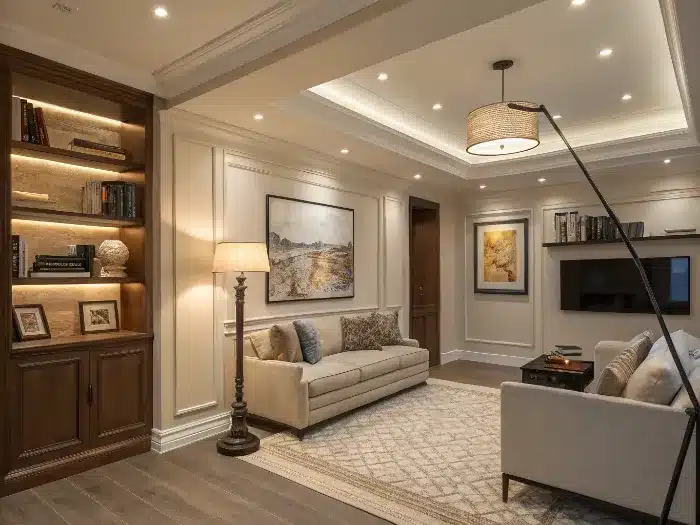
ambient task accent lighting interior design examples
| Característica | Ambient Lighting | Task Lighting | Accent Lighting | B2B Specification Check |
|---|---|---|---|---|
| Visual purpose | Base visibility | Work-zone clarity | Contrast and focus | Define the fixture’s job before selecting wattage |
| Common optic | Wide or diffuse | Controlled | Narrow to medium | Confirm beam angle and photometric data |
| Common products | Downlights, linear profiles, cove lights | Under-cabinet lights, mirror lights, desk lights | GU10, MR16, PAR30, track spots | Match lamp type to mounting height and target size |
| Color quality need | General comfort | Accurate task visibility | Material and product rendering | Use CRI 80 minimum for general areas; consider CRI 90+ or TM-30 for color-critical zones |
| Reliability risk | Glare, overlighting, inconsistent dimming | Shadows, flicker, user discomfort | Heat, color shift, weak contrast | Check driver, thermal design, and enclosed fixture rating |
Nota de Fábrica
For LED replacement lamps, enclosed fixture compatibility is especially important. Fully enclosed fixtures trap heat, and DOE guidance warns that heat build-up can affect LED performance and life expectancy.5 If a lamp package or datasheet says it is not for enclosed fixtures, using it in a sealed downlight, globe, or compact housing is a specification risk, not a minor installation detail.
Layered Lighting: The Core Principle of Modern Interior Lighting Design
Realidad en el sitio / comercial
Layered lighting is often discussed as a design concept, but in commercial projects it is also a risk-control method. A restaurant needs different scenes for lunch, dinner, cleaning, and private events. A hotel lobby needs clear reception visibility during check-in and a warmer atmosphere in the evening. A retail store needs general circulation light, but also stronger visual emphasis on new arrivals, promotional tables, and premium shelves.
If all fixtures sit on one circuit or one dimming group, the operator has little control. If the ambient layer is too strong and the accent layer too weak, dimming the room down may create mood but reduce functional visibility. If the accent layer is too narrow or poorly aimed, increasing output may cause glare without improving product presentation.
Análisis Profundo y Solución de Ingeniería
Layered lighting means that each visual function is specified, installed, and controlled with a clear purpose:
- Ambient lighting sets the baseline for orientation and comfort.
- Task lighting supports specific work zones and user activities.
- Accent lighting creates depth, contrast, and commercial focus.
For B2B lighting schedules, this should translate into separate product and control decisions. Ambient downlights may use wider beams and lower contrast. Task lighting may require local switching or independent dimming. Accent lighting may require adjustable heads, tighter optics, higher CRI, and stronger center beam intensity.
Driver stability becomes important when these layers are dimmed separately. A project using phase-cut dimming, 0-10 V, DALI, or smart control should not assume that all LED products will behave the same way. Buyers should request dimmer compatibility data, minimum load information, flicker performance if available, and sample testing for the actual control system. For hotel, restaurant, and high-end residential projects, dimmable LED lighting solutions should be tested as a system, not purchased as isolated lamps and drivers. ENERGY STAR lamp packaging requirements have also recognized that dimmable lamps may not be compatible with all dimmers and may need compatibility information.6
Thermal management should be reviewed at the same time. LED performance depends on heat transfer from the LED package and driver to the surrounding environment. DOE’s LED luminaire lifetime guidance identifies thermal management, power management, optical management, and assembly integrity as part of overall SSL reliability, and notes that poor thermal design can accelerate lumen depreciation and color shift.7
Nota de Fábrica
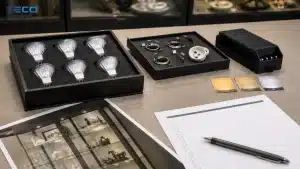
For large hospitality and retail projects, the best purchasing practice is to approve a complete sample set before mass order: one ambient fixture, one task fixture, and one accent fixture in the planned CCT, CRI, beam angle, driver type, and finish. This avoids approving a good-looking fixture body while missing the performance details that determine the final result.
Real Interior Design Applications of Different Lighting Types
Realidad en el sitio / comercial
Real interiors are less forgiving than renderings. A rendering may show balanced brightness, but the installed result depends on ceiling height, beam spread, wall reflectance, furniture layout, shelf depth, mirror placement, and fixture temperature. This is why project selection logic should change by application.
For a B2B LED supplier or buyer, the question is not only "What type of light does this room need?" It is also "Which lamp or luminaire can deliver that function reliably in this installation?"
Análisis Profundo y Solución de Ingeniería
Living Rooms and Residential Lounge Areas
Residential lounge areas need comfort, flexibility, and low glare. Ambient lighting may come from recessed downlights, cove lighting, or decorative ceiling fixtures. Task lighting may include reading lamps, adjustable wall lights, or localized downlights near seating. Accent lighting can highlight artwork, shelves, textured walls, or fireplace features.
For residential projects, GU10 lamps and small adjustable downlights are often used for accent lighting. A medium-narrow beam, such as above 29-46 degrees, is usually more forgiving for artwork and feature walls than an extremely narrow beam, especially at lower ceiling heights. Warm CCTs such as 2700 K or 3000 K are common, but the exact choice should match the interior material palette.
If the lamp is installed in a recessed can, enclosed trim, or compact decorative fixture, enclosed-fixture compatibility should be checked before purchase. A lamp that performs well in open air may run hotter in a sealed housing.
Cocinas
Kitchens need more than bright ceilings. Ceiling downlights can provide ambient light, but they often create shadows when the user stands between the fixture and the worktop. Task lighting should be placed directly over counters, sinks, islands, and food preparation areas.
Under-cabinet linear lighting is usually a better task solution than simply adding higher-output ceiling lamps. For kitchen counters, buyers should check diffuser quality, glare shielding, color consistency, and driver placement. If a remote driver is used, service access should be planned before cabinetry is finalized.
CRI should be selected with practical use in mind. CRI 80 may be acceptable for general circulation, but CRI 90+ is often preferred where food color, stone surfaces, wood finishes, and decorative materials need to look natural.
Tiendas Minoristas
Retail lighting is where accent lighting becomes a commercial tool. Ambient lighting supports movement, but accent lighting drives attention. Retail LED spotlights such as track lights, adjustable downlights, PAR30 lamps, and GU10 spotlights are commonly used to highlight merchandise, mannequins, display tables, wall bays, and premium product zones.
Beam angle should match mounting height and display size. A narrow beam can create strong contrast on a small display, but it may produce scalloping or hot spots on a broad wall. A wider beam can improve coverage but reduce visual punch. For fashion, cosmetics, food, furniture, and material showrooms, color quality is critical. CRI 90+ and TM-30 data are worth requesting because CRI alone may not show how reds, skin tones, wood, fabric, and saturated colors will appear.
Hotel Lobbies
Hotel lobbies combine circulation, service, atmosphere, and brand impression. Ambient lighting should make the space feel welcoming. Task lighting should support reception desks, concierge areas, and lounge tables. Hospitality LED lighting should also include accent lighting for artwork, stone, wood, floral arrangements, signage, and architectural features.
For hotels, driver stability and dimming quality are often as important as raw output. Low-end dimming behavior, flicker, color shift, and compatibility with the control system should be tested before full installation. In guest-facing areas, lighting defects are highly visible because the space is used for long hours and under multiple scenes.
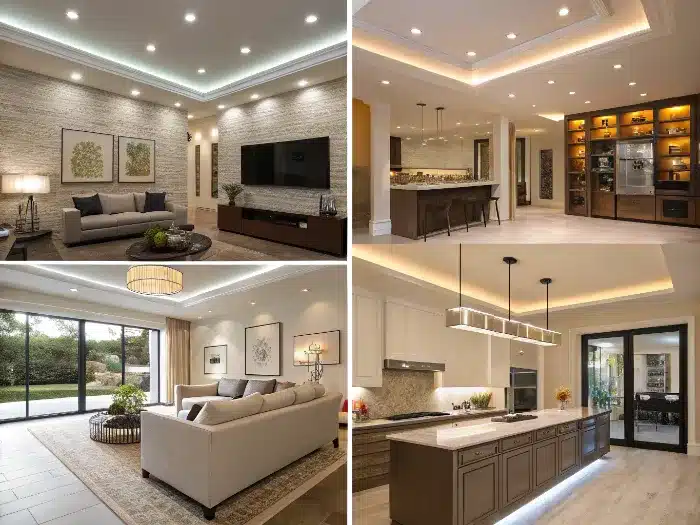
interior lighting applications living room kitchen retail hotel lobby
| Tipo de espacio | Ambient Layer | Task Layer | Accent Layer | Product Selection Logic |
|---|---|---|---|---|
| Living room | Cove lighting, downlights | Reading light, localized downlight | GU10, adjustable spot, shelf light | Warm CCT, low glare, dimmable, enclosed rating if needed |
| Cocina | Downlights de techo | Under-cabinet linear, island light | Cabinet or joinery highlight | CRI 90+ for food and finishes, easy driver access |
| Retail store | General ceiling grid | Cash desk, fitting room | Track spot, PAR30, GU10, wall washer | Beam angle and TM-30/CRI drive product appearance |
| Hotel lobby | Indirect and decorative base light | Reception and lounge task light | Adjustable downlight, track spot, wall washer | Dimming stability and batch consistency are critical |
Nota de Fábrica
For retrofit projects, MR16 LED replacement lamps need extra care because existing low-voltage transformers may not be compatible with all LED MR lamps. ENERGY STAR lamp documentation specifically recognizes that low-voltage MR lamps may need transformer compatibility information.6 This is a common source of flicker, buzzing, unstable dimming, and field complaints.
Choosing the Right Lighting Fixtures for Each Lighting Layer
Realidad en el sitio / comercial
Fixture misselection is one of the most expensive lighting mistakes because it is often discovered after purchase or installation. A lamp may fit the socket but fail the application. A high-lumen product may still have the wrong beam. A beautiful trim may run too hot in an enclosed ceiling. A dimmable product may not dim properly on the project’s actual control system.
For B2B buyers, a good fixture schedule should therefore include more than product name and wattage. It should specify optical, electrical, thermal, and control requirements.
Análisis Profundo y Solución de Ingeniería
For ambient lighting, prioritize uniformity, comfort, and system control. Linear profiles, downlights, and cove lighting should be selected with beam distribution, lumen package, glare control, and spacing in mind. The target is not maximum brightness. The target is a stable base layer that can support the rest of the lighting design.
For task lighting, prioritize position and shielding. Under-cabinet lights, mirror lights, and workstation luminaires should deliver light to the task plane without shining directly into the user’s eyes. The driver should be located where it can be cooled and serviced.
For accent lighting, prioritize optical accuracy. GU10 and MR16 lamps are useful for compact accent applications, while PAR30 lamps and track lights can provide stronger output for retail and hospitality spaces. Beam angle should be selected according to mounting height, target size, and desired contrast. CRI 90+ or TM-30 data should be considered for product display, artwork, food, textiles, cosmetics, and hospitality interiors.
Thermal management must be part of selection. LED products are more efficient than incandescent lamps, but they still produce heat that must be removed through the fixture body, heat sink, or surrounding air.5 A product designed for open-air use should not be assumed suitable for sealed housings, IC-rated recessed cans, or small decorative fixtures. For sealed globes, compact recessed housings, and decorative fixtures with limited airflow, specify enclosed fixture rated LED lamps instead of assuming a standard lamp will survive the installation.
| Selection Item | What to Ask the Supplier | Por qué es importante |
|---|---|---|
| Ángulo del haz | Is the listed value nominal beam angle, and is an IES file available? | Prevents weak accent lighting, hot spots, and poor coverage |
| CRI / TM-30 | Is CRI Ra 80, 90, or higher? Are R9, Rf, and Rg available? | Protects color appearance in retail, hospitality, and material finishes |
| Driver stability | Which dimming method is supported: phase-cut, 0-10 V, DALI, or non-dim? | Reduces flicker, buzzing, drop-out, and control complaints |
| Thermal design | What is the rated ambient temperature and housing condition? | Helps avoid accelerated lumen depreciation and color shift |
| Enclosed rating | Is the lamp rated or specified for enclosed or recessed fixtures? | Prevents misuse in heat-trapping installations |
| Consistencia del lote | What CCT tolerance or binning is provided? | Reduces visible mismatch across large commercial projects |
Nota de Fábrica
For serious project procurement, request samples under the actual operating condition, not only on a desk. Test the lamp in the intended housing, dimmer, transformer, and control group. A sample that performs well in open air may behave differently inside a recessed trim, enclosed globe, or compact track head.
Common Lighting Design Mistakes to Avoid
Realidad en el sitio / comercial
Most lighting mistakes are not dramatic design failures. They are small technical mismatches repeated across many fixtures: the wrong beam angle, insufficient glare control, CRI that is too low for the application, a driver that does not match the dimmer, or an LED lamp installed in a fixture that traps heat.
These problems are painful because they appear late. The ceiling is finished, the store is ready to open, the hotel lobby is being commissioned, or residential units are close to handover. At that stage, the correction is no longer a simple product choice. It becomes a labor, access, schedule, and warranty issue.
Análisis Profundo y Solución de Ingeniería
Common lighting design mistakes include:
- Using ambient lighting alone and expecting it to support circulation, tasks, and visual focus
- Selecting GU10, MR16, or PAR lamps by wattage instead of beam angle and center beam performance
- Using CRI 80 products in color-sensitive retail, hospitality, food, or material display zones without reviewing color quality
- Ignoring TM-30, R9, or spectral data when merchandise color is commercially important
- Installing LED lamps in enclosed or recessed fixtures without checking the rated application
- Mixing drivers, dimmers, and transformers without compatibility testing
- Placing downlights symmetrically on the ceiling instead of aligning them with counters, shelves, artwork, and furniture
- Using narrow beams across broad walls, creating hot spots and dark gaps
- Treating decorative fixtures as the main functional lighting source
- Forgetting service access for remote drivers in cabinets, coves, and ceiling voids
The more useful way to read these mistakes is by the field symptom they create:
| Error | On-Site Symptom | Specification Fix |
|---|---|---|
| GU10 used for general lighting | Spotty ceiling pattern, uneven floor brightness, glare complaints | Use broad-beam downlights or linear ambient lighting for the base layer |
| High lumen output but wrong beam angle | Bright ceiling, weak merchandise, poor wall presentation | Recalculate target size, mounting height, beam angle, and CBCP |
| CRI 80 used in color-sensitive retail | Fabric, cosmetics, food, or wood finishes look dull or inaccurate | Request CRI 90+, R9, or TM-30 data before approval |
| LED MR16 installed on unknown transformer | Flicker, buzzing, dimming drop-out, early returns | Test transformer, dimmer, and lamp as one system |
| Non-enclosed-rated lamp used in sealed housing | Early lumen depreciation, color shift, driver stress | Use enclosed-rated products or change fixture ventilation |
A practical way to reduce these mistakes is to review the lighting schedule in four columns: visual function, product type, installation condition, and control method. If any fixture does not have a clear answer in all four columns, the specification is not ready.
Nota de Fábrica
For distributors and project buyers, the strongest defense against field complaints is documentation. Keep the approved datasheet, dimmer list, transformer list, IES file, installation condition, and sample approval record attached to the order. This makes later technical discussions much easier and protects both supplier and buyer.
Future Trends in Interior Lighting Design
Realidad en el sitio / comercial
Future lighting trends only matter when they improve real projects. For commercial buyers, the valuable trends are not just decorative shapes or smart features. The important movement is toward better control, better color data, more reliable thermal design, and more application-specific LED products.
In other words, the market is moving away from "one lamp solves everything" and toward more precise specification.
Análisis Profundo y Solución de Ingeniería
Several trends are shaping interior lighting design in a practical B2B direction:
- More use of TM-30 data alongside CRI for retail, hospitality, and premium residential projects
- Higher demand for CRI 90+ products in color-sensitive applications
- More attention to R9 performance for red rendering in food, skin tones, textiles, and warm materials
- Greater use of replaceable LED modules and serviceable drivers in commercial luminaires
- Stronger focus on low-glare optics, especially in hotels, restaurants, offices, and high-end residences
- Better dimming integration through 0-10 V, DALI, and smart control systems
- More careful review of enclosed fixture compatibility in retrofit lamps
- Increased demand for consistent CCT and binning across large multi-zone projects
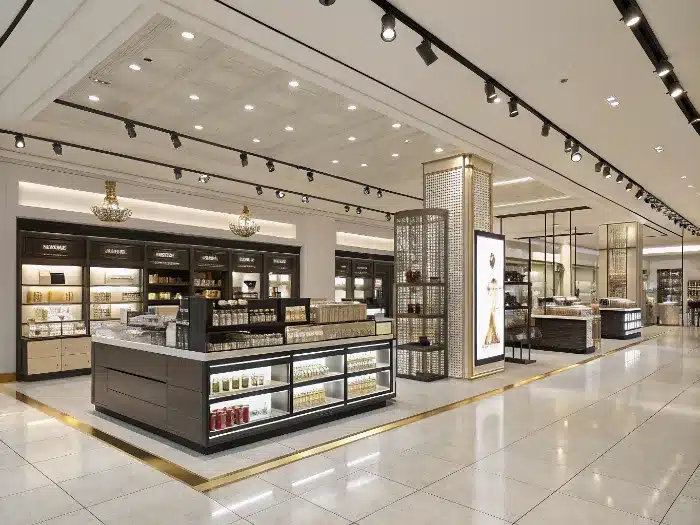
future trends in interior lighting design commercial residential
For suppliers, this means datasheets need to become more transparent. For buyers, it means selection should move beyond wattage and price. A competitive LED product for interior design should be supported by photometric data, color quality data, driver information, thermal ratings, and clear application restrictions.
Nota de Fábrica
The future-ready LED product is not necessarily the one with the longest feature list. It is the one that performs predictably in the actual fixture, ceiling, dimming system, and operating temperature. In B2B projects, reliability is a specification outcome, not a marketing claim.
Conclusion: Building Effective Lighting Layers for Interior Spaces
Effective interior lighting depends on matching each type of light to a real visual function and a suitable LED product. Ambient lighting creates the base layer, task lighting improves usability, and accent lighting adds contrast, depth, and commercial focus.
For residential projects, this means comfort, dimming quality, and correct use of compact lamps such as GU10 or MR16. For retail projects, it means beam control, CRI or TM-30 data, and display-driven accent lighting. For hospitality projects, it means low glare, stable dimming, batch consistency, and reliable thermal performance over long operating hours.
The strongest B2B specification does not ask only how bright a fixture is. It asks what the fixture must do, where it will be installed, how it will be controlled, how heat will be managed, and whether the product data supports the application.
B2B Engineering Recommendation
Before mass production or bulk purchase, request the complete technical package: datasheet, photometric file, beam angle, CRI and available TM-30 data, driver specification, dimmer or transformer compatibility list, rated ambient temperature, and enclosed fixture rating if relevant. For large projects, approve samples under the actual installation condition before confirming the final order.
For a practical purchasing review, ask the supplier for:
- IES or LDT photometric file
- Nominal beam angle and CBCP for directional lamps
- CRI Ra, R9 if available, and TM-30 Rf/Rg for color-sensitive projects
- Driver specification and supported dimming method
- Dimmer compatibility list for phase-cut or smart-control projects
- Transformer compatibility list for MR16 retrofit projects
- Rated ambient temperature and thermal test condition
- Enclosed or recessed fixture rating where relevant
- CCT tolerance, binning information, and batch consistency plan
- Physical samples tested in the real fixture, dimmer, transformer, and installation condition
Notas al pie
ENERGY STAR Lamps Version 2.1 defines beam angle using the 50% center beam intensity criterion and includes center beam intensity requirements for PAR, MR, and MRX lamps. Source: ENERGY STAR Lamps V2.1 Final Specification. ↩
ENERGY STAR Lamps Version 2.1 required certified compact fluorescent and solid-state lamps to have Ra >= 80; for solid-state lamps, R9 had to be greater than 0. Source: ENERGY STAR Lamps V2.1 Final Specification. ↩
CIE defines the 1974 general colour rendering index Ra as the mean of special colour rendering indices for a specified set of eight test colour samples. Source: CIE e-ILV, General Colour Rendering Index Ra. ↩
DOE explains that TM-30 uses 99 color samples and provides additional information such as fidelity index Rf and gamut index Rg, while PNNL notes that TM-30 can differentiate color rendition more effectively than relying only on high CRI thresholds. Sources: DOE, TM-30 Basics y PNNL, TM-30 Guidance. ↩
ENERGY STAR explains that LED thermal management is critical to lifetime performance and that higher operating temperatures accelerate light degradation. Source: ENERGY STAR, Learn About LED Lighting. ↩ ↩
ENERGY STAR lamp specification documentation includes labeling requirements for dimming compatibility, application exceptions such as enclosed or recessed fixtures, and low-voltage MR transformer compatibility. Source: ENERGY STAR Lamps Specification. ↩ ↩
DOE’s LED luminaire lifetime guidance identifies thermal, power, optical, and assembly management as reliability factors and notes that poor thermal management can accelerate lumen depreciation and color shift. Source: DOE, LED Luminaire Lifetime: Recommendations for Testing and Reporting. ↩