¿Cuándo deberías elegir una lámpara de atenuar a cálido o una lámpara de blanco ajustable?
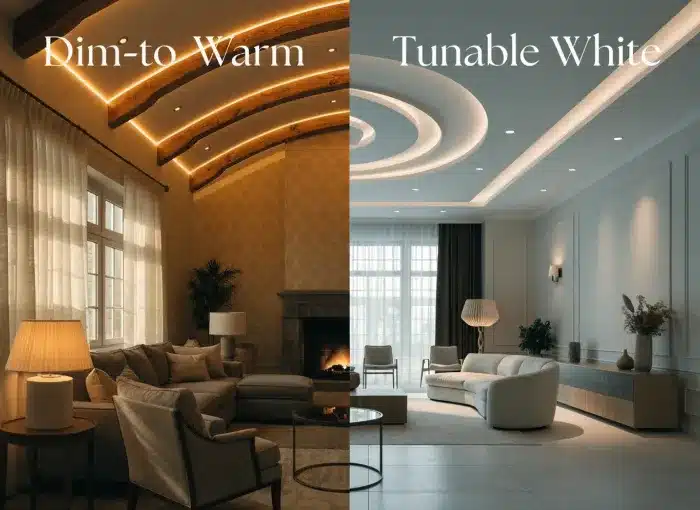
Many buyers focus only on specifications. But the real problem starts after installation, when the lighting control does not match the user’s habits or the project environment.
Dim-to-warm lamps are better for stable and traditional lighting environments with wired dimming systems. Tunable white lamps are better for flexible and personalized spaces that use wireless smart controls like apps, remotes, or smart speakers.
I often tell buyers that choosing between dim-to-warm and tunable white is not only about technology. It is also about how people want to use light every day.
Why Are Dim-to-Warm Lamps Better for Traditional and Commercial Spaces?
Dim-to-warm lamps work best in places that need stability, simplicity, and reliable wired control.
Commercial and formal spaces usually prefer dim-to-warm because triac dimming systems are stable, mature, and easy to maintain. The lighting behavior also feels familiar to users.
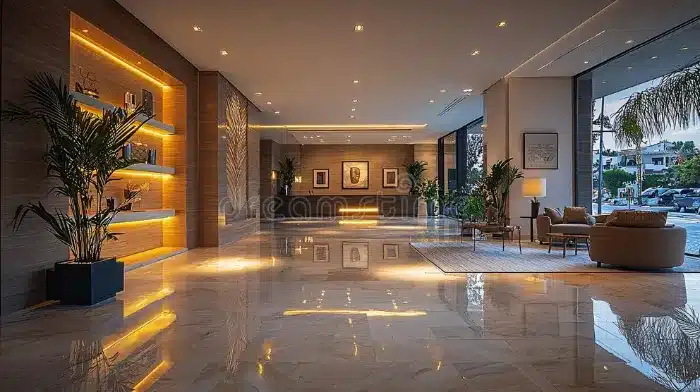
Traditional lighting logic still matters
Many commercial projects still use traditional wired dimming systems. Hotels, restaurants, meeting rooms, galleries, and luxury retail stores often choose triac dimming because it is stable and proven over many years.
People in these spaces usually do not want complicated control systems. They only want lighting that feels natural and dependable.
Dim-to-warm perfectly matches this idea.
When brightness goes down, the color temperature becomes warmer. This copies the old halogen and incandescent feeling that people already understand. Users do not need to learn anything new.
Wired dimming feels more reliable
In many business projects, reliability is more important than advanced features. Building owners care about long-term maintenance. Contractors care about compatibility. Buyers care about reducing complaints.
This is why wired triac dimming is still popular.
Advantages of dim-to-warm in commercial projects
| Característica | Beneficio |
|---|---|
| Wired dimming | Stable signal and fewer connection problems |
| Simple operation | Easy for all users to understand |
| Traditional lighting feeling | Comfortable and familiar atmosphere |
| Mature dimmer technology | Easy replacement and maintenance |
| Low learning curve | No apps or pairing needed |
I have seen many hotel projects avoid wireless systems completely. The owner does not want guests to download apps or learn control logic. They want a simple wall dimmer that always works.
Formal spaces do not need complicated control
Business environments usually focus on consistency. A conference room should look professional. A luxury restaurant should feel warm and elegant. A showroom should maintain the same atmosphere every day.
Too many lighting options can actually create confusion.
In these cases, dim-to-warm creates a more controlled experience. The light changes naturally with dimming. The user does not need to think about separate color adjustment.
Typical projects for dim-to-warm
Proyectos de hotelería
Hotels often use dim-to-warm GU10 lamps in bedrooms and lounge areas because the lighting becomes softer at night.
Fine dining restaurants
Warm lighting creates comfort and improves the dining atmosphere.
Luxury retail stores
Dim-to-warm helps products feel premium and relaxed without distracting control systems.
Villas and traditional interiors
Many homeowners still prefer the classic warm dimming feeling from halogen lighting.
Why Is Tunable White Better for Smart and Personalized Spaces?
Tunable white works best in modern spaces where users want flexible lighting scenes and smart control options.
Wireless control systems make tunable white ideal for homes, studios, apartments, and personalized environments where users accept app control, remotes, and smart speakers.
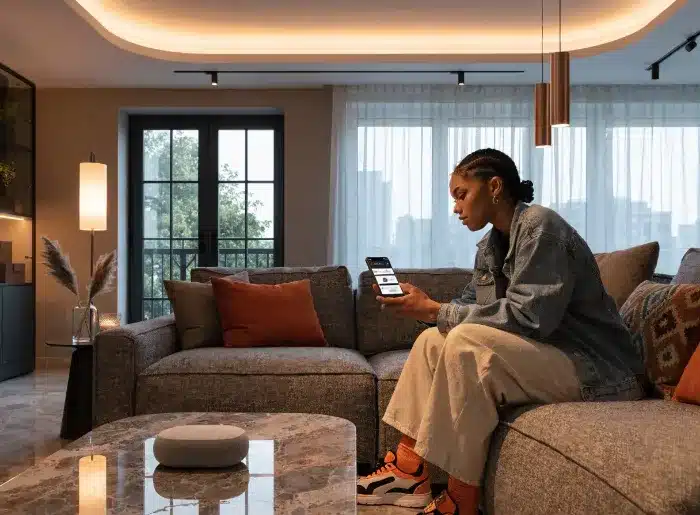
Modern users want flexibility
Today many home users expect lighting to behave like other smart devices. They want to adjust lighting with voice control, apps, or remote controls.
Tunable white fits perfectly into this trend.
The user can freely choose warm or cool light without changing brightness. They can also create different scenes for different activities.
Por ejemplo:
| Actividad | CCT recomendada |
|---|---|
| Leyendo | 5000K |
| Watching movies | 3000K |
| Cooking | 4000K |
| Relaxing at night | 2700K |
| Working from home | 6500K |
This flexibility is difficult for dim-to-warm systems because brightness and color are linked together.
Wireless control makes installation easier
Another reason tunable white is popular in homes is simple installation.
Many wireless systems do not require new dimming wires. This is useful for apartments, renovations, and small projects.
Users can control the lighting through:
- Mobile apps
- RF remotes
- Bluetooth systems
- Zigbee systems
- Smart speakers
- Wi-Fi smart home platforms
In small personalized spaces, people usually accept these control methods. They even enjoy them.
Smart lighting supports lifestyle changes
Home lighting today is no longer only functional. Many users want lighting to support mood, lifestyle, and health.
Tunable white allows lighting to change during the day.
Morning scenes
Cooler white light helps users feel awake and focused.
Evening scenes
Warm white light creates a softer and more relaxing atmosphere.
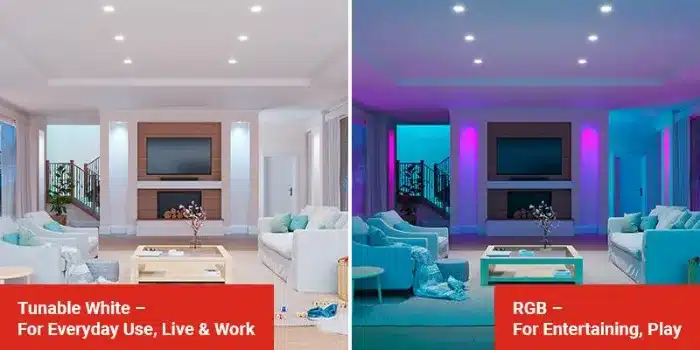
Entertainment scenes
Users can customize lighting for gaming, music, movies, or social gatherings.
Typical projects for tunable white
| Tipo de Proyecto | Why Tunable White Works Well |
|---|---|
| Hogares inteligentes | Flexible control and scene creation |
| Apartments | Easy wireless installation |
| Gaming rooms | Personalized lighting effects |
| Home offices | Adjustable work lighting |
| Small studios | Multi-function lighting |
| Modern residential projects | Smart ecosystem compatibility |
Wireless control is not always ideal for commercial projects
I often explain this to buyers.
Wireless lighting sounds attractive during presentations. But in large commercial projects, too many wireless devices can create management problems.
Por ejemplo:
- Pairing problems
- Signal interference
- App compatibility issues
- User confusion
- Long-term maintenance difficulties
This is why many serious commercial environments still prefer wired dimming systems.
But for home users, these risks are usually acceptable because the scale is smaller and the user experience is more personal.
How Do I Recommend the Right Option to Buyers?
I first ask buyers about the control method and the final user behavior before discussing the lamp itself.
The best lighting choice depends more on user habits and project requirements than on the lamp specification alone.
Questions I usually ask buyers
Is the project commercial or residential?
Commercial projects usually prefer stable wired systems.
Residential projects are more open to smart wireless control.
Does the user want simplicity or flexibility?
Some users only want a dimmer knob.
Others want full scene customization.
Is long-term maintenance important?
Large projects often avoid complicated wireless ecosystems because future maintenance may become difficult.
Will users accept app control?
Older or traditional users may dislike apps and smart speakers.
Younger users usually expect them.
My simple recommendation logic
| User Need | Solución recomendada |
|---|---|
| Stable commercial lighting | Dim-to-warm |
| Traditional luxury atmosphere | Dim-to-warm |
| Integración de hogar inteligente | Tunable white |
| Personalized lighting scenes | Tunable white |
| Easy wired maintenance | Dim-to-warm |
| Wireless flexibility | Tunable white |
I believe lighting should match human behavior, not force users to adapt to technology.
That is why dim-to-warm still has strong value today, even in the LED era. People still love the emotional feeling of traditional warm dimming.
At the same time, tunable white represents a more digital lifestyle. It gives users freedom and customization that old lighting systems could never provide.
Conclusión
Dim-to-warm is better for stable and traditional spaces. Tunable white is better for smart and personalized environments with flexible wireless control.
Recommended Products for Your Project
Based on the lighting principles discussed above, we have selected high-performance GU10 solutions to match different control systems and installation needs.
Top Dim-to-Warm Solutions (TRIAC Dimming)
Best for hotels, luxury villas, restaurants, and traditional wired dimming environments.
TECO Premium GU10 LED Bulb
Dim-to-Warm | Die-Cast Aluminum
- Fitting Type: GU10 LED Spotlight
- Dimming: Triac / Dim-to-Warm
- Color Temperature: 3000K → 1800K
- Luminous Flux: Up to 580lm
- Lifespan: 40,000 hours
- Compatibility: Works with 180+ dimmer brands
View Product Details → https://tecolite.com/product/gu10-dim-to-warm-led-spotlight-3000k-1800k/
TECO LED Essential GU10 Dimmable Bulb
5.5W | Plastic Body | High CRI
- CRI: >90
- Beam Angle: 38° / 60°
- Luminous Flux: 510lm
- Color Temperature: 2700K / 3000K / 4000K
- Lifespan: 25,000 hours
- Body: Thermoplastic, halogen-size replacement
View Product Details → https://tecolite.com/product/led-essential-plastic-gu10-dimmable-bulbs-5-5w/
Top Tunable White Solutions (Smart Wireless)
Best for smart homes, modern offices, apartments, and personalized lighting scenes.
Tuya Zigbee GU10 Smart LED Bulb
Smart CCT | RGBCW | Wireless Control
- Socket: GU10
- Control: WiFi / Zigbee / Bluetooth (Tuya ecosystem)
- Beam Angle: 38° / 60°
- Luminous Flux: 330–350lm
- Lifespan: 25,000 hours
- Smart Integration: Alexa / Google Home / SmartThings
- Equivalent: ~50W halogen lamp
View Product Details → https://tecolite.com/product/wireless-bluetooth-control-smart-tuya-cct-dimming-5w-glass-gu10-led-bulb/