Ampoules LED abordables pour les grandes pièces : Comment choisir la luminosité sans dépenser trop
Affordable LED light bulbs for large rooms should not simply mean the cheapest bulb on the shelf. In a large living room, lobby, restaurant, showroom, open-plan office, or high-ceiling interior, a low-cost bulb can become expensive if it is too dim, creates uneven brightness, fails early in enclosed fixtures, or forces the buyer to install too many lamps.
The better question is: how can buyers get enough useful light with the lowest reasonable total cost? That means checking lumens, beam spread, fixture type, color quality, heat behavior, dimming needs, and replacement planning together. A 2000 lm bulb may be affordable in one fixture layout and wasteful in another. A decorative globe bulb may work well in a pendant cluster, while a PAR spotlight may be better for directional brightness.
For distributors, contractors, hospitality buyers, and project teams, this article explains how to choose LED bulbs for large rooms without overspending on wattage, overbuying lumens, or selecting a bulb type that does not match the fixture.
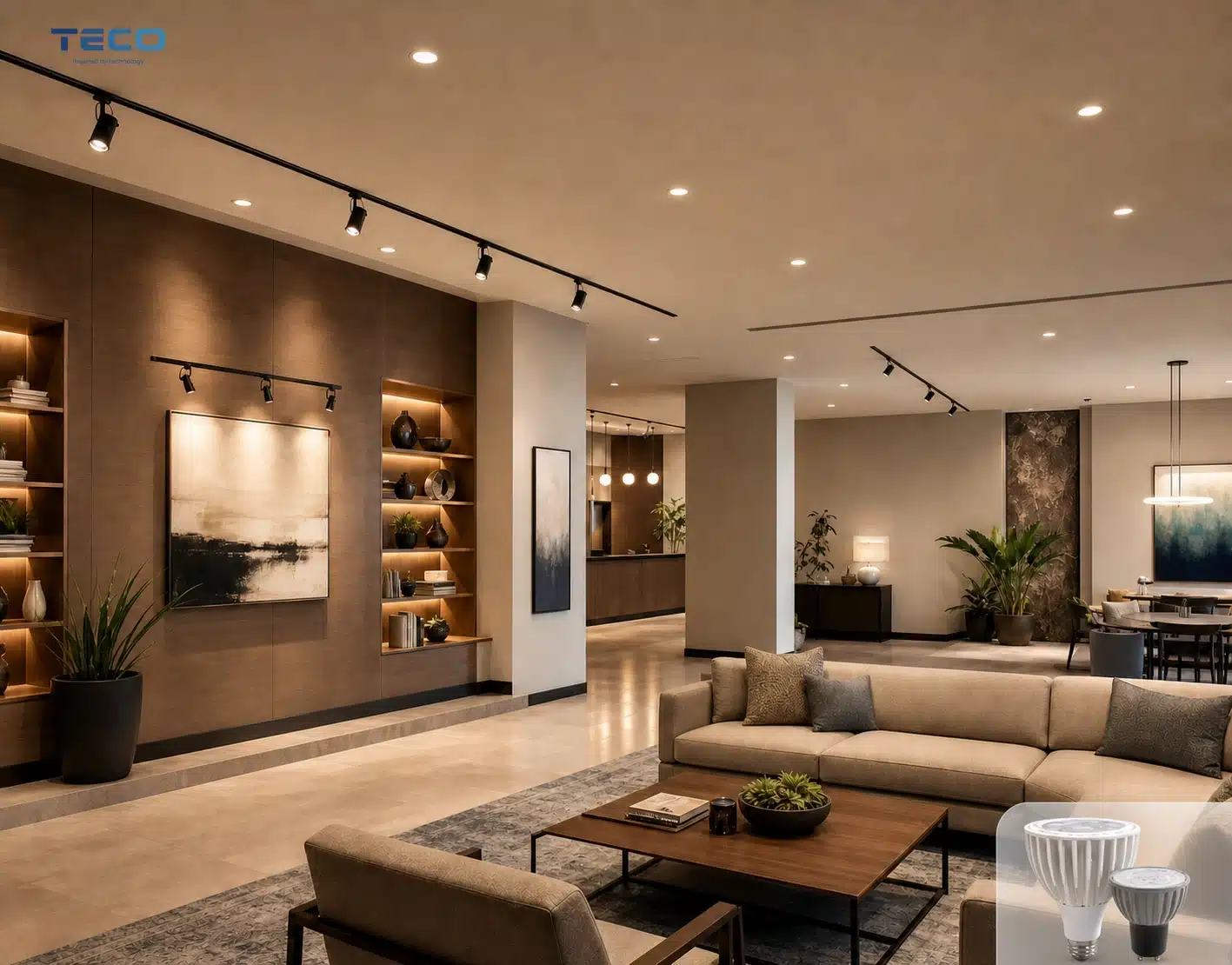
Affordable LED light bulbs for large rooms with layered ambient lighting
Start With Lumens, Not Wattage
The most common mistake in large-room lighting is still choosing bulbs by wattage equivalent. In incandescent lighting, buyers often used "60W" or "100W" as a shortcut for brightness. With LED bulbs, watts describe power consumption, not light output. Lumens describe visible light output and are the better starting point for selecting brightness.1
Large rooms need more total lumens because the light must cover more floor area, furniture, wall surfaces, and task zones. But that does not mean one very bright bulb is always the answer. A single high-lumen lamp in the center of a room may create glare directly below the fixture while leaving corners dark.
A more reliable method is to think in layers:
- ambient light for general visibility
- task light for reading, working, dining, or counters
- accent light for artwork, retail displays, wall features, or architectural details
- decorative light for visual style and atmosphere
For early planning, the total lumen target can be estimated from room area and desired illuminance. The simplified idea is:
target lumens = room area x target luxThis is only a starting point because real performance depends on ceiling height, wall reflectance, fixture shade, beam direction, and lamp position. The Illuminating Engineering Society provides detailed lighting criteria for different applications, and professional projects should use application-specific design values rather than one universal "large room" number.2
As a practical early reference:
| Large Room Type | Typical Lighting Goal | Buying Implication |
|---|---|---|
| Large living room | Comfortable ambient light plus local task lighting | Multiple medium-output bulbs often work better than one extreme bulb |
| Hotel lobby | Warm, layered, visually comfortable lighting | Use decorative ambient bulbs plus accent or downlight layers |
| Restaurant hall | Mood and table visibility | Avoid harsh high-CCT bulbs even if they are cheap |
| Retail showroom | Product visibility and color accuracy | Prioritize CRI, beam direction, and uniformity |
| Open utility room | Strong practical visibility | Higher lumen bulbs may be cost-effective |
| High-ceiling room | Light loss due to height | More output or better-directed optics may be needed |
The affordable choice is the bulb that meets the lighting task with fewer complaints, fewer replacements, and less wasted power.
Match the Bulb Type to the Fixture and Room Size
Large rooms usually fail when all bulbs are treated as interchangeable. An E27 globe bulb, a GU10 spotlight, a PAR30 lamp, and an LED filament bulb may all be called LED bulbs, but they distribute light very differently.
For large rooms, the fixture type often matters as much as the bulb wattage.
| Bulb / Fixture Type | Best Use in Large Rooms | Main Risk |
|---|---|---|
| G120 globe bulb | Pendants, open decorative fixtures, ambient lighting | Not ideal for narrow beam accent lighting |
| A60 / A19 bulb | General lamps, table lamps, simple ceiling fixtures | May be too weak for large rooms unless used in multiples |
| GU10 spotlight | Recessed or track accent lighting | Too directional for whole-room ambient light |
| PAR30 spotlight | Stronger directional output for high ceilings or feature zones | Can create glare if aimed poorly |
| Decorative filament bulb | Visible fixtures and hospitality ambience | Lower useful brightness in task-heavy spaces |
TECO’s Ampoule Globe LED G120 E26/E27 10W-20W Non Gradable Ra90 is a good example of a large-format ambient bulb. The series is listed with 10W, 15W, and 20W options, flux up to 2000 lm, E26/E27 base, Ra90 color rendering, omnidirectional globe distribution, and 120/220Vac operation.3 This type of bulb can make sense in pendants, open fixtures, decorative hospitality spaces, and rooms where a visible globe lamp is part of the design.
For directional brightness, the product logic changes. TECO’s PAR30 E27 Dimmable LED Spotlight Bulb is listed with E27 base, 20 degree / 30 degree beam options, high-lumen variants around 1900-3200 lm depending on model, and CRI80 / CRI90 options.4 This is more suitable where the buyer needs controlled light on a feature wall, retail area, high-ceiling zone, or task surface.
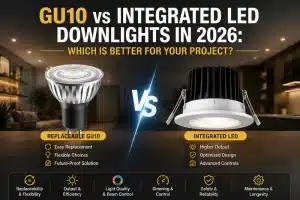
GU10 bulbs can still be used in large rooms, but usually as part of a multi-fixture layout. A few GU10 spotlights cannot replace a well-planned ambient lighting system. For buyers who need high-CRI accent lighting, the TECO GU10 product range is better treated as an accent layer, not the main large-room brightness solution.
Need help selecting the right LED bulb for a large commercial space? TECO provides OEM/ODM LED bulb solutions for distributors, lighting brands, contractors, and commercial projects. Buyers can send the fixture photos, room size, ceiling height, target brightness, and voltage market for a practical recommendation before sampling.
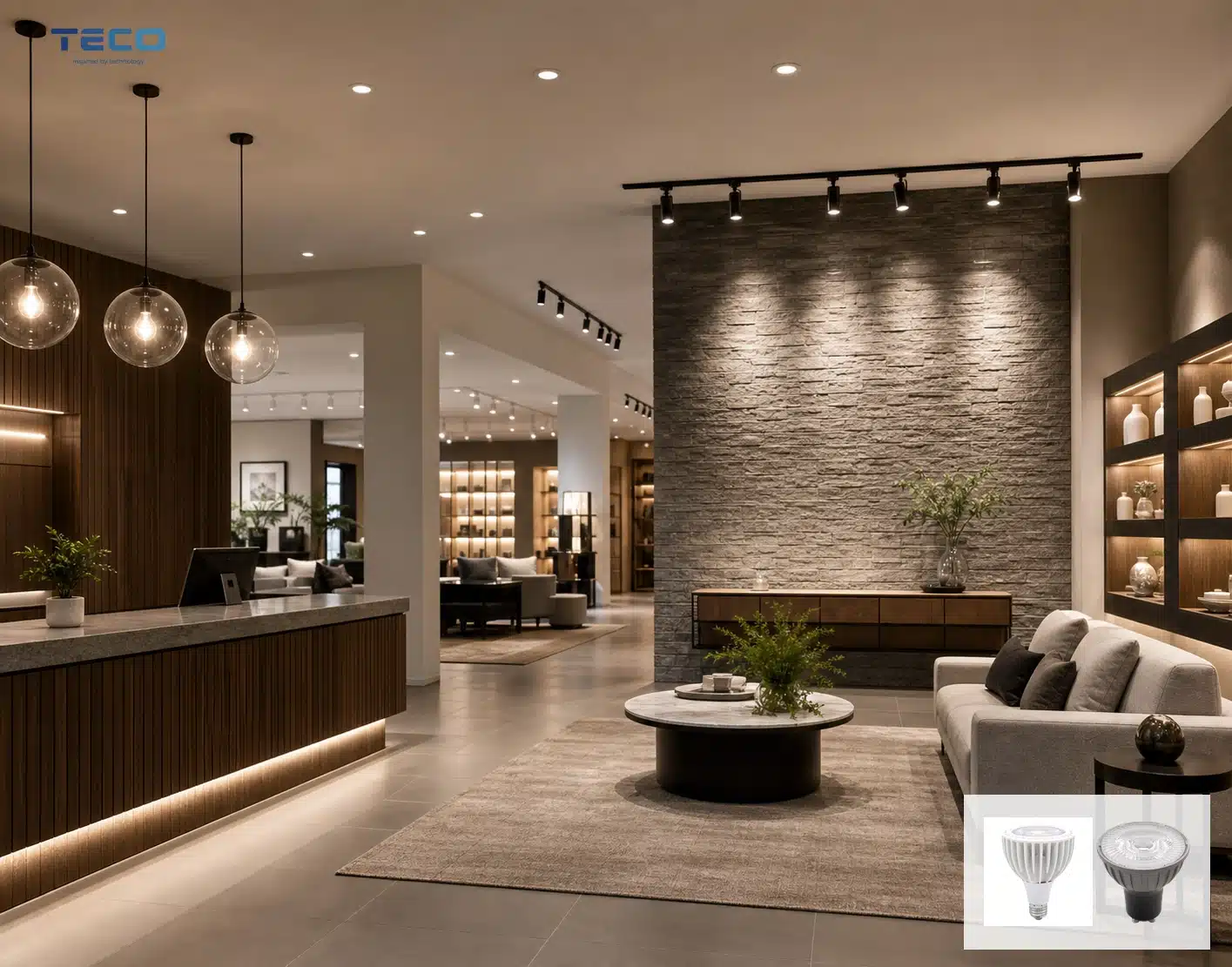
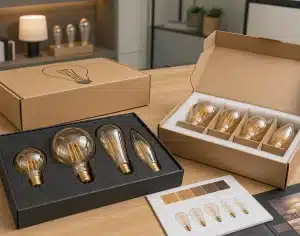
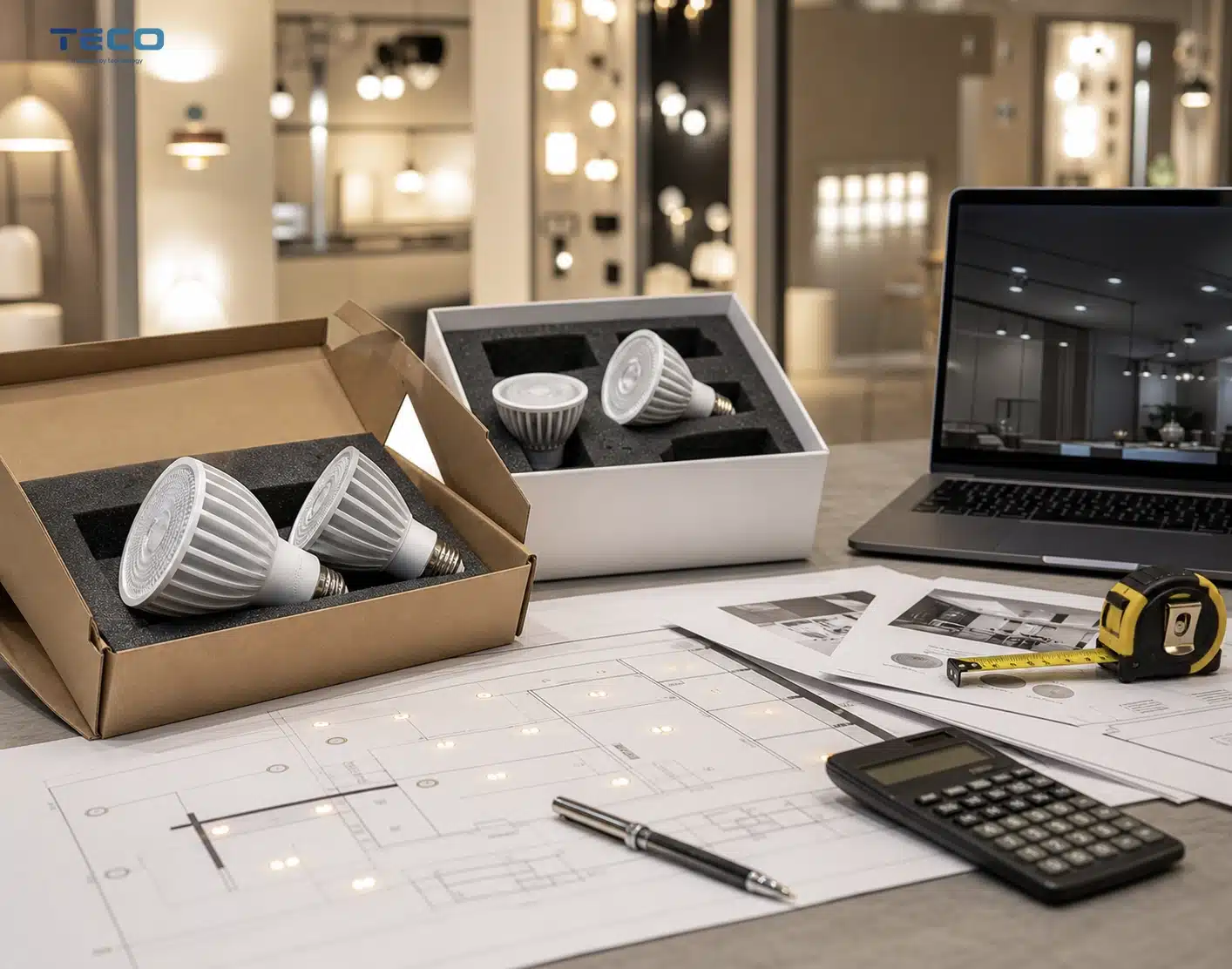
G120 globe bulbs and PAR30 spotlights for large room lighting selection
What Makes an LED Bulb Truly Affordable?
The cheapest purchase price is not always the lowest project cost. In large rooms, the wrong bulb can increase labor, returns, energy use, visual discomfort, and replacement frequency. For B2B buyers, affordability should be evaluated across the full use cycle.
Important cost factors include:
| Cost Factor | Pourquoi c'est important |
|---|---|
| Lumens per watt | Higher efficacy can reduce electricity cost |
| Useful beam spread | Light must reach the occupied area, not just the ceiling |
| Rendu des couleurs | Poor color quality can reduce retail or hospitality value |
| Durée de Vie | Fewer replacements reduce labor and maintenance cost |
| Fixture compatibility | Wrong bulb shape or heat condition can shorten life |
| Compatibilité avec la gradation | Incompatible dimming creates flicker, buzzing, and complaints |
| Batch consistency | Mixed CCT or brightness creates an unprofessional result |
| Packaging and shipping | Large orders need stable supply and export handling |
ENERGY STAR explains that brightness is measured in lumens rather than watts, and that efficient LED products can provide similar brightness using far less power than incandescent bulbs.1 The U.S. Department of Energy also notes that buyers should compare light bulbs using lumens because watts measure energy use, not brightness.5
For example, a buyer might compare two large-room options:
| Option | First Impression | Real Project Question |
|---|---|---|
| Low-price low-lumen bulb | Cheap per unit | Will too many lamps be needed to reach the target brightness? |
| High-lumen bulb | Higher unit cost | Does one lamp reduce quantity, wiring points, and maintenance? |
| High-CRI bulb | Slightly higher cost | Does it improve furniture, food, retail, or hospitality appearance? |
| Dimmable bulb | More flexible | Is the dimmer actually compatible with the LED driver? |
This is why "affordable LED light bulbs for large rooms" should be interpreted as value engineering, not bargain hunting. A better bulb may cost more per piece but less per useful lumen, less per year, or less per completed project.
How to Reduce LED Lighting Costs in Large Spaces
Reducing LED bulb cost in a large room does not always mean choosing the lowest unit price. In many projects, better cost control comes from reducing waste: too many fixture points, over-specified color quality, mismatched dimming, repeated sample changes, or inconsistent products across batches.
For commercial buyers, the most effective cost controls are:
| Cost-Control Method | Practical Benefit |
|---|---|
| Standardize fewer bulb models | Easier stock management and replacement |
| Choose enough lumens, not maximum lumens | Avoids paying for brightness the room does not use |
| Match CRI to the application | Ra90 where appearance matters; Ra80 may be enough for utility areas |
| Use the right bulb shape | Reduces fixture mismatch and installation complaints |
| Avoid unnecessary dimming | Non-dimmable bulbs can be more economical where simple on/off is enough |
| Test before bulk orders | Prevents returns, rework, and mixed-site performance |
| Buy by project batch | Improves CCT and brightness consistency across the room |
One common purchasing mistake is paying for the "highest specification" everywhere. A hotel lobby may justify Ra90 decorative bulbs and accent spotlights, while a storage room may not. A retail showroom may need higher color quality near products, while back corridors may need reliable brightness at lower cost.
For high-ceiling commercial spaces, high-lumen LED bulbs and directional spotlights are often more cost-effective than simply increasing fixture quantity. For wholesale LED bulb projects, this kind of model selection can reduce SKUs, simplify stocking, and make replacement planning easier across multiple sites.
Another mistake is under-buying brightness and then solving the problem with extra fixtures. If a large room needs more useful light, one suitable high-lumen bulb in the right fixture may be cheaper than adding new wiring points. But if the room needs uniformity, multiple moderate-output bulbs may still be more economical than one oversized lamp that creates glare.
Cost-effective LED bulb selection for large commercial rooms
Brightness, Color Temperature and CRI for Large Rooms
Large rooms often need stronger light output, but brightness alone does not make the space comfortable. A large room with cold, flat, high-lumen light can feel harsh. A large room with warm but underpowered bulbs can feel dim and tiring. The right specification balances brightness, color temperature, and color rendering.
Color temperature should follow the room function:
| Space Type | Suggested CCT Direction | Raison |
|---|---|---|
| Living rooms and lounges | 2700K-3000K | Warm, comfortable, relaxed atmosphere |
| Restaurants and hospitality | 2700K-3000K | Food, wood, fabric, and skin tones feel more inviting |
| Retail showrooms | 3000K-4000K | Better product visibility while maintaining comfort |
| Offices and utility rooms | 3500K-4000K | Clearer task visibility |
| Garages and storage areas | 4000K-5000K | Practical visibility and cleaner appearance |
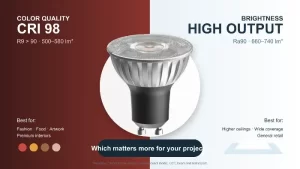
CRI is especially important in large rooms where surfaces and products are visible from multiple angles. Ra80 may be acceptable for simple utility spaces. Ra90 is often a better choice for hospitality interiors, retail rooms, decorative pendants, furniture showrooms, and spaces with wood, fabric, food, or skin-tone presentation.
The G120 globe product mentioned earlier is listed with Ra90, which makes it more suitable for visible decorative interiors than a basic low-CRI bulb.3 For stronger directional lighting, PAR30 products with CRI80 or CRI90 options allow buyers to match cost and color quality to the project level.4
For large rooms, buyers should also avoid mixing different CCT batches casually. A 3000K lamp from one batch and a 4000K lamp from another may both be "white light," but they can make the room look patchy. This is especially visible in hotel lobbies, retail showrooms, and restaurants with repeated fixtures.
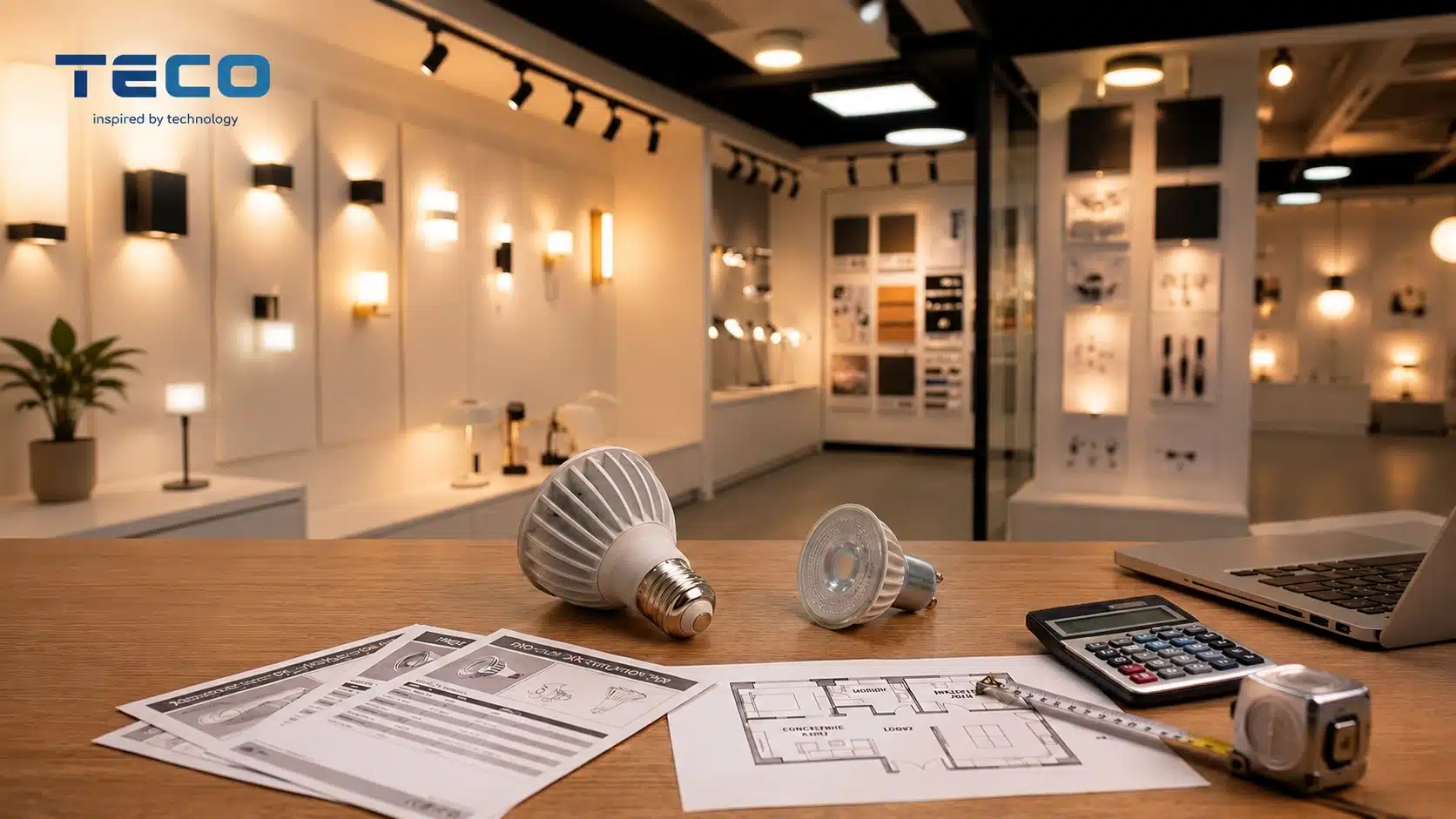
Large room LED bulb color temperature and CRI comparison for hospitality interiors
When to Use One High-Lumen Bulb vs Multiple Lower-Lumen Bulbs
Many buyers ask whether one powerful LED bulb can light a large room. Sometimes it can help, but it is rarely the whole answer. The room shape, ceiling height, fixture location, and shade design decide whether the brightness is useful.
One high-lumen bulb may work when:
- the fixture is central and open
- the ceiling height is moderate
- the room does not need visual zoning
- glare can be controlled
- the bulb has enough thermal space
- the light distribution matches the room
Multiple lower-lumen bulbs are often better when:
- the room is long or irregular
- corners are dark
- the space has separate seating, dining, or display areas
- ceiling height is high
- one lamp would create glare
- the design needs more even coverage
In large rooms, uniformity matters. A 2000 lm bulb in the wrong fixture may look bright directly below it and weak at the edges. Four 800 lm lamps placed correctly may feel more comfortable than one 3000 lm lamp in the center.
For pendant clusters, large globe bulbs such as G120 can provide decorative ambient output while keeping the bulb visible. For a high ceiling or feature wall, a PAR30 spotlight can direct stronger light where it is needed. For recessed or track systems, GU10 lamps can create layered accents, but they should not be expected to replace the entire ambient layer unless the fixture count is high enough.
This is also where affordability becomes design-dependent. A cheaper bulb may require more sockets, more installation labor, or more future replacement. A more suitable bulb may reduce the number of fixtures or improve perceived brightness without increasing energy use too much.
Can GU10 LED Bulbs Work in Large Rooms?
GU10 LED bulbs can work in large rooms, but they should usually be used for layered lighting rather than as the only light source. Their strength is controlled directional light. That makes them useful for recessed lighting layouts, track lighting, wall washing, artwork, retail displays, hotel feature walls, and seating zones where focused light is needed.
In a large room, GU10 lamps are often most effective when paired with ambient lighting. For example, G120 globe bulbs or ceiling fixtures can provide broad room brightness, while GU10 spotlights add visual focus on shelves, counters, artwork, or architectural details. This creates a more comfortable result than trying to make every lamp do the same job.
For project buyers, the key questions are:
- How many GU10 fixtures are installed across the room?
- Is the goal ambient brightness or accent lighting?
- What beam angle is required for the ceiling height?
- Is high CRI needed for retail, hospitality, or display areas?
- Does the dimming system match the selected GU10 driver?
For large rooms with many recessed or track heads, selected TECO GU10 products can support accent layers while G120 or PAR30 products handle broader brightness needs. This keeps the article’s main topic on affordable large-room bulbs while still giving buyers a natural path into GU10 product selection.
Buying Checklist for B2B Projects
Before ordering affordable LED bulbs for large rooms, project buyers should prepare more than a wattage target. The supplier needs enough information to recommend the right bulb type and avoid mismatched products.
| Checkpoint | What to Confirm |
|---|---|
| Room size | Length, width, ceiling height, and usage |
| Fixture type | Pendant, open fixture, recessed can, track, wall light, floor lamp |
| Type de base | E26, E27, GU10, PAR, or other lamp holder |
| Target brightness | Total lumen requirement or current lamp performance |
| Distribution de la lumière | Omnidirectional, wide beam, or directional spotlight |
| TDC | 2700K, 3000K, 4000K, or 5000K depending on room function |
| CRI | Ra80 for utility; Ra90+ for hospitality, retail, and decorative interiors |
| Gradation | Confirm dimmable or non-dimmable circuit before ordering |
| Fixture heat | Check enclosed shades, deep fittings, or limited airflow |
| Voltage market | 120Vac, 220-240Vac, or dual-market requirement |
| Quantity | Sample order, distributor stock, or project batch |
| Certification | CE, RoHS, LM80, WEEE, or destination-market documentation |
For TECO inquiries, buyers can send room photos, fixture photos, base type, current bulb wattage and lumen output, target CCT, dimming requirement, and estimated order quantity. For large-room ambient lighting, the G120 series may be considered when visible globe fixtures or pendant lighting are used. For stronger directional lighting, PAR30 or selected GU10 options may be reviewed depending on the fixture and beam requirement.
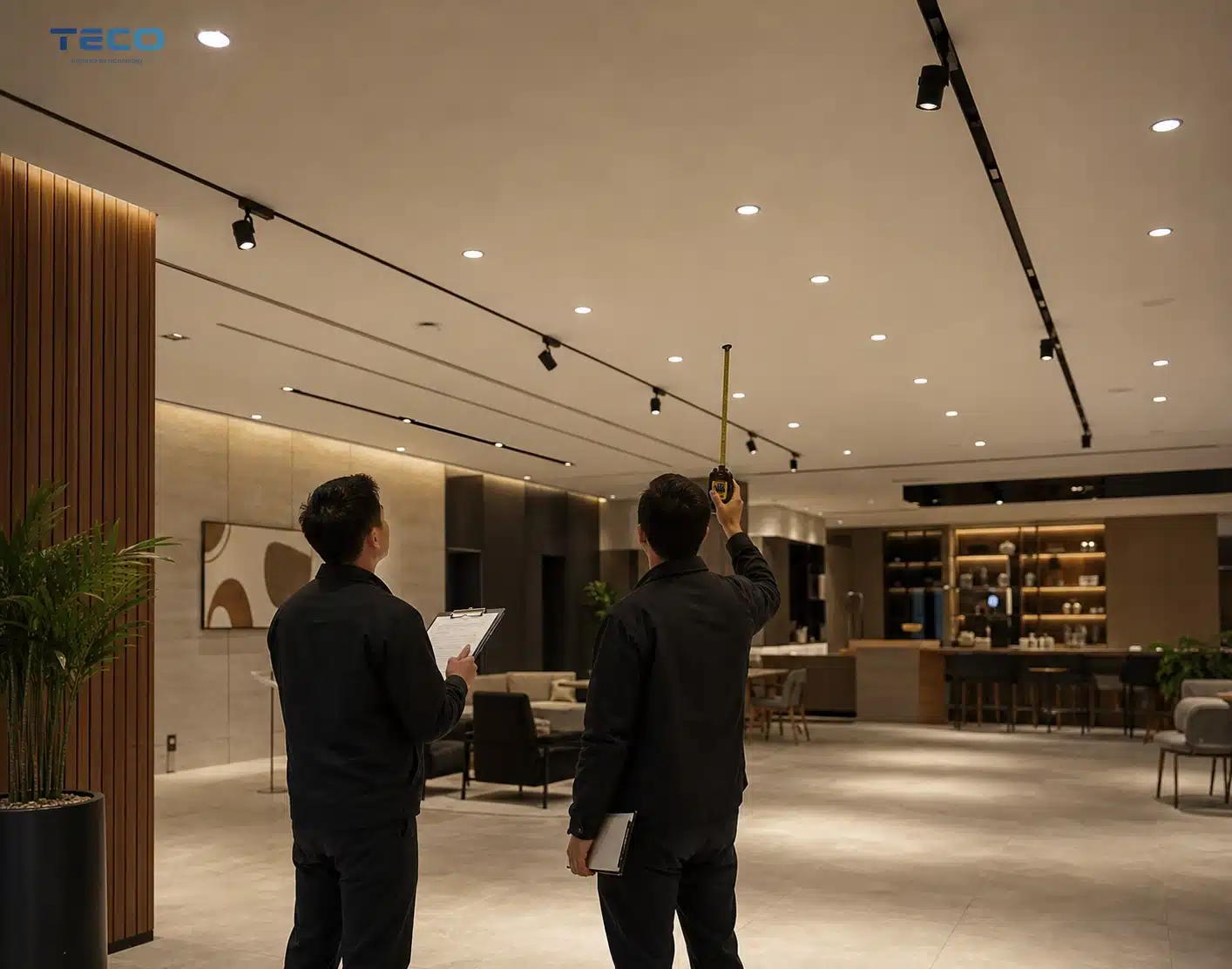
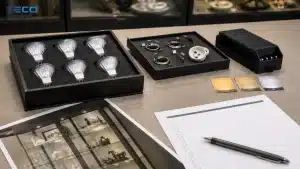
B2B buyer checklist for affordable LED bulbs in large rooms
Conclusion
Affordable LED light bulbs for large rooms should be selected by useful brightness, fixture match, efficiency, color quality, and long-term maintenance cost. A cheap bulb that is too dim, poorly matched to the fixture, or inconsistent across a project is not truly affordable.
Start with lumens, not wattage. Then decide whether the room needs omnidirectional ambient light, directional spotlighting, decorative visible bulbs, or a layered layout. For large pendants and decorative ambient lighting, TECO’s G120 globe LED bulbs may be a practical option. For stronger directional zones, PAR30 or GU10 products may be more suitable.
The best specification is not always the brightest bulb. It is the bulb that gives the room enough comfortable light, matches the fixture, controls energy cost, and reduces replacement risk across the whole project.
Notes de bas de page
ENERGY STAR explains that brightness is measured in lumens rather than watts and that LED bulb packaging should be compared by light output, not only wattage equivalent. See ENERGY STAR Learn About Brightness. ↩ ↩
The Illuminating Engineering Society provides lighting standards and recommended illuminance criteria for many application types, which is why professional lighting projects should use application-specific design values. See IES Lighting Library Standards Collection. ↩
Product details are based on TECO’s G120 LED Globe Bulb E26/E27 10W-20W Non-Dimmable Ra90 page, including 10W / 15W / 20W options, up to 2000 lm, Ra90, omnidirectional distribution, E26/E27 base, and 120/220Vac operation. See TECO G120 LED Globe Bulb E26/E27 10W-20W. ↩ ↩
Product details are based on TECO’s PAR30 E27 LED spotlight page, including E27 base, 20 degree / 30 degree beam options, high-lumen variants around 1900-3200 lm depending on model, and CRI80 / CRI90 options. See TECO PAR30 E27 Dimmable LED Spotlight Bulb. ↩ ↩
The U.S. Department of Energy notes that lumens measure visible light output while watts measure energy use, so buyers should compare LED bulbs by lumens when selecting brightness. See DOE Purchasing Energy-Efficient Light Bulbs. ↩