Come Verificare la Qualità delle Luci LED Prima di Ordini all'Ingrosso dalla Cina?
For B2B buyers, LED light quality should not be judged only by appearance, wattage, or unit price. A sample may look acceptable, but bulk production can still fail if dimming compatibility, color consistency, driver quality, certification documents, packaging, and BOM1 control are not verified before mass production.
This LED light quality inspection checklist is designed for buyers who source bulk LED lights from China and need a practical way to evaluate samples, documents, packaging, and production consistency before shipment.
For importers, distributors, lighting brands, contractors, and project buyers, the real cost of poor LED quality is rarely limited to the lamp itself. Returns, relabeling, installer complaints, project delays, and customer claims can cost far more than saving a few cents on the unit price.

LED light quality inspection before bulk orders from China
What Should Buyers Check Before Bulk LED Orders from China?
Before placing bulk LED light orders from China, buyers should check four things together: the approved sample, the written specification, the supplier’s production standard, and the documents used for export or resale. If these four do not match, the order is not fully controlled.
A common mistake is to approve a sample based only on brightness and appearance. In real B2B procurement, the buyer also needs to confirm whether the same LED chip, driver, lens, housing, label, packaging, and certification version will be used for mass production.
At a minimum, buyers should confirm:
- Product model, wattage, voltage, CCT2, CRI3, and beam angle
- Dimming type and compatible dimmer or control system
- Approved sample and final datasheet
- Driver and key component requirements
- Certification documents for the target market
- Label, barcode, carton mark, and OEM packaging files
- Aging test, inspection method, warranty, and replacement process
The purpose is not to make purchasing complicated. The purpose is to prevent a situation where the sample looks acceptable, but the delivered goods are different in performance, compliance, or packaging.
Why Is LED Light Quality Inspection Important Before Bulk Orders?
Bulk quality inspection matters because many LED lighting problems do not appear during quotation. They appear after the goods are packed, shipped, installed, resold, or used in a project.
For a wholesaler, poor quality may become return handling and stock loss. For a lighting brand, it may become customer complaints and damaged reputation. For a contractor, it may become site rework, delayed handover, or additional labor cost. In project lighting, replacing a failed lamp in a hotel ceiling, retail display, museum, showroom, or high-rise corridor is not a small product issue — it is a service and access issue.
Low-price sourcing also creates hidden risks. A supplier may keep the same product appearance but change the driver, capacitor, LED bin, housing material, lens supplier, or packaging version to reduce cost. These changes may not be visible in photos, but they can affect dimming, lifetime, color consistency, certification validity, and customer acceptance.
That is why a bulk LED light order should not be approved only by appearance, wattage, or unit price. Buyers need to verify whether the sample, datasheet, certification documents, and mass production standard are consistent.
What Should Buyers Check in LED Light Samples?
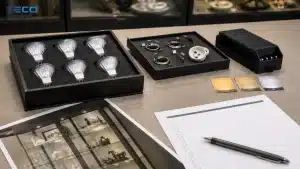
LED light sample testing should be more detailed than simply checking whether the lamp turns on. A sample should be treated as the reference standard for the entire shipment.
Start with the physical structure. Check the housing, lamp base, lens, diffuser, reflector, soldering points, heat sink, and overall assembly. The lamp should feel solid and well assembled. For GU10, MR16, MR11, PAR, AR111, and ES111 spotlights, base accuracy, lens alignment, and heat dissipation structure are especially important.
Next, compare the lamp marking with the datasheet and purchase requirement. The wattage, voltage, CCT, CRI, dimming type, beam angle, model number, and safety marks should match. A small mismatch at sample stage can become a serious problem when thousands of pieces are labeled and shipped.
Buyers should also test multiple samples from the same model. One good sample is not enough. A reliable LED light sample test should check whether different samples have consistent appearance, startup behavior, color, brightness, and dimming response.
| Sample Check Item | Cosa verificare | Perché è importante |
|---|---|---|
| Housing and base | Material feel, finish, cap alignment, pin quality | Affects installation and durability |
| Lens or diffuser | Clarity, fixation, optical centering | Affects beam shape and appearance |
| Label information | Wattage, voltage, CCT, CRI, model, marks | Must match order and documents |
| Startup test | Delay, flicker, unstable ignition | Reveals basic electrical issues |
| Noise check | Buzzing from driver or lamp | Important for hotels, offices, homes |
| Multi-sample consistency | Same output, color, build, label | Indicates production control |
For private-label or OEM orders, the approved sample should include the final lamp, label, packaging, barcode, and instruction version. Keep one approved sample for comparison before shipment.
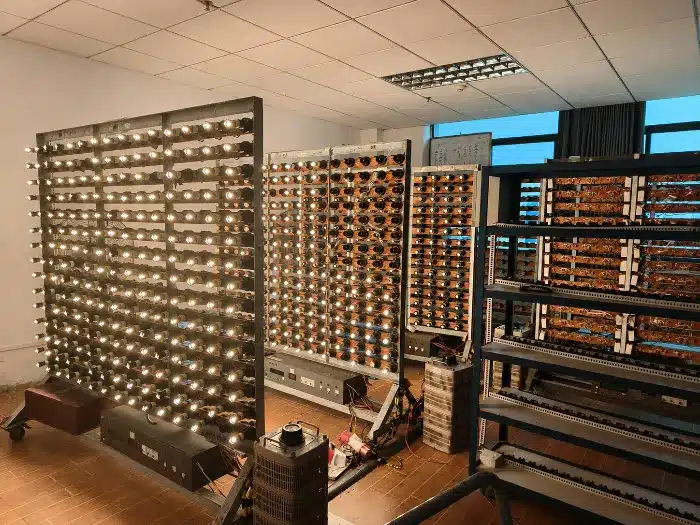
LED sample inspection checklist for importers and distributors
How to Test Dimming, Flicker and Electrical Performance?
Dimming is one of the most common failure points in LED bulb and spotlight orders. A product marked as "dimmable" does not automatically work smoothly with every dimmer or control system.
For Triac dimming, buyers should test the lamp with the intended leading-edge or trailing-edge dimmers. The lamp should dim smoothly from high brightness to low brightness without visible flicker, sudden dropout, unstable brightness, delayed startup, or buzzing noise. Low-end dimming is especially important — many products perform stably at 100% output but fail below 20% or 10%.
For DALI, 0-10V, smart control, or dim-to-warm projects, the test should match the real project control system. A product may pass a basic bench test but still fail during commercial installation if the driver is not compatible with the selected control interface.
| Dimming Test Item | What Buyers Should Check | Risk if Ignored |
|---|---|---|
| Full dimming range | Smooth output from high to low | Flicker, dropout, poor scene control |
| Low brightness stability | No flashing or sudden shutoff | Complaints in hotels and residences |
| Startup under dimmed state | Lamp starts reliably at low setting | Site commissioning problems |
| Ronzio | No noise from lamp or dimmer | Rejection in quiet spaces |
| Multi-lamp circuit | Lamps dim evenly together | Uneven lighting across rooms |
| Control system match | Driver matches Triac, DALI, 0-10V, or smart system | Integration delays |
For dimmable LED bulbs and spotlights, buyers should work with a supplier that can test drivers, dimmers, beam angles, and batch consistency before mass production. This is especially important for hospitality, residential, retail, and commercial project lighting.
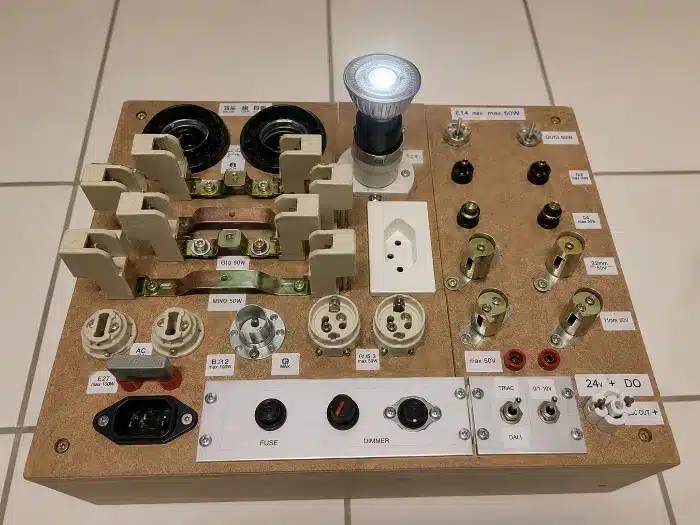
LED dimming compatibility test before mass production
How to Evaluate Light Quality: CRI, CCT, Lumen Output and Beam Angle?
Light quality should not be reduced to one number. Buyers need to evaluate CRI, CCT, color consistency, lumen output, wattage, beam angle, glare control, and actual target illumination together.
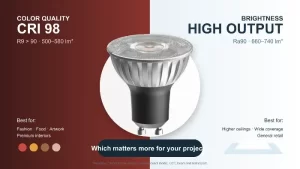
CRI affects how accurately objects, fabrics, food, artwork, interiors, and merchandise appear under the light. CRI 80 may be acceptable for basic applications, but retail, hotels, museums, galleries, restaurants, and high-end residential projects often need CRI 90 or higher.
CCT affects the atmosphere of the space. Two lamps both labeled 3000K may still look different if LED bin control is weak. In a hotel corridor or retail display, even small color differences between lamps can make the project look inconsistent.
For spotlights, lumen output alone is not enough. A GU10 or MR16 spotlight with 560 lumens may perform very differently depending on beam angle, center beam intensity, and optical control. A 15-degree beam, 24-degree beam, 36-degree beam, and 60-degree beam are used for different lighting effects. Accent lighting, museum displays, hotel rooms, retail shelves, and residential spaces require different beam distributions.
Buyers should ask for photometric test reports, IES files when needed, CCT tolerance, CRI data, and SDCM4 information if color consistency is important. For lighting brands and project buyers, color consistency directly affects shelf appearance, interior atmosphere, product display, and customer satisfaction after installation.
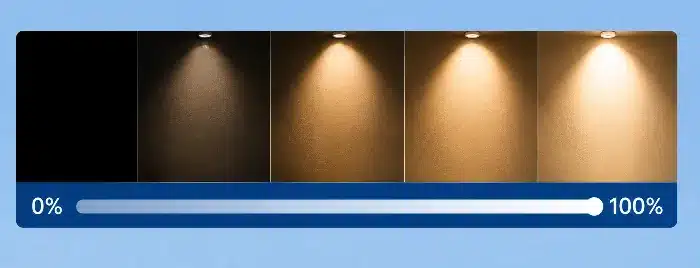
LED light quality CRI CCT lumen output beam angle inspection
Why Do Heat Management and Component Quality Affect LED Lifetime?
Lifetime claims such as 25,000 hours or 40,000 hours are meaningful only when supported by thermal design, driver quality, aging tests, and stable production control. Buyers should not accept printed numbers without understanding how the supplier controls reliability in production.
Many LED lamp failures are not caused directly by the LED chip. They may come from driver failure, capacitor aging, weak soldering, poor plastic materials, thermal stress, or inconsistent assembly. Compact products such as GU10, MR16, PAR, and small spotlight lamps have limited internal space, which makes heat management more challenging.
High-power products in small housings should be reviewed with extra care. Enclosed fixtures, recessed ceilings, warm installation environments, and poor ventilation can all increase operating temperature. If the driver or capacitor is not selected correctly, the lamp may pass a short sample test but fail earlier in real use.
Buyers should ask about:
- Housing material and heat dissipation structure
- Driver design and key component quality
- Capacitor temperature rating
- Soldering and internal assembly control
- Aging5 or burn-in test process
- Thermal performance under realistic conditions
- Whether the lamp is suitable for enclosed fixtures, if required
What Documents, Packaging and OEM Details Should Importers Verify?
For importers and distributors, product quality is not complete until documents, labels, and packaging are also correct. A lamp can work well electrically but still create problems if the certificate does not match the model, the barcode is wrong, the carton mark is inaccurate, or the private-label packaging does not follow the approved artwork.
Certification requirements depend on the target market and product category. Buyers may need to review CE, RoHS, ErP, UKCA, CB, UL, ETL, FCC, SAA, RCM, or other LED lighting certification documents. The key point is not whether the supplier can show a logo — the buyer should verify whether the certificate, test report, model number, voltage range, product category, and production version match the actual order.
| Verification Item | What to Check | Buyer Risk if Incorrect |
|---|---|---|
| Certificate and report | Model, voltage, wattage, product category, validity | Compliance and customs exposure |
| Datasheet | Specs match approved sample and purchase order | Sales claim mismatch |
| Product label | Wattage, CCT, CRI, voltage, marks, origin | Market and warehouse errors |
| Barcode and product code | Correct SKU and retail information | Resale and inventory problems |
| OEM packaging | Logo, artwork, language, warning labels | Relabeling cost and brand complaints |
| Carton mark | Item code, quantity, weight, destination | Logistics and receiving confusion |
| Manual or insert | Required warnings and local language | Regulatory or customer issues |
Packaging is part of product quality for wholesale and private-label LED orders. Weak cartons, wrong labels, missing warning text, or country-specific language errors can create customs issues, warehouse problems, retail complaints, or project delivery delays.
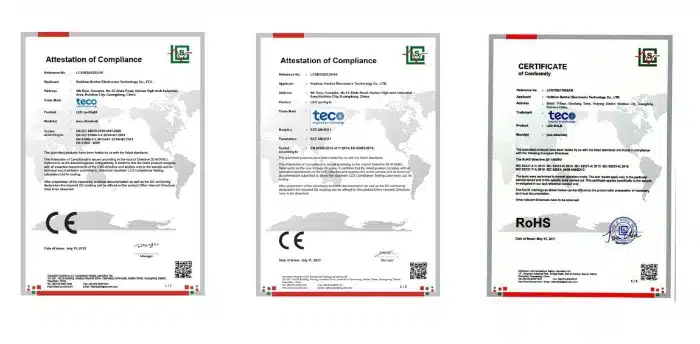
LED certification documents for bulk orders
What Final Checklist Should Buyers Confirm Before Mass Production?
The final pre-production review is the last point where buyers can control risk at a relatively low cost. Once materials are purchased, packaging is printed, and assembly starts, every unresolved detail becomes harder to correct.
Before confirming mass production, buyers should review the following checklist in writing:
| Final Checklist Item | Confirmation Requirement |
|---|---|
| Product specification | Model, wattage, voltage, base type, CCT, CRI, beam angle |
| Approved sample | Physical sample retained and signed off as shipment reference |
| Dimming compatibility | Tested with the intended dimmer or control system |
| Light performance | CRI, CCT, SDCM tolerance, lumen output, beam angle |
| Heat management | Housing, driver, component quality, aging test completed |
| Documents | Certificates, test reports, datasheets, Declarations of Conformity |
| Packaging | Inner box, outer carton, label, barcode, carton mark |
| OEM files | Logo, artwork, manual, product code confirmed |
| BOM consistency | Key components locked against the approved sample |
| Warranty terms | Replacement process, failure criteria, after-sales support |
A clear specification sheet is more important than a long conversation. Before bulk production, buyers should confirm all key parameters in writing, including approved samples, datasheets, packaging files, and certification requirements. If the supplier proposes any change in LED chip, driver, lens, housing, label, packaging, or certification version after approval, that change should be documented and re-approved before production continues.
How TECO Supports LED Bulb Quality Control for Wholesale and OEM Orders
TECO is an LED bulb manufacturer in China with four production lines and dedicated quality control for dimmable LED bulbs and spotlight products. TECO supports distributors, wholesalers, lighting brands, contractors, and commercial lighting projects across Europe, the Middle East, North America, and Southeast Asia.
TECO supplies dimmable LED bulbs and spotlight bulbs including GU10, MR16, MR11, ES111, PAR, A-Series, and G-Series, along with LED drivers and lighting fixtures. Available options include Triac dimming, DALI, 0-10V, dim-to-warm, smart control, high CRI, and multiple beam angles. OEM and ODM customization is supported for private-label buyers and lighting brands.
For wholesale and project orders, TECO provides pre-production sample evaluation, BOM locking, dimmer compatibility testing, photometric data, and market-specific certification support including CE, RoHS, ErP, UKCA, and CB. Before production starts, TECO works with buyers to align the approved sample, written specification, and mass production standard — so what arrives matches what was approved.
If you are sourcing dimmable LED bulbs or spotlights for a wholesale, OEM, or project order, contact TECO to discuss product requirements, sample evaluation, and pre-production documentation before placing your order.
Conclusione
Checking LED light quality before bulk orders from China is not about finding small cosmetic defects after production. It is about controlling the approved sample, dimming performance, color consistency, heat management, certification documents, packaging accuracy, and BOM consistency before mass production starts.
For importers, distributors, lighting brands, wholesalers, contractors, and project buyers, a structured LED light quality inspection process can reduce returns, project complaints, relabeling costs, and delivery risks.
The practical conclusion is straightforward: buyers should work with an LED bulb manufacturer in China that understands dimming, optics, certification, OEM/ODM packaging, and batch consistency for real B2B supply — not just one that offers the lowest unit price.
Contact TECO to request samples, discuss specifications, or get pre-production documentation for your next LED bulb or spotlight order.
Note a piè di pagina
BOM: Bill of Materials, the controlled list of components and materials used to build the product. ↩
CCT: Correlated Color Temperature, the color appearance of white light, usually expressed in kelvin. ↩
CRI: Color Rendering Index, a measure of how accurately a light source renders colors. ↩
SDCM: Standard Deviation of Color Matching, a common way to describe color consistency between lamps. ↩
Aging test: A controlled operating period used to expose early failures before shipment. ↩