
TRIAC Dimming vs 0–10V Dimming: Key Differences, Compatibility & Applications
Introduzione
In commercial and hospitality lighting projects, dimming problems rarely appear during product selection. They surface during commissioning—when LED fixtures flicker, buzz, fail to dim smoothly, or shut down unexpectedly. At that stage, the cost is no longer theoretical. Replacing incompatible dimmers, rewiring control circuits, or changing drivers often means delayed handover, additional labor, and reputational risk for contractors and suppliers.
For B2B buyers, specifiers, and project contractors, the decision between TRIAC dimming and 0–10V dimming is not a matter of preference. It is a system-level choice that directly affects compatibility, scalability, long-term maintenance, and total project cost.
This guide explains how TRIAC vs 0–10V dimming really works with LED systems, where each method performs well, where problems typically occur, and how to select the right dimming approach for modern commercial applications.
Sintesi Esecutiva
- TRIAC dimming is widely used in legacy systems and simple retrofits but is sensitive to LED driver design, minimum load, and waveform distortion.
- 0–10V dimming offers stable, flicker-free control for commercial LED installations, especially where zoning, scalability, and integration with building systems are required.
- Most dimming failures are caused by system incompatibility, not product defects.
- Correct selection requires understanding load behavior, control wiring, and driver compatibility—before procurement.
How LED Dimming Actually Works (and Why It Fails)
Traditional dimming methods were designed for incandescent and halogen lamps, which behave as linear, resistive loads. LEDs are fundamentally different.
LED luminaires contain electronic drivers that convert AC power into controlled DC current. These drivers react differently to voltage changes, chopped waveforms, and control signals. When the dimmer and the driver are not designed to work together, common symptoms appear:
- Flicker at low dimming levels
- Audible noise (buzzing or humming)
- Limited dimming range
- Dropout or sudden shutoff
- Inconsistent performance between batches
Understanding these behaviors is essential when comparing TRIAC dimming vs 0–10V dimming for LED systems.
What Is TRIAC Dimming?

TRIAC dimming is a phase-cut dimming method that controls brightness by chopping part of the AC waveform. It is commonly used in wall-box dimmers and legacy installations.
Why TRIAC Is Still Widely Used
- Compatible with existing mains wiring
- Simple installation for retrofits
- Low initial cost
- Familiar to electricians and installers
These advantages explain why TRIAC dimming remains common in residential-style commercial spaces and renovation projects.
Why TRIAC Dimming Struggles with LEDs
LED drivers draw current in short pulses rather than continuously. When paired with TRIAC dimmers, this can cause:
- Misfiring at low loads
- Excessive inrush current
- Thermal stress on dimmer components
- Unstable dimming below certain thresholds
To mitigate these issues, TRIAC-compatible LED drivers often include:
- Bleed resistors
- Active phase detection
- Low-end trim adjustment
Even with these measures, performance varies widely depending on driver quality and system design.
What Is 0–10V Dimming?
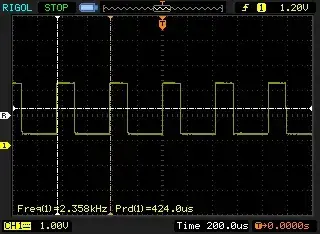
0–10V dimming uses a low-voltage control signal to adjust light output independently of the mains power. The AC supply remains constant while brightness is controlled by a separate signal pair.
Note: Implementations vary. Some systems use 0–10V (0V = minimum), others 1–10V (1V = minimum). Off-state behavior depends on driver design and switching strategy.
Why 0–10V Is Preferred in Commercial Projects
- Stable, flicker-free dimming
- Wide and predictable dimming range
- Minimal interaction with AC waveform
- Easy zoning and scalability
- Compatible with building management systems
Because control and power are separated, 0–10V dimming systems for LED are far less sensitive to load size and driver non-linearity.
Key Differences Between TRIAC and 0–10V Dimming
| Aspetto | TRIAC Dimming | 0–10V Dimming |
|---|---|---|
| Control method | AC phase-cut | Low-voltage analog signal |
| Utilizzo tipico | Retrofits, simple zones | Commercial & architectural projects |
| Flicker risk | Higher at low levels | Very low when properly wired |
| Minimum load sensitivity | Sì | No (signal-based) |
| Wiring complexity | Basso | Moderate (extra control pair) |
| Scalabilità | Limitata | Eccellente |
| Integration with BMS | Limitata | Forte |
This comparison highlights why commercial dimming system selection increasingly favors 0–10V in new builds.
Compatibility: The Real Risk Factor in Dimming Projects

Most project failures are not caused by dimmers or luminaires alone—but by their interaction.
Common Compatibility Pitfalls
- TRIAC dimmers paired with drivers not designed for phase-cut input
- Minimum load not met on TRIAC circuits
- Long 0–10V control runs without proper signal management
- Floating or incorrectly terminated control lines
- Mixed driver models within the same zone
Compatibility must be validated at system level, not product level.
Why Testing Matters
Industry standards emphasize system testing:
- IEEE 1789 for flicker considerations
- IEC 62386 for digital lighting interfaces
- UL 8750 for LED driver safety
- IEC 61000-3-2 for harmonic limits
Requesting dimmer compatibility lists or test reports is a best practice for B2B buyers.
When to Choose TRIAC Dimming
TRIAC dimming makes sense when:
- Retrofitting existing halogen or incandescent systems
- Wall-box dimmers must be reused
- Zones are small and simple
- Budget constraints limit control wiring changes
Recommended applications:
- Small commercial renovations
- Residential-style hospitality spaces
- Limited-zone lighting without future expansion plans
When to Choose 0–10V Dimming
0–10V dimming is the better choice when:
- Designing new commercial or hospitality projects
- Multiple zones or large fixture counts are required
- Flicker-free low-level dimming is critical
- Integration with BMS or smart controls is planned
Recommended applications:
- Offices and conference centers
- Hotels and hospitality projects
- Retail and architectural lighting
- Long-term installations requiring stability
Common Problems and How to Avoid Them
Problem 1: Flicker at Low Levels
Cause: Incompatible driver or control method
Solution: Match dimming protocol and verify minimum dimming performance
Problem 2: Audible Noise
Cause: Phase-cut stress on driver components
Solution: Use trailing-edge TRIAC or switch to 0–10V
Problem 3: Limited Dimming Range
Cause: Conservative driver design
Solution: Specify required minimum dimming level during procurement
Problem 4: Zone Inconsistency (0–10V)
Cause: Signal voltage drop or wiring errors
Solution: Follow Class 2 wiring practices and proper termination
Buyer Decision Checklist (Before Quoting or Ordering)
Before selecting TRIAC vs 0–10V dimming, confirm:
- Dimmer brand and model
- Number of fixtures per circuit
- Driver dimming interface
- Required minimum dimming level
- Control wiring distance
- Future expansion or zoning needs
This checklist alone prevents most commissioning failures.
Domande frequenti
Can TRIAC dimming work reliably with LEDs?
Yes, but only with compatible drivers and correct load conditions.
Is 0–10V always better?
Not always. It offers better stability but requires additional wiring and planning.
Do I need separate switching with 0–10V?
Often yes. Many systems require a switched hot in addition to the control signal.
Conclusion: Business Value
Choosing the right dimming method is not about technology preference—it is about risk management, scalability, and lifecycle cost. TRIAC dimming remains useful for simple retrofits, but 0–10V dimming delivers superior reliability and control for modern commercial LED projects.
Well-matched dimming systems reduce commissioning delays, minimize maintenance, and protect long-term project value.
Teco supports B2B buyers, contractors, and specifiers with dimmable LED solutions designed for real-world compatibility.
We help with:
- TRIAC and 0–10V dimming selection
- Driver and dimmer compatibility review
- Pre-project system validation
- Stable supply for long-term programs
Email: [email protected]
Sito web: https://www.tecolite.com
Share your dimmer type, fixture count, and project requirements.
We’ll help you select a dimming solution that works on site—not just on paper.
Footnotes & References
- IEEE 1789 – Recommended Practices for Modulating Current in LEDs
https://standards.ieee.org/standard/1789-2015.html - IEC 62386 – Digital Addressable Lighting Interface
https://webstore.iec.ch/en/publication/63177 - IEC 61000-3-2 – Limits for Harmonic Current Emissions
https://webstore.iec.ch/en/publication/413



 English
  French
  German
  Italian
  Spanish
  Portuguese
  Arabic
  Russian
  Japanese
  Chinese