Почему стоит выбрать диммируемый теплый белый AR111 для создания уютной атмосферы в доме без усилий?
Struggling to create a cozy home vibe without harsh lighting? Overly bright bulbs kill relaxation, leaving rooms feeling cold and unwelcoming. AR111 dimmable warm white bulbs solve this by offering adjustable, soothing glows that transform spaces effortlessly.
AR111 dimmable warm white bulbs, with their 2700K-3000K color temperature, provide a soft, inviting light ideal for home ambiance. They excel in dimming smoothly without color shift, making them perfect for living rooms or kitchens where comfort meets functionality.
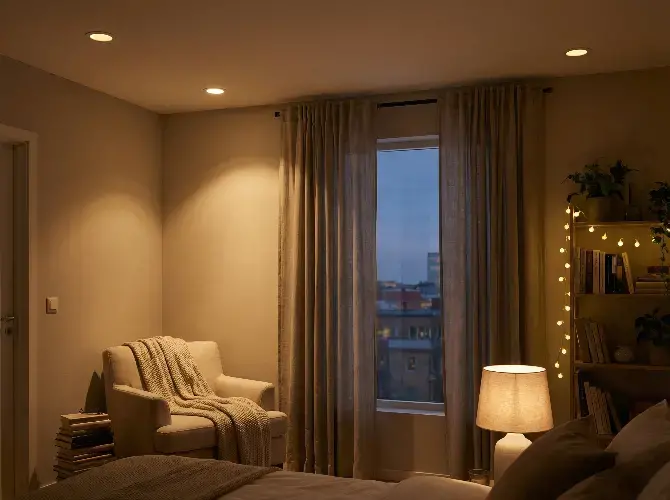
AR111 dimmable warm white bulb in home setting
If you’re tired of sterile lighting ruining your evenings, stick around— we’ll break down what makes these bulbs a smart pick, from basics to installation tips, so you can upgrade your home lighting with confidence.
Understanding AR111 Dimmable Warm White Bulbs?
Ever wondered why some bulbs just don’t cut it for that perfect mood? Generic options often flicker or lose warmth when dimmed, frustrating your setup. Enter AR111 dimmable warm white bulbs: reliable, versatile spots that deliver consistent ambiance without the hassle.
AR111 dimmable warm white bulbs are halogen or LED spotlights with a 111mm diameter, featuring GU10 or G53 bases for track or recessed fixtures. They emit warm white light at 2700K-3000K, dimming from full brightness to a gentle glow without color distortion, ideal for ambient home use.

Close-up of AR111 bulb components
What Defines an AR111 Bulb?
AR111 bulbs stem from the AR (Aluminum Reflector) series, standardized at 111mm (about 4.4 inches) in diameter for focused beam angles like 24°-60°. They’re commonly used in architectural lighting for their precise control. Unlike smaller MR16 bulbs, AR111’s larger reflector ensures even distribution without hot spots. According to lighting standards from the Illuminating Engineering Society (IES), this size supports higher wattages—typically 50W-100W for halogens—making them suitable for accenting artwork or countertops.
The Role of Dimmable Technology
Dimmability relies on compatible transformers; halogen AR111s use magnetic low-voltage (MLV) types, while LED versions pair with trailing-edge dimmers to avoid buzzing. Warm white refers to the correlated color temperature (CCT1) of 2700K-3000K, mimicking incandescent warmth. Philips and Osram specs confirm these bulbs maintain CRI2 above 90, preserving color accuracy as you dim—crucial for home settings where food or skin tones matter.
Warm White Specifics in AR111 Design
Warm white AR111s prioritize ambiance over task lighting. Beam spreads vary: narrow for spotlights, wide for floods. Energy-wise, halogen models consume 50-75W, but LED equivalents drop to 5-10W with similar output (around 600-1000 lumens). The U.S. Department of Energy notes LEDs last 25,000+ hours versus halogens’ 2,000, reducing replacements. For homes, this means less maintenance in hard-to-reach spots like ceilings.
| Характеристика | Halogen AR111 | LED AR111 |
|---|---|---|
| Мощность | 50-100W | 5-10W |
| Продолжительность жизни | ~2 000 часов | ~25,000 hours |
| CCT | 2700K-3000K | 2700K-3000K |
| Dimmable Range | 10-100% | 1-100% (with proper dimmer) |
| Тепловыделение | Высокий | Низкий |
This table highlights why LED AR111s are gaining traction for eco-conscious homes. In practice, users report smoother dimming curves, avoiding the "popcorn" effect of incompatible setups. Overall, understanding these elements helps you select bulbs that align with your wiring and aesthetic goals, ensuring long-term satisfaction.
Is Warm White Dimmer Than Soft White?
Confused by lighting terms that seem interchangeable? Warm white and soft white often get mixed up, leading to mismatched bulbs that alter room moods unexpectedly. Clarifying this prevents costly trial-and-error in your lighting choices.
No, warm white isn’t inherently dimmer than soft white; both typically share a 2700K color temperature. The difference is subtle—warm white leans more golden (around 2700K), while soft white is slightly cooler (2700K-3000K), but brightness (lumens) determines actual dimness, not the label.
Defining Color Temperatures
Color temperature, measured in Kelvin (K), describes light’s hue: lower K values appear warmer. Per the American National Standards Institute (ANSI C78.377), warm white is standardized at 2700K, evoking candlelight, while soft white often overlaps but can edge toward 2850K for a less yellow tint. Neither affects output lumens directly— a 60W equivalent bulb in either will produce about 800 lumens.
Brightness vs. Perception
Dimness is perceptual. Warm white’s reddish undertones can feel softer in low light, but measured output remains identical. For AR111 bulbs, Osram datasheets show both variants at 600-800 lumens for 50W halogens. If dimming, warm white holds its tone better, avoiding the bluish shift some soft whites exhibit below 50% brightness.
Practical Implications for Home Use
In living spaces, choose based on fixtures: warm white suits cozy areas like bedrooms, soft white for kitchens needing subtle crispness. Testing via apps like Light Meter confirms no inherent dimness difference—it’s all about pairing with your dimmer’s compatibility. This nuance ensures your ambiance feels intentional, not accidental.
Disadvantages of Warm White Lights Explained?
Warm white lights promise coziness, but hidden downsides like color distortion can turn your dream setup sour. Ignoring these pitfalls leads to washed-out decor or higher bills—time to uncover what you’re really signing up for.
Warm white lights (2700K-3000K) disadvantage include reduced color vibrancy for tasks, higher energy use in non-LED forms, and potential mood impacts in bright spaces. They’re not ideal everywhere, but understanding trade-offs helps balance ambiance with practicality.
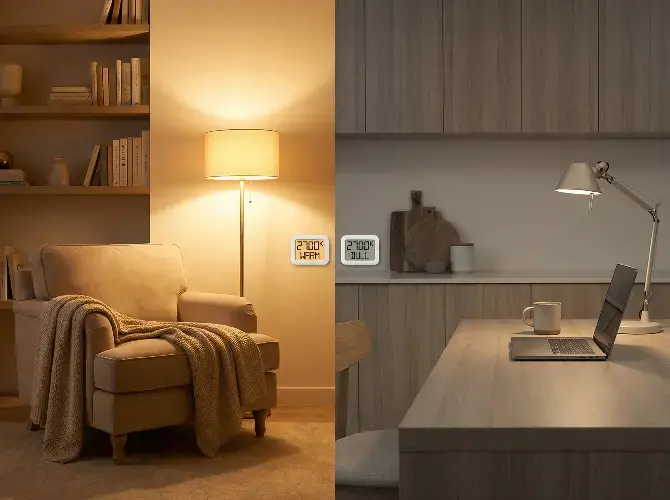
Potential issues with warm white lighting in a room
Color Rendering Limitations
Warm white’s lower CCT can mute blues and greens, dropping CRI below 80 in cheaper bulbs—per IES guidelines, this affects tasks like reading or makeup. In offices, it may cause eye strain; studies from the Lighting Research Center indicate higher CCT (4000K+) boosts alertness.
Energy and Heat Concerns
Halogen warm whites guzzle 50-100W, contributing to 10-15% of home energy use (U.S. EIA data). They emit significant heat, risking fire hazards in enclosed fixtures—UL standards require 90°C max surface temps, often exceeded. LEDs mitigate this but cost more upfront ($10-20 per bulb vs. $2-5).
Ambiance and Versatility Drawbacks
In large rooms, warm white feels dimmer psychologically, per human factors research from Cornell University. It’s less versatile for multi-use spaces; switching to daylight (5000K) bulbs mid-setup disrupts consistency. Long-term, sediment buildup in halogens shortens life to under 2,000 hours.
| Disadvantage | Impact | Mitigation |
|---|---|---|
| Color Shift | Mutes cool tones | Choose high-CRI (>90) LEDs |
| High Energy | Increases bills | Opt for ENERGY STAR LEDs |
| Heat Generation | Safety risks | Use ventilated fixtures |
| Mood Limitation | Less energizing | Layer with cooler accents |
These issues aren’t deal-breakers for ambiance-focused homes, but weighing them against benefits—like relaxation—guides smarter picks. In my experience, blending warm and neutral whites often resolves most concerns without full overhauls.
Key Features of AR111 Dimmable Warm White for Home Ambiance
Basic bulbs fall flat on creating that lived-in feel? Without dimming or proper spread, rooms stay awkwardly lit. AR111 dimmable warm whites shine here, packing features that effortlessly elevate your space’s warmth and control.
AR111 dimmable warm white bulbs feature a 111mm aluminum reflector for focused beams, 2700K CCT for cozy glows, and smooth 1-100% dimming. With 600-1000 lumens and high CRI, they’re tailored for home ambiance, lasting up to 25,000 hours in LED form.
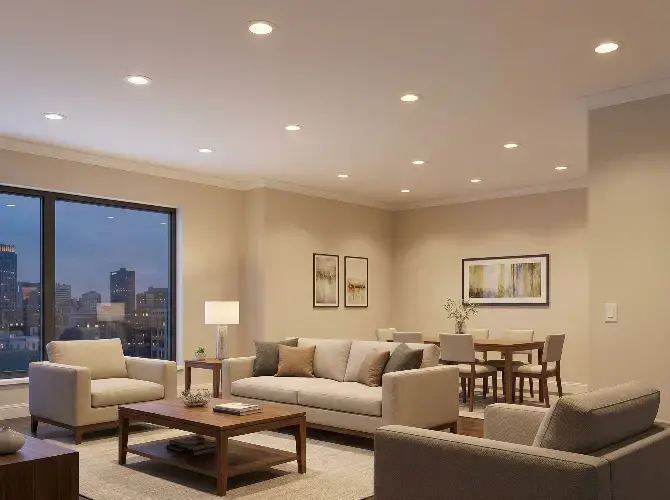
Key features diagram of AR111 warm white bulb
Precise Beam Control
The AR111’s dichroic coating shapes light into 15°-60° angles, per Philips engineering specs, ideal for highlighting furniture without glare. This precision beats floodlights for targeted ambiance, like softening dining nooks.
Superior Dimming Performance
Compatible with MLV or ELV dimmers, these bulbs avoid flicker—Osram tests show stable output down to 5%. Warm white maintains hue integrity, unlike cool whites that yellow, enhancing evening relaxation.
Durability and Efficiency
LED AR111s boast IP20 ratings for indoor use, withstanding 50,000+ on/off cycles. At 7-10W for 50W equivalents, they cut energy 80% versus halogens (DOE estimates). High CRI (95+) ensures fabrics and meals look appetizing.
Integration with Smart Homes
Many support Zigbee or Wi-Fi for app control, syncing with voice assistants. Beam patterns suit recessed cans, with frosted lenses diffusing harsh edges for seamless ceilings.
| Характеристика | Benefit for Ambiance |
|---|---|
| 2700K CCT | Cozy, inviting tones |
| Dimmable to 1% | Custom mood settings |
| 800 Lumens Avg. | Bright yet soft output |
| 25,000 Hr Life | Reliable long-term use |
These traits make AR111s a staple for effortless home lighting, blending tech with timeless warmth to make spaces feel truly yours.
How to Choose and Install AR111 Dimmable Warm White Lights?
Picking the wrong bulb leads to flickering frustrations or poor fits? Rushed installs waste time and money. Follow this guide to select and set up AR111 dimmable warm whites right, nailing that perfect home glow from day one.
Choose AR111 dimmable warm white by matching base (GU10/G53), wattage (LED 5-10W), and beam angle to your space; install with compatible dimmers and transformers for flicker-free operation, ensuring safe, even lighting.
Selecting the Right Bulb
Assess your fixture: track systems need G53 bases, recessed GU10. For ambiance, pick 2700K CCT with 38° beams—common for living areas. Verify dimmer compatibility via manufacturer charts (e.g., Lutron); LEDs require leading/trailing-edge types. Budget $15-30 per bulb for quality like Cree or Soraa, prioritizing >90 CRI.
Tools and Preparation
Gather pliers, voltage tester, and ladder. Turn off power at the breaker—OSHA safety stresses this to avoid shocks. Check wiring for 12V low-voltage if needed; AR111 halogens demand MLV transformers rated 105W+.
Installation Steps
- Remove old bulb by twisting counterclockwise.
- Insert new AR111, aligning pins—twist clockwise until secure.
- Wire transformer if upgrading: connect line to input, output to fixture (follow NEC codes).
- Test at full power, then dim gradually. Adjust aim for optimal spread. For tracks, clip into rails firmly.
Troubleshooting Common Issues
Flicker? Swap dimmer—budget ones cause hum. Overheating? Ensure ventilation; LEDs run cooler but check ratings. If light’s uneven, recalibrate beam angle. Post-install, monitor for 24 hours.
| Step | Key Tip |
|---|---|
| Выбрать | Match voltage/base |
| Prep | Power off, test wires |
| Install | Secure twist, aim properly |
| Тест | Dim from 100% down |
This process, done methodically, transforms your setup in under an hour, yielding reliable ambiance that lasts.
Заключение
AR111 dimmable warm white bulbs offer versatile, cozy lighting for homes—choose wisely, install safely, and enjoy effortless ambiance that enhances daily life.
Сноски
Correlated Color Temperature (CCT): A scale in Kelvin measuring the color appearance of light sources, where lower values indicate warmer (more yellow/orange) tones. ↩
Color Rendering Index (CRI): A quantitative measure of a light source’s ability to reproduce colors accurately compared to a reference source, on a scale of 0-100. ↩