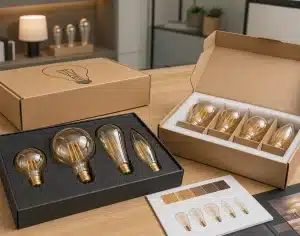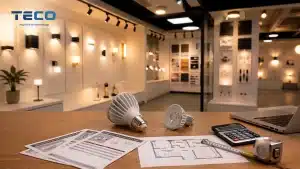
如何为展示柜选择MR11 GU4 LED灯泡
MR11灯泡可能适配GU4灯座,但在展示柜内仍可能因眩光、变压器不兼容、光束不均匀、热量积聚或显色性差而表现不佳。展示柜照明与普通天花照明不同:空间更小、灯具离产品更近,且顾客可能透过玻璃、亚克力、抛光金属、光面包装或浅层开放货架观看商品。.
这正是MR11 GU4 LED灯泡的用武之地。MR11是一种紧凑型反射式射灯规格,直径通常约35毫米,GU4指常用于低压MR11灯具的小型两针底座。相较于MR16,MR11尺寸更小,更适合空间有限的紧凑型灯具、小型橱柜、精品货架及装饰点缀照明。.
对于零售商、店铺装潢商、照明经销商及灯具制造商,核心问题不仅是灯泡能否点亮。真正关键在于MR11灯具是否能在实际展示环境(无论是玻璃展柜、化妆品壁架、酒店迷你吧龛位还是紧凑型装饰灯具)中产生适宜的光束、色彩、热效应及维护效果。.
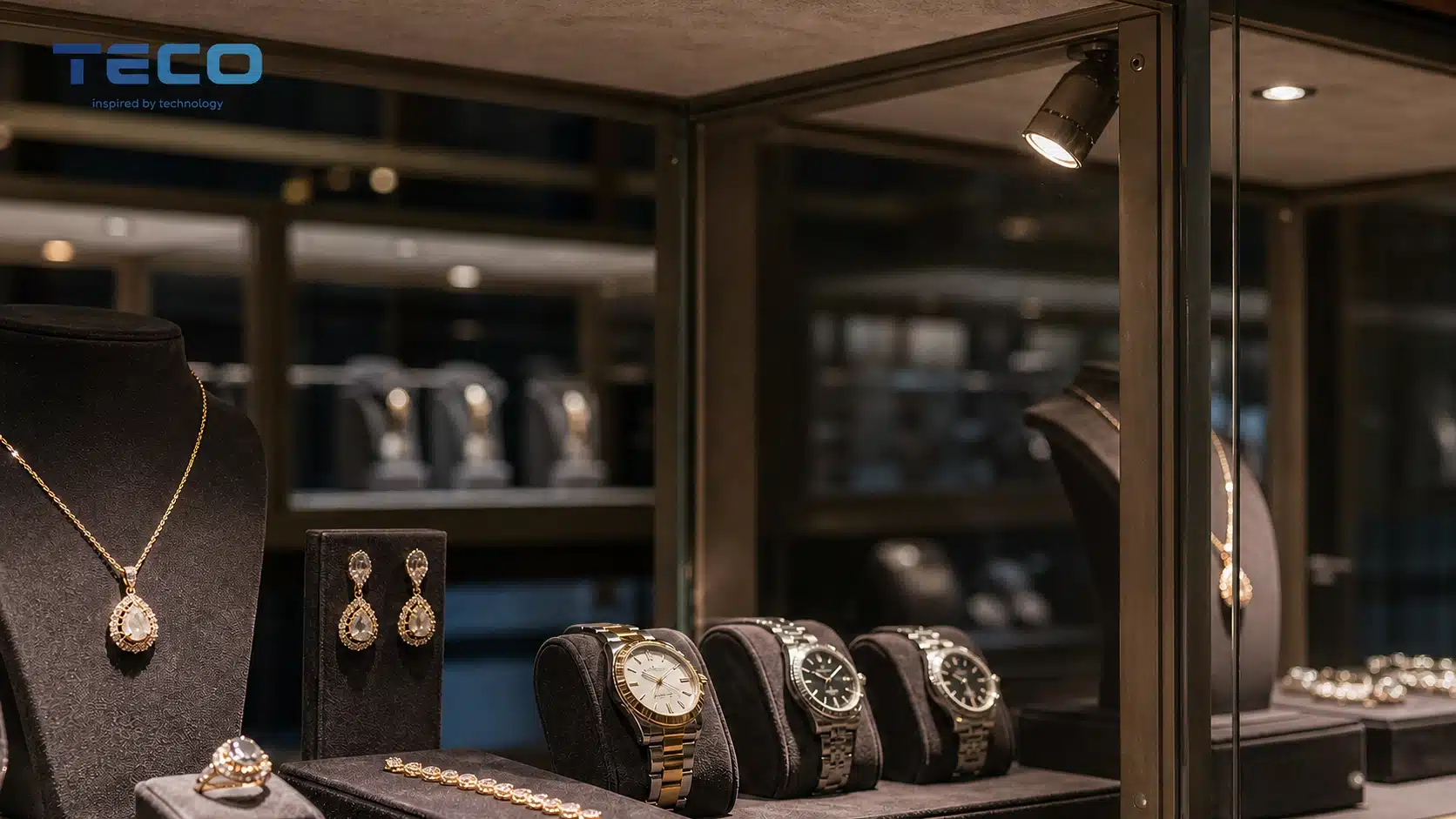
零售展示柜照明用MR11 GU4 LED灯泡
为何MR11 GU4 LED适用于紧凑型展示与小尺寸灯具
当安装空间过小无法容纳MR16或GU10灯具时,常选用MR11 LED灯泡。其紧凑尺寸可适配微型嵌入式灯具、小型可调射灯、橱柜照明灯头及装饰性展示配件。.
在紧凑型展示照明中,这种较小尺寸适用于:
- 珠宝托盘与手表展台
- 化妆品柜台
- 香水货架
- 博物馆商店陈列
- 酒类与特色食品展示柜
- 精品配件展示架
- 酒店迷你吧或装饰性展示壁龛
其优势不仅在于尺寸。MR11能从小型灯具位置产生聚焦光束,帮助设计师突出特定产品区域,而不会让整个橱柜、层板或壁龛光线泛滥。.
然而MR11并非通用解决方案。因其尺寸小巧,输出亮度通常低于MR16。适用于聚焦式重点照明,而非大面积基础照明。.
采购者应首先核验基础规格:
| 特点 | 典型MR11 GU4 LED灯泡 |
|---|---|
| 灯具规格 | 紧凑型反射式射灯 |
| 直径 | 约35毫米 |
| 基地 | GU4双针接口 |
| 电压 | 通常为12V低压 |
| 典型用途 | 微型重点与展示照明 |
TECO MR11产品类别 包含紧凑型GU4射灯选项,适用于重点照明、展示照明、轨道照明系统及装饰灯具。当前MR11产品示例包括:约3W至3.5W的12V GU4型号、35毫米紧凑灯体、CRI 90+显色指数、根据型号可选24度或36度光束角,以及可营造暖光、中性光或调光暖光展示效果的色温选择。.1 产品细节必须与实际灯具及项目需求相匹配。.
小型橱柜与货架中的光束角与产品可见度
光束角是MR11橱柜与层板照明中最关键的选择之一。在小型展示柜中,窄光束可突出单个物品,而宽光束则能为整个层板提供柔和的覆盖。购买者应综合考虑产品尺寸、层板深度、灯具距离及观看角度。.
| 光束角度 | 紧凑型展示最佳用途 |
|---|---|
| 15度/窄光束 | 小型珠宝、手表、单一特色产品 |
| 24度 | 聚焦式橱柜照明与紧凑型货架 |
| 36度 | 提供柔和覆盖的通用展示照明 |
| 60度或宽光束 | 对比度要求较低的宽幅货架覆盖 |
市场上常见的光束角选项包括15度、24度、36度及更宽的光束分布,具体取决于灯具与光学设计。不同型号的可用光束角有所差异,因此在采样前应确认TECO MR11的当前可选范围。.
对于珠宝和手表,窄光束能营造对比度和更强的高光效果。但若光束过窄,可能造成中心过亮而周边昏暗。对于化妆品和盒装商品,24度或36度通常更易掌控,因为陈列通常需要更均匀的产品可见度。.
常见误区是对所有货架使用相同光束角。浅层玻璃搁板、高挑展示柜与狭窄产品龛位可能需要不同的光束扩散范围。同一24度光束在150毫米距离形成的光斑远小于500毫米距离,因此选择光束角时必须考量灯具与产品的距离。光束角还需结合眩光评估:优秀的MR11橱柜照明方案应首先突出商品,而非灯具本身。.
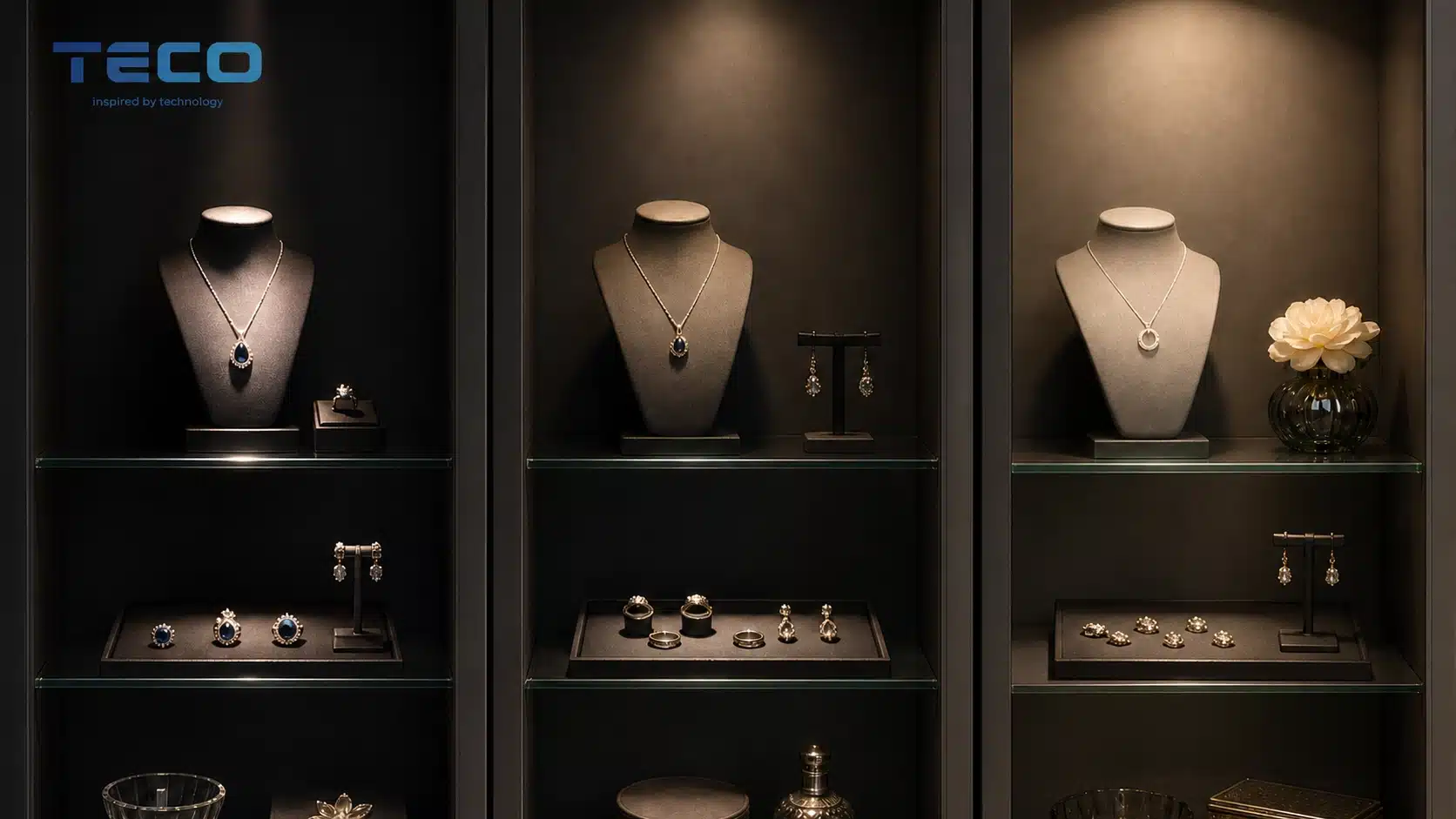
适用于珠宝与展柜照明的MR11射灯光束角
零售展示中的显色指数、色温与材质色彩
在紧凑型展示照明中,色彩品质至关重要,因为顾客常常需要评判细微的视觉细节。错误的光线会使宝石显得暗淡、化妆品色调失真、酒标失去立体感,或令皮革配件缺乏层次感。.
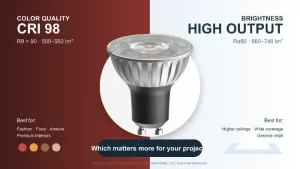
CRI是实用的起点。CRI90是大多数零售展示应用的基础标准。对于珠宝、化妆品、时尚配饰、艺术品及高端零售场景,采购者还应关注R9值、CCT一致性以及实际产品上的视觉效果。TECO的MR11 GU4系列包含高显色性CRI90+的展示照明型号,部分12V型号提供2700K、3000K、4000K等标称CCT选项,另含可调光至暖色版本(调光时色温从约3000K降至2200K)。.1
色温应契合商品特性与品牌氛围:
| CCT | 展示用途 |
|---|---|
| 2700K | Warm luxury, wood, leather, hospitality displays |
| 3000K | Jewelry, boutique retail, cosmetics with warm ambience |
| 4000K | Cleaner cosmetics counters, galleries, neutral product displays |
| 5000K | Cooler technical displays where crispness is preferred |
For a fast project review, buyers can start with this selection framework and then confirm the final result in a cabinet, shelf, or niche mockup:
| Display Type | 推荐光束 | Suggested CCT | Color Rendering Focus |
|---|---|---|---|
| Jewelry and watches | 15-24 degrees | 3000K-4000K | CRI 90+, good R9, and visual sparkle testing |
| Cosmetics | 24-36 degrees | 3000K-4000K | Skin-tone and packaging color accuracy |
| Wine, leather, wood | 24-36 degrees | 2700K-3000K | Warm material depth and label readability |
| General retail shelves | 36-60 degrees | 3000K-4000K | Even shelf visibility and batch consistency |
For premium displays, R9 and color consistency also matter. Red tones, skin-tone cosmetics, warm labels, and leather products can shift under weak red rendering. A high CRI number is helpful, but buyers should still test the lamp on the real products being sold. CIE has also noted that general CRI/Ra has limitations for evaluating some solid-state lighting sources, so visual mockup testing remains important.2
Batch consistency is another B2B issue. If one cabinet uses a slightly warmer batch and another uses a cooler batch, the same product may look different across the store. For retail chains, CCT binning and production consistency should be discussed before bulk orders.
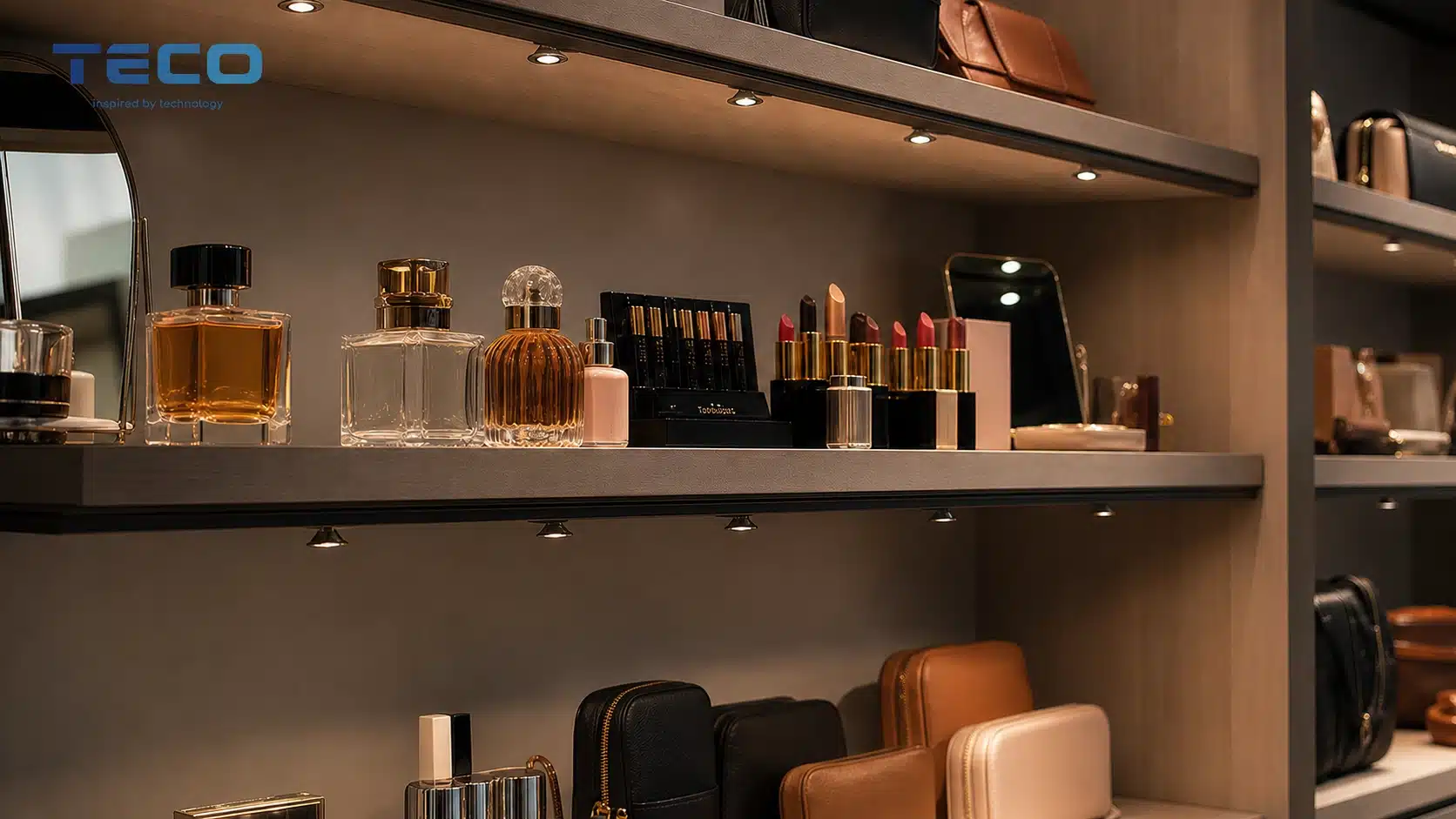
High CRI MR11 LED lighting for cosmetics and boutique open shelf display
Heat, Glare and Glass Reflection Risks
MR11 LED bulbs produce much less heat than halogen MR11 lamps, but compact display lighting can still create heat problems. The fixture is often small, the lamp may be close to the product, and airflow may be limited by glass, shelves, back panels, minibar joinery, or decorative trim.
Heat affects more than comfort. It can influence LED driver life, optical materials, product packaging, and the customer’s perception of quality. In a closed or semi-enclosed cabinet, even efficient LED lamps should be checked under real operating conditions. The U.S. Department of Energy notes that enclosed fixtures can trap heat and increase operating temperatures, which may affect LED performance and life expectancy.3
Glare is the second major risk. Glass doors, mirrored backs, polished metal, watch faces, jewelry trays, and glossy cosmetics packaging can reflect light directly toward the customer. If the MR11 is placed too close to the glass, the reflection may become more visible than the product.
Good display cabinet lighting usually requires:
- lamp position that avoids direct eye-level glare
- enough setback from glass and reflective surfaces
- suitable beam angle for shelf depth
- fixture shielding or trim where needed
- thermal space around the lamp
- sample testing with real merchandise
If a cabinet, shelf, or hotel display niche feels visually harsh, increasing lumen output is rarely the best answer. Better aiming, better shielding, and a more suitable beam angle often improve the display more effectively.
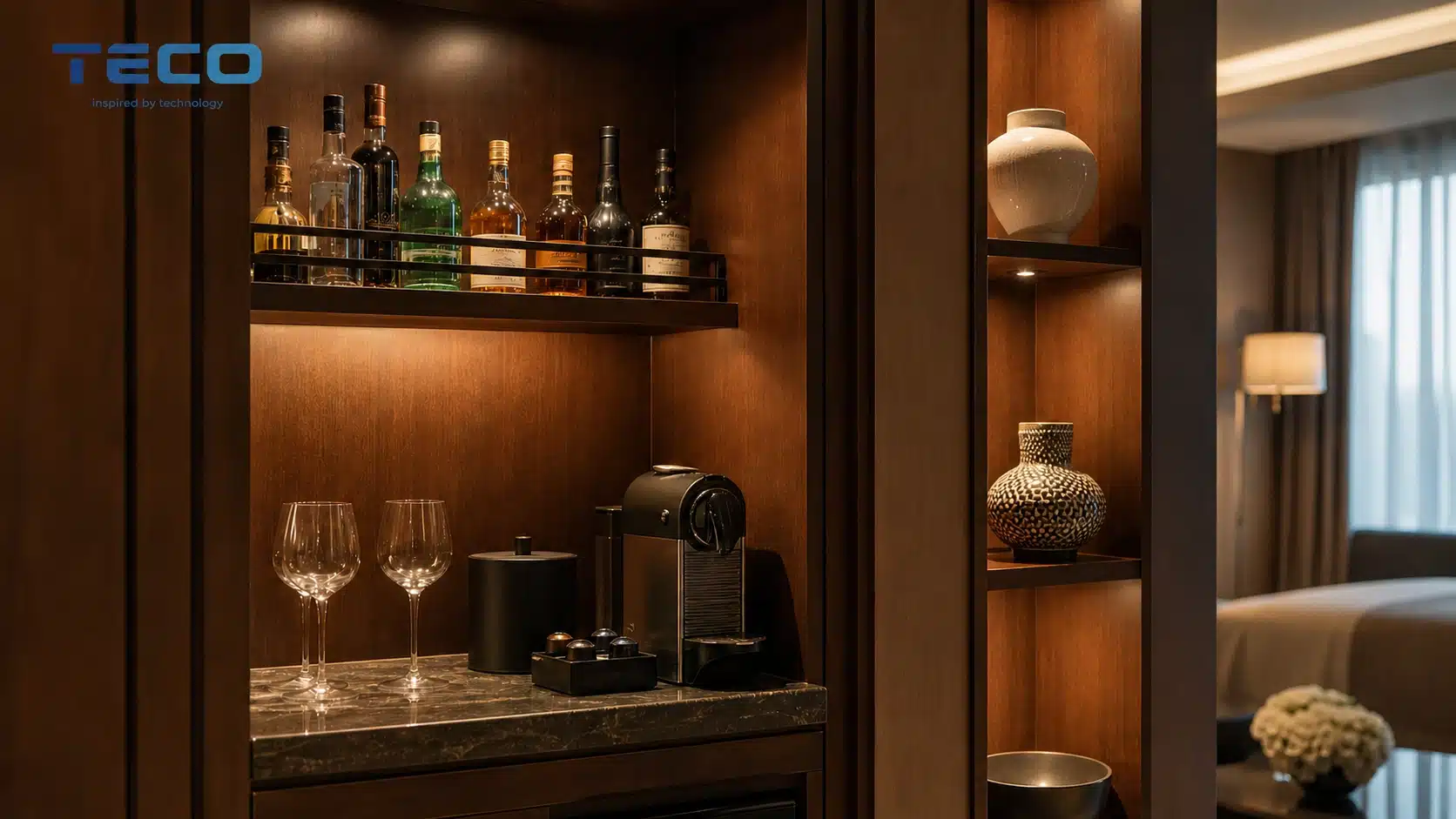
MR11 LED lighting for hotel minibar and decorative display niche
Dimming, Transformer and Fixture Compatibility
Many MR11 GU4 LED bulbs are low-voltage lamps, so the transformer or driver matters. Buyers should confirm whether the lamp is designed for 12V AC, 12V DC, or both. They should also check whether the existing transformer is suitable for the lower LED load.
This is especially important in retrofit display cabinets that originally used halogen MR11 lamps. A halogen transformer may have a minimum load requirement. If the LED load is too low, the lamp may flicker, fail to start, or behave unpredictably.
Dimming should also be checked carefully. A dimmable MR11 label does not guarantee compatibility with every transformer or dimmer. If the project requires dimming, buyers should test the complete system: lamp, transformer, dimmer, wiring, fixture, and load quantity.
For buyers comparing MR11 and MR16, MR11 is usually better for compact spaces, while MR16 often offers more output and broader fixture options. TECO already has a dedicated article on MR11 vs MR16 bulbs for buyers who need a direct comparison.
What B2B Buyers Should Test Before Bulk Orders
Compact display lighting should be approved in a mockup, not only from a datasheet. The lamp may look acceptable on a desk but behave differently inside a cabinet with glass, an open shelf with glossy packaging, a hotel niche with wood panels, mirrors, dark shelves, or limited ventilation.
Before placing bulk orders, buyers should check:
| Checkpoint | What to Confirm |
|---|---|
| Base and voltage | GU4 holder and 12V system compatibility |
| Transformer | Minimum load and AC/DC output suitability |
| 光束角度 | Correct spread for shelf depth and product size |
| CCT | Matches brand atmosphere and merchandise type |
| CRI / R9 | Product colors look accurate under real display conditions |
| Heat | Fixture does not trap excessive heat |
| 眩光 | No harsh reflection from glass or glossy surfaces |
| 调光性能 | Tested with actual transformer, dimmer, and load |
| Batch consistency | CCT, beam, and driver remain stable in bulk production |
| 认证 | Matches target market requirements |
For retail chains, shopfitters, display cabinet manufacturers, and lighting distributors, this testing process reduces rework. It also helps avoid after-sales complaints caused by color mismatch, flicker, glare, or early failure.
TECO can support MR11 sample review, CCT selection, beam angle discussion, dimming checks, and bulk production communication for retail cabinet, open shelf, and compact niche lighting projects. Buyers can share the fixture type, cabinet or shelf depth, transformer model, dimming requirement, product category, and order quantity before sample approval.
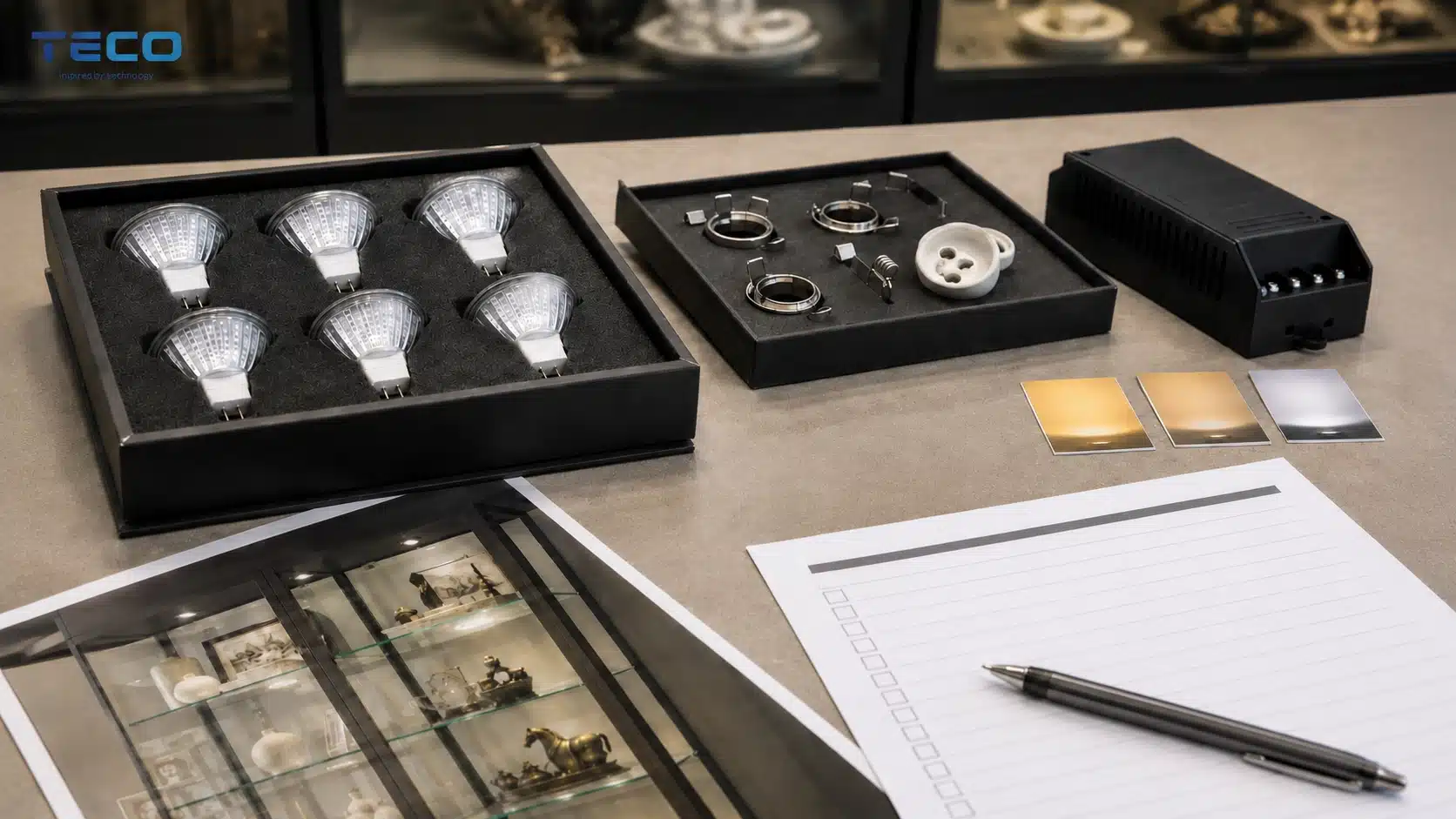
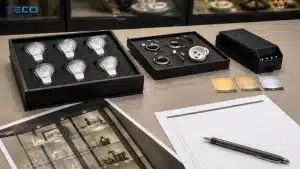
MR11 GU4 LED bulb sample testing for display cabinet projects
结论
MR11 GU4 LED bulbs are useful when retail display lighting needs a compact, focused, low-voltage spotlight. They are especially relevant for display cabinets, jewelry cases, cosmetics counters, boutique shelves, hotel minibar niches, and small accent fixtures where MR16 or GU10 lamps may be too large.
The right MR11 choice depends on more than size. Buyers should check beam angle, CCT, CRI, R9, heat, glare, transformer compatibility, dimming behavior, and batch consistency before bulk orders.
For professional projects, the safest approach is to test the MR11 lamp inside the real display fixture with real merchandise. Send TECO the cabinet dimensions, fixture type, GU4 holder details, transformer model, target beam angle, preferred CCT, dimming requirement, and estimated order quantity. This allows the engineering and sales team to recommend a realistic MR11 GU4 sample configuration before bulk production.
脚注
Product data is based on TECO’s MR11 category and product pages, including 12V GU4 MR11 dimmable and dim-to-warm spotlight options. See TECO MR11 GU4 LED bulbs, TECO 3W MR11 GU4 12V Dimmable LED Spotlight, 、以及 TECO Premium MR11 12V GU4 Dim-to-Warm LED Bulb. ↩ ↩
CIE notes that the CIE Colour Rendering Index, especially general Ra, has known limitations for evaluating some solid-state lighting sources. See CIE Colour Fidelity Index for accurate scientific use. ↩
The U.S. Department of Energy notes that fully enclosed fixtures can trap heat and increase operating temperatures, which may affect LED product performance and life expectancy. See DOE Purchasing Energy-Efficient Light Bulbs. ↩