引言
对于 LED 制造商、进口商和项目承包商,, ErP合规不是可选的——它是进入欧盟市场的法律要求.
未能遵守可能导致:
- 海关拒收货物
- 酒店和商业安装项目延误
- 昂贵的重新设计和重新测试
- 进口商的法律责任
一个真实案例:
一家照明供应商未能完成 EPREL 注册。.
结果:价值 50,000 欧元的 LED 产品在德国港口被扣留超过 3 周。.
关键问题是:
您的LED产品能否合法进入欧盟市场?
ErP 合规检查清单(SLR 与 ELR 已验证)
| 需求 | 法律依据 | 合规要求 | 来源 |
|---|---|---|---|
| 能效(开机功率) | SLR (EU) 2019/2020 | Pon ≤ Ponmax,使用Φuse、CRI和校正因子计算 | 法规 (EU) 2019/2020 |
| 能效标签分类 | ELR (EU) 2019/2015 | 基于 ηTM (lm/W) 的能效等级 A–G | 法规 (EU) 2019/2015 |
| 待机功率(Psb, Pnet) | SLR (EU) 2019/2020 | 通常≤0.5 W(取决于产品类型) | 法规 (EU) 2019/2020 |
| 闪烁 (Pst LM) | SLR (EU) 2019/2020 | Pst LM ≤1.0 | 法规 (EU) 2019/2020 |
| 频闪效应(SVM) | SLR (EU) 2019/2020 | SVM ≤0.4 | 法规 (EU) 2019/2020 |
| 功能要求(寿命、开关、光通维持率) | SLR (EU) 2019/2020 | 必须满足附件中定义的耐用性和性能标准 | 法规 (EU) 2019/2020 |
| EPREL 注册 | ELR (EU) 2019/2015 | 产品在投放欧盟市场前必须完成注册 | EPREL数据库 |
| 技术文档 | ErP 指令 2009/125/EC | 必须保留10年 | 指令 2009/125/EC |
| CE标志 | 多项指令(LVD、EMC、RoHS) | 市场投放前必需 | CE标志欧盟 |
若任何项目未通过,您的产品 不能在欧盟销售.
实际适用的法规(SLR 与 ELR)
ErP框架(2009/125/EC)通过以下方式实施:
- (EU) 2019/2020 — 单一照明法规 (SLR)
- (EU) 2019/2015 — 能源标签法规(ELR)
官方来源:
核心概念
- SLR(ErP) → 定义最低技术性能
- ELR(能效标签) → 定义能效等级(A–G)
您必须通过 SLR 优先 在应用ELR标签前。.
欧盟能效标签现状
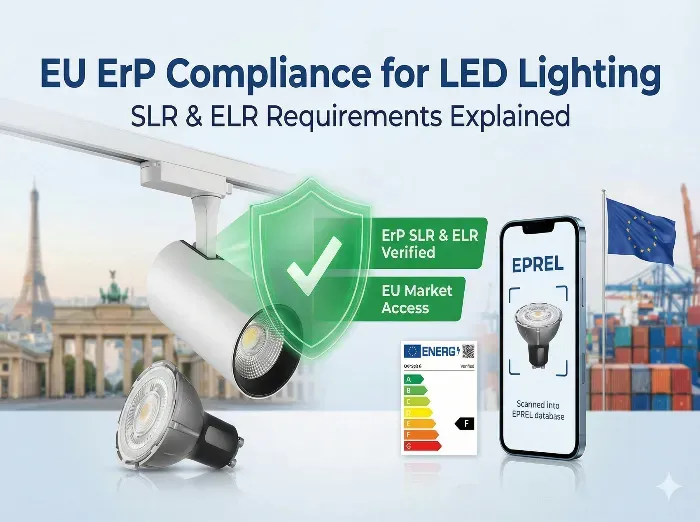
关键行业事实
目前大多数合规LED产品介于 D–F 级.
- A类 (>210 流明/瓦) → 极为罕见
- B–C类 → 高端产品
- D–F类 → 主流合规产品
不要仅因产品未达到 A 级就予以拒绝。.
关键 ErP 技术要求
核心性能参数(法规 + 市场参考)
| 参数 | 需求 | 类型 | 重要提示 |
|---|---|---|---|
| 光效 | 非固定(基于ηTM,依据欧盟SLR) | 法规 | 不能简化为流明/瓦阈值 |
| 待机功率(Psb) | ≤0.5瓦(网络待机≤2.0瓦) | 法规 | 对智能/互联照明至关重要 |
| 寿命 | 15,000–25,000小时(L70B50典型值) | 市场 | 非欧盟强制性要求 |
| 显色指数 (Ra) | ≥80 (通用照明) | 法规 | 零售建议≥90 |
| Pst LM | ≤1.0 | 法规 | 短期闪烁 |
| SVM | ≤0.4 | 法规 | 频闪效应安全 |
如何计算LED效能
为验证合规性,效能必须按以下公式计算:
光效(η)= 总光通量(流明)/ 输入功率(瓦)示例
- 900 流明 / 10 瓦 = 90 流明/瓦 → 通过
- 800 流明 / 10 瓦 = 80 流明/瓦 → 未通过
这是欧盟检查中最常见的故障点之一。.
按产品类型的最低效能(市场参考,非法规限制)
| 产品类型 | 典型市场范围(流明/瓦) | 关键影响因素 |
|---|---|---|
| 非定向灯具 | 90–130 流明/瓦 | 热设计、驱动器效率 |
| 定向灯(GU10) | 70–110 流明/瓦 | 光束角、光学损耗 |
| 高输出灯具 | 110–160+ 流明/瓦 | 功率水平、散热 |
测试前务必核实类别特定要求。.
为何闪烁指标重要
- Pst LM → 可见闪烁
- SVM → 运动失真
这些是 欧盟合规审计中的常见故障点.
推荐内部链接:
(为什么可调光LED射灯会闪烁?)
LED产品未通过ErP合规的常见原因
❌ 低效率(<85流明/瓦)
- 过时的LED芯片
- 光学设计不良
❌ 待机功耗过高(>0.5 W)
- 驱动器效率低下
- 调光电路漏电
❌ 缺少EPREL注册
- 产品不在欧盟数据库中
- 自动海关拒收
❌ 技术文档不完整
- 缺少测试报告
- 无符合性声明
❌ 热失配(环境温度与实际使用)
- 在25°C下测试
- 安装于40°C以上环境
导致实际应用故障
制造商洞察
超过60%的ErP失败由文档引起,而非产品性能。.
EPREL注册:您实际需要什么
EPREL数据库:
https://eprel.ec.europa.eu
所需数据
- 产品数据表
- 能效标签参数
- 测试报告(效能、功率、闪烁)
- 供应商账户(欧盟注册)
关键规则
必须完成EPREL注册 将产品投放欧盟市场前
如何实现ErP合规
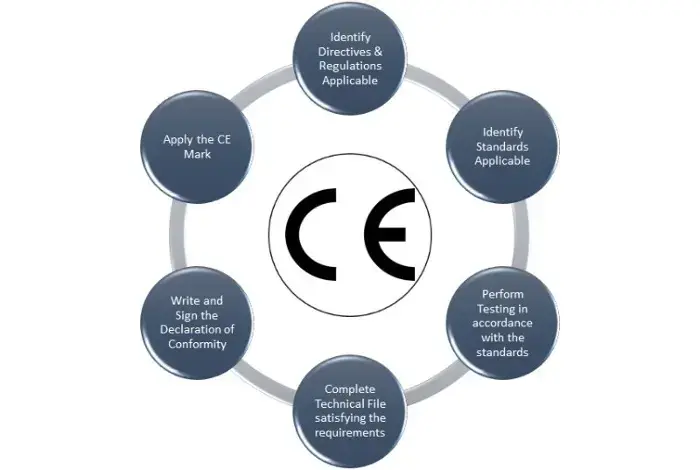
图解展示获取CE标志认证的分步流程,以CE标志为中心,环绕着测试和文件编制等关键合规活动。.
步骤一:确定产品范围
- 确定是灯还是灯具
- 确认SLR适用性
步骤二:进行实验室测试
- efficacy
- standby power
- flicker (Pst LM / SVM)
- lifetime (LM-80 / TM-21)
Step 3: Verify Against SLR Limits
- compare results with thresholds
Step 4: Prepare Technical File
- test reports
- drawings
- risk assessment
- 符合性声明
Step 5: Register in EPREL
- upload product data
- generate energy label
Step 6: Apply CE Marking
- confirm compliance
- prepare for inspection
Manufacturer vs Importer Responsibilities
| 角色 | Responsibility | 风险 |
|---|---|---|
| Manufacturer | Design, testing, documentation | Production halt |
| Importer | Verify compliance, keep files (10 yrs) | Import ban / fines |
关键规则
该 importer is legally responsible for placing compliant products on the EU market.
Compliant vs Non-Compliant LED Products
| 方面 | Compliant Product | Non-Compliant Product |
|---|---|---|
| Customs | Pass | Rejected |
| EPREL | Registered | Missing |
| Performance | 已验证 | Unstable |
| Legal Risk | 低 | 高 |
Critical Engineering Factors
Ambient Temperature (Ta)
Performance is valid only under defined Ta conditions.
If exceeded:
- lumen output drops
- lifetime shortens
L70B50 Meaning
- L70 → 70% lumen maintenance
- B50 → 50% population
行业标准 = L70B50
推荐内部链接:
(Insert your L70 article)
System vs Component
- LM-80 → LED chip only
Real system includes:
- 驱动器
- thermal design
- optics
Final Compliance Checklist
✔ ≥85 lm/W efficacy
✔ ≤0.5W standby power
✔ Pst LM ≤1.0
✔ SVM ≤0.4
✔ ≥25,000h (L70B50)
✔ EPREL registered
✔ CE marked
✔ documents stored for 10 years
常见问题
What is ErP compliance for LED?
ErP compliance ensures LED products meet EU efficiency and environmental requirements for legal sale.
Can I sell LED lights in the EU without ErP?
No. Non-compliant products will be rejected or banned.
What is EPREL registration?
EPREL is the EU database for energy-labelled products required before market entry.
What are the most common failures?
Low efficacy, high standby power, missing EPREL registration, and incomplete documentation.
结论
ErP compliance is not just a technical requirement—it is a market access gatekeeper.
Failure leads to:
- shipment rejection
- financial loss
- project delays
Compliance ensures legal entry, stable performance, and long-term business reliability.
Get Your Product EU-Ready Before Shipping
Avoid:
- customs rejection
- project delays
- compliance penalties
We support:
- SLR compliance verification
- EPREL 注册
- full technical file preparation