LED产品如何与Alexa、Google和Tuya集成:智能照明生态系统完整指南
Smart lighting has become a central component of modern residential and commercial environments. As voice-enabled systems expand across homes, hotels, offices, and retail spaces, the expectation for seamless control continues to rise. Today, three platforms dominate the mainstream lighting ecosystem: 亚马逊 Alexa, Google Home / Google Assistant, 、以及 Tuya Smart.
For lighting manufacturers, wholesalers, and integrators, understanding how LED products integrate with these platforms is critical—not only for compatibility and reliability, but also for end-user satisfaction, return rates, and long-term support.
This comprehensive guide explains how LED products connect to these ecosystems, what is required technically, how commissioning works, and why integration has become a key buying factor in global LED trade.
Why Smart Lighting Ecosystems Matter for LED Products
Commercial buyers increasingly expect LED fittings to do more than illuminate.
Integration with smart platforms enables:
Core Advantages
- Centralized control via apps and voice assistants
- Automated lighting schedules
- Scene presets tied to activities
- Cross-platform interoperability
- Energy reduction through automation
- Improved comfort and convenience
- Remote diagnostics (in some cases)
Industry Drivers
- Growth of IoT adoption
- Decline in smart module costs
- Rising end-user expectation for voice control
- Higher margin potential for distributors
- Project differentiation for contractors
A standard GU10 or A60 bulb that once sold purely on wattage and efficacy is now evaluated on:
| Evaluation Factor | 2015 | Today |
|---|---|---|
| Lumen efficiency | 高 | Expected |
| 中国国际广播电台 | 中等 | Important |
| 光束角度 | Important | Critical |
| Connectivity | Not required | Expected |
| Platform compatibility | 罕见 | Influential |
| App experience | 无 | Required |
| Voice control | Not needed | Essential in mid-high segments |
The shift is structural and permanent.
Smart Lighting Ecosystem Overview

Modern smart lighting connectivity includes four layers:
Layer 1 – Hardware
- LED灯
- Drivers
- Control ICs
- Wireless modules
Layer 2 – Connectivity Protocol
- Wi-Fi
- 蓝牙Mesh
- Zigbee
- Matter (emerging)
- Thread (in Matter deployments)
Layer 3 – Cloud Platform
- Alexa Cloud
- Google Cloud
- Tuya Cloud
- Brand private cloud (optional)
Layer 4 – User Interface
- Voice assistants
- Mobile apps
- Scenes
- Schedules
- Automation rules
To integrate LED products successfully, all 4 must align.
How Integration Technically Works
Integration relies on enabling the LED product to:
- Communicate wirelessly
- Register on a cloud platform
- Be recognized by a third-party ecosystem
- Execute commands in real-time
Technical Sequence
- LED device joins home network
- Product connects to manufacturer or Tuya cloud
- Cloud exchange registers the device
- Platform skill → exposes device category
- User links account to Alexa/Google
- Commands relay cloud → cloud → device
Data path example for cloud control:
Voice → Alexa Cloud → Tuya Cloud → LED → Driver → LED emission
Local control bypasses cloud, when supported.
Overview of Each Platform

A. Amazon Alexa
Core Capabilities
- Voice commands
- Device groups
- Lighting scenes
- Routines & automations
- Remote access
- Multi-room control
Supported Controls
- On/off
- 调光性能
- Color temperature tuning
- RGB color change
- Scheduling
- Workflows (e.g., sunrise mode)
Integration Path
- Wi-Fi: simplest route
- Zigbee: works with Echo devices that include Zigbee hubs
- Matter: expected to expand adoption
Common Alexa Lighting Use Cases
- Residential smart homes
- Short-term rental upgrades
- Senior-friendly home automation
- Lifestyle convenience installations
Google Home / Google Assistant
Google Home positions itself as the ecosystem centered on contextual intelligence.
Strengths
- Multi-device awareness
- Seamless Android integration
- Routines based on activity
- Strong localization languages
- Broad assistant compatibility
Supported Controls
Similar to Alexa but typically more intuitive for automation groups.
Google Technology Stack
- Google Home App
- Assistant cloud
- Partner device certification
- Works with Google ecosystem
Deployment Environment Examples
- Multi-room homes
- Residential blocks
- Student accommodations
- Budget apartments using Wi-Fi systems
Tuya Smart
Tuya is not a voice assistant.
It is an IoT development platform enabling:
- OEM LED manufacturers
- ODM developers
- Lighting brands
- Distributors
to deploy smart products without building a cloud from scratch.
Why Tuya matters
- Largest IoT product ecosystem globally
- 500,000+ registered developers
- Supports Wi-Fi, Bluetooth Mesh, Zigbee, Matter
- Allows white-label apps
- Compatible with Alexa, Google, Siri Shortcut, SmartThings
Tuya for Commercial Buyers
- Easiest path to launch private-label smart bulbs
- Zero infrastructure requirement
- Rapid time-to-market
- Fast firmware deployment
- Cloud uptime is managed centrally
Tuya Smart Plug-in Features
- Energy monitoring
- Scenes
- Group control
- Automations
- OTA upgrades
Connectivity Protocols Explained
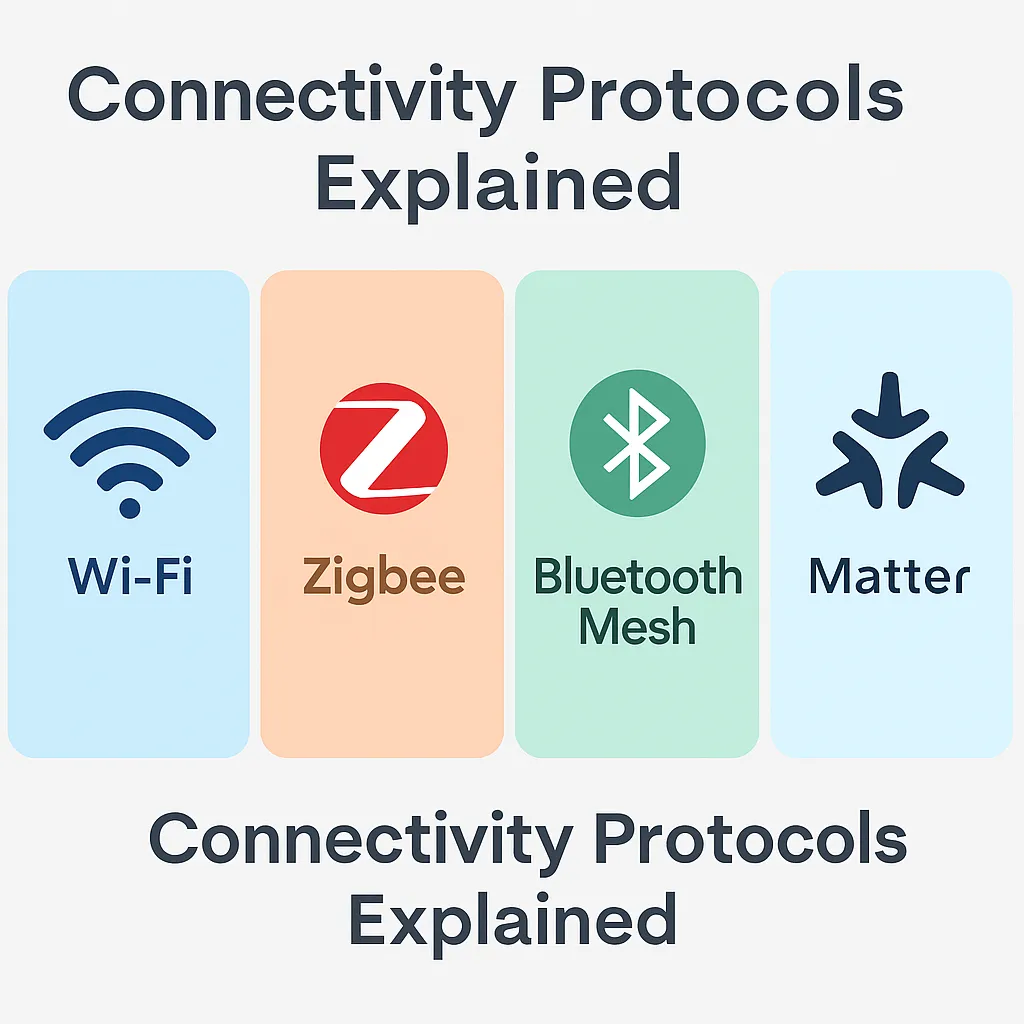
Wi-Fi
最适合:
- Residential single property
- Small-area control
- Fast deployment
Limitation: router load
Zigbee
最适合:
- Multi-room installations
- 酒店
- Apartment blocks
Advantages:
- Mesh coverage
- 低功率
蓝牙Mesh
Benefits:
- Low cost
- 本地控制
- Reliable groups
Limitations:
- Cloud-dependent automation optional
Matter
Next wave
- cross-platform unified standard
- multi-ecosystem interoperability
Matter-enabled lights will be important in next 3 years.
Hardware Requirements in LED Products
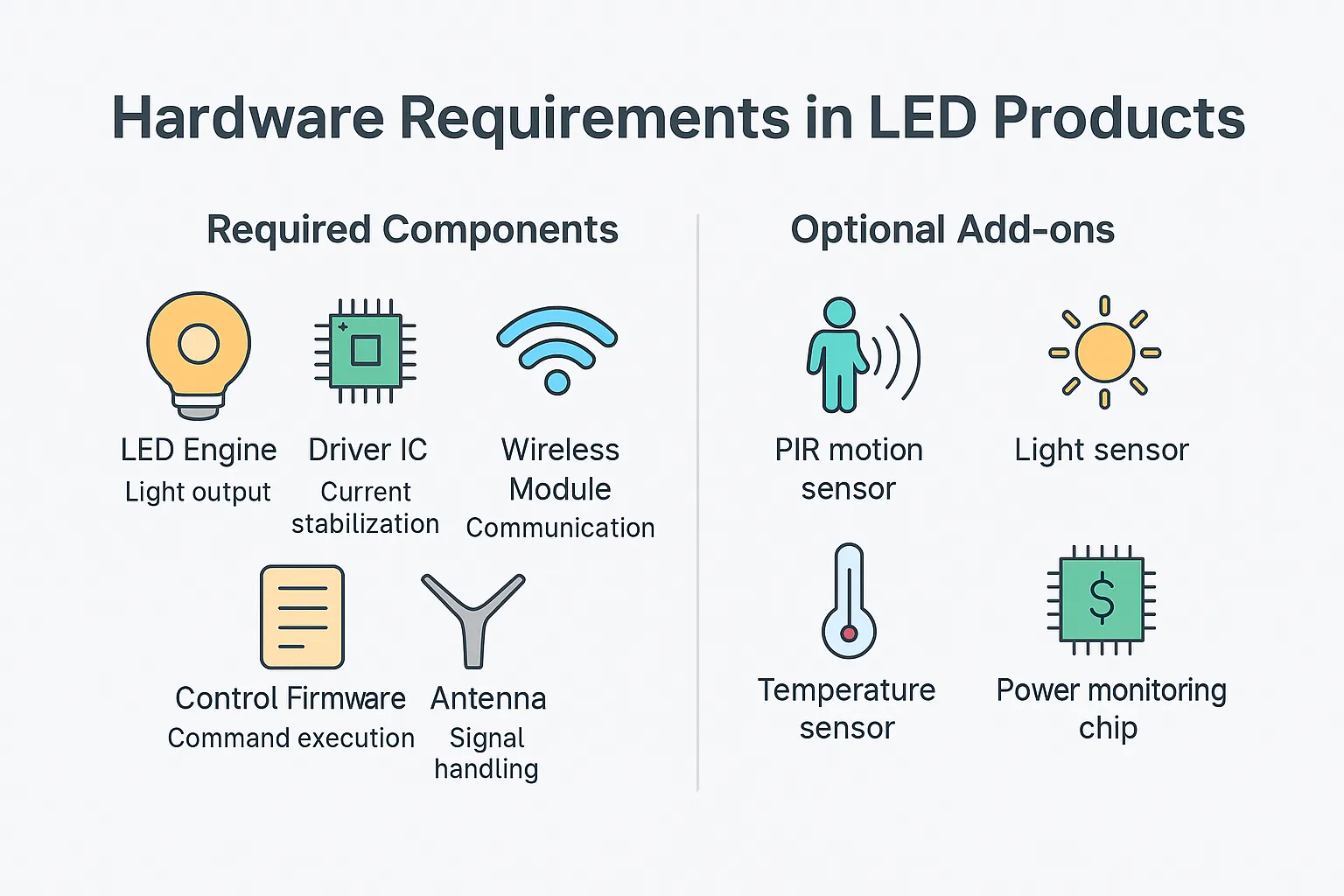
Required Components
| 组件 | 目的 |
|---|---|
| LED Engine | 光输出 |
| Driver IC | Current stabilization |
| Wireless Module | Communication |
| Control Firmware | Command execution |
| Antenna | Signal handling |
Optional Add-ons
- PIR motion sensor
- Light sensor
- Temperature sensor
- Power monitoring chip
Firmware & Cloud Considerations

Firmware determines:
- communication reliability
- user pairing success rate
- responsiveness
- OTA capabilities
- network stability
Cloud determines:
- latency
- uptime
- region segmentation
- load management
- cross-ecosystem sharing
How Commissioning Works

End-user installation flow
- Power the bulb
- Enter pairing mode
- Add via mobile app
- Connect to Wi-Fi
- Account authorization
- Add to Alexa/Google
- Test controls
- Configure schedules/scenes
Commissioning requirements
- stable Wi-Fi
- 2.4 GHz network
- mobile app access
- cloud link permissions
Commercial Applications
A. Residential
- apartments
- villas
- rentals
- senior living
B. Hospitality
- hotels
- serviced apartments
- resorts
C. Workplaces
- 办公室
- conference areas
- shared spaces
D. Retail
- showrooms
- grocery chains
- boutique stores
E. Mixed Developments
- public spaces
- lobbies
- carparks (with sensors)
Benefits for Wholesalers & Distributors
Sales Benefits
- higher perceived value
- faster portfolio differentiation
- upsell opportunities
Margin Benefits
- smart products = higher ASP
- higher retention
- lower SKU fragmentation
Customer Satisfaction Benefits
- easier control
- remote troubleshooting
- fewer complaints about usability
Benefits for Contractors and System Integrators
Technical Value
- less rewiring
- scalable by module count
- cloud configured automation
Commercial Value
- lower commissioning labor
- reduces callbacks
- portfolio expands quickly
Platform Comparison Table
| 特点 | Alexa | 谷歌 | Tuya |
|---|---|---|---|
| Cloud Voice Control | ✔️ | ✔️ | via Alexa/Google |
| Native App Control | ✔️ | ✔️ | ✔️ |
| Private Label Option | ❌ | ❌ | ✔️ |
| Works Without Internet | partial | partial | local mesh capable |
| 最适合 | Residential | Residential | OEM/ODM/Wholesalers |
Common Integration Challenges
- router conflicts
- mesh interference
- firmware instability
- low-quality modules
- weak antennas
- mismatched drivers
- cloud region mismatch
- platform certification delays
- insufficient testing
Best Practices for B2B Buyers
Before purchasing
请求:
- firmware version list
- stress test report
- router compatibility record
- OTA update roadmap
- cloud uptime SLA
- integration certification copies
During production
- engineering samples
- temperature performance checks
- RF signal test
Before shipment
- factory acceptance testing
- random pairing test
- latency validation
Future Trends
- Matter adoption accelerating
- hybrid Wi-Fi + Thread designs
- sensor-linked automation
- granular energy dashboards
- predictive maintenance
- AI-assisted scene management
- hotel-scale deployments
- cloudless edge control
The integration model is shifting from accessory feature → core expectation.
结论
LED lighting is no longer isolated hardware.
It is now a node in a wider digital ecosystem shaped by global platforms like Alexa, Google, and Tuya.
For wholesalers, distributors, contractors, and project managers, understanding integration requirements is essential to maintaining competitiveness, ensuring compatibility, and reducing support risks.
Well-designed integration brings measurable benefits:
- superior user experience
- stronger market demand
- longer product lifecycle
- higher margins
- reduced technical complaints
As ecosystems mature and protocols converge, integration will define the next stage of LED industry evolution.