MR16-LED-Dimmung erklärt: Kompatibilität, Transformatoren & Dimmerauswahl
Zuletzt aktualisiert am 9. März 2026
MR16-LED-Lampen werden häufig in Einbauleuchten, Akzentbeleuchtung, Einzelhandelsbeleuchtung, Gastronomieprojekten und Wohninstallationen eingesetzt. Im Vergleich zu herkömmlichen Halogen-MR16-Lampen bieten LED-Ersatzlampen eine deutlich höhere Energieeffizienz, reduzierte Wärmeabgabe und eine längere Betriebsdauer.
Allerdings, MR16-LED-Dimmung bleibt eine der häufigsten Ursachen für Instabilität in Beleuchtungssystemen, was oft zu Problemen wie: führt
- flackernde Lichtleistung
- Brummgeräusche von Transformatoren
- begrenzter Dimmbereich
- instabile niedrige Helligkeit
- unerwartetes Abschalten der Lampe
Viele Installateure gehen davon aus, dass das Problem bei der Lampe selbst liegt. In Wirklichkeit treten die meisten Ausfälle auf, weil MR16-LED-Dimmung hängt von der Systemkompatibilität ab und nicht von einer einzelnen Komponente.
Das grundlegende Missverständnis ist einfach:
“Dimmbar” bedeutet nicht “universell kompatibel”.”
Dieser Leitfaden erklärt, wie die MR16-LED-Dimmung funktioniert, warum Kompatibilitätsprobleme auftreten und wie Käufer, Installateure und Lichtplaner zuverlässige dimmbare MR16-LED-Systeme auswählen können.
Was ist eine MR16-LED-Lampe?
MR16 beschreibt einen Lampenformat, keine elektrische Spezifikation.
Die Bezeichnung stammt von zwei Merkmalen:
- MR = Vielseitiger Reflektor
- 16 = 16 Achtel Zoll (ca. 50 mm Durchmesser)
Diese Norm definiert die physische Größe und Reflektoroptik der Lampe, die häufig in gerichteten Beleuchtungsanwendungen wie: verwendet werden
- Einzelhandelsbeleuchtung
- Museumsbeleuchtung
- Restaurantbeleuchtung
- Architektonische Akzentbeleuchtung
Allerdings ist die Das elektrische Verhalten einer MR16-LED-Lampe wird durch den Sockeltyp, das Spannungssystem und die Treiberelektronik bestimmt, die die Dimmleistung direkt beeinflussen.
MR16-Sockeltypen und Spannungssysteme
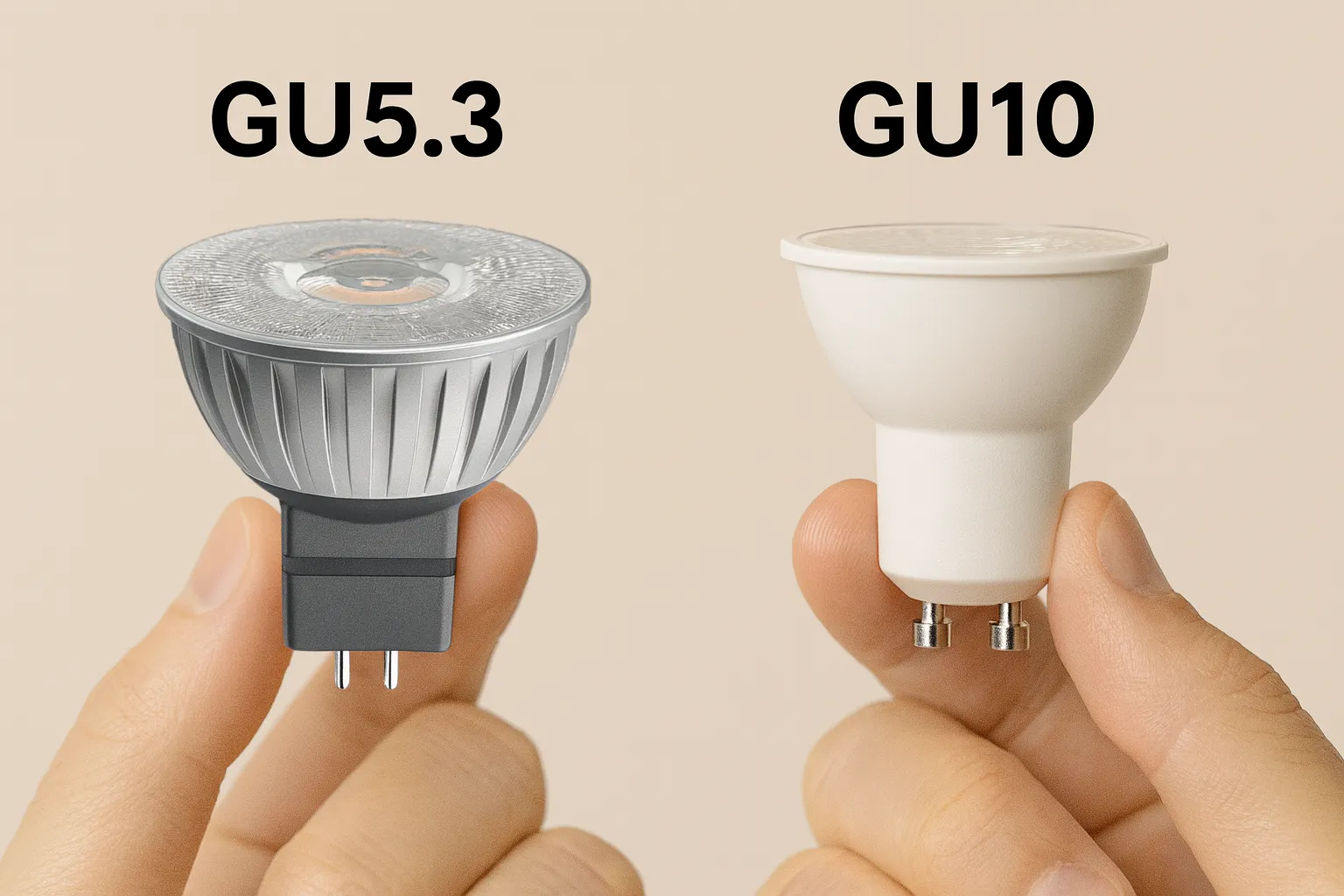
MR16-Format-Lampen werden typischerweise mit zwei verschiedenen Sockelsystemen verwendet.
Diese Systeme verhalten sich beim Dimmen sehr unterschiedlich.
GU5.3 — Niedervolt-MR16
Merkmale:
- zweipoliger Sockel
- arbeitet bei 12V AC oder DC
- erfordert einen externer Transformator oder LED-Treiber
- häufig in Halogen-Retrofiteinbauten verwendet
Da der Transformator extern ist, Systemkompatibilität wird für die Dimmleistung entscheidend.
GU10 — Netzspannungssystem
Merkmale:
- Drehverschluss-Sockel
- arbeitet bei 120V oder 230V Wechselstrom
- LED-Treiber ist in der Lampe integriert
Dieses Design vereinfacht die Installation, da weniger externe Komponenten beteiligt sind.
Wichtige Klarstellung
Viele Leute nehmen an:
MR16 = GU10Das ist falsch.
MR16 bezieht sich auf Lampengröße, während GU10 sich auf Sockeltyp und Spannungssystem.
Das Dimmverhalten wird hauptsächlich bestimmt durch Treiberschaltungen und Systemkompatibilität, nicht Reflektordurchmesser.
Warum MR16 LED-Dimmen komplexer ist als bei Halogen

Traditionelle Halogenlampen dimmen sanft, weil sie sich verhalten wie rein ohmsche elektrische Lasten.
LED-Systeme verhalten sich völlig anders.
Eine dimmbare MR16 LED-Installation umfasst typischerweise drei Komponenten:
Dimmer → Transformator / Treiber → LED-LampeJedes Element beeinflusst die Systemstabilität.
Wenn eine Komponente inkompatibel ist, können Dimmprobleme auftreten.
Häufige technische Herausforderungen sind:
- Mindestlastanforderungen des Transformators
- Phasenabschnittsdimmer-Kompatibilität
- Treiberschwankungen bei niedrigen Stromstärken
- hoher LED-Einschaltstrom beim Start
- Wechselstrom vs. Gleichstrom-Ausgangsvariationen
Aufgrund dieser Faktoren treten MR16 LED-Dimmprobleme häufig auf nach der Installation, selbst wenn einzelne Komponenten beim Testen korrekt funktionieren.
Sind alle MR16 LED-Lampen dimmbar?
Nein.
Nicht jede MR16 LED-Lampe unterstützt das Dimmen.
Einige LED-Lampen:
- sind nicht dimmbar
- flackern beim Dimmen
- schalten sich unter bestimmten Helligkeitsstufen ab
- verhalten sich je nach Wechsel- oder Gleichspannungseingang unterschiedlich
Damit eine Lampe in Dimm-Systemen korrekt funktioniert, muss sie:
- ausdrücklich für Dimmen ausgelegt
- mit kompatiblen Transformatoren getestet
- mit bestimmten Dimmertypen validiert
Auch wenn als “dimmbar”, muss die Kompatibilität mit Transformatoren und Dimmern dennoch überprüft werden.
Wichtige Faktoren bei der Auswahl einer dimmbaren MR16 LED-Lampe

Die Auswahl der richtigen MR16 LED-Lampe erfordert die Bewertung mehrerer technischer Parameter.
1. Eingangsspannungskompatibilität
Low-voltage MR16 lamps may support:
- AC input only
- DC input only
- universal AC/DC operation
Some lamps operate perfectly on DC but flicker on AC electronic transformers.
Always verify the supported voltage type.
2. Transformer Type
Two common transformer categories exist:
Magnetic Transformers
Merkmale:
- stable output waveform
- high compatibility with LED loads
- heavier and less energy efficient
Electronic Transformers
Merkmale:
- compact and efficient
- designed for halogen loads
- may require minimum load levels
A common failure scenario occurs when the LED load is below the transformer’s minimum load requirement, causing flicker or shutdown.
3. Dimmer Load Rating
LED lamps consume low steady-state power but generate high inrush current during startup.
Example:
10 × 7W MR16 LEDs = 70W running loadHowever, startup current may exceed the tolerance of a small dimmer.
Best practice is to select dimmers rated 2–3 times higher than the calculated LED load.
4. Dimmer Technology
Two primary phase-cut dimmer types exist.
Leading-Edge (Forward Phase)
Merkmale:
- older technology
- higher electrical stress
- greater risk of buzzing
Trailing-Edge (Reverse Phase)
Merkmale:
- smoother dimming waveform
- better compatibility with electronic LED drivers
- lower noise levels
Trailing-edge dimmers are generally preferred for LED lighting.
However, compatibility must still be verified with the transformer.
5. Dimming Range
Professional MR16 LED lamps should provide:
- smooth dimming from 100% down to 5–10% brightness
- stable light output at low levels
- no visible flicker
- no sudden shutdown
Low-quality LEDs often become unstable below 20–30%.
6. Flicker Performance
Lighting flicker is not only a visual issue.
Research published in IEEE Std 1789 indicates that excessive LED flicker can contribute to visual discomfort and neurological stress.
Professional lighting systems should therefore provide documented flicker performance data.
Common MR16 LED Dimming Problems
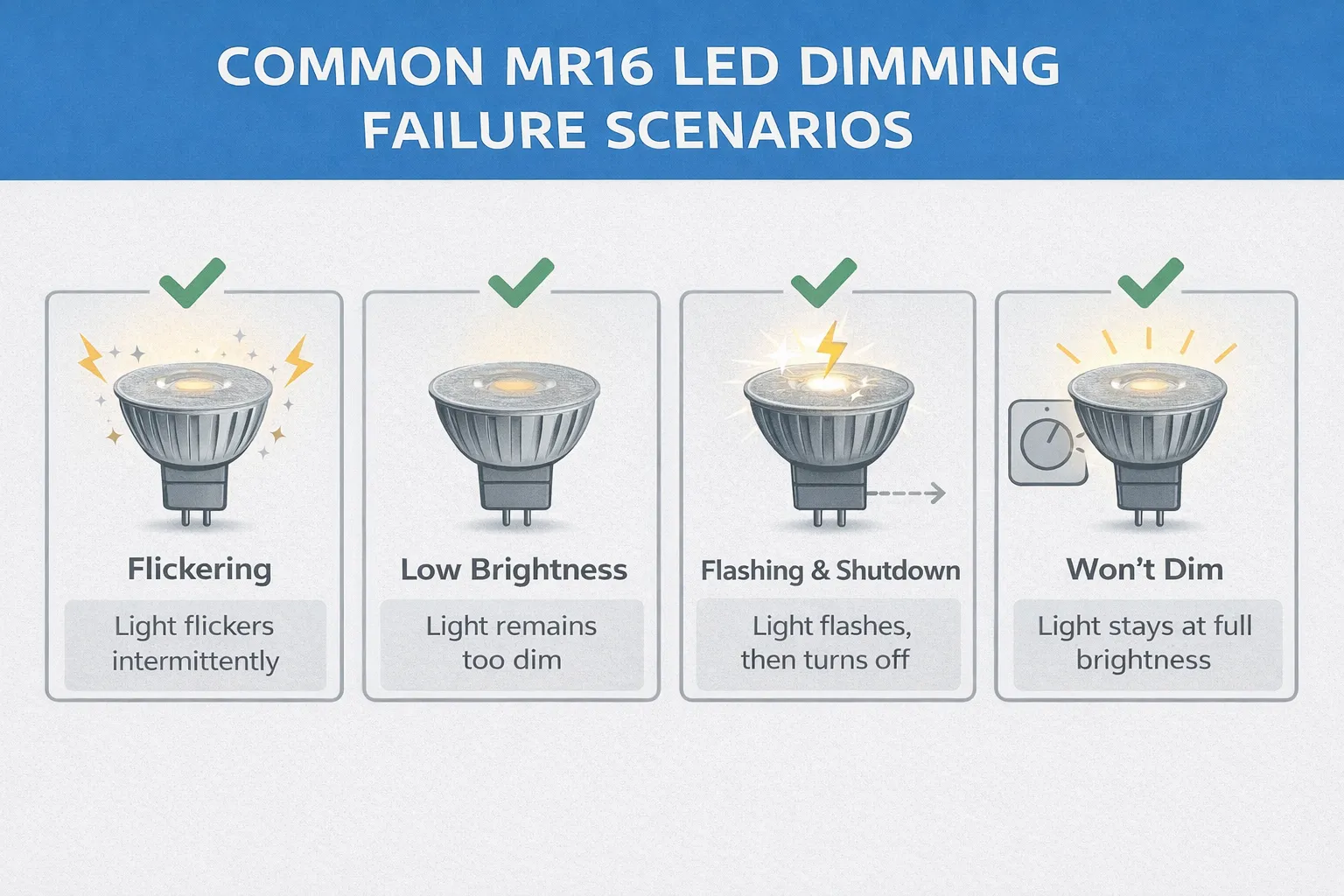
Typical installation problems include:
- reusing halogen-era transformers with LED loads
- mixing different MR16 LED models on one circuit
- ignoring transformer minimum load requirements
- selecting under-rated dimmers
- assuming dimming compatibility without testing
In most cases, these are system failures rather than lamp defects.
MR16 LED vs Halogen Dimming
| Merkmal | Halogen MR16 | MR16 LED |
|---|---|---|
| Electrical behavior | Resistive load | Electronic driver |
| Dimming compatibility | Nearly universal | System dependent |
| Energieeffizienz | Niedrig | Hoch |
| Heat output | Hoch | Niedrig |
| Lebenserwartung | 2,000 hours | 25,000–40,000 hours |
This comparison explains why LED dimming requires greater attention to compatibility.
Pre-Installation Compatibility Checklist
Before approving a dimmable MR16 LED installation, verify the following:
- lamp explicitly rated as dimmable
- supported AC/DC voltage clearly specified
- transformer type confirmed
- transformer minimum load verified
- dimmer type confirmed
- dimmer load rating sufficient
- low-level dimming tested
- flicker performance documented
If these factors are unclear, installation problems are likely.
Schlussfolgerung
MR16 LED bulbs can deliver reliable dimming performance — but only when the entire electrical system is designed and verified as a whole.
Successful MR16 LED dimming depends on:
- LED driver behavior
- transformer compatibility
- dimmer waveform characteristics
Understanding these interactions allows installers and buyers to avoid common compatibility issues and achieve stable, flicker-free lighting installations.
In MR16 LED dimming systems, system design matters more than lamp selection alone.