Cómo los Productos LED se Integran con Alexa, Google y Tuya: Una Guía Completa de los Ecosistemas de Iluminación Inteligente
La iluminación inteligente se ha convertido en un componente central de los entornos residenciales y comerciales modernos. A medida que los sistemas habilitados por voz se expanden en hogares, hoteles, oficinas y espacios comerciales, la expectativa de un control fluido sigue aumentando. Hoy, tres plataformas dominan el ecosistema principal de iluminación: Amazon Alexa, Google Home / Asistente de Google, y Tuya Smart.
Para los fabricantes de iluminación, mayoristas e integradores, entender cómo los productos LED se integran con estas plataformas es crucial, no solo para la compatibilidad y fiabilidad, sino también para la satisfacción del usuario final, las tasas de devolución y el soporte a largo plazo.
Esta guía completa explica cómo los productos LED se conectan a estos ecosistemas, qué se requiere técnicamente, cómo funciona la puesta en marcha y por qué la integración se ha convertido en un factor clave de compra en el comercio global de LED.
Por qué los ecosistemas de iluminación inteligente son importantes para los productos LED
Los compradores comerciales esperan cada vez más que las luminarias LED hagan más que iluminar.
La integración con plataformas inteligentes permite:
Ventajas principales
- Control centralizado mediante aplicaciones y asistentes de voz
- Programas de iluminación automatizados
- Preajustes de escenas vinculados a actividades
- Interoperabilidad multiplataforma
- Reducción de energía mediante automatización
- Mayor comodidad y conveniencia
- Diagnóstico remoto (en algunos casos)
Impulsores de la industria
- Crecimiento de la adopción de IoT
- Disminución de costos de módulos inteligentes
- Creciente expectativa del usuario final por control por voz
- Mayor potencial de margen para distribuidores
- Diferenciación de proyectos para contratistas
Una bombilla estándar GU10 o A60 que antes se vendía solo por vatios y eficacia ahora se evalúa según:
| Factor de Evaluación | 2015 | Hoy |
|---|---|---|
| Eficiencia lumínica | Alta | Esperado |
| CRI | Medio | Importante |
| Ángulo del haz | Importante | Crítico |
| Conectividad | No requerido | Esperado |
| Compatibilidad de plataforma | Raro | Influyente |
| Experiencia en la aplicación | Ninguno | Requerido |
| Control por voz | No necesario | Esencial en segmentos medios-altos |
El cambio es estructural y permanente.
Descripción general del ecosistema de iluminación inteligente

La conectividad moderna de iluminación inteligente incluye cuatro capas:
Capa 1 – Hardware
- LEDs
- Controladores
- CI de control
- Módulos inalámbricos
Capa 2 – Protocolo de conectividad
- Wi-Fi
- Bluetooth Mesh
- Zigbee
- Matter (emerging)
- Thread (in Matter deployments)
Layer 3 – Cloud Platform
- Alexa Cloud
- Google Cloud
- Tuya Cloud
- Brand private cloud (optional)
Layer 4 – User Interface
- Voice assistants
- Mobile apps
- Scenes
- Schedules
- Automation rules
To integrate LED products successfully, all 4 must align.
How Integration Technically Works
Integration relies on enabling the LED product to:
- Communicate wirelessly
- Register on a cloud platform
- Be recognized by a third-party ecosystem
- Execute commands in real-time
Technical Sequence
- LED device joins home network
- Product connects to manufacturer or Tuya cloud
- Cloud exchange registers the device
- Platform skill → exposes device category
- User links account to Alexa/Google
- Commands relay cloud → cloud → device
Data path example for cloud control:
Voice → Alexa Cloud → Tuya Cloud → LED → Driver → LED emission
Local control bypasses cloud, when supported.
Overview of Each Platform

A. Amazon Alexa
Core Capabilities
- Voice commands
- Device groups
- Lighting scenes
- Routines & automations
- Remote access
- Multi-room control
Supported Controls
- On/off
- Atenuación
- Color temperature tuning
- RGB color change
- Scheduling
- Workflows (e.g., sunrise mode)
Integration Path
- Wi-Fi: simplest route
- Zigbee: works with Echo devices that include Zigbee hubs
- Matter: expected to expand adoption
Common Alexa Lighting Use Cases
- Residential smart homes
- Short-term rental upgrades
- Senior-friendly home automation
- Lifestyle convenience installations
Google Home / Asistente de Google
Google Home positions itself as the ecosystem centered on contextual intelligence.
Strengths
- Multi-device awareness
- Seamless Android integration
- Routines based on activity
- Strong localization languages
- Broad assistant compatibility
Supported Controls
Similar to Alexa but typically more intuitive for automation groups.
Google Technology Stack
- Google Home App
- Assistant cloud
- Partner device certification
- Works with Google ecosystem
Deployment Environment Examples
- Multi-room homes
- Residential blocks
- Student accommodations
- Budget apartments using Wi-Fi systems
Tuya Smart
Tuya is not a voice assistant.
It is an IoT development platform enabling:
- OEM LED manufacturers
- ODM developers
- Lighting brands
- Distributors
to deploy smart products without building a cloud from scratch.
Why Tuya matters
- Largest IoT product ecosystem globally
- 500,000+ registered developers
- Supports Wi-Fi, Bluetooth Mesh, Zigbee, Matter
- Allows white-label apps
- Compatible with Alexa, Google, Siri Shortcut, SmartThings
Tuya for Commercial Buyers
- Easiest path to launch private-label smart bulbs
- Zero infrastructure requirement
- Rapid time-to-market
- Fast firmware deployment
- Cloud uptime is managed centrally
Tuya Smart Plug-in Features
- Energy monitoring
- Scenes
- Group control
- Automations
- OTA upgrades
Connectivity Protocols Explained
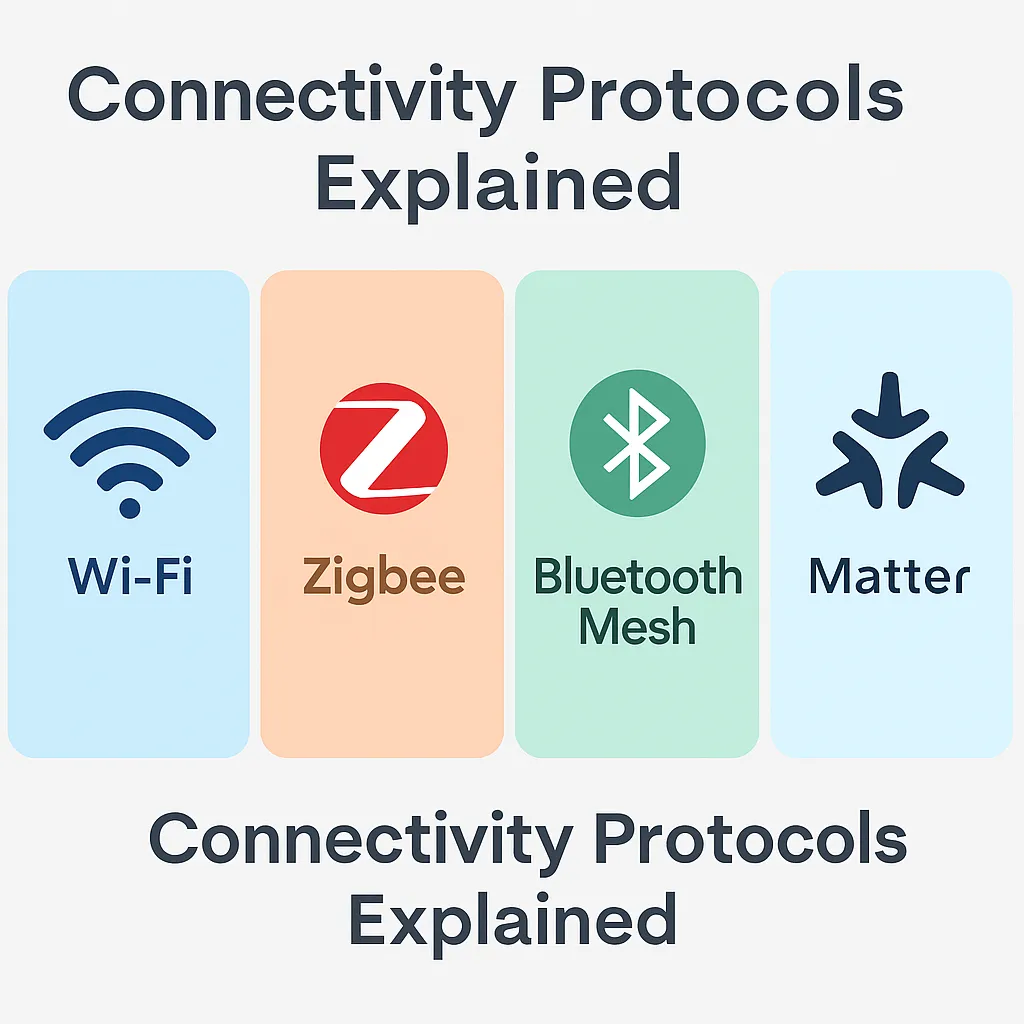
Wi-Fi
Ideal para:
- Residential single property
- Small-area control
- Fast deployment
Limitation: router load
Zigbee
Ideal para:
- Multi-room installations
- Hoteles
- Apartment blocks
Advantages:
- Mesh coverage
- Baja potencia
Bluetooth Mesh
Benefits:
- Low cost
- Control local
- Reliable groups
Limitations:
- Cloud-dependent automation optional
Matter
Next wave
- cross-platform unified standard
- multi-ecosystem interoperability
Matter-enabled lights will be important in next 3 years.
Hardware Requirements in LED Products
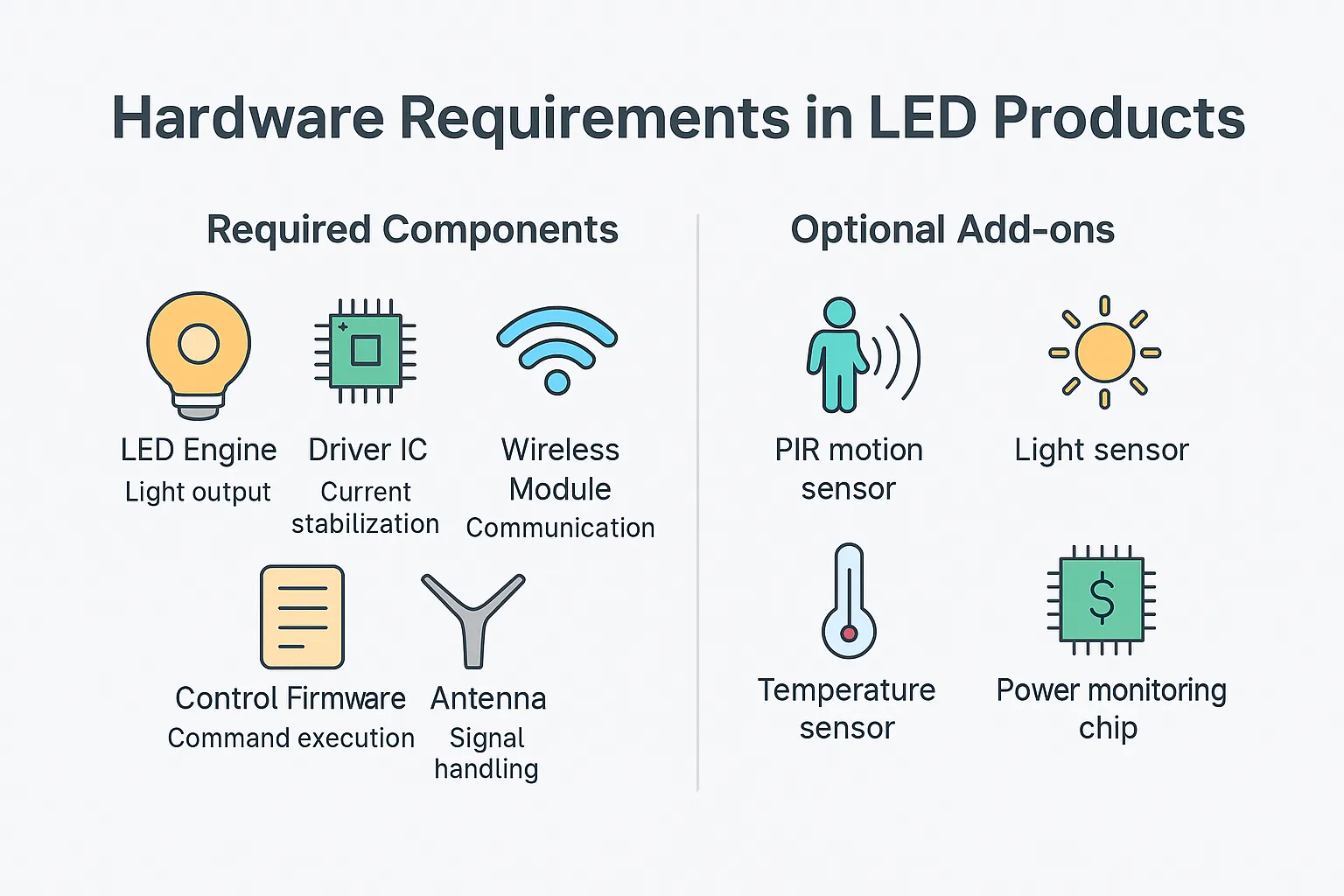
Required Components
| Componente | Propósito |
|---|---|
| LED Engine | Light output |
| Driver IC | Current stabilization |
| Wireless Module | Communication |
| Control Firmware | Command execution |
| Antenna | Signal handling |
Optional Add-ons
- PIR motion sensor
- Light sensor
- Temperature sensor
- Power monitoring chip
Firmware & Cloud Considerations

Firmware determines:
- communication reliability
- user pairing success rate
- responsiveness
- OTA capabilities
- network stability
Cloud determines:
- latency
- uptime
- region segmentation
- load management
- cross-ecosystem sharing
How Commissioning Works

End-user installation flow
- Power the bulb
- Enter pairing mode
- Add via mobile app
- Connect to Wi-Fi
- Account authorization
- Add to Alexa/Google
- Test controls
- Configure schedules/scenes
Commissioning requirements
- stable Wi-Fi
- 2.4 GHz network
- mobile app access
- cloud link permissions
Commercial Applications
A. Residential
- apartments
- villas
- rentals
- senior living
B. Hospitality
- hotels
- serviced apartments
- resorts
C. Workplaces
- oficinas
- conference areas
- shared spaces
D. Retail
- showrooms
- grocery chains
- boutique stores
E. Mixed Developments
- public spaces
- lobbies
- carparks (with sensors)
Benefits for Wholesalers & Distributors
Sales Benefits
- higher perceived value
- faster portfolio differentiation
- upsell opportunities
Margin Benefits
- smart products = higher ASP
- higher retention
- lower SKU fragmentation
Customer Satisfaction Benefits
- easier control
- remote troubleshooting
- fewer complaints about usability
Benefits for Contractors and System Integrators
Technical Value
- less rewiring
- scalable by module count
- cloud configured automation
Commercial Value
- lower commissioning labor
- reduces callbacks
- portfolio expands quickly
Platform Comparison Table
| Característica | Alexa | Tuya | |
|---|---|---|---|
| Cloud Voice Control | ✔️ | ✔️ | via Alexa/Google |
| Native App Control | ✔️ | ✔️ | ✔️ |
| Private Label Option | ❌ | ❌ | ✔️ |
| Works Without Internet | partial | partial | local mesh capable |
| Mejor para | Residential | Residential | OEM/ODM/Wholesalers |
Common Integration Challenges
- router conflicts
- mesh interference
- firmware instability
- low-quality modules
- weak antennas
- mismatched drivers
- cloud region mismatch
- platform certification delays
- insufficient testing
Best Practices for B2B Buyers
Before purchasing
Request:
- firmware version list
- stress test report
- router compatibility record
- OTA update roadmap
- cloud uptime SLA
- integration certification copies
During production
- engineering samples
- temperature performance checks
- RF signal test
Before shipment
- factory acceptance testing
- random pairing test
- latency validation
Future Trends
- Matter adoption accelerating
- hybrid Wi-Fi + Thread designs
- sensor-linked automation
- granular energy dashboards
- predictive maintenance
- AI-assisted scene management
- hotel-scale deployments
- cloudless edge control
The integration model is shifting from accessory feature → core expectation.
Conclusión
LED lighting is no longer isolated hardware.
It is now a node in a wider digital ecosystem shaped by global platforms like Alexa, Google, and Tuya.
For wholesalers, distributors, contractors, and project managers, understanding integration requirements is essential to maintaining competitiveness, ensuring compatibility, and reducing support risks.
Well-designed integration brings measurable benefits:
- superior user experience
- stronger market demand
- longer product lifecycle
- higher margins
- reduced technical complaints
As ecosystems mature and protocols converge, integration will define the next stage of LED industry evolution.