LED产品如何与Alexa、Google和Tuya集成:智能照明生态系统完整指南
智能照明已成为现代住宅和商业环境的核心组成部分。随着语音启用的系统在家庭、酒店、办公室和零售空间的扩展,对无缝控制的期望持续上升。如今,三大平台主导着主流照明生态系统: 亚马逊 Alexa, Google Home / Google Assistant, 、以及 涂鸦智能.
对于照明制造商、批发商和集成商而言,理解LED产品如何与这些平台集成至关重要——这不仅关乎兼容性和可靠性,还影响最终用户满意度、退货率和长期支持。.
本全面指南解释了LED产品如何连接到这些生态系统、所需的技术条件、调试过程,以及为何集成已成为全球LED贸易中的关键购买因素。.
为什么智能照明生态系统对LED产品至关重要
商业买家日益期望LED灯具不仅能提供照明。.
与智能平台集成可实现:
核心优势
- 通过应用程序和语音助手进行集中控制
- 自动化照明计划
- 与活动绑定的场景预设
- 跨平台互操作性
- 通过自动化实现节能
- 提升舒适度与便利性
- 远程诊断(在某些情况下)
行业驱动因素
- 物联网采用率的增长
- 智能模块成本下降
- 终端用户对语音控制的期望日益增长
- 分销商更高的利润潜力
- 承包商的项目差异化
曾经仅凭功率和效能销售的GU10或A60标准灯泡,现在评估标准包括:
| 评估因素 | 2015 | 今天 |
|---|---|---|
| 流明效率 | 高 | 预期 |
| 中国国际广播电台 | 中等 | 重要 |
| 光束角度 | 重要 | 关键 |
| 连接性 | 非必需 | 预期 |
| 平台兼容性 | 罕见 | 有影响力 |
| 应用体验 | 无 | 必需 |
| 语音控制 | 不需要 | 在中高端市场至关重要 |
这种转变是结构性的且永久性的。.
智能照明生态系统概览

现代智能照明连接包括四个层次:
第一层 – 硬件
- LED灯
- 驱动因素
- 控制集成电路
- 无线模块
第二层 – 连接协议
- Wi-Fi
- 蓝牙Mesh
- Zigbee
- Matter(新兴)
- 线程(在Matter部署中)
第三层 – 云平台
- Alexa Cloud
- Google Cloud
- Tuya Cloud
- Brand private cloud (optional)
Layer 4 – User Interface
- Voice assistants
- Mobile apps
- Scenes
- Schedules
- Automation rules
To integrate LED products successfully, all 4 must align.
How Integration Technically Works
Integration relies on enabling the LED product to:
- Communicate wirelessly
- Register on a cloud platform
- Be recognized by a third-party ecosystem
- Execute commands in real-time
Technical Sequence
- LED device joins home network
- Product connects to manufacturer or Tuya cloud
- Cloud exchange registers the device
- Platform skill → exposes device category
- User links account to Alexa/Google
- Commands relay cloud → cloud → device
Data path example for cloud control:
Voice → Alexa Cloud → Tuya Cloud → LED → Driver → LED emission
Local control bypasses cloud, when supported.
Overview of Each Platform

A. Amazon Alexa
Core Capabilities
- Voice commands
- Device groups
- Lighting scenes
- Routines & automations
- Remote access
- Multi-room control
Supported Controls
- On/off
- 调光性能
- Color temperature tuning
- RGB color change
- Scheduling
- Workflows (e.g., sunrise mode)
Integration Path
- Wi-Fi: simplest route
- Zigbee: works with Echo devices that include Zigbee hubs
- Matter: expected to expand adoption
Common Alexa Lighting Use Cases
- Residential smart homes
- Short-term rental upgrades
- Senior-friendly home automation
- Lifestyle convenience installations
Google Home / Google Assistant
Google Home positions itself as the ecosystem centered on contextual intelligence.
Strengths
- Multi-device awareness
- Seamless Android integration
- Routines based on activity
- Strong localization languages
- Broad assistant compatibility
Supported Controls
Similar to Alexa but typically more intuitive for automation groups.
Google Technology Stack
- Google Home App
- Assistant cloud
- Partner device certification
- Works with Google ecosystem
Deployment Environment Examples
- Multi-room homes
- Residential blocks
- Student accommodations
- Budget apartments using Wi-Fi systems
涂鸦智能
Tuya is not a voice assistant.
It is an IoT development platform enabling:
- OEM LED manufacturers
- ODM developers
- Lighting brands
- Distributors
to deploy smart products without building a cloud from scratch.
Why Tuya matters
- Largest IoT product ecosystem globally
- 500,000+ registered developers
- Supports Wi-Fi, Bluetooth Mesh, Zigbee, Matter
- Allows white-label apps
- Compatible with Alexa, Google, Siri Shortcut, SmartThings
Tuya for Commercial Buyers
- Easiest path to launch private-label smart bulbs
- Zero infrastructure requirement
- Rapid time-to-market
- Fast firmware deployment
- Cloud uptime is managed centrally
Tuya Smart Plug-in Features
- Energy monitoring
- Scenes
- Group control
- Automations
- OTA upgrades
Connectivity Protocols Explained
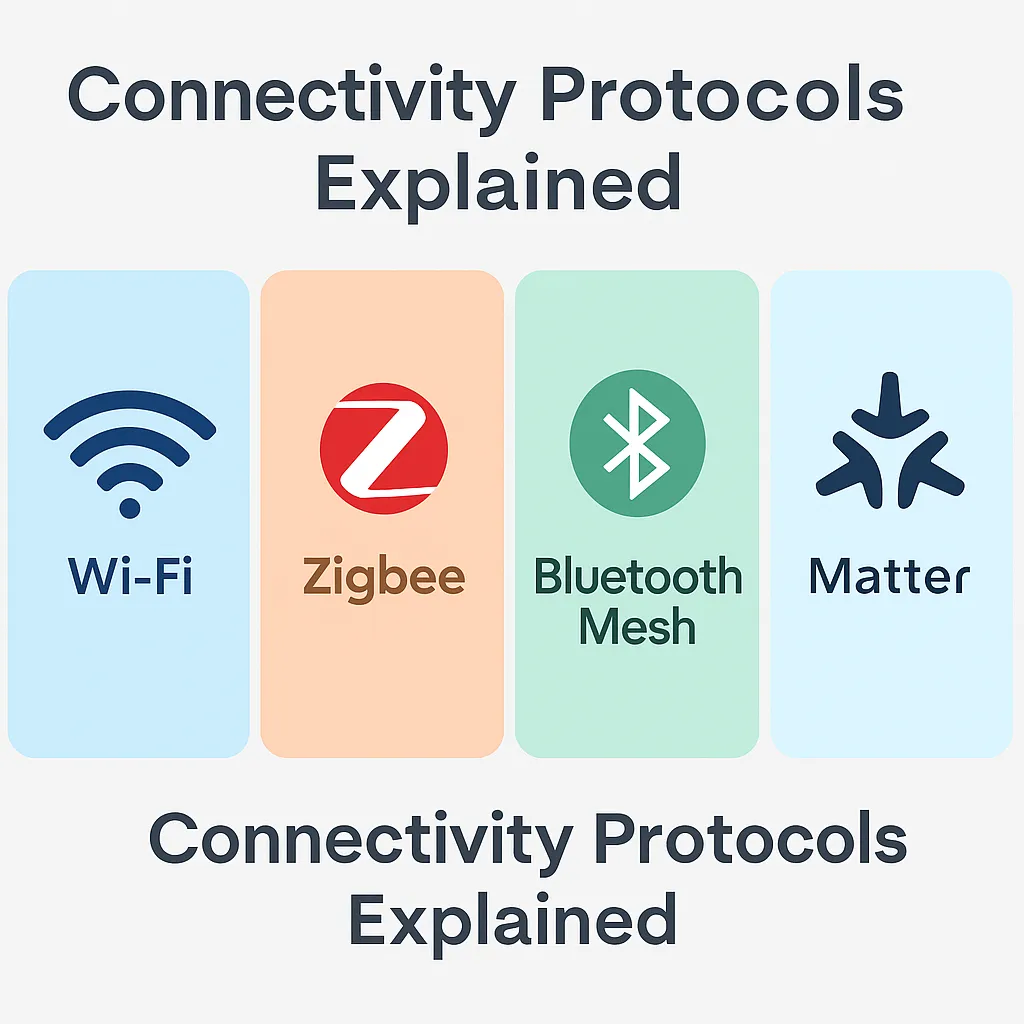
Wi-Fi
最适合:
- Residential single property
- Small-area control
- Fast deployment
Limitation: router load
Zigbee
最适合:
- Multi-room installations
- 酒店
- Apartment blocks
优点:
- Mesh coverage
- 低功率
蓝牙Mesh
Benefits:
- Low cost
- 本地控制
- Reliable groups
Limitations:
- Cloud-dependent automation optional
Matter
Next wave
- cross-platform unified standard
- multi-ecosystem interoperability
Matter-enabled lights will be important in next 3 years.
Hardware Requirements in LED Products
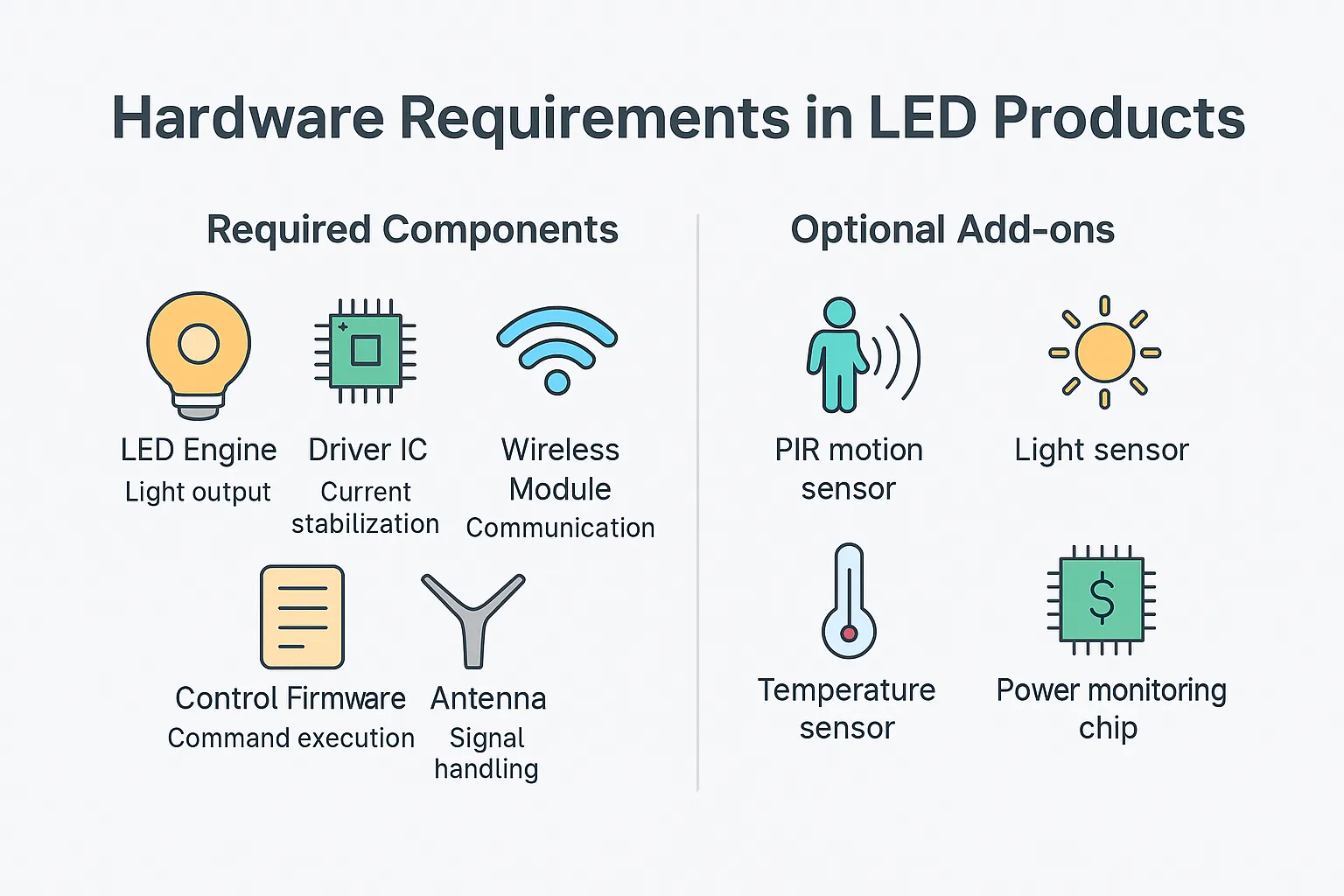
Required Components
| 组件 | 目的 |
|---|---|
| LED Engine | 光输出 |
| Driver IC | Current stabilization |
| Wireless Module | Communication |
| Control Firmware | Command execution |
| Antenna | Signal handling |
Optional Add-ons
- PIR motion sensor
- Light sensor
- Temperature sensor
- Power monitoring chip
Firmware & Cloud Considerations

Firmware determines:
- communication reliability
- user pairing success rate
- responsiveness
- OTA capabilities
- network stability
Cloud determines:
- latency
- uptime
- region segmentation
- load management
- cross-ecosystem sharing
How Commissioning Works

End-user installation flow
- Power the bulb
- Enter pairing mode
- Add via mobile app
- Connect to Wi-Fi
- Account authorization
- Add to Alexa/Google
- Test controls
- Configure schedules/scenes
Commissioning requirements
- stable Wi-Fi
- 2.4 GHz network
- mobile app access
- cloud link permissions
Commercial Applications
A. Residential
- apartments
- villas
- rentals
- senior living
B. Hospitality
- hotels
- serviced apartments
- resorts
C. Workplaces
- 办公室
- conference areas
- shared spaces
D. Retail
- showrooms
- grocery chains
- boutique stores
E. Mixed Developments
- public spaces
- lobbies
- carparks (with sensors)
Benefits for Wholesalers & Distributors
Sales Benefits
- higher perceived value
- faster portfolio differentiation
- upsell opportunities
Margin Benefits
- smart products = higher ASP
- higher retention
- lower SKU fragmentation
Customer Satisfaction Benefits
- easier control
- remote troubleshooting
- fewer complaints about usability
Benefits for Contractors and System Integrators
Technical Value
- less rewiring
- scalable by module count
- cloud configured automation
Commercial Value
- lower commissioning labor
- reduces callbacks
- portfolio expands quickly
Platform Comparison Table
| 特点 | Alexa | 谷歌 | Tuya |
|---|---|---|---|
| Cloud Voice Control | ✔️ | ✔️ | via Alexa/Google |
| Native App Control | ✔️ | ✔️ | ✔️ |
| Private Label Option | ❌ | ❌ | ✔️ |
| Works Without Internet | partial | partial | local mesh capable |
| 最适合 | 住宅 | 住宅 | OEM/ODM/Wholesalers |
Common Integration Challenges
- router conflicts
- mesh interference
- firmware instability
- low-quality modules
- weak antennas
- mismatched drivers
- cloud region mismatch
- platform certification delays
- insufficient testing
Best Practices for B2B Buyers
Before purchasing
请求:
- firmware version list
- stress test report
- router compatibility record
- OTA update roadmap
- cloud uptime SLA
- integration certification copies
During production
- engineering samples
- temperature performance checks
- RF signal test
Before shipment
- factory acceptance testing
- random pairing test
- latency validation
Future Trends
- Matter adoption accelerating
- hybrid Wi-Fi + Thread designs
- sensor-linked automation
- granular energy dashboards
- predictive maintenance
- AI-assisted scene management
- hotel-scale deployments
- cloudless edge control
The integration model is shifting from accessory feature → core expectation.
结论
LED lighting is no longer isolated hardware.
It is now a node in a wider digital ecosystem shaped by global platforms like Alexa, Google, and Tuya.
For wholesalers, distributors, contractors, and project managers, understanding integration requirements is essential to maintaining competitiveness, ensuring compatibility, and reducing support risks.
Well-designed integration brings measurable benefits:
- superior user experience
- stronger market demand
- longer product lifecycle
- higher margins
- reduced technical complaints
As ecosystems mature and protocols converge, integration will define the next stage of LED industry evolution.