Why Certification Is the Cornerstone of B2B Lighting Reliability
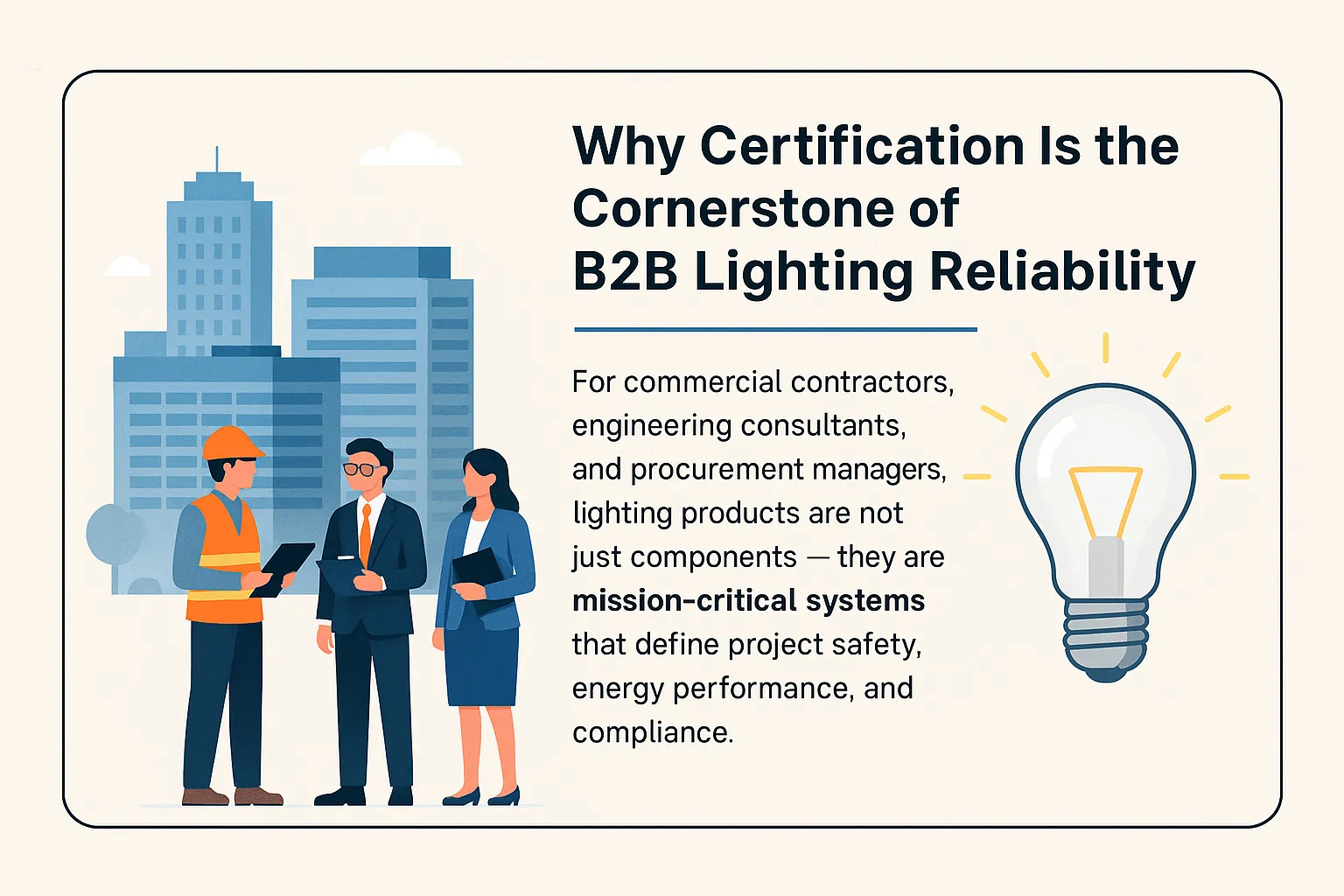
For commercial contractors, engineering consultants, and procurement managers, lighting products are not just components — they are mission-critical systems that define project safety, energy performance, and compliance.
Según International Energy Agency (IEA, 2024), China now produces over 80% of the world’s LED lighting products, exporting billions of units annually. However, product quality and compliance vary widely among suppliers.
In the B2B environment — where projects often exceed millions of dollars — an uncertified LED bulb can cause inspection failures, warranty disputes, and reputational damage.
Case in point: A large-scale hotel retrofit in Dubai was delayed for months when a shipment of non-certified bulbs failed SASO energy efficiency checks. The reinstallation cost exceeded 15% of the total project budget.
Lesson: Certification isn’t just paperwork. It’s a strategic safeguard against technical risk, regulatory penalties, and client dissatisfaction.
Understanding What LED Certification Really Means
Certification vs. Compliance

While often used interchangeably, these terms have distinct meanings:
- Certification: The product has been independently tested and approved by a recognized authority (e.g., TÜV, UL, Intertek).
- Compliance: The manufacturer claims to meet standards but may lack third-party validation.
Who Issues Certifications
Globally recognized certification and testing bodies include:
- TÜV Rheinland (Germany)
- UL (Underwriters Laboratories, USA)
- Intertek (ETL)
- CSA Group (Canada)
- SAA Approvals (Australia)
- CB Scheme (IECEE)
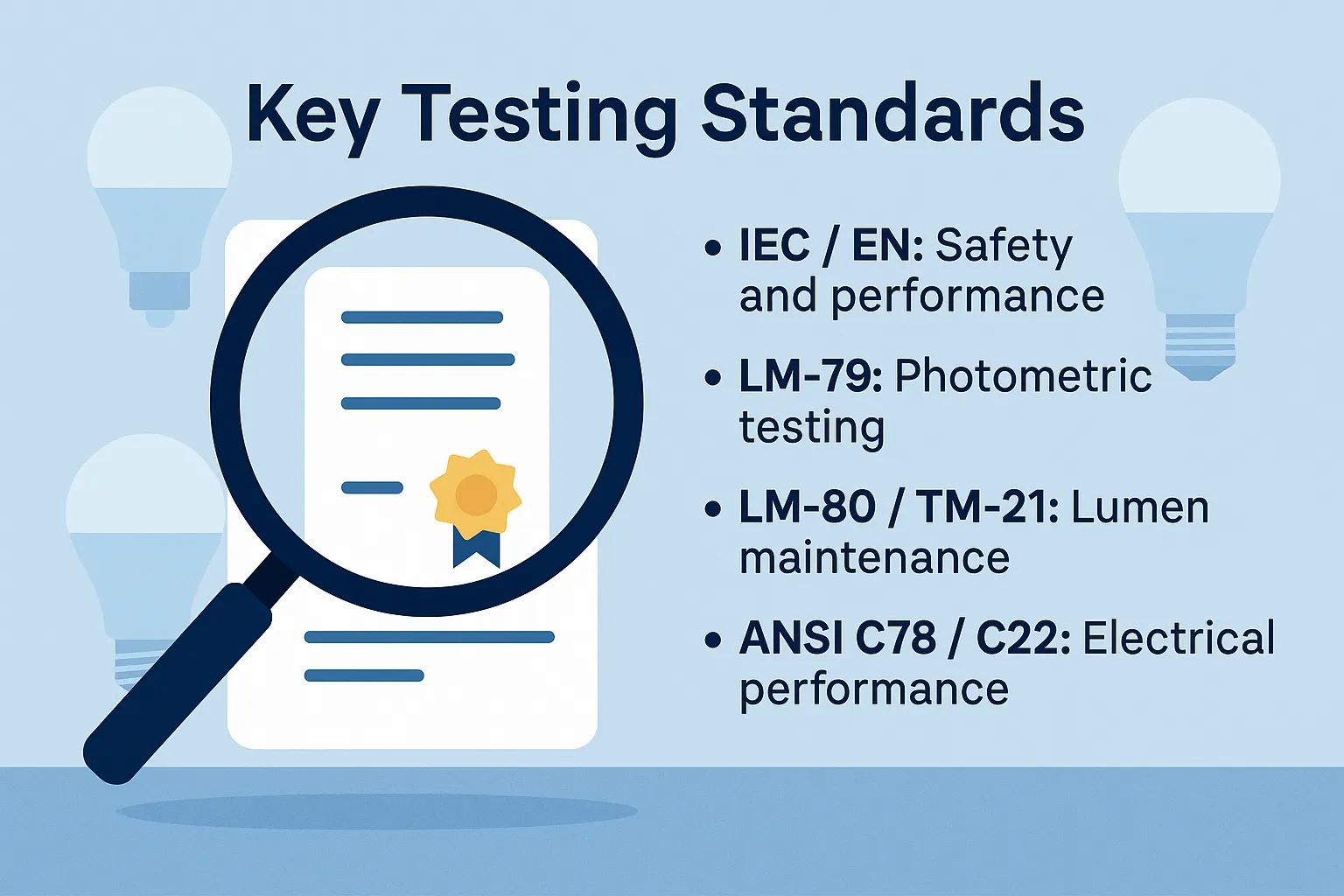
Key Testing Standards
- IEC / EN Standards: Safety and performance baselines recognized globally.
- LM-79: Luminous flux, efficiency, and colorimetric testing for LED lamps.
- LM-80 / TM-21: Lumen maintenance and life expectancy projections.
- ANSI C78 / C82: Electrical and photometric performance standards for North America.
(Fuente: U.S. Department of Energy – Solid-State Lighting Program)
Understanding Testing Standards and Certification Details
To qualify for international markets, a reliable LED bulb manufacturer must comply with specific directives and test standards that vary by region.
1. CE Mark (Europe & UK)
LVD — Low Voltage Directive (2014/35/EU)
Ensures electrical safety of devices operating between 50–1000V AC.
Test Items:
- Insulation resistance and dielectric strength
- Protection against electric shock
- Temperature rise under abnormal conditions
- Flame and fire hazard tests (glow-wire, needle-flame)
Standards Referenced:
- EN/IEC 62560 (Self-ballasted LED lamp safety)
- EN 60529 (IP protection)
- EN/IEC 62471 (Photobiological safety)
EMC Directive (2014/30/EU)
Prevents interference between electrical devices.
Key Tests:
- Emissions: EN 55015 / CISPR 15
- Harmonics: EN 61000-3-2 (Class C lighting equipment)
- Flicker / Voltage fluctuation: EN 61000-3-3
- Immunity: EN/IEC 61547
RoHS (2011/65/EU + 2015/863)
Limits hazardous substances like lead, cadmium, and mercury.
Manufacturers must provide a Declaration of Conformity y material testing reports.
(Reference: European Commission RoHS Directive)
Ecodesign & Energy Label (EU 2019/2020 & EU 2019/2015)
Defines minimum energy performance and product information requirements.
Key Tests:
- Luminous efficacy and standby power
- Lifetime and lumen maintenance
- Flicker (Pst LM) and stroboscopic effect (SVM)
- Registration in EPREL database
2. North America: UL / ETL / FCC
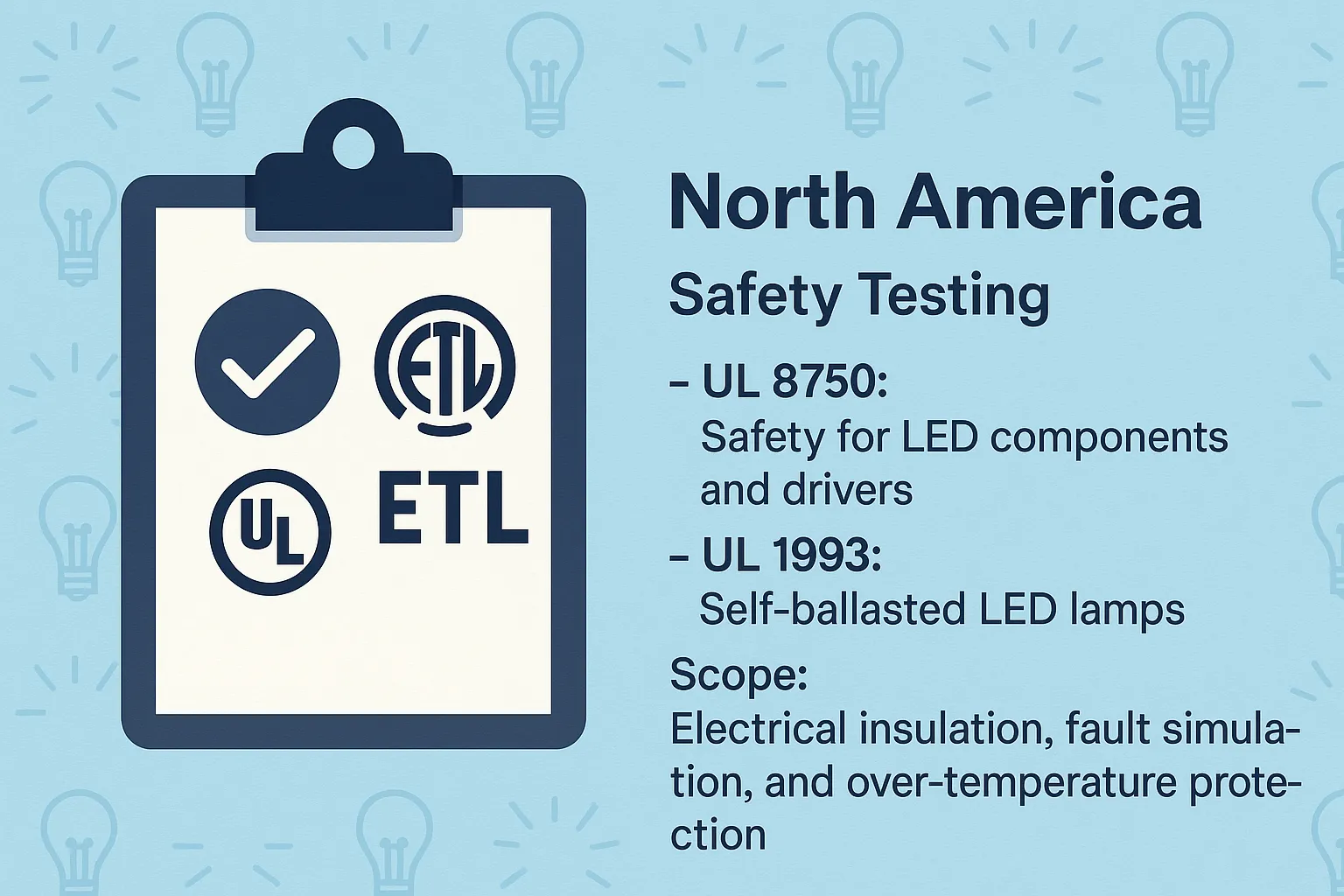
UL / ETL Safety Testing
- UL 8750: Safety for LED components and drivers
UL 1993: Self-ballasted LED lamps
- Scope: Electrical insulation, fault simulation, and over-temperature protection
- Verify authenticity in the UL Product iQ Database
FCC Part 15 (Subpart B)
- Regulates electromagnetic emissions for Class B (residential) lighting devices
- Test methods: Conducted and radiated emission under ANSI C63.4
(Reference: FCC Part 15 Rules)
Performance Standards
- IES LM-79 — Complete luminaire photometric testing
- IES LM-80 / TM-21 — LED chip lumen maintenance and life projection
3. Middle East: SASO & G-Mark
SASO Energy Efficiency and Safety
- SASO 2902 — Energy efficiency, optical performance, and safety for lighting products
- Required for customs clearance and project tender qualification
G-Mark (Gulf Conformity Mark)
- Issued under the GCC Standardization Organization (GSO)
- Covers Low Voltage y CEM compliance under unified Gulf regulations
Consejo: For Gulf-region tenders, ensure dual compliance — CB Report + SASO registration — to avoid port clearance issues.
4. Australia & New Zealand: RCM and AS/NZS Standards
RCM (Regulatory Compliance Mark)
- Represents compliance with Electrical Safety (EESS) y EMC (ACMA) frameworks
- Supplier must be registered in the National Database
AS/NZS 62560:2017
- Based on IEC 62560, adapted for local voltage and safety environments
- Combined with CISPR 15 for EMC emission tests
5. ISO Quality and Environmental Systems
- ISO 9001 – Quality Management
- ISO 14001 – Environmental Management
- ISO 45001 – Occupational Health and Safety
(Fuente: ISO Official Site)
Engineering Insight:
Certified manufacturers integrate these standards into every stage — from SMT production to aging tests and shipment traceability — ensuring consistent reliability across batches.
Core Certifications Every Reliable LED Bulb Manufacturer Should Provide
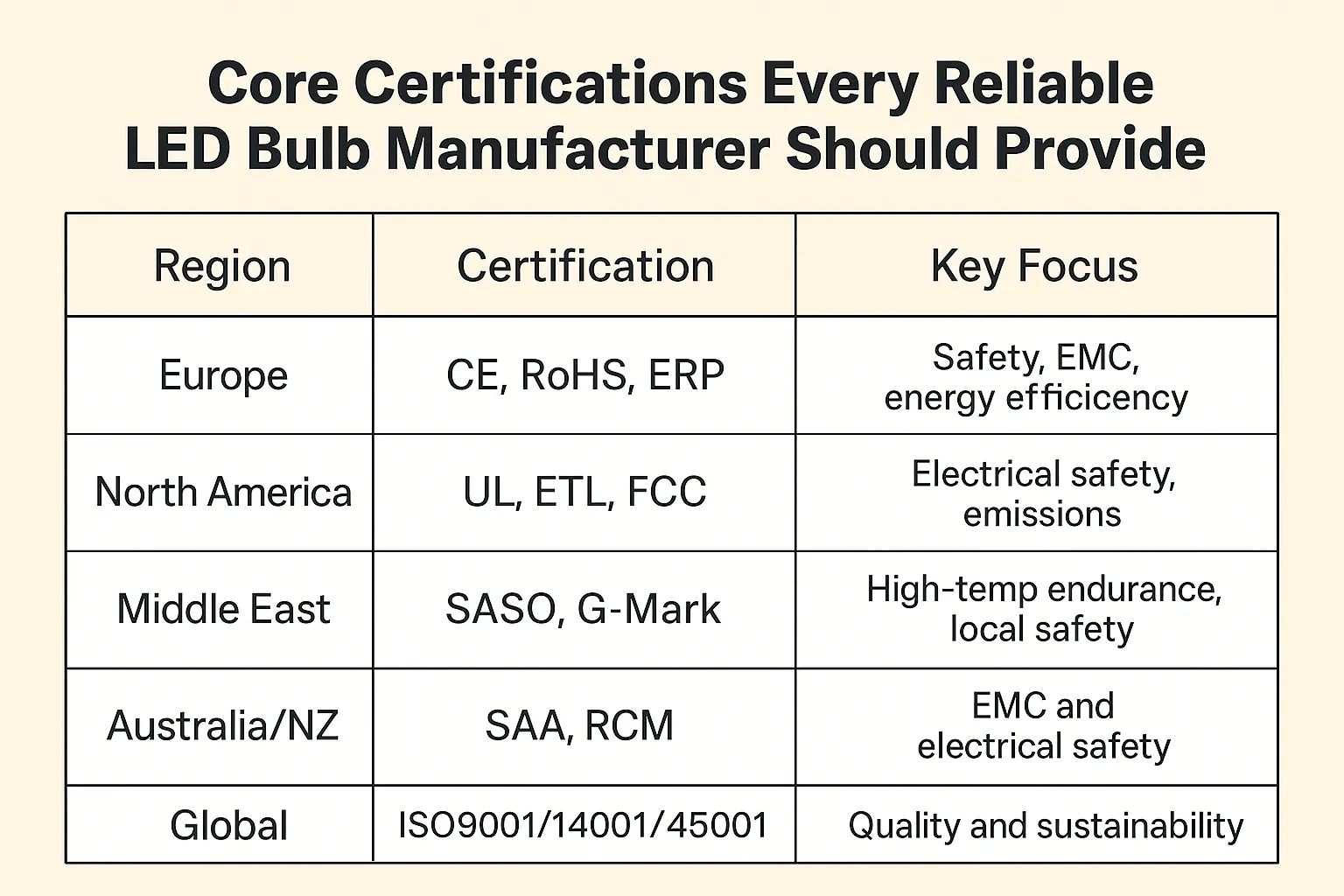 | Region | Certification | Key Focus |
|---|---|---|---|
| Europe | CE, RoHS, ERP | Safety, EMC, energy efficiency | |
| North America | UL, ETL, FCC | Electrical safety, emissions | |
| Middle East | SASO, G-Mark | High-temp endurance, local safety | |
| Australia/NZ | SAA, RCM | EMC and electrical safety | |
| Global | ISO9001/14001/45001 | Quality and sustainability |
A trustworthy supplier will proactively share documentation and explain the testing process in detail, including reports, test lab names, and certificate expiry dates.
How B2B Buyers Can Verify Certification Authenticity
A structured verification process ensures compliance integrity.
Checklist for Verification:
- Request certificates with serial numbers and issuing body details.
- Verify authenticity through official databases (e.g., TÜV, UL, SASO).
- Verificar expiry and scope of coverage.
- Solicitar LM-79 / LM-80 / TM-21 reports with original lab logos.
- Confirm the company name matches the business license.
- Use third-party inspectors (SGS, QIMA, or Intertek) before shipment.
- Reject any “shared” certificates or unverifiable PDFs.
(See TÜV Rheinland Certipedia Database)
Certification as a Marker of Manufacturing Maturity
Reliable LED bulb manufacturers integrate compliance at every level:
- Automated SMT assembly and AOI optical inspection
- In-house test labs for EMC, temperature, and surge tests
- ERP systems for batch traceability
- Documented internal audits under ISO9001
As LightingEurope’s Compliance Report (2024) notes, manufacturers with in-house certification systems experience 40% fewer warranty claims and significantly better product consistency.
Common Pitfalls and Red Flags
Avoid suppliers who:
- Uso fake CE or UL logos without valid IDs.
- Provide certificates unrelated to LED bulbs.
- Offer ultra-low pricing without test documentation.
- Refuse video audits or third-party verification.
- Operate as traders posing as manufacturers.
Pro Tip: Conduct a Pre-Shipment Inspection (PSI) — a small cost that prevents large losses.
How Certification Impacts ROI and Project Success
Certified lighting directly improves project outcomes:
- 35% longer lifespan on average (DOE SSL Report, 2024)
- 10–15% lower warranty costs
- Improved tender eligibility in government and ESG projects
- Reduced maintenance labor, improving total cost of ownership (TCO)
Certification ensures not just compliance, but business continuity for multi-year projects.
Emerging Trends in Global LED Certification
The next phase of LED compliance is about smart, sustainable, and digital verification.
1. Smart Lighting Protocols
- DALI-2, Zigbee, and Bluetooth Mesh now require interoperability certification.
2. ESG and Carbon Footprint Verification
- ISO 50001 (Energy Management) and Life Cycle Assessment (LCA) are becoming standard in green procurement.
3. Digital Product Passport (DPP)
- Introduced under the EU Ecodesign for Sustainable Products Regulation (2024), mandating traceable digital IDs for each lighting product.
4. Circular Economy Readiness
Manufacturers are expected to adopt recyclable materials and packaging — aligning with the European Green Deal.
Conclusion: Certification as a Strategic Investment
For B2B procurement teams and engineering firms, certification is more than a compliance checkbox — it’s a strategic guarantee of reliability and professionalism.
A certified LED bulb manufacturer demonstrates:
- Global market readiness
- Transparent quality management
- Engineering consistency
- Sustainable production practices
Partnering with certified suppliers not only mitigates risk but enhances brand credibility, ensuring every project is delivered on time, within specification, and to international standards.