De la Energía a la Ecología: Cómo el Diseño de Lentes de Lámparas LED Aumenta la Eficiencia y la Sostenibilidad
Introducción: El motor oculto de la luz eficiente
El cambio global hacia la iluminación sostenible ha convertido a los LED en la estrella indiscutible de la iluminación energéticamente eficiente. Sin embargo, el héroe anónimo detrás de muchos de los sistemas de iluminación LED más efectivos—especialmente en focos, downlights y luminarias comerciales—es la lente de lámpara, también conocida como la lente reflectora.
Mientras que los chips LED generan la luz, la lente de lámpara LED determina hacia dónde va esa luz, cómo se ve y qué tan eficientemente se utiliza. Mediante geometría óptica de precisión y materiales cuidadosamente diseñados, esta lente garantiza que casi cada fotón sea dirigido a un propósito útil.
En este artículo, exploramos cómo diseño de lentes para lámparas LED mejora ambos eficiencia energética y sostenibilidad ambiental, cerrando la brecha entre la precisión de ingeniería y la responsabilidad ecológica.
¿Qué es una lente LED?

Una lente de lámpara de foco, o lámpara LED reflectora, es un tipo de componente óptico secundario utilizado para recoger y dirigir la luz de una fuente LED—típicamente una matriz COB (chip-on-board) o SMD.
A diferencia de las lentes planas que dependen principalmente de la refracción, las lentes de lámparas LED a menudo combinan reflexión y refracción principios:
- Superficies reflectantes—generalmente recubrimientos metálicos o metalizados—redirigen la luz del LED hacia afuera.
- Geometría óptica (parabólico, elíptico o de forma libre) define la forma del haz y la intensidad.
- Capas de difusión opcionales garantizan transiciones suaves y reducen bordes duros.
Estos diseños son especialmente comunes en:
- Focos y luces de riel (haces estrechos, 10°–36°)
- Downlights (haces medios, 40°–60°)
- Iluminación de escenario o museo (alto CRI, deslumbramiento controlado)
Los principios ópticos detrás de la eficiencia de las lámparas LED
Geometría Reflectante
El principio fundamental detrás de una lente de lámpara es reflexión controlada. La superficie interior—a menudo parabólica o facetada—redirige la luz LED que de otro modo se dispersaría.
Esto permite que la luminaria alcance un mayor factor de utilización, alcanzando a menudo 85–95% eficiencia óptica, en comparación con 70–80% en alojamientos no optimizados (Signify I+D, 2022).
Hybrid Optical Systems
Modern lamp lamp lenses frequently combine:
- Total Internal Reflection (TIR) zones for direct light control.
- Metalized reflective walls for secondary redirection.
This hybrid approach maximizes light output and ensures precise beam shaping, eliminating dark spots or color shadows.
Ejemplo:
In a COB spotlight, roughly 30–40% of emitted light exits directly through the lens dome, while the remaining 60–70% is captured and redirected by the lamp’s reflective walls. Optimized geometry ensures that nearly all of it contributes to usable illumination.
Materials Matter: Choosing the Right Substrate and Coating
The material and surface finish of a lamp lens directly affect its optical and environmental performance.
| Material | Optical Efficiency | Temperature Resistance | Impacto medioambiental | Common Use |
|---|---|---|---|---|
| Aluminum Alloy (Al6061, Al1100) | 92–95% (with vacuum coating) | Excelente | Recyclable metal | High-end reflectors |
| PC (Polycarbonate) | 88–91% | Moderado | Recyclable, low-carbon | General-purpose fixtures |
| PMMA (Acrylic) | 90–93% | Low (≤85°C) | Lightweight, clean processing | Indoor lamps |
| Glass or Ceramic Hybrid | 93–96% | Excelente | Long lifespan, inert | Premium optics |
Reflective Coatings
To achieve maximum brightness and consistent color:
- Vacuum aluminum deposition (VAD) y silver plating create mirror-like finishes.
- PVD (Physical Vapor Deposition) coatings improve adhesion and corrosion resistance.
- Nano-diffusion layers can reduce glare without major light loss.
For sustainability, aluminum reflectors are preferred due to infinite recyclability y stable optical performance over time.
📖 Referencia:
Lighting Research Center (RPI). “Advanced Reflector Materials for Energy-Efficient Lighting.” 2021.
https://www.lrc.rpi.edu/
Geometry of Efficiency: How Shape Defines Output
The lamp’s internal geometry is what determines its beam angle, light uniformity, y energy utilization.
a. Parabolic bulbs
Classic design for collimated beams. Ideal for track lights and spotlights needing narrow focus (15°–25°).
- Advantage: High center intensity, excellent for long-throw lighting.
- Limitation: Potential ring patterns if surface quality is poor.
b. Elliptical or Compound Curves
Provide smoother transitions between light zones—ideal for downlights and retail fixtures.
These designs typically improve beam uniformity by up to 20% compared with standard parabolic designs (Philips Optical Report, 2021).
c. Freeform Reflectors
Created through computer-optimized ray-tracing. They can produce complex asymmetric distributions for special applications (e.g., wall washing or museum exhibits).
Freeform reflectors often increase target illumination efficiency by 15–18% relative to conventional symmetrical shapes.
Reducing Light Waste and Energy Consumption

Directional Efficiency
Because LED sources emit light in a hemisphere, a portion is often lost without optical guidance. A light lamp captures stray light and redirects it forward.
This can reduce energy waste by 20–30%, allowing manufacturers to achieve the same luminous flux with fewer LEDs (DOE SSL Report, 2020).
Enhanced Beam Utilization
Precise reflector angles ensure that almost 95% of generated light falls within the intended beam zone—meaning fewer lumens are wasted as spill or glare.
Thermal Efficiency
Unlike sealed diffusers,LED lamp designs allow better heat dissipation through open-air geometries and metallic reflection surfaces, preventing efficiency loss from heat buildup.
📖 Referencia:
U.S. Department of Energy (DOE). “Solid-State Lighting Technology Fact Sheet.” 2020.
https://www.energy.gov/eere/ssl
Minimizing Light Pollution and Glare
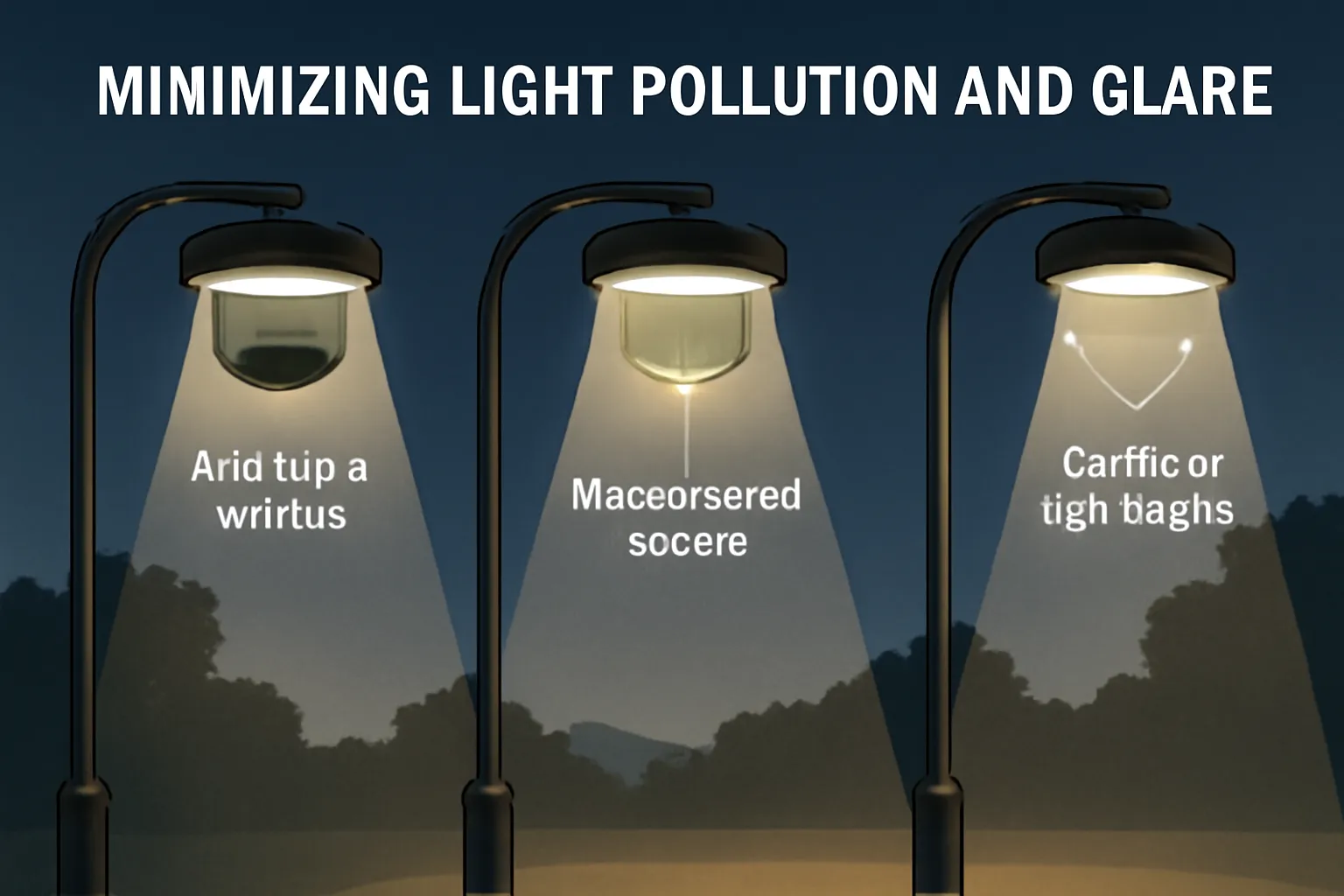
Glare Control
Improperly designed reflectors can cause harsh glare, particularly in commercial and retail spaces.
To mitigate this, optical engineers integrate:
- Anti-glare baffles within the spotlight lamp.
- Microfaceted textures that scatter excess light gently.
- Black-coated edges to absorb peripheral spill.
Light Pollution Reduction
By confining light within precise angles (e.g., 24° or 36° beam), lamp lenses prevent skyward or lateral leakage—helping cities meet International Dark-Sky Association (IDA) compliance standards.
📖 Referencia:
International Dark-Sky Association. “Lighting Guidelines for Responsible Outdoor Illumination.” 2022.
https://www.darksky.org
Sustainability in Manufacturing and Lifecycle Design

Sustainability isn’t only about power consumption—it extends across the product’s entire lifecycle.
a. Recyclable and Reusable Materials
- Aluminum and PC are both recyclable and maintain high optical stability over time.
- Some manufacturers (e.g., Signify, Seoul Semiconductor) are experimenting with PCR-based plastics for reflectors, reducing virgin material use by up to 40%.
b. Modular Assembly
spotlight lamp lenses can be designed as detachable units, allowing end-users to replace optical modules without discarding the entire fixture—a critical step toward circular lighting systems.
c. Low-Energy Manufacturing
Vacuum coating technologies now operate at lower temperatures and shorter cycles, cutting manufacturing energy consumption by 20–25% compared to older electroplating methods.
📖 Referencia:
Covestro AG. “Recycled Polycarbonate in Optical Applications.” 2022.
https://solutions.covestro.com/en/highlights/articles/cases/2022/more-sustainable-lighting
Case Study: COB LED Spotlight Optimization
Project Overview
A commercial lighting manufacturer redesigned its COB LED spotlight using a hybrid lamp lens—combining TIR optics with a vacuum-coated aluminum lamp.
Results
| Métrica | Before | After | Improvement |
|---|---|---|---|
| Optical Efficiency | 82% | 94% | +14.6% |
| System Power | 18W | 14.5W | –19% |
| Center Intensity | 1,200 cd | 1,560 cd | +30% |
| Luminous Uniformity | 0.72 | 0.89 | +24% |
This upgrade saved approximately 1.8 kWh per fixture per month, translating into 21,600 kWh annually across a 1,000-light installation.
📖 Referencia:
Signify Lighting Systems. “High-Efficiency Optical Design for COB LEDs.” Case Report, 2021.
The Ecological Benefits of Smart Optical Design

Reduced Energy Demand
A well-optimized reflector can allow smaller power supplies y fewer LEDs per luminaire, reducing manufacturing emissions and long-term operational energy.
Longer Lifespan, Less Waste
Because optical control improves heat management, LEDs run cooler—extending lifetime by 15–20% on average (Cree LED Technical Note, 2020).
Longer lifespan means fewer replacements, lower waste, and reduced logistics emissions.
Eco-Friendly Lighting Quality
Accurate optical control minimizes over-illumination, preventing “visual pollution” while enhancing the aesthetic quality of spaces.
In retail or hospitality settings, this contributes to visual comfort y customer well-being, reinforcing the “human-centered sustainability” principle.
Global Standards Supporting Efficient Optical Design
Optical performance is now a formal criterion in most energy and sustainability certifications:
- ENERGY STAR® (EPA, USA) – Requires minimum optical efficiency and beam uniformity.
- DLC (DesignLights Consortium) – Version 5.1 mandates optical control data and UGR testing.
- LEED v4 (USGBC) – Awards points for lighting systems that reduce glare and light pollution.
- IEC 62717 – Specifies LED module performance, including optical parameters.
📖 Referencia:
DesignLights Consortium Technical Requirements, Version 5.1, 2022.
https://designlights.org/our-work/solid-state-lighting/technical-requirements/ssl-v5-1
Looking Ahead: The Next Generation of lamp Lenses
The future of led lamp lens design is evolving rapidly as new materials and digital tools merge optical science with sustainability goals.
AI-Assisted Optical Design
Machine learning algorithms now generate optimized reflector geometries, reducing design time from weeks to hours.
AI models trained on photometric data can predict light distribution with over 95% accuracy before physical prototyping.
Advanced Surface Technologies
Emerging metamaterial coatings enhance reflectivity beyond 97% while resisting oxidation—ideal for long-life, outdoor, or industrial lighting.
Recyclable Hybrid Structures
Some manufacturers are introducing disassemblable multi-layer lenses, where the reflective shell and inner lens can be separated and recycled independently, meeting upcoming EU circular economy directives.
Conclusion: The Reflective Path Toward Sustainable Illumination
The LED lamp lens exemplifies how precision engineering and ecological responsibility can coexist. By capturing and redirecting every photon efficiently, it transforms lighting fixtures into models of sustainability—reducing energy use, minimizing waste, and protecting our environment from unnecessary light pollution.
As lighting design continues to evolve, the humble lamp will remain a symbol of how small details—an angle, a curve, a coating—can have global impact.
From energy to ecology, the future of light will be defined not just by how bright it shines, but by how intelligently it reflects.