From Energy to Ecology: How LED lamp Lens Design Boosts Efficiency and Sustainability
Introduction: The Hidden Engine of Efficient Light
The global shift toward sustainable lighting has made LEDs the undeniable star of energy-efficient illumination. Yet, the unsung hero behind many of the most effective LED lighting systems—especially in spotlights, downlights, and commercial fixtures—is the lamp lens, also known as the reflector lens.
While LED chips generate the light, the LED lamp lens determines where that light goes, how it looks, and how efficiently it’s used. Through precision optical geometry and carefully engineered materials, this lens ensures that nearly every photon is directed to a useful purpose.
In this article, we explore how LED lamp lens design enhances both エネルギー効率 そして environmental sustainability, bridging the gap between engineering precision and ecological responsibility.
What Is an LED Lens?

A spotlight lamp lens, or LED reflector lamp, is a type of secondary optical component used to collect and direct light from an LED source—typically a COB (chip-on-board) or SMD array.
Unlike flat lenses that rely primarily on refraction, LED lamp lenses often combine reflection and refraction principles:
- 反射面—usually metallic or metallized coatings—redirect light from the LED outward.
- Optical geometry (parabolic, elliptical, or freeform) defines the beam shape and intensity.
- Optional diffusion layers ensure smooth transitions and reduce harsh edges.
These designs are especially common in:
- Spotlights and track lights (narrow beams, 10°–36°)
- Downlights (medium beams, 40°–60°)
- Stage or museum lighting (high CRI, controlled glare)
The Optical Principles Behind LED lamp Efficiency
Reflective Geometry
The fundamental principle behind a lamp lens is controlled reflection. The interior surface—often parabolic or faceted—redirects LED light that would otherwise scatter.
This allows the luminaire to achieve a higher utilization factor, often reaching 85–95% optical efficiency, 、と比較して 70–80% in non-optimized housings (Signify R&D, 2022).
Hybrid Optical Systems
Modern lamp lamp lenses frequently combine:
- Total Internal Reflection (TIR) zones for direct light control.
- Metalized reflective walls for secondary redirection.
This hybrid approach maximizes light output and ensures precise beam shaping, eliminating dark spots or color shadows.
例:
In a COB spotlight, roughly 30–40% of emitted light exits directly through the lens dome, while the remaining 60–70% is captured and redirected by the lamp’s reflective walls. Optimized geometry ensures that nearly all of it contributes to usable illumination.
Materials Matter: Choosing the Right Substrate and Coating
The material and surface finish of a lamp lens directly affect its optical and environmental performance.
| 素材 | Optical Efficiency | Temperature Resistance | 環境への影響 | Common Use |
|---|---|---|---|---|
| Aluminum Alloy (Al6061, Al1100) | 92–95% (with vacuum coating) | 優れている | Recyclable metal | High-end reflectors |
| PC (Polycarbonate) | 88–91% | 中程度 | Recyclable, low-carbon | General-purpose fixtures |
| PMMA (Acrylic) | 90–93% | Low (≤85°C) | Lightweight, clean processing | Indoor lamps |
| Glass or Ceramic Hybrid | 93–96% | 優れている | Long lifespan, inert | Premium optics |
Reflective Coatings
To achieve maximum brightness and consistent color:
- Vacuum aluminum deposition (VAD) そして silver plating create mirror-like finishes.
- PVD (Physical Vapor Deposition) coatings improve adhesion and corrosion resistance.
- Nano-diffusion layers can reduce glare without major light loss.
For sustainability, aluminum reflectors are preferred due to infinite recyclability そして stable optical performance over time.
📖 参照:
Lighting Research Center (RPI). “Advanced Reflector Materials for Energy-Efficient Lighting.” 2021.
https://www.lrc.rpi.edu/
Geometry of Efficiency: How Shape Defines Output
The lamp’s internal geometry is what determines its ビーム角, light uniformity, 、および energy utilization.
a. Parabolic bulbs
Classic design for collimated beams. Ideal for track lights and spotlights needing narrow focus (15°–25°).
- Advantage: High center intensity, excellent for long-throw lighting.
- Limitation: Potential ring patterns if surface quality is poor.
b. Elliptical or Compound Curves
Provide smoother transitions between light zones—ideal for downlights and retail fixtures.
These designs typically improve beam uniformity by up to 20% compared with standard parabolic designs (Philips Optical Report, 2021).
c. Freeform Reflectors
Created through computer-optimized ray-tracing. They can produce complex asymmetric distributions for special applications (e.g., wall washing or museum exhibits).
Freeform reflectors often increase target illumination efficiency by 15–18% relative to conventional symmetrical shapes.
Reducing Light Waste and Energy Consumption

Directional Efficiency
Because LED sources emit light in a hemisphere, a portion is often lost without optical guidance. A light lamp captures stray light and redirects it forward.
This can reduce energy waste by 20–30%, allowing manufacturers to achieve the same luminous flux with fewer LEDs (DOE SSL Report, 2020).
Enhanced Beam Utilization
Precise reflector angles ensure that almost 95% of generated light falls within the intended beam zone—meaning fewer lumens are wasted as spill or glare.
Thermal Efficiency
Unlike sealed diffusers,LED lamp designs allow better heat dissipation through open-air geometries and metallic reflection surfaces, preventing efficiency loss from heat buildup.
📖 参照:
U.S. Department of Energy (DOE). “Solid-State Lighting Technology Fact Sheet.” 2020.
https://www.energy.gov/eere/ssl
Minimizing Light Pollution and Glare
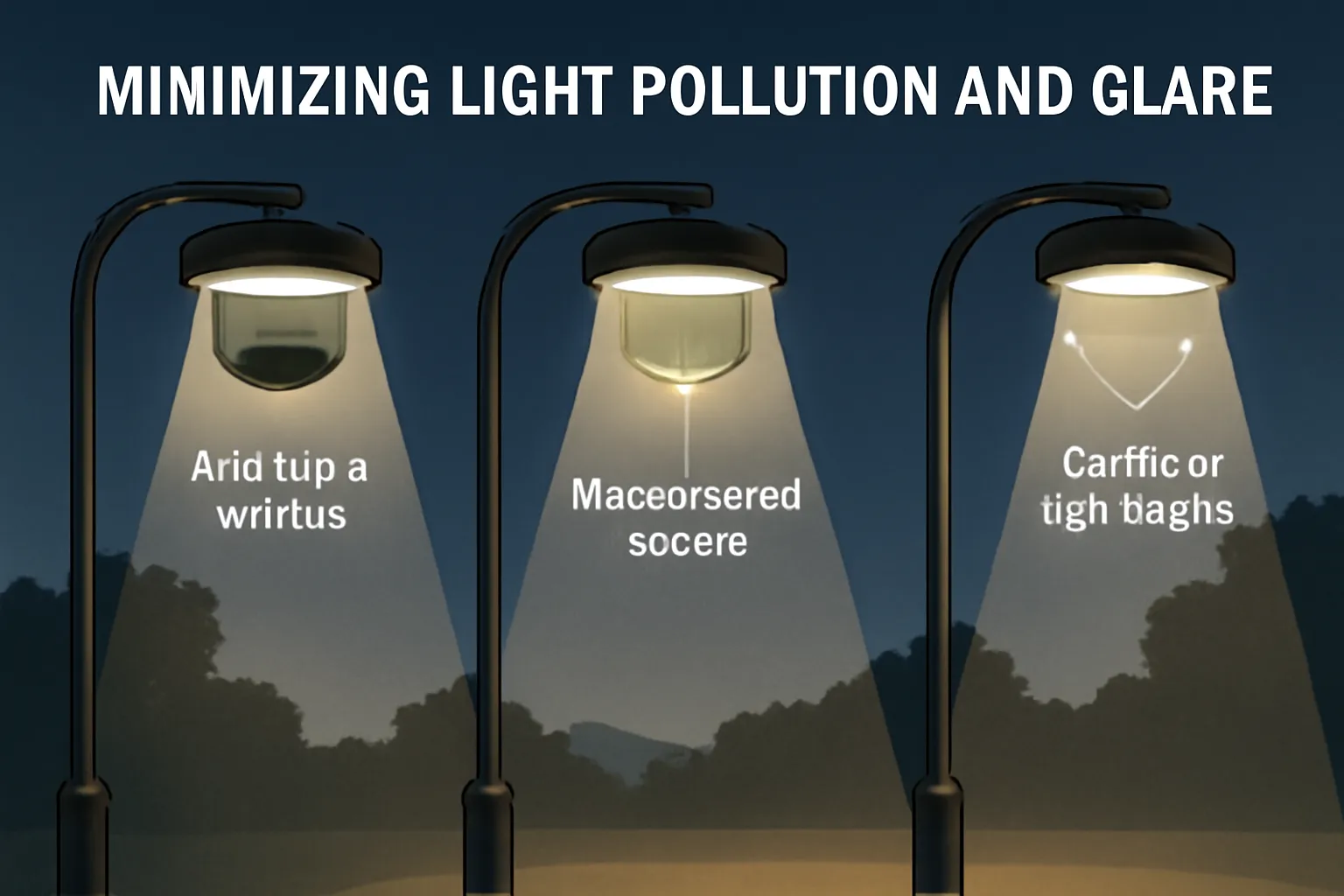
Glare Control
Improperly designed reflectors can cause harsh glare, particularly in commercial and retail spaces.
To mitigate this, optical engineers integrate:
- Anti-glare baffles within the spotlight lamp.
- Microfaceted textures that scatter excess light gently.
- Black-coated edges to absorb peripheral spill.
Light Pollution Reduction
By confining light within precise angles (e.g., 24° or 36° beam), lamp lenses prevent skyward or lateral leakage—helping cities meet International Dark-Sky Association (IDA) compliance standards.
📖 参照:
International Dark-Sky Association. “Lighting Guidelines for Responsible Outdoor Illumination.” 2022.
https://www.darksky.org
Sustainability in Manufacturing and Lifecycle Design

Sustainability isn’t only about power consumption—it extends across the product’s entire lifecycle.
a. Recyclable and Reusable Materials
- Aluminum and PC are both recyclable and maintain high optical stability over time.
- Some manufacturers (e.g., Signify, Seoul Semiconductor) are experimenting with PCR-based plastics for reflectors, reducing virgin material use by up to 40%.
b. Modular Assembly
spotlight lamp lenses can be designed as detachable units, allowing end-users to replace optical modules without discarding the entire fixture—a critical step toward circular lighting systems.
c. Low-Energy Manufacturing
Vacuum coating technologies now operate at lower temperatures and shorter cycles, cutting manufacturing energy consumption by 20–25% compared to older electroplating methods.
📖 参照:
Covestro AG. “Recycled Polycarbonate in Optical Applications.” 2022.
https://solutions.covestro.com/en/highlights/articles/cases/2022/more-sustainable-lighting
Case Study: COB LED Spotlight Optimization
Project Overview
A commercial lighting manufacturer redesigned its COB LED spotlight using a hybrid lamp lens—combining TIR optics with a vacuum-coated aluminum lamp.
Results
| 指標 | Before | After | Improvement |
|---|---|---|---|
| Optical Efficiency | 82% | 94% | +14.6% |
| System Power | 18W | 14.5W | –19% |
| Center Intensity | 1,200 cd | 1,560 cd | +30% |
| Luminous Uniformity | 0.72 | 0.89 | +24% |
This upgrade saved approximately 1.8 kWh per fixture per month, translating into 21,600 kWh annually across a 1,000-light installation.
📖 参照:
Signify Lighting Systems. “High-Efficiency Optical Design for COB LEDs.” Case Report, 2021.
The Ecological Benefits of Smart Optical Design

Reduced Energy Demand
A well-optimized reflector can allow smaller power supplies そして fewer LEDs per luminaire, reducing manufacturing emissions and long-term operational energy.
Longer Lifespan, Less Waste
Because optical control improves heat management, LEDs run cooler—extending lifetime by 15–20% on average (Cree LED Technical Note, 2020).
Longer lifespan means fewer replacements, lower waste, and reduced logistics emissions.
Eco-Friendly Lighting Quality
Accurate optical control minimizes over-illumination, preventing “visual pollution” while enhancing the aesthetic quality of spaces.
In retail or hospitality settings, this contributes to visual comfort そして customer well-being, reinforcing the “human-centered sustainability” principle.
Global Standards Supporting Efficient Optical Design
Optical performance is now a formal criterion in most energy and sustainability certifications:
- ENERGY STAR® (EPA, USA) – Requires minimum optical efficiency and beam uniformity.
- DLC (DesignLights Consortium) – Version 5.1 mandates optical control data and UGR testing.
- LEED v4 (USGBC) – Awards points for lighting systems that reduce glare and light pollution.
- IEC 62717 – Specifies LED module performance, including optical parameters.
📖 参照:
DesignLights Consortium Technical Requirements, Version 5.1, 2022.
https://designlights.org/our-work/solid-state-lighting/technical-requirements/ssl-v5-1
Looking Ahead: The Next Generation of lamp Lenses
The future of led lamp lens design is evolving rapidly as new materials and digital tools merge optical science with sustainability goals.
AI-Assisted Optical Design
Machine learning algorithms now generate optimized reflector geometries, reducing design time from weeks to hours.
AI models trained on photometric data can predict light distribution with over 95% accuracy before physical prototyping.
Advanced Surface Technologies
Emerging metamaterial coatings enhance reflectivity beyond 97% while resisting oxidation—ideal for long-life, outdoor, or industrial lighting.
Recyclable Hybrid Structures
Some manufacturers are introducing disassemblable multi-layer lenses, where the reflective shell and inner lens can be separated and recycled independently, meeting upcoming EU circular economy directives.
Conclusion: The Reflective Path Toward Sustainable Illumination
The LED lamp lens exemplifies how precision engineering and ecological responsibility can coexist. By capturing and redirecting every photon efficiently, it transforms lighting fixtures into models of sustainability—reducing energy use, minimizing waste, and protecting our environment from unnecessary light pollution.
As lighting design continues to evolve, the humble lamp will remain a symbol of how small details—an angle, a curve, a coating—can have global impact.
From energy to ecology, the future of light will be defined not just by how bright it shines, but by how intelligently it reflects.