CRI98対ハイルーメンGU10:色品質か明るさか?
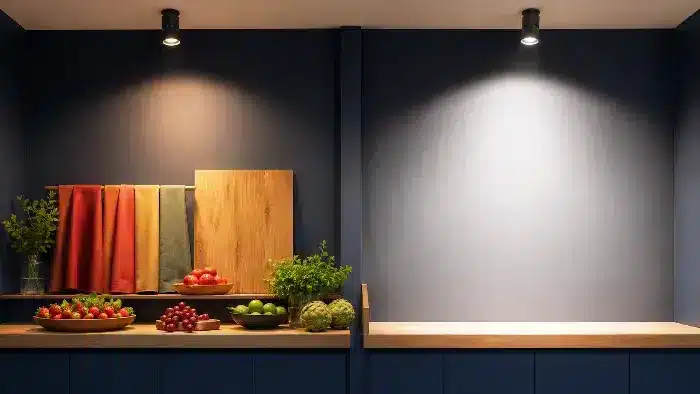
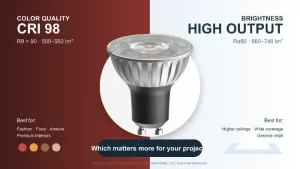
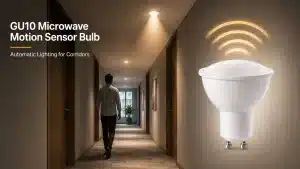
同じTECO GU10製品を、豊かな色彩表現と高い知覚輝度という2つの照明優先事項の間で示したもの。製品自体にはTECO提供のオリジナル写真を使用しています。.
簡単な回答
衣服、美術品、食品、家具、化粧品、肌の色調、高級内装仕上げなど、正確な色表現が照らされる対象物の価値に直接影響する場合は、CRI98 GU10を選択してください。.
ターゲット面で十分な照度を得ることが最優先事項である場合、特に高い天井、広いビームアプリケーション、一般的な商業スペース、または明るいハロゲンランプを置き換えるプロジェクトでは、高ルーメンのGU10を選択してください。.
ただし、最高のGU10が必ずしも最高のCRIまたは最高のルーメン値を持つランプとは限りません。適切な選択には以下のバランスが必要です:
- 色品質
- ターゲット上の有用な光
- ビーム角
- 取付高さ
- 調光性能
- 熱管理
- 寿命
- プロジェクト予算
制御された24°ビームを持つ500ルーメンのCRI98 GU10は、広い60°ビームを持つ700ルーメンのランプよりも、小さなディスプレイをより効果的に照らすかもしれません。逆に、完璧な演色性でも、広い空間や天井の高い空間で不十分な照度を補うことはできません。.
したがって、正しい質問は単に「色質か明るさか?」ではなく、次の通りです:
プロジェクトにはどれだけの光が必要か、その光はどこに向けるべきか、照らされる対象物はどれほど正確に表現される必要があるか?
CRIとルーメンは実際に何を測定するのか?
ルーメンはランプが発する可視光の総量を測定します。ルーメンが多いほど一般的に総光量は多くなりますが、ルーメンだけでは光がどこに向かうのか、またはその下で物体がどのように見えるかはわかりません。.
CRI(Color Rendering Index)は、光源が同じ色温度の基準光源と比較して、どれだけ忠実に色を再現するかを評価します。一般に公表されているRa値は、最初の8つのテスト色(R1–R8)に基づく平均値です。肌、食品、木材、織物、花、多くの小売商品にとって特に重要な飽和赤テスト色であるR9は含まれていません。EU規制では、CRIをR1–R8の平均と定義し、R9は別個の製品パラメータとして扱います。.
この違いにより、「CRI 90」という類似したラベルを持つ2つのランプが、明らかに異なる見え方になる理由が説明されます。一方はパステルカラーを比較的良く再現する一方で、赤い素材を平坦または茶色がかって見せることがあり、もう一方はより強い赤成分を持ち、より自然な肌色、食品、暖かい仕上げを生み出すことがあります。.
CRIとルーメンは異なる質問に答えます:
| 指標 | 回答する質問 | それが伝えないこと |
|---|---|---|
| ルーメン | ランプはどれだけの総可視光を発するか? | 色精度、ビーム品質または目標照度 |
| CRI / Ra | 一連の色はどの程度忠実に再現されていますか? | 輝度、R9性能または調光品質 |
| R9 | 彩度の高い赤はどの程度忠実に再現されていますか? | 全体的な色忠実度 |
| ビーム角 | 光はどの程度広く分布していますか? | 総出力またはビーム均一性 |
| カンデラ | 特定の方向への光の強さはどの程度ですか? | 総光束 |
| ルクス | 表面に届く光の量は? | 色品質 |
プロフェッショナルな選択には、これらの値のいくつかを組み合わせる必要があります。.
なぜCRI98のGU10はルーメンが少なくなることがあるのか?
白色LEDは通常、青色または紫色のLED光源と蛍光体材料を組み合わせて光を作ります。演色性(特に彩度の高い赤)を向上させるには、メーカーは測光ルーメン計算への寄与が効率的でないスペクトルの部分により多くのエネルギーを分配する必要があります。.
その結果、同じランププラットフォームの超高CRIバージョンは、最大発光効率に最適化されたバージョンよりもルーメン出力が低くなる場合がよくあります。この差の大きさは固定されていません。LEDパッケージ、蛍光体システム、色温度、駆動電流、光学設計、熱条件、およびメーカーが品質と効率のバランスをどう取るかによって異なります。.
TECOの現在のGU10製品ラインでは、提供される製品マトリックスには以下のような例が含まれます:
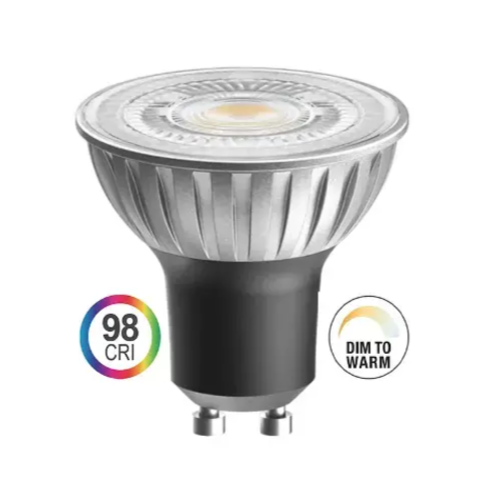
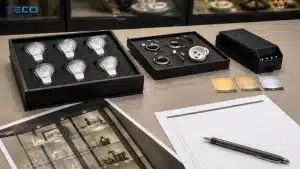
TECO提供の実際のTECO GU10製品写真。.
| GU10オプション | 演色性 | 宣言光束* | 主な優先事項 |
|---|---|---|---|
| 高CRIバージョン | Ra98、R9 >90 | 500–580 lm | 正確な色 |
| 高出力版 | Ra90、R9 >90 | 660~740ルーメン | 良好な色品質を備えたより多くの光 |
| 汎用高出力版 | Ra80 | 670–710 lm | 明るさと効率 |
| 狭角ビーム版 | Ra95 | 440 lm | 精密アクセント照明 |
*出力は製品バージョンと光学構成によって異なります。仕様決定や発注前に、正確なモデル、CCT、ビーム角、試験報告書を確認してください。.
購入者は現在公開されているものを確認できます TECO Premium GU10 Pro 8W Ra98 仕様 完全なものを閲覧する GU10 LED電球の範囲 マッチングサンプルをリクエストする前に。.
これらの数値は、ワット数だけでは選択方法として弱い理由を示しています。約7.5–8Wと定格された2つのGU10ランプは、非常に異なるルーメン出力と色品質をもたらす可能性があります。その違いは、単なる定格電力の0.5Wの変化ではなく、完全な光学・電気設計から生じます。.
高ルーメンが必ずしも明るい表示を意味するわけではありません
ルーメンは総光量を測定しますが、スポットライトは光を指向させるように設計されています。GU10用途では、ビーム角と中心光束強度は、総ルーメンと同様に重要なことが多いです。.
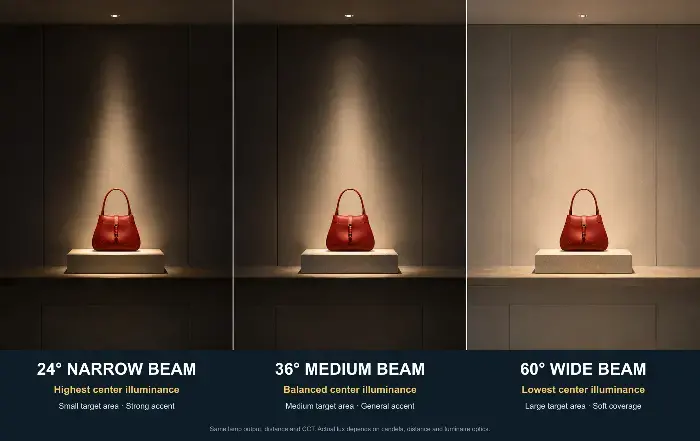
狭角、中角、広角ビームの比較例。最終的な計算には測定済みIES/LDTファイルと投影距離を使用してください。.
2つの簡略化された例を考えてみましょう:
- ランプA:500 lm、24°ビーム角
- ランプB: 540 lm、60°ビーム
ランプBは総合的な光量は多いが、はるかに広い範囲に広がります。ランプAは小さな絵画、マネキン、テーブル、商品ディスプレイ上で実質的に高い照度を生み出すかもしれません。ランプBは広い環境照明には適しているかもしれません。.
取り付け高さが結果を再び変えます。ターゲットからの距離が増すにつれ、ビームは広くなり照度は低下します。光束角、カンデラ、ビーム図、試験距離なしでルーメンのみを示す製品ページは、専門的な判断に十分な情報を提供しません。.
GU10製品を比較する際には、以下をリクエストしてください:
- ビーム角
- 中心ビーム燭光
- 一般的な設置距離におけるビーム径
- 1メートル、2メートル、3メートルにおける照度(ルクス)
- IESまたはLDT測光ファイル
- 実際のビームの写真
- ホットスポット、リング、色分離に関する情報
グレア、影、または制御不良の縁を持つ不均一な700ルーメンのビームよりも、クリーンで均一な500ルーメンのビームの方が有用かもしれません。.
設置後に光学的な柔軟性が必要なプロジェクトでは、固定ビーム製品と比較してください TECO GU10 ズーム可能 7.5W Ra98 スポットライト. 。精密なアクセント照明については、 TECO 10° 狭角ビーム GU10.
CRI98はCRI90よりも目に見えて優れていますか?
場合によってはそうですが、すべての用途でそうとは限りません。.
スペクトル品質が赤、食品、花、布地、天然素材にどのように影響するかの例示比較。最終製品の承認には測定データと実サンプルを使用すべきです。.
以下の場合に違いが最も目立ちます:
- 照明対象物に豊かな赤、自然な肌色、または微妙な色の違いが含まれている場合
- 顧客は色で製品を比較します
- 美術品、テキスタイル、木材、食品、化粧品が展示される
- 類似した色調を持つ複数の素材が区別可能である必要があります
- 既存の照明は緑がかった、灰色がかった、または色褪せた外観をしています
- プロジェクトはプレミアムとして位置付けられています
以下の場合、その差は商業的に重要性が低いかもしれません:
- Corridors
- Storage areas
- Utility rooms
- General circulation spaces
- Locations where color discrimination is not important
- Projects where current illumination is already insufficient
Also remember that the Ra number is not the complete story. A lamp marked Ra98 should ideally be supported by its R9 value, spectral power distribution, color consistency and—where available—TM-30 results. The U.S. Department of Energy describes TM-30 as a system of related measures and graphics that provides broader information for evaluating color rendition and its trade-offs than a single-number approach.
For a serious commercial project, request:
- Ra
- R9
- TM-30 Rf and Rg, if available
- Spectral power distribution
- CCT and Duv
- SDCM or MacAdam ellipse
- Initial and maintained color data
These values help distinguish genuinely balanced color quality from a strong headline CRI number.
Application Guide: Which GU10 Should You Choose?
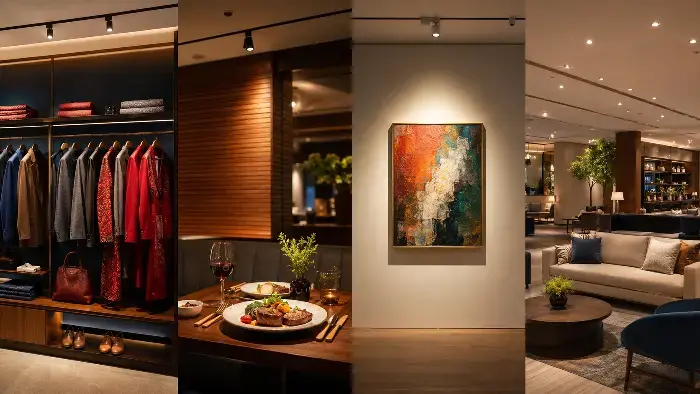
Fashion and Textile Retail
Prioritize CRI98 or another very-high-CRI option with strong R9 performance. Accurate rendering helps customers distinguish fabric colors, textures and finishes. Sufficient illuminance remains necessary, but increasing light quantity cannot correct a distorted spectrum.
For a deeper retail-specific specification process, read High CRI GU10 LED for Retail Lighting.
Recommended starting point:
- Ra: 95–98
- R9: >80, preferably >90 for premium applications
- Beam: 24° or 36°, depending on display size
- CCT: commonly 3000K or 4000K
- Always test with actual merchandise
Restaurants, Bakeries and Food Displays
High R9 is particularly important for meat, fruit, baked goods, tomatoes, wood and skin tones. A high-lumen lamp with weak saturated-red rendering may make food look dull even when the table is brightly illuminated.
For atmospheric areas, consider high-CRI dim-to-warm lighting. For food preparation or brighter service areas, a fixed-CCT high-CRI option may provide a better balance between visibility and appearance.
Galleries and Museums
Color accuracy, beam control and consistency usually take priority over maximum lumens. A narrow 10° or controlled 24° beam can place light precisely while limiting spill. The specification should also consider conservation requirements, glare, UV/IR exposure, dimming and scene control.
CRI98 alone is not enough: review R9, TM-30, spectrum, beam uniformity and color consistency.
Hotels and Premium Residential Projects
Guest rooms, restaurants, reception areas and decorative interiors benefit from natural skin tones, warm materials and smooth dimming. A high-CRI GU10 often delivers more perceived quality than a modest increase in total lumens.
Test the lamp with the actual wall dimmer. Color quality does not guarantee quiet, flicker-free or stable low-end dimming.
General Commercial Lighting
For corridors, general circulation, basic retail and locations with higher mounting heights, a high-output Ra90 option may offer the best balance. Ra90 with strong R9 is already suitable for many demanding applications and may provide significantly more light than an Ra98 version.
High Ceilings and Wide Beams
Prioritize the required target illuminance first. If the Ra98 option cannot achieve the design lux level without increasing lamp quantity, a high-output Ra90 version may be more practical. Alternatively, use a narrower beam or change the fixture layout rather than selecting only by total lumens.
Dimming and Flicker Can Matter More Than Either Number
A lamp can have excellent CRI and high lumen output but still create a poor user experience if it flickers, buzzes or drops out at low dimming levels.
For dimmable GU10 projects, check:
- Leading-edge and trailing-edge compatibility
- Minimum and maximum dimmer load
- Number of lamps on each circuit
- Minimum stable dimming level
- Pop-on and dropout behavior
- Audible noise
- Synchronization between lamps
- Flicker at full output and during dimming
- PstLM and SVM values
EU ecodesign requirements include full-load limits for PstLM and SVM for covered LED light sources, but a compliant full-load result does not automatically prove perfect performance across every dimmer and every low-level setting. Project-specific compatibility testing remains important.
For samples, test the exact lamp model with the intended dimmer, voltage, lamp quantity and fixture. Do not rely on a general statement such as “TRIAC compatible.”
TECO has also published a practical explanation of what 0–100% dimmable GU10 really means and why the lamp, dimmer and circuit load must be evaluated together.
The Thermal Limit of a High-Output GU10
GU10 is a compact format. The LED package, driver electronics, optics and heat-dissipation structure must all fit within a small housing. Increasing drive current may increase initial lumen output, but it also increases heat.
Poor thermal management can lead to:
- Reduced lumen maintenance
- 色ずれ
- Shorter driver life
- Unstable dimming
- Premature failure
- Lower reliability in enclosed fixtures
This is why the highest initial lumen figure is not always the best commercial choice. For hotels, restaurants and retail stores where lamps operate for long hours, maintained performance and replacement labor can matter more than a small advantage on the first-day datasheet.
Ask the supplier for:
- Operating temperature range
- Thermal test report
- LED board and driver temperature data
- L70 or lumen-maintenance information
- Aging-test conditions
- Enclosed-fixture limitations
- Warranty conditions
How to Run a Useful Sample Comparison
The most reliable decision comes from testing both versions in the real application.
Before approving a bulk order, use the broader LED sample and quality inspection checklist to verify the approved sample, written specification, certificates, packaging and production standard.
Step 1: Confirm Comparable Samples
Use the same:
- CCT
- ビーム角
- Input voltage
- 器具
- 取り付け位置
- Dimmer
- Test distance
Comparing a 2700K, 60° high-output lamp with a 4000K, 24° CRI98 lamp will not isolate the effect of color quality.
Step 2: Measure the Target
Record:
- Center lux
- Average lux across the target
- Beam diameter
- 均一性
- Glare
- Visual brightness
Step 3: Review Real Materials
Test the products, finishes or artwork used in the project. Include red, skin-tone, wood, fabric and neutral grey samples. Photographs can support the comparison, but camera settings must be locked because automatic white balance can hide differences.
Step 4: Test Dimming
Check full output, medium output and the lowest required level. Listen for noise and observe whether several lamps dim together.
Step 5: Run the Lamps at Temperature
Do not judge only during the first five minutes. Operate samples in the intended fixture and environment, then recheck output, color, noise and stability.
Step 6: Compare Total Project Cost
Consider:
- Lamp quantity
- Energy use
- Fixture and dimmer compatibility
- Expected replacement labor
- Warranty
- Customer complaints
- Value of better merchandise presentation
The lower-priced or higher-lumen lamp is not automatically the lower-cost solution.
Final Decision Matrix
| Project requirement | Recommended priority |
|---|---|
| Accurate merchandise colors | CRI98 with strong R9 |
| Food, skin and warm materials | High CRI plus high R9 |
| Maximum general brightness | High-output GU10 |
| High ceiling | Target lux, beam intensity and high output |
| Small accent target | Controlled narrow beam, not just more lumens |
| Premium hotel atmosphere | High CRI and verified smooth dimming |
| Gallery or artwork | CRI98, spectrum and precise beam control |
| Corridors and utility areas | Adequate lumens and efficiency |
| Long operating hours | Thermal reliability and maintained output |
| Existing wall dimmers | Tested compatibility and low-end stability |
結論
CRI98 and high lumen output are not competing measures of the same thing. One describes color fidelity; the other describes total visible light. Both can be valuable, and both can be misleading when considered alone.
Choose CRI98 when the appearance of products, people, artwork, food or interior materials affects the success of the space. Choose a high-output GU10 when the project first needs more usable illumination, especially across wide beams or longer distances. In many commercial applications, a high-output Ra90 lamp with strong R9 provides an excellent middle ground.
Most importantly, evaluate the complete lighting result:
- Is the target bright enough?
- Are colors accurate and appealing?
- Is the beam clean and correctly sized?
- Does the lamp dim smoothly?
- Can it manage heat over long operating hours?
- Are the published values supported by test data?
The best GU10 is not the one with the largest number on the box. It is the one that delivers the required color quality and target illuminance under the real beam, fixture, dimmer and thermal conditions of the project.
よくある質問
Does CRI98 always mean fewer lumens?
Not always, but a very-high-CRI version of the same lamp platform often has lower luminous efficacy because more energy is distributed across the spectrum to improve color fidelity. Compare products with the same CCT, wattage, beam angle and thermal conditions.
Is CRI98 visibly better than CRI90?
It can be, especially for artwork, textiles, food, skin tones and premium materials. The practical difference also depends on R9, spectrum, Duv, CCT and the objects being illuminated.
Is R9 included in the published CRI value?
No. The commonly published Ra value averages R1–R8. R9 is a separate saturated-red rendering value and should be reviewed independently.
Can a 500-lumen GU10 look brighter than a 700-lumen GU10?
Yes, on a small target. A narrower, well-controlled beam can create higher target illuminance than a wider beam with more total lumens. Compare candela, beam angle and measured lux—not only lumens.
Does high CRI guarantee flicker-free dimming?
No. Color rendering and dimming performance are separate. Verify driver design, dimmer compatibility, circuit load, PstLM/SVM and low-end behavior.
Which option is better for retail lighting?
For fashion, cosmetics, food or other color-sensitive displays, CRI98 or Ra95+ with strong R9 is usually the better starting point. For general retail illumination or high mounting positions, a high-output Ra90 option may provide a better balance.
Not Sure Which GU10 Version Fits Your Project?
Send us your application, mounting height, target beam angle, required CCT, dimmer model and estimated quantity. TECO can recommend a high-CRI or high-output GU10 configuration and prepare samples for side-by-side testing.
Primary button: Request GU10 Samples
Secondary button: Compare GU10 Models
Text link: Check Dimmer Compatibility