CRI98 مقابل GU10 عالي اللمعان: جودة اللون أم السطوع؟
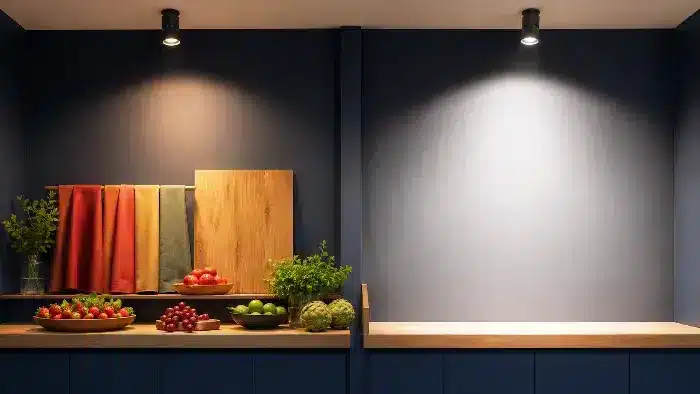
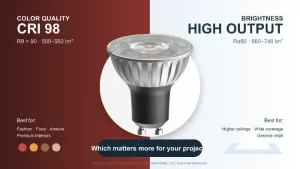
نفس منتج TECO GU10 المعروض بين أولويتين للإضاءة: عرض ألوان أكثر ثراءً وإدراك سطوع أعلى. يستخدم المنتج نفسه الصورة الأصلية المقدمة من TECO.
إجابة سريعة
اختر مصباح CRI98 GU10 عندما يؤثر المظهر الدقيق للألوان بشكل مباشر على قيمة ما يتم إضاءته، مثل الملابس، والأعمال الفنية، والطعام، والأثاث، ومستحضرات التجميل، ودرجات لون البشرة، أو التشطيبات الداخلية الفاخرة.
اختر GU10 عالي اللومن عندما يكون الأولوية الأولى هي تحقيق إضاءة كافية على السطح المستهدف، خاصة في الأسقف الأعلى، أو تطبيقات الحزمة الأوسع، أو المساحات التجارية العامة، أو المشاريع التي تستبدل مصابيح الهالوجين الساطعة.
ومع ذلك، فإن أفضل مصباح GU10 ليس تلقائيًا المصباح ذو أعلى CRI أو أعلى قيمة لومن. يجب أن يوازن الاختيار الناجح بين:
- جودة اللون
- الضوء المفيد على الهدف
- زاوية الشعاع
- ارتفاع التركيب
- أداء التعتيم
- إدارة الحرارة
- العمر الافتراضي
- ميزانية المشروع
قد يُضيء مصباح GU10 بقوة 500 لومن ومؤشر دقة ألوان 98 مع حزمة مضبوطة بزاوية 24° عرضًا صغيرًا بشكل أكثر فعالية من مصباح بقوة 700 لومن بحزمة عريضة بزاوية 60°. على العكس، حتى عرض الألوان المثالي لا يمكنه تعويض الإضاءة غير الكافية في مساحة كبيرة أو ذات سقف مرتفع.
السؤال الصحيح إذن ليس ببساطة “جودة اللون أم السطوع؟” بل هو:
كم يحتاج المشروع من الضوء، وأين يجب أن يذهب هذا الضوء، وكم يجب أن يظهر المظهر الدقيق للأجسام المضاءة؟
ماذا يقيس CRI واللومن فعليًا؟
يقيس اللومن الكمية الإجمالية للضوء المرئي المنبعث من المصباح. بشكل عام، يعني المزيد من اللومن مزيدًا من الضوء الإجمالي، لكن اللومن لا يخبرك إلى أين يذهب ذلك الضوء أو كيف ستبدو الأشياء تحته.
يقيّم مؤشر دقة الألوان (CRI) مدى دقة عرض مصدر الضوء للألوان مقارنة بمصدر مرجعي بنفس درجة حرارة اللون. قيمة Ra المنشورة شائعةً هي متوسط يعتمد على أول ثمانية ألوان اختبار، R1–R8. لا تتضمن R9، وهو لون اختبار الأحمر المشبع المهم بشكل خاص للجلد، والطعام، والخشب، والأقمشة، والزهور، والعديد من المنتجات التجزئة. تحدد لوائح الاتحاد الأوروبي مؤشر دقة الألوان على أنه متوسط R1–R8 وتتعامل مع R9 كمعلمة منتج منفصلة.
يُفسر هذا التمييز سبب ظهور مصباحين يحملان علامة “CRI 90” متشابهة بشكل ملحوظ مختلفًا. قد يعرض أحدهما الألوان الباستيل بشكل معقول بينما يترك المواد الحمراء باهتة أو مائلة للبني. قد يكون للآخر محتوى أحمر أقوى وينتج درجات جلد طبيعية أكثر، وأطعمة، وأسطح دافئة.
CRI واللومن يجيبان على أسئلة مختلفة:
| مقياس | السؤال الذي يجيب عليه | ما لا يخبرك به |
|---|---|---|
| اللومنات | كم إجمالي الضوء المرئي يصدره المصباح؟ | دقة الألوان، جودة الحزمة أو الإضاءة المستهدفة |
| CRI / Ra | ما مدى دقة عرض مجموعة من الألوان؟ | السطوع، أداء R9 أو جودة التعتيم |
| R9 | ما مدى جودة عرض الأحمر المشبع؟ | الدقة اللونية الشاملة |
| زاوية الشعاع | ما مدى انتشار الضوء؟ | الإنتاج الكلي أو تجانس الحزمة |
| شمعة | ما مدى شدة الضوء في اتجاه معين؟ | إجمالي إنتاج الضوء |
| لوكس | كم يصل من الضوء إلى السطح؟ | جودة اللون |
يتطلب الاختيار المهني عدة من هذه القيم معًا.
لماذا يمكن لمصباح CRI98 GU10 إنتاج لومن أقل؟
عادةً ما تنشئ مصابيح LED البيضاء الضوء عن طريق الجمع بين مصدر LED أزرق أو بنفسجي ومواد الفسفور. لتحسين عرض الألوان - وخاصة الأحمر المشبع - يجب على الشركة المصنعة توزيع المزيد من الطاقة عبر أجزاء الطيف التي تساهم بكفاءة أقل في حساب الشمعة الضوئية.
نتيجة لذلك، غالبًا ما تنتج نسخة المصباح ذات مؤشر دقة الألوان العالي جدًا من نفس منصة المصباح عددًا أقل من الشمعة مقارنةً بالنسخة المُحسَّنة لأقصى كفاءة إضاءة. حجم هذا الاختلاف ليس ثابتًا. يعتمد على عبوة الصمام الثنائي الباعث للضوء، ونظام الفسفور، ودرجة حرارة اللون، وتيار التشغيل، والتصميم البصري، والظروف الحرارية، وكيفية موازنة الشركة المصنعة بين الجودة والكفاءة.
لمجموعة TECO الحالية من مصابيح GU10، تتضمن مصفوفة المنتج المقدمة أمثلة مثل:
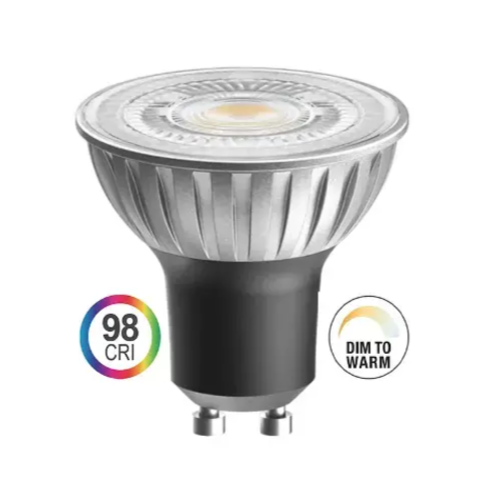
صورة فعلية لمنتج TECO GU10 مقدمة من TECO.
| خيار GU10 | تجسيد الألوان | التدفق الضوئي المُعلن عنه* | الأولوية الرئيسية |
|---|---|---|---|
| نسخة CRI العالية | Ra98، R9 >90 | 500–580 لومن | ألوان دقيقة |
| نسخة الإنتاج العالي | Ra90، R9 >90 | 660–740 لومن | مزيد من الضوء مع جودة ألوان جيدة |
| نسخة الإنتاج العالي العامة | Ra80 | 670–710 لومن | السطوع والكفاءة |
| نسخة الشعاع الضيق | Ra95 | 440 لومن | إضاءة تركيز دقيقة |
*يختلف الإخراج حسب إصدار المنتج والتكوين البصري. تأكد من النموذج الدقيق، ودرجة حرارة اللون المئوية، وزاوية الشعاع وتقرير الاختبار قبل التحديد أو الطلب.
يمكن للمشترين مراجعة المنشور حالياً مواصفات TECO Premium GU10 Pro 8W Ra98 وتصفح كامل مجموعة مصابيح LED من نوع GU10 قبل طلب عينات متطابقة.
توضح هذه الأرقام سبب ضعف الاعتماد على الواط وحده كطريقة اختيار. قد تقدم مصباحان GU10 بقدرة تقريبية 7.5–8 واط إنتاج لومن وجودة ألوان مختلفتين تماماً. يأتي الاختلاف من التصميم البصري والكهربائي الكامل – وليس مجرد تغيير 0.5 واط في القدرة الاسمية.
اللومن العالي لا يعني دائماً عرضاً أكثر سطوعاً
تقيس اللومنات إجمالي الضوء، لكن تصميم الضوء المركز يهدف إلى توجيه الضوء. بالنسبة لتطبيقات GU10، غالبًا ما تكون زاوية الشعاع وشدة الشعاع المركزية بنفس أهمية إجمالي اللومنات.
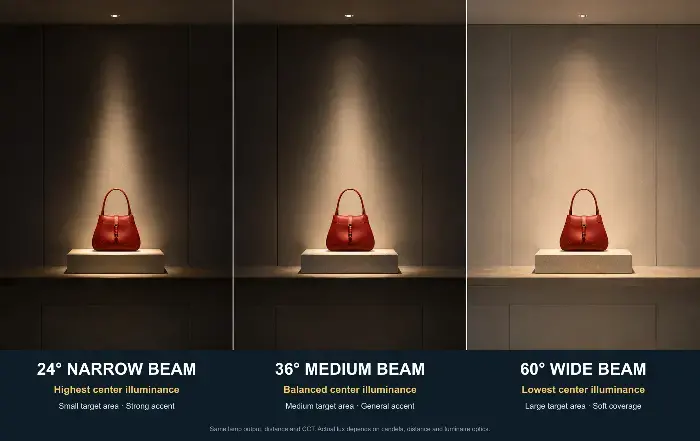
مقارنة توضيحية للشعاع الضيق والمتوسط والعريض. استخدم ملفات IES/LDT المقاسة ومسافات الإسقاط للحسابات النهائية.
ضع في اعتبارك مثالين مبسطين:
- المصباح أ: 500 لومن مع شعاع 24°
- المصباح ب: 540 لومن بشعاع 60°
ينتج المصباح B المزيد من الضوء الكلي، لكنه يوزعه على مساحة أكبر بكثير. قد يخلق المصباح A إضاءة أعلى بشكل ملحوظ على لوحة صغيرة أو مانيكان أو طاولة أو عرض سلع. قد يكون المصباح B أفضل للتغطية المحيطة الواسعة.
تغيير ارتفاع التركيب يغير النتيجة مرة أخرى. مع زيادة المسافة عن الهدف، يصبح الشعاع أوسع وتقل الإضاءة. صفحة المنتج التي تقدم فقط لومن، بدون زاوية شعاع أو شمعة أو مخطط شعاع أو مسافة اختبار، لا توفر معلومات كافية لاتخاذ قرار احترافي.
عند مقارنة منتجات GU10، اطلب:
- زاوية الشعاع
- قوة الشمعة في مركز الشعاع
- قطر الشعاع عند مسافات التركيب النموذجية
- لوكس عند متر، مترين وثلاثة أمتار
- ملفات قياس الضوء IES أو LDT
- صور للشعاع الفعلي
- معلومات عن البقع الساخنة والحلقات وفصل الألوان
قد يكون شعاع نظيف وموحد بقوة 500 لومن أكثر فائدة من شعاع غير متساوٍ بقوة 700 لومن مع وهج، أو ظلال، أو حواف غير مضبوطة جيداً.
للمشاريع التي تحتاج مرونة بصرية بعد التثبيت، قارن منتجات الشعاع الثابت مع مصباح سبوت لايت GU10 قابل للتحريك بالزوم 7.5 واط Ra98. للإضاءة المركزية الدقيقة، انظر إلى TECO 10° شعاع ضيق GU10.
هل CRI98 أفضل بشكل مرئي من CRI90؟
أحيانًا نعم، ولكن ليس في كل تطبيق.
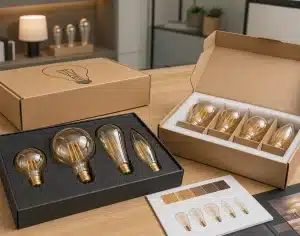
مقارنة توضيحية لكيفية تأثير الجودة الطيفية على الأحمر، الطعام، الزهور، الأقمشة والمواد الطبيعية. يجب أن يستخدم الموافقة النهائية على المنتج بيانات مقاسة وعينات حقيقية.
من المرجح أن يكون الفرق مرئيًا عندما:
- تحتوي الأشياء المضاءة على درجات حمراء غنية، أو ألوان بشرة طبيعية، أو فروق لونية دقيقة
- يقارن العملاء المنتجات حسب اللون
- يتم عرض الأعمال الفنية، المنسوجات، الخشب، الطعام أو مستحضرات التجميل
- يجب أن تظل عدة مواد ذات درجات لونية متشابهة قابلة للتمييز
- الإضاءة الحالية لها مظهر مائل إلى الخضرة، رمادي أو باهت
- يتم وضع المشروع كمنتج مميز
The difference may be less commercially important in:
- الممرات
- Storage areas
- Utility rooms
- General circulation spaces
- Locations where color discrimination is not important
- Projects where current illumination is already insufficient
Also remember that the Ra number is not the complete story. A lamp marked Ra98 should ideally be supported by its R9 value, spectral power distribution, color consistency and—where available—TM-30 results. The U.S. Department of Energy describes TM-30 as a system of related measures and graphics that provides broader information for evaluating color rendition and its trade-offs than a single-number approach.
For a serious commercial project, request:
- Ra
- R9
- TM-30 Rf and Rg, if available
- Spectral power distribution
- CCT and Duv
- SDCM or MacAdam ellipse
- Initial and maintained color data
These values help distinguish genuinely balanced color quality from a strong headline CRI number.
Application Guide: Which GU10 Should You Choose?
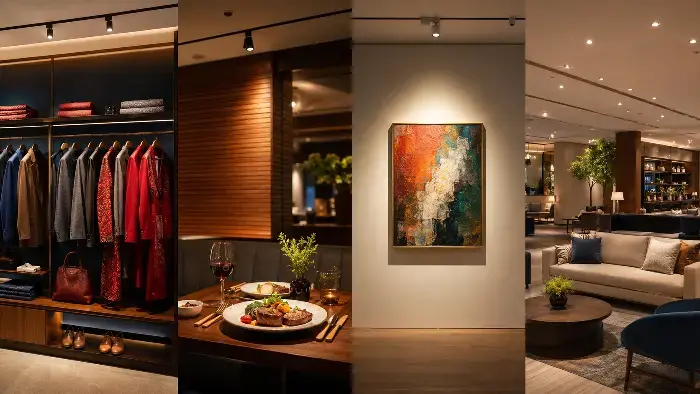
Fashion and Textile Retail
Prioritize CRI98 or another very-high-CRI option with strong R9 performance. Accurate rendering helps customers distinguish fabric colors, textures and finishes. Sufficient illuminance remains necessary, but increasing light quantity cannot correct a distorted spectrum.
For a deeper retail-specific specification process, read High CRI GU10 LED for Retail Lighting.
Recommended starting point:
- Ra: 95–98
- R9: >80, preferably >90 for premium applications
- Beam: 24° or 36°, depending on display size
- CCT: commonly 3000K or 4000K
- Always test with actual merchandise
Restaurants, Bakeries and Food Displays
High R9 is particularly important for meat, fruit, baked goods, tomatoes, wood and skin tones. A high-lumen lamp with weak saturated-red rendering may make food look dull even when the table is brightly illuminated.
For atmospheric areas, consider high-CRI dim-to-warm lighting. For food preparation or brighter service areas, a fixed-CCT high-CRI option may provide a better balance between visibility and appearance.
Galleries and Museums
Color accuracy, beam control and consistency usually take priority over maximum lumens. A narrow 10° or controlled 24° beam can place light precisely while limiting spill. The specification should also consider conservation requirements, glare, UV/IR exposure, dimming and scene control.
CRI98 alone is not enough: review R9, TM-30, spectrum, beam uniformity and color consistency.
Hotels and Premium Residential Projects
Guest rooms, restaurants, reception areas and decorative interiors benefit from natural skin tones, warm materials and smooth dimming. A high-CRI GU10 often delivers more perceived quality than a modest increase in total lumens.
Test the lamp with the actual wall dimmer. Color quality does not guarantee quiet, flicker-free or stable low-end dimming.
General Commercial Lighting
For corridors, general circulation, basic retail and locations with higher mounting heights, a high-output Ra90 option may offer the best balance. Ra90 with strong R9 is already suitable for many demanding applications and may provide significantly more light than an Ra98 version.
High Ceilings and Wide Beams
Prioritize the required target illuminance first. If the Ra98 option cannot achieve the design lux level without increasing lamp quantity, a high-output Ra90 version may be more practical. Alternatively, use a narrower beam or change the fixture layout rather than selecting only by total lumens.
Dimming and Flicker Can Matter More Than Either Number
A lamp can have excellent CRI and high lumen output but still create a poor user experience if it flickers, buzzes or drops out at low dimming levels.
For dimmable GU10 projects, check:
- Leading-edge and trailing-edge compatibility
- Minimum and maximum dimmer load
- Number of lamps on each circuit
- Minimum stable dimming level
- Pop-on and dropout behavior
- Audible noise
- Synchronization between lamps
- Flicker at full output and during dimming
- PstLM and SVM values
EU ecodesign requirements include full-load limits for PstLM and SVM for covered LED light sources, but a compliant full-load result does not automatically prove perfect performance across every dimmer and every low-level setting. Project-specific compatibility testing remains important.
For samples, test the exact lamp model with the intended dimmer, voltage, lamp quantity and fixture. Do not rely on a general statement such as “TRIAC compatible.”
TECO has also published a practical explanation of what 0–100% dimmable GU10 really means and why the lamp, dimmer and circuit load must be evaluated together.
The Thermal Limit of a High-Output GU10
GU10 is a compact format. The LED package, driver electronics, optics and heat-dissipation structure must all fit within a small housing. Increasing drive current may increase initial lumen output, but it also increases heat.
Poor thermal management can lead to:
- Reduced lumen maintenance
- انزياح اللون
- Shorter driver life
- Unstable dimming
- Premature failure
- Lower reliability in enclosed fixtures
This is why the highest initial lumen figure is not always the best commercial choice. For hotels, restaurants and retail stores where lamps operate for long hours, maintained performance and replacement labor can matter more than a small advantage on the first-day datasheet.
Ask the supplier for:
- Operating temperature range
- Thermal test report
- LED board and driver temperature data
- L70 or lumen-maintenance information
- Aging-test conditions
- Enclosed-fixture limitations
- Warranty conditions
How to Run a Useful Sample Comparison
The most reliable decision comes from testing both versions in the real application.
Before approving a bulk order, use the broader LED sample and quality inspection checklist to verify the approved sample, written specification, certificates, packaging and production standard.
Step 1: Confirm Comparable Samples
Use the same:
- درجة حرارة اللون المترابط
- زاوية الشعاع
- Input voltage
- Fixture
- Mounting position
- Dimmer
- Test distance
Comparing a 2700K, 60° high-output lamp with a 4000K, 24° CRI98 lamp will not isolate the effect of color quality.
Step 2: Measure the Target
Record:
- Center lux
- Average lux across the target
- Beam diameter
- التجانس
- Glare
- Visual brightness
Step 3: Review Real Materials
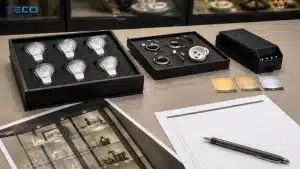
Test the products, finishes or artwork used in the project. Include red, skin-tone, wood, fabric and neutral grey samples. Photographs can support the comparison, but camera settings must be locked because automatic white balance can hide differences.
Step 4: Test Dimming
Check full output, medium output and the lowest required level. Listen for noise and observe whether several lamps dim together.
Step 5: Run the Lamps at Temperature
Do not judge only during the first five minutes. Operate samples in the intended fixture and environment, then recheck output, color, noise and stability.
Step 6: Compare Total Project Cost
Consider:
- Lamp quantity
- Energy use
- Fixture and dimmer compatibility
- Expected replacement labor
- Warranty
- Customer complaints
- Value of better merchandise presentation
The lower-priced or higher-lumen lamp is not automatically the lower-cost solution.
Final Decision Matrix
| Project requirement | Recommended priority |
|---|---|
| Accurate merchandise colors | CRI98 with strong R9 |
| Food, skin and warm materials | High CRI plus high R9 |
| Maximum general brightness | High-output GU10 |
| High ceiling | Target lux, beam intensity and high output |
| Small accent target | Controlled narrow beam, not just more lumens |
| Premium hotel atmosphere | High CRI and verified smooth dimming |
| Gallery or artwork | CRI98, spectrum and precise beam control |
| Corridors and utility areas | Adequate lumens and efficiency |
| Long operating hours | Thermal reliability and maintained output |
| Existing wall dimmers | Tested compatibility and low-end stability |
الخلاصة
CRI98 and high lumen output are not competing measures of the same thing. One describes color fidelity; the other describes total visible light. Both can be valuable, and both can be misleading when considered alone.
Choose CRI98 when the appearance of products, people, artwork, food or interior materials affects the success of the space. Choose a high-output GU10 when the project first needs more usable illumination, especially across wide beams or longer distances. In many commercial applications, a high-output Ra90 lamp with strong R9 provides an excellent middle ground.
Most importantly, evaluate the complete lighting result:
- Is the target bright enough?
- Are colors accurate and appealing?
- Is the beam clean and correctly sized?
- Does the lamp dim smoothly?
- Can it manage heat over long operating hours?
- Are the published values supported by test data?
The best GU10 is not the one with the largest number on the box. It is the one that delivers the required color quality and target illuminance under the real beam, fixture, dimmer and thermal conditions of the project.
الأسئلة المتكررة
Does CRI98 always mean fewer lumens?
Not always, but a very-high-CRI version of the same lamp platform often has lower luminous efficacy because more energy is distributed across the spectrum to improve color fidelity. Compare products with the same CCT, wattage, beam angle and thermal conditions.
Is CRI98 visibly better than CRI90?
It can be, especially for artwork, textiles, food, skin tones and premium materials. The practical difference also depends on R9, spectrum, Duv, CCT and the objects being illuminated.
Is R9 included in the published CRI value?
No. The commonly published Ra value averages R1–R8. R9 is a separate saturated-red rendering value and should be reviewed independently.
Can a 500-lumen GU10 look brighter than a 700-lumen GU10?
Yes, on a small target. A narrower, well-controlled beam can create higher target illuminance than a wider beam with more total lumens. Compare candela, beam angle and measured lux—not only lumens.
Does high CRI guarantee flicker-free dimming?
No. Color rendering and dimming performance are separate. Verify driver design, dimmer compatibility, circuit load, PstLM/SVM and low-end behavior.
Which option is better for retail lighting?
For fashion, cosmetics, food or other color-sensitive displays, CRI98 or Ra95+ with strong R9 is usually the better starting point. For general retail illumination or high mounting positions, a high-output Ra90 option may provide a better balance.
Not Sure Which GU10 Version Fits Your Project?
Send us your application, mounting height, target beam angle, required CCT, dimmer model and estimated quantity. TECO can recommend a high-CRI or high-output GU10 configuration and prepare samples for side-by-side testing.
Primary button: Request GU10 Samples
Secondary button: Compare GU10 Models
Text link: Check Dimmer Compatibility