إضاءة LED عالية CRI GU10 لإضاءة التجزئة: معايير دقة الألوان واعتبارات المشروع
مقدمة
In retail lighting, color accuracy is not a cosmetic detail. It directly affects how merchandise is perceived, how consistent a brand environment feels across locations, and how reliably a lighting scheme performs after installation. When a lamp makes apparel look dull, cosmetics appear inaccurate, or food displays lose freshness, the issue quickly becomes commercial rather than aesthetic.
For distributors, contractors, and project buyers, this becomes a system-level risk. A GU10 lamp that looks acceptable on paper but delivers unstable color, weak red rendering, or inconsistent beam appearance can lead to mock-up rejection, store refits, repeat site visits, and unnecessary stock replacement. In multi-store rollouts, even small color deviations between batches can create visible inconsistency and damage brand presentation.
High CRI GU10 LED selection for retail projects therefore needs to go beyond a single headline specification. The real engineering question is whether the lamp can reproduce merchandise colors faithfully, maintain batch consistency, and integrate into the intended lighting layout without creating commissioning problems later.
ملخص تنفيذي
High CRI GU10 LEDs improve retail presentation only when CRI, R9, color consistency1, beam angle, and color temperature2 are evaluated together. For commercial projects, stable batch performance and application-specific selection matter more than claiming the highest CRI number alone.
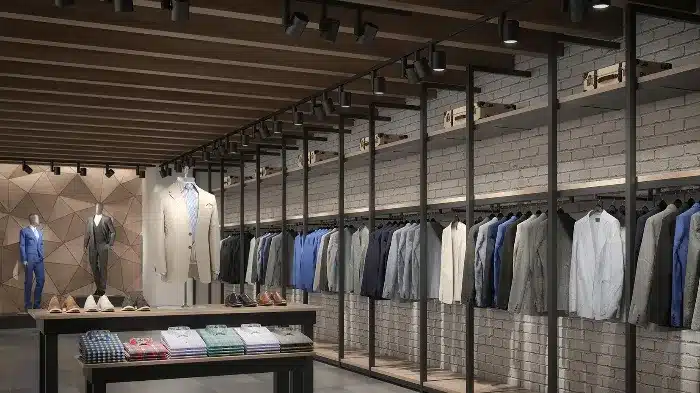
high cri gu10 led retail lighting color accuracy
Why Color Rendering Is Critical in Retail Lighting
الواقع الميداني / التجاري
Retail lighting is judged at eye level, at close distance, and often beside competing products and neighboring displays. If product color appears flat or shifted under the spotlight, store staff notice it immediately, and customers often react before they understand why. For contractors, this means lighting complaints are difficult to dismiss because the problem is visually obvious under real merchandise.
In apparel chains, jewelry counters, cosmetic displays, and premium food retail, poor color rendering can trigger expensive adjustment work after opening. Re-lamping focused ceiling spots is not always simple, especially where access equipment, after-hours work, and visual re-aiming are required. In rollout programs, repeating that process across multiple stores is a direct cost issue.
غوص عميق وحل هندسي
Color rendering describes how accurately a light source reveals object colors compared with a reference source. In retail settings, this affects more than visual comfort. It influences product appeal, price perception, and the perceived quality of the retail environment.
A high CRI GU10 spotlight is particularly relevant because accent lighting is usually the layer that defines merchandise. General ambient lighting may set the background, but GU10 spots often create the final visual impression on displayed products. If the spotlight has weak spectral output in key regions, the merchandise may appear less saturated, skin tones may look unnatural, and branded materials may lose intended color identity.
For retail applications, color rendering should be evaluated as part of a broader visual package:
| ميزة | Standard CRI Lamp | High CRI Retail Lamp | التأثير على الصيانة / العائد على الاستثمار |
|---|---|---|---|
| Merchandise appearance | Acceptable for general use | More faithful color presentation | Fewer complaints during store handover |
| Brand consistency | May vary between batches | Better controlled visual identity | Lower risk in chain-store rollouts |
| Customer perception | Functional lighting only | Stronger product presentation | Better support for premium merchandising |
| Refit risk | Higher if mock-up fails | Lower when tested against actual products | Reduced labor and replacement cost |
A well-selected high CRI GU10 lamp helps retail spaces present products closer to their intended appearance, but it must still be paired with the correct beam spread, aiming, and color temperature to produce useful results.
ملاحظة المصنع
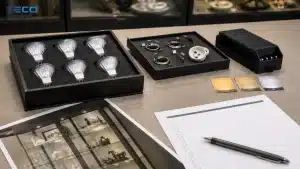
In apparel and cosmetics mock-ups, complaints often appear even when lumen output is acceptable. One common pattern is that a lamp passes a basic CRI 90 datasheet check, but fabrics with red, brown, beige, or skin-tone references still look weak because the spectrum and R9 performance are not strong enough. For retail supply, sample approval should therefore use real merchandise, not only a white wall or empty showroom.
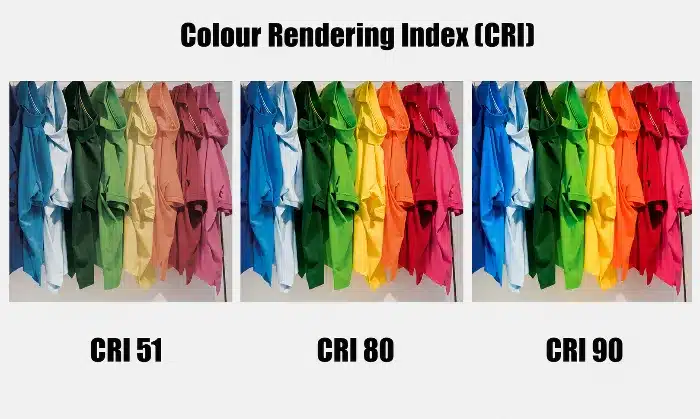
retail gu10 spotlight color rendering standards
Understanding CRI, R9, and Color Accuracy Metrics
الواقع الميداني / التجاري
During project review, many buyers ask for “CRI 90” as a minimum requirement. That is a useful starting point, but on site it is often not enough. Two lamps with the same nominal CRI can produce noticeably different results on apparel, leather goods, cosmetics, meat displays, or branded packaging. This becomes a problem when sample approval is based only on the catalog value.
If the specification ignores R93 and color consistency, installers may complete the full fit-out only to discover that reds look weak, skin tones look lifeless, or lamp-to-lamp variation becomes visible across the ceiling. Correcting that after opening is far more expensive than screening the lamps properly before ordering.
غوص عميق وحل هندسي
CRI measures how accurately a light source renders a set of standard test colors. However, the commonly quoted general CRI value, often called Ra, does not fully represent difficult saturated colors. In retail lighting, that limitation matters.
R9 specifically refers to saturated red rendering. This is one of the most important supplemental indicators for retail because many commercially sensitive items depend on red content for visual appeal: skin tones, fashion fabrics, cosmetics, food, wood finishes, and premium packaging. A lamp can have a respectable Ra value while still delivering weak R9 performance.
Color accuracy in retail projects should therefore be reviewed through several layers:
| مقياس | What It Indicates | Why It Matters in Retail | التأثير على الصيانة / العائد على الاستثمار |
|---|---|---|---|
| CRI (Ra) | General color rendering performance | Baseline screening for commercial quality | Helps avoid underperforming low-end lamps |
| R9 | Saturated red rendering | Critical for apparel, cosmetics, food, and skin tones | Reduces mock-up rejection and relamping risk |
| Color consistency | Lamp-to-lamp chromaticity control | Prevents visible ceiling inconsistency | Important for chain-store visual standards |
| درجة حرارة اللون المترابط | Apparent warmth or coolness of light | Affects product mood and material perception | Reduces redesign work if matched correctly |
For retail GU10 lamps, evaluating CRI without R9 is incomplete. Likewise, evaluating both without checking batch chromaticity control can still lead to visible inconsistency in the final installation. In practice, project approval should combine datasheet review, sample comparison, and mock-up validation under the actual merchandise mix.
ملاحظة المصنع
During retail mock-ups, it is common to see two “CRI 90” lamps behave very differently. In one apparel review, two samples met the same headline requirement, but one produced visibly weaker red and beige tones under side-by-side fabric testing. The difference was not lumen output; it was spectral distribution, R9 performance, and bin control. For commercial supply, batch verification is just as important as the nominal color rendering specification.
CRI 90 vs CRI 98: Do Retail Stores Need Ultra-High CRI?
الواقع الميداني / التجاري
Project teams often assume that the highest CRI value is always the safest specification. In practice, that approach can increase cost without delivering proportional benefit in every retail category. It may also narrow sourcing options, affect efficacy4, and create unnecessary pressure on lead time and batch consistency.
For commercial buyers, the real question is not whether CRI 98 is technically better in isolation. It is whether the application actually benefits enough to justify the trade-offs in cost, output, and procurement flexibility.
غوص عميق وحل هندسي
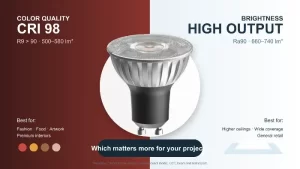
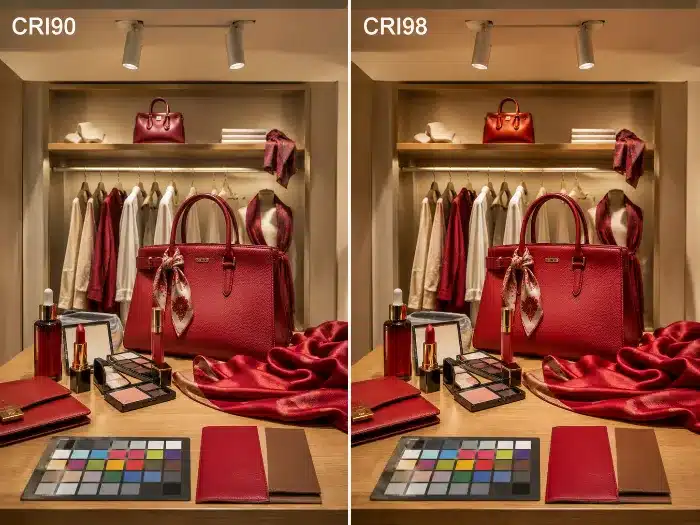
CRI 90 is already a strong threshold for many retail environments. It usually provides a clear improvement over standard commercial lamps and can support apparel, lifestyle retail, premium fixtures, and general product display when paired with a suitable R9 and stable color control.
CRI 98 moves closer to reference-source rendering and can be beneficial where exact color discrimination is central to the sales process. This may include luxury fashion, cosmetics, jewelry support lighting, galleries inside retail spaces, or premium branded environments where materials and finishes must appear highly refined.
However, ultra-high CRI should be specified selectively. In many projects, the visible improvement from CRI 90 to CRI 98 is meaningful only when other conditions are also optimized, such as display contrast, beam control, merchandise reflectance, and observer distance.
| ميزة | CRI 90 GU10 | CRI 98 GU10 | التأثير على الصيانة / العائد على الاستثمار |
|---|---|---|---|
| General retail suitability | Strong | ممتاز | CRI 90 often sufficient for broader rollouts |
| Red and subtle tone rendering | Good to very good | Typically stronger | Useful for premium product presentation |
| الكفاءة الضوئية | Usually higher | Often reduced | May affect fixture count or energy target |
| Procurement flexibility | Broader | More limited | Influences lead time and replacement planning |
| Cost position | More balanced | أعلى | Best reserved for value-critical zones |
A practical specification strategy is to define CRI 90 with verified R9 minimums for most retail areas, then reserve CRI 95 to 98 products for feature zones, premium displays, or brands with strict visual identity requirements. In many apparel projects, CRI 90+ with R9 above 50 is sufficient when CCT and beam control are correct. CRI 95+ or CRI 98 is more often justified for luxury fashion, high-end cosmetics, premium jewelry displays, or brand environments where subtle color differences affect buying decisions.
For these value-critical zones, a high-CRI option such as the TECO Premium GU10 Pro 8W Ra98 Dimmable LED Bulb is more relevant than a standard commodity GU10, because the selection conversation shifts from basic brightness to color accuracy, bin consistency, beam quality, and project approval risk.
ملاحظة المصنع
From a manufacturing perspective, pushing CRI higher is not just a matter of changing one number. Spectral tuning can reduce efficacy and tighten component selection windows. For volume projects, a controlled CRI 90+ solution with strong R9 and stable bins often delivers better commercial results than an ultra-high CRI product with inconsistent supply.
cri 90 vs cri 98 gu10 retail lighting
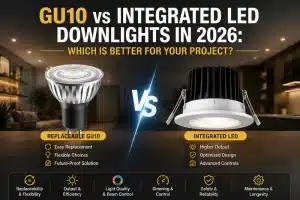
Why GU10 Spotlights Are Common in Retail Lighting
الواقع الميداني / التجاري
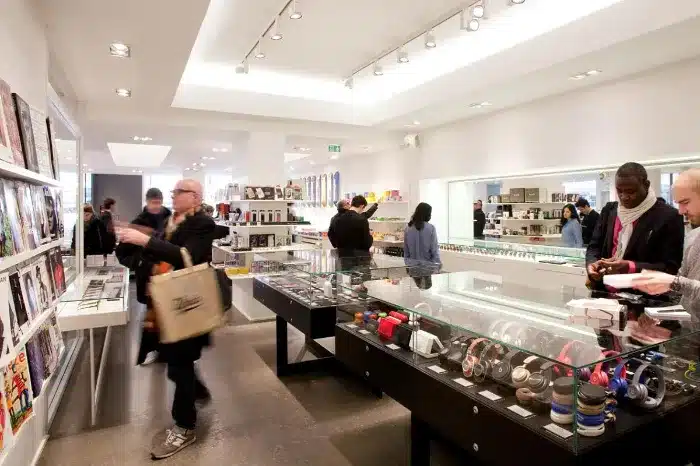
Retail projects favor solutions that are familiar to installers, easy to replace, and compatible with compact ceiling formats. GU10 spotlights remain common because they support directional accent lighting without requiring a fully integrated luminaire change for every maintenance event. That matters in stores where access windows are limited and downtime must be controlled.
For contractors and facility teams, GU10 platforms also simplify service stock planning. A failed lamp can be replaced faster than a complete fitting, provided the lamp form factor, thermal behavior, and beam performance remain consistent with the original specification.
غوص عميق وحل هندسي
The GU10 format is widely used in retail because it suits the functional role of accent lighting. Retail environments depend heavily on controlled beams to highlight merchandise, create focal hierarchy, and shape customer attention. GU10 LED products fit that need while remaining practical for track heads, recessed spot fittings, and small-format directional luminaires.
Their commercial popularity comes from several factors:
| ميزة | GU10 Spotlight | Integrated Fixed Module | التأثير على الصيانة / العائد على الاستثمار |
|---|---|---|---|
| Replacement method | Lamp replacement | Often full fitting or module service | Lower maintenance disruption with GU10 |
| Beam options | Broad market availability | Depends on luminaire platform | Easier adaptation to display layouts |
| Installer familiarity | عالية | Varies by system | Faster fit-out and lower service error risk |
| Stock management | Simpler for standard projects | More system-specific | Better for multi-site maintenance |
That said, not all GU10 LED lamps are equal in retail use. Optical control, thermal design, driver stability, and front-face consistency all affect real project performance. A lamp that physically fits the holder but produces inconsistent beam edges, excessive glare, or color shift under temperature rise can still create project failure.
ملاحظة المصنع
In large hospitality projects and retail chains, GU10 remains attractive because maintenance teams understand it and replacement logistics are straightforward. The risk comes when procurement treats all GU10 lamps as interchangeable. In reality, optical quality, thermal margin, and dimmer compatibility can vary substantially between suppliers.
gu10 spotlight retail commercial project lighting
Beam Angle and Color Temperature Selection for Retail Projects
الواقع الميداني / التجاري
Even a high CRI lamp will underperform if the beam angle is wrong for the display geometry. Narrow beams can create dramatic focus but may produce harsh contrast or hot spots on shallow shelves. Wide beams can improve uniformity but reduce emphasis and spill onto circulation areas. Once the ceiling is installed and aiming points are set, correcting poor beam selection can become labor-intensive.
Color temperature errors create a different but equally expensive problem. A lamp that is too warm may flatten clean white packaging or modern interiors, while a lamp that is too cool can make premium materials feel sterile. In retail, these issues show up immediately during brand review and visual merchandising setup.
غوص عميق وحل هندسي
Beam angle and color temperature should be selected according to merchandise type, mounting height, display depth, and brand atmosphere. High CRI does not override these fundamentals.
For stores where shelf layouts, promotional tables, or display distances change often, an adjustable-beam product such as the لمبة LED تيكو بريميوم GU10 قابلة للتركيز بقوة 7.5 واط can be easier to evaluate during mock-up because the beam can be tuned without changing the lamp family.
A practical framework for GU10 retail spotlights:
| Project Factor | Narrow Beam | Medium Beam | Wide Beam | التأثير على الصيانة / العائد على الاستثمار |
|---|---|---|---|---|
| Accent emphasis | Strong | Balanced | Softer | Wrong selection leads to re-aiming and relamping |
| Shelf coverage | محدود | معتدل | Broad | Affects fitting quantity and display uniformity |
| دراما بصرية | عالية | متوسط | أقل | مهم للتسويق المتميز |
| التحكم في الضوء المسكوب | أفضل | معتدل | أقل تحكمًا | يؤثر على الوهج والضوء المهدر |
لدرجة حرارة اللون:
| تطبيق التجزئة | نطاق CCT النموذجي | التأثير التجاري | التأثير على الصيانة / العائد على الاستثمار |
|---|---|---|---|
| الأزياء / البوتيك | 2700 كلفن إلى 3000 كلفن | مواد دافئة، متميزة، ذات ملمس | يدعم أجواء متميزة |
| بيع التجزئة العام لنمط الحياة | 3000 كلفن إلى 3500 كلفن | دفء ووضوح متوازنان | مرن عبر السلع المختلطة |
| مستحضرات التجميل / عروض المنتجات النظيفة | 3500 كلفن إلى 4000 كلفن | عرض أوضح، بياض أنظف | مفيد حيث تكون الدقة مهمة |
| مناطق الطعام والتخصصات | مخصص للتطبيق | يجب أن يناسب فئة المنتج وإدراك النضارة | يتجنب مظهر المنتج السيء وشكاوى العملاء |
يجب دائمًا التحقق من الاختيار مقابل عروض العينات الفعلية. تؤثر زاوية الشعاع على نمط الإضاءة، لكنها تغير أيضًا كيفية إدراك الملمس واللمعان وتشبع اللون. وبالمثل، يعتمد CCT المناسب على كل من البضائع ولوحة المواد الداخلية.
ملاحظة المصنع
خلال تشغيل الفندق وتركيبات التجزئة، فإن العديد من “مشاكل المصابيح” هي في الواقع عدم تطابق في الحزم أو درجة حرارة اللون المترابطة. عندما يقوم فريق المشروع بتقييم ناتج اللمعان ومؤشر تجسيد اللون فقط، فإنهم غالبًا ما يغفلون مشكلة توزيع الضوء حتى يبدأ التوجيه في الموقع.
اعتبارات تصميم الإضاءة لفئات التجزئة المختلفة
الواقع الميداني / التجاري
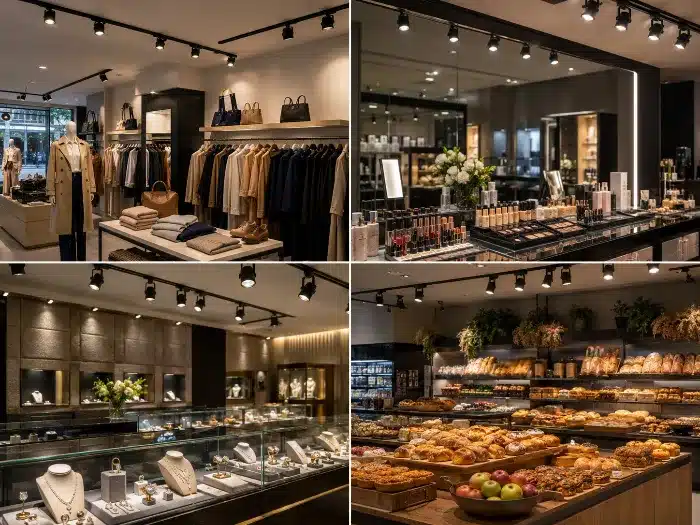
تختلف فئات التجزئة المختلفة بشكل كبير في استجابتها لنفس المصباح. قد يكون مصباح GU10 الذي يعمل بشكل جيد في متجر الأحذية غير مناسب لمستحضرات التجميل، والمصباح الذي يظهر منتجات المخبز بشكل جيد قد يشوه الأقمشة البيضاء. توحيد مصباح واحد عبر جميع المناطق قد يبسط عملية الشراء، لكنه قد يؤدي إلى تنازلات بصرية تصبح مكلفة بعد الافتتاح.
للمقاولين والمحددين، هذا يعني أن التخطيط القائم على الفئة أمر ضروري قبل الطلب النهائي. وإلا، قد ينجح المشروع في التثبيت الكهربائي لكن يفشل في القبول البصري.
غوص عميق وحل هندسي
يجب تصميم إضاءة التجزئة لتتناسب مع خصائص البضائع، وسلوك توقف العملاء، وتحديد مكانة العلامة التجارية.
| فئة التجزئة | المتطلب البصري الرئيسي | التركيز الموصى به | التأثير على الصيانة / العائد على الاستثمار |
|---|---|---|---|
| الملابس | دعم نسيج القماش، الملمس، ولون البشرة | CRI عالي، R9 جيد، حزم تسليط مضبوطة | يقلل من تغييرات التركيب بعد النموذج الأولي |
| مستحضرات التجميل | إدراك دقيق للألوان المتعلقة بالبشرة | R9 قوي، درجة حرارة لون مستقرة، تباين منخفض | أساسي لثقة العملاء والثقة في العلامة التجارية |
| المجوهرات / الفخامة | بريق بالإضافة إلى دقة المواد | حزم ضيقة، جودة لونية عالية، تحكم في الوهج | يدعم العرض المتميز |
| بيع الطعام بالتجزئة | النضارة والمظهر الطبيعي | طيف خاص بالفئة ودرجة حرارة اللون المترابطة | الاختيار السيئ يُسرع في استدعاء الشكاوى |
| بضائع عامة | وضوح وكفاءة متوازنة | CRI 90+، انتشار شعاع معتدل، صناديق مستقرة | جيد لعمليات النشر المتعددة المواقع القابلة للتطوير |
النقطة المركزية للمقال هي أن اختيار GU10 عالي CRI يجب أن يرتبط بعرض المنتج، وإدراك العميل، وصورة العلامة التجارية، وليس معاملته كترقية رقمية واحدة. مواصفات الإضاءة الناجحة للبيع بالتجزئة تجمع بين مقاييس اللون وعوامل التصميم العملية بحيث يدعم المصباح بيئة المبيعات الفعلية بدلاً من مجرد تلبية قائمة مراجعة المشتريات.
ملاحظة المصنع
في برامج البيع بالتجزئة الكبيرة، عادة ما تأتي أفضل النتائج من التقسيم إلى مناطق بدلاً من تحديد مواصفات مفرطة لكل تركيب. غالبًا ما يكون أكثر فعالية استخدام عرض ألوان أقوى في مناطق العرض الرئيسية ومواصفات أكثر توازنًا في المناطق العامة، بشرط التحكم في الانتقالات البصرية.
إضاءة فئة البيع بالتجزئة اختيار GU10 عالي CRI
كيفية اختيار مصابيح LED عالية معامل نقل اللون GU10 للمشاريع التجارية
مراجع مواصفات منتج TECO
الأمثلة أدناه ليست عناصر نائبة عامة. فهي تستند إلى مواصفات صفحة منتج TECO المنشورة ويمكن أن تساعد المشترين في ربط معايير الاختيار في المقالة مع عائلات المصابيح الحقيقية.
| مثال على المنتج | بيانات الصفحة المُتحقق منها | أفضل استخدام مناسب للبيع بالتجزئة |
|---|---|---|
| TECO Premium GU10 Pro 8W Ra98 Dimmable LED Bulb | 8 واط، معامل نقل اللون 98، 2700 كلفن / 3000 كلفن / 4000 كلفن، حتى 660 لومن، 24° / 36° / 60°، تعتيم ترياك، انحراف 3 في تباين اللون، عمر افتراضي مقدر 40,000 ساعة | البيع بالتجزئة الفاخر، المعارض، المتاحف، مناطق العرض المتميزة |
| لمبة LED GU10 قابلة للتعتيم بقوة 7.5 واط CRI98 مع إضاءة عالية | 7.5 واط، CRI 98، 2700K / 3000K / 4000K، 510 / 550 / 570 لومن، 24° / 36° / 60°، تخفيف Triac، خالٍ من الوميض، SDCM 3 | متاجر الملابس، عدادات مستحضرات التجميل، البيع بالتجزئة العام المتميز |
| لمبة LED تيكو بريميوم GU10 قابلة للتركيز بقوة 7.5 واط | 7.5 واط، CRI 98، 2700K / 3000K / 4000K، 520 / 540 / 590 لومن، قابل للتعديل 24° / 36° / 55°، تخفيف Triac، خالٍ من الوميض، SDCM 3 | تخطيطات البيع بالتجزئة حيث قد تتغير زاوية الحزمة بين العروض |
| ضوء سبوت لايت تيكو بريميوم MR16 GU5.3 قابل للتعديل | MR16 / GU5.3، زاوية حزمة قابلة للتعديل 24° / 36° / 55°، مصباح LED عالي معامل نقل اللون MR16، سائق قابل للتعتيم، تصميم تجاري للعمل 24 ساعة | مشاريع البيع بالتجزئة أو العرض MR16 12 فولت حيث تم تأكيد توافق المحول |
لا يزال R9 عنصرًا للموافقة على المشروع وليس شيئًا يمكن افتراضه من عنوان المنتج وحده. إذا تطلبت مواصفات البيع بالتجزئة R9 > 50 أو إعادة إنتاج أحمر أقوى، فيجب تأكيد القيمة من خلال مراجعة ورقة البيانات، اختبار العينة، أو القياس الخاص بالمشروع قبل الشراء بالجملة.
الواقع الميداني / التجاري
عادةً ما تحدث فشل الاختيار التجاري لأن المصباح يتم اختياره من ورقة بيانات دون مراعاة سلوك التعتيم، التحكم في الدفعات، الأداء الحراري، واستجابة البضاعة الفعلية. قد يكون ذلك قابلاً للإدارة في موقع صغير، ولكن في تجارة التجزئة المتسلسلة أو التجهيزات واسعة النطاق، فإنه يخلق مخاطر مضاعفة عبر كل موقع.
نادرًا ما يقتصر تكلفة اختيار مصباح GU10 الخطأ على استبدال المنتج. فهو يشمل الوصول إلى العمالة، الخدمة بعد ساعات العمل، إعادة الموافقة البصرية، وتعطيل جدول الافتتاح.
غوص عميق وحل هندسي
يجب أن تتضمن عملية الاختيار العملية للمشاريع التجارية عالية معامل نقل اللون GU10 الفحوصات التالية:
- تأكيد الحد الأدنى من أهداف معامل نقل اللون و R9 بناءً على فئة البضاعة.
- تحديد حدود مقبولة لاتساق الألوان بين المصابيح وبين الدفعات.
- تطابق زاوية الحزمة مع ارتفاع التركيب، عمق الرف، ونية العرض.
- اختر درجة حرارة اللون المترابط وفقًا لجو العلامة التجارية ونوع المنتج.
- تحقق من توافق المخفت إذا كان المشروع يتضمن تحكمًا بقطع الطور5.
- راجع الظروف الحرارية داخل هيكل الثريا الفعلي.
- وافق على العينات باستخدام البضائع الحقيقية، وليس فقط فحص السبورة البيضاء.
- تحقق من أداء الدفعة قبل النشر الكامل.
يمكن استخدام أمثلة مواصفات GU10 النموذجية للبيع بالتجزئة كمرشح مبكر للمشروع قبل الموافقة النهائية على العينة:
| حالة استخدام البيع بالتجزئة | هدف معامل نقل اللون / R9 النموذجي | اتجاه CCT | اتجاه زاوية الحزمة | ملاحظات |
|---|---|---|---|---|
| متجر ملابس | CRI 90+، R9 > 50 | 3000K أو 3500K | 36° أو 60° | توازن نسيج اللون ودفء المتجر |
| عداد مستحضرات التجميل | CRI 95+، R9 قوي | 3500 كلفن إلى 4000 كلفن | 36° | دقة أفضل للون البشرة ولون المنتج |
| Jewelry display | CRI 95+ or CRI 98 | 3000K to 4000K by material | 24° or 36° | Narrower beams for sparkle and focus |
| بضائع عامة | مؤشر تجسيد اللون 90+ | 3000K to 4000K | 36° أو 60° | Scalable for broader rollouts |
A common commercial baseline for premium retail GU10 review is CRI 90+, R9 > 50, 3000K or 4000K, 36° or 60° beam options, 25,000-hour class lifetime, and optional phase-cut dimming where the project requires it. Final values should still be confirmed against the actual dimmer, luminaire housing, ceiling height, and merchandise mock-up.
For apparel stores, cosmetics counters, and premium general retail zones, a product such as the لمبة LED GU10 قابلة للتعتيم بقوة 7.5 واط CRI98 مع إضاءة عالية fits this type of review because the published page data includes CRI 98, multiple CCT options, 24° / 36° / 60° beam options, Triac dimming, flicker-free operation, and SDCM 3. If the project uses 12V GU5.3 holders rather than mains-voltage GU10 holders, the ضوء سبوت لايت تيكو بريميوم MR16 GU5.3 قابل للتعديل should be treated as a separate retrofit path with transformer and driver compatibility checked before approval.
| Selection Item | What to Verify | لماذا يهم | التأثير على الصيانة / العائد على الاستثمار |
|---|---|---|---|
| CRI / R9 | Measured color rendering data | Ensures product color fidelity | Avoids visual rejection |
| Color consistency | Bin control and batch repeatability | Prevents visible ceiling mismatch | Reduces replacement sorting |
| زاوية الشعاع | Optical suitability for display | Avoids hot spots and poor coverage | Less site adjustment |
| درجة حرارة اللون المترابط | Match to retail concept | Supports brand identity | Prevents relighting requests |
| Dimming behavior | Compatibility and smoothness | Important in mood-based retail scenes | Reduces flicker and instability complaints |
| Thermal reliability | Performance in enclosed fittings | Protects life and color stability | Lowers failure rate and RMA exposure |
The right commercial decision is not simply “choose the highest CRI available.” It is to select a lamp whose full performance profile has been verified against the project’s visual, electrical, and maintenance conditions.
ملاحظة المصنع
From a manufacturing perspective, batch verification is essential for retail programs. Sample approval alone is not enough. For a chain-store rollout, the approved sample may look excellent, but later production lots still need checks for color point stability, R9 consistency, aging performance, and dimmer behavior. This is especially important when the same GU10 lamp will be installed across apparel walls, cashier zones, window displays, and promotional areas.
الأسئلة الشائعة
What CRI is recommended for retail lighting?
For many retail applications, CRI 90+ is a strong starting point. Premium displays, cosmetics, jewelry, galleries, and luxury retail may require CRI 95+ or CRI 98 depending on how critical color accuracy is to the buying decision.
Is CRI 90 enough for apparel stores?
CRI 90+ can be enough for many apparel stores when R9, CCT, beam angle, and batch color consistency are properly controlled. For high-end fashion or color-critical fabrics, sample testing with actual merchandise is still recommended.
Why is R9 important in retail lighting?
R9 measures saturated red rendering, which affects skin tones, cosmetics, warm fabrics, food, leather, and some branded packaging. Two lamps can both claim CRI 90 while showing different R9 performance in real displays.
Does high CRI reduce LED efficiency?
High CRI can reduce luminous efficacy because spectral tuning often requires trade-offs in output. This is why CRI 98 should be used where the visual benefit justifies the cost, output, and procurement impact.
What beam angle is best for retail GU10 spotlights?
There is no single best beam angle. Narrow beams such as 24° are useful for focused highlights, while 36° and 60° are often used for broader displays, apparel walls, and general accent lighting. The choice should match ceiling height, shelf depth, and display intent.
Conclusion: Business Value
For retail projects, high CRI GU10 LEDs create value when they improve merchandise appearance consistently and predictably across the full installation, not when they only offer an impressive catalog number. The most reliable commercial result comes from evaluating CRI, R9, beam control, CCT, dimming behavior, and batch consistency together.
هذا النهج يقلل من جهد الصيانة، ويخفض مخاطر إعادة الإضاءة بعد التشغيل، ويساعد في حماية تكلفة النظام على المدى الطويل من خلال تجنب التدخل المتكرر في الموقع.
توصية هندسية بين الشركات
لمشاريع التجزئة، فإن المواصفات الأكثر فائدة ليست رقم مؤشر تجسيد الألوان الواحد، بل الملف البصري والكهربائي الكامل:
| منطقة التجزئة | نقطة البداية الموصى بها |
|---|---|
| متجر أزياء | مؤشر تجسيد الألوان 90+، R9 > 50، 3000K أو 3500K، 36° أو 60° |
| مستحضرات التجميل | مؤشر تجسيد الألوان 95+، R9 قوي، 3500K إلى 4000K، تحكم في الوهج |
| عرض المجوهرات / الفاخرة | مؤشر تجسيد الألوان 95+ أو 98، حزمة ضيقة إلى متوسطة، اتساق عالي |
| نشر تجزئة عام | مؤشر تجسيد الألوان 90+، تحكم مستقر في التصنيف، توافق مخفت مُتحقق منه |
لمشاريع التجزئة الكبيرة، شارك تخطيط المتجر، وارتفاع السقف، ودرجة حرارة اللون المطلوبة، وخطة زاوية الحزمة، وطريقة التعتيم، وعينات البضائع المعتمدة، وكمية النشر قبل الإنتاج الضخم. Teco يمكن لفريق الهندسة مراجعة ملاءمة مواصفات GU10، والتحقق من توافق المخفت، والتحقق من اتساق ألوان الدفعة، ودعم اختبار العينات قبل النشر الكامل.
هوامش
يشير اتساق الألوان إلى مدى تطابق لون الضوء المنبعث بين المصابيح وعبر دفعات الإنتاج.↩
درجة حرارة اللون المترابطة، تصف ما إذا كان الضوء يبدو أكثر دفئًا أو برودة في النغمة، تُعبر عنها عادةً بالكلفن.↩
R9 هو قيمة عينة لمؤشر تجسيد الألوان تمثل أداء الأحمر المشبع، وهو مهم في عرض البضائع.↩
الكفاءة الضوئية هي كمية ناتج الضوء المرئي المنتج لكل وحدة من الطاقة الكهربائية المستهلكة.↩
التحكم بقطع الطور هو طريقة تعتيم شائعة تضبط طاقة المصباح عن طريق قطع أجزاء من موجة التيار المتردد.↩