
Interior Lighting Design: How LED Technology Creates a Premium Ambience
A beautifully designed space can fall flat the moment the lights turn on. Materials lose depth, surfaces look dull, and the atmosphere becomes unremarkable. In high-end interiors, lighting is not decoration — it is the medium that reveals craftsmanship, shapes mood, and determines whether a space feels truly premium.
Modern LED technology has reshaped what “luxury lighting” means. High color fidelity, tunable CCT, precise optics, low glare, stable dimming curves, and intelligent control systems allow designers to sculpt ambience with a level of precision that old technologies simply couldn’t achieve.
This guide breaks down the lighting principles behind premium ambience, explains how LED technology supports them, and provides practical specifications you can confidently use in residential, hospitality, retail, and commercial environments.
Lighting as the Language of Luxury
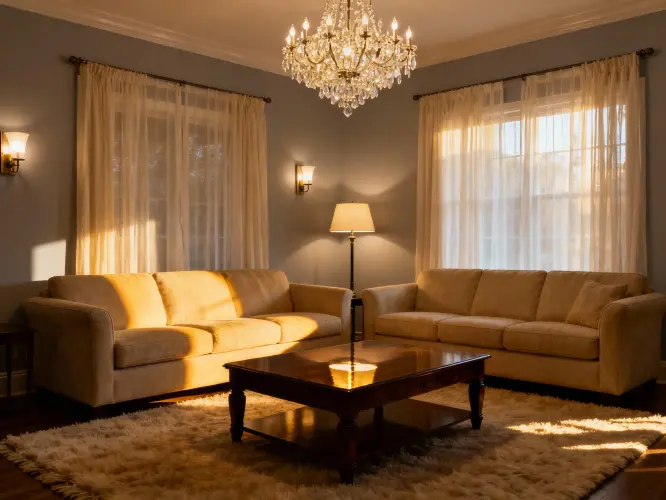
Luxury is not about adding more brightness — it’s about controlling it. A space feels high-end when light is layered, softly graded, and aligned with materiality and emotional intent.
When lighting is flat or overly bright, even expensive materials look ordinary. When glare is visible, comfort collapses. But when contrast is controlled and color is honest, the entire room becomes more refined.
Why light determines perceived luxury
- Contrast signals value — our eyes interpret highlights as intentional, crafted moments, not accidents.
- Shadows reveal form — wood grain, stone texture, and architectural profiles only “activate” under angled or accented light.
- Comfort equals quality — low-glare fixtures encourage the slow, attentive viewing associated with premium interiors.
The four layers of luxury lighting
A premium ambience is almost always built from four layers:
| Layer | Scopo | Feeling |
|---|---|---|
| Ambiente | Base illumination | Calm, openness |
| Compito | Functional clarity | Precision |
| Accento | Highlighting focal points | Drama, intention |
| Decorative | Emotional punctuation | Identity, intimacy |
Using these layers in balance creates depth, rhythm, and a sense of quiet refinement.
What Defines Luxury Lighting Today
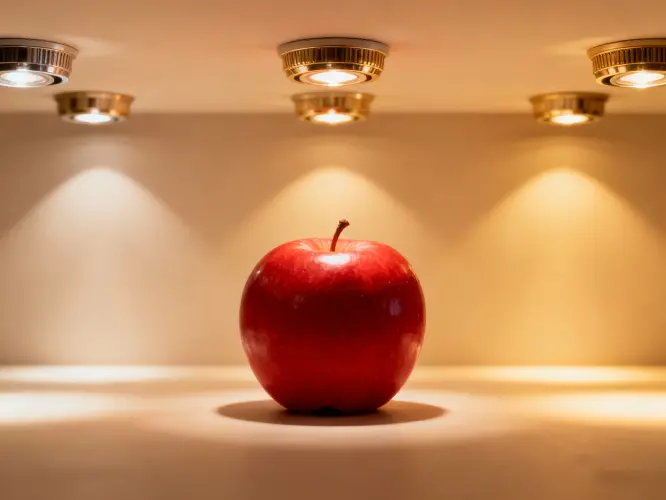
Luxury interiors are no longer about chandeliers or oversized fixtures. Today, quality is evaluated through measurable performance standards used by lighting designers worldwide — color fidelity, glare control, consistency, optical precision, and dimming behavior.
Key performance criteria
The following metrics align with IES (Illuminating Engineering Society) and CIE (Commission Internationale de l’Éclairage) recommendations:
| Criterion | Luxury Target | Perché è importante |
|---|---|---|
| CRI (Indice di Resa Cromatica) | 95+ | Accurate color for materials and skin |
| R9 (deep red rendering) | >80 | Essential for wood, leather, food, fabrics |
| TM-30 Rf/Rg | Rf ≥ 90, Rg 95–105 | Balanced realism and vibrancy |
| UGR (Unified Glare Rating) | ≤16 in lounges, ≤19 in work areas | Comfort and perceived quality |
| CCT (Color Temperature) | 2700–3000K for living, 3000–3500K hospitality | Warmth communicates luxury |
| Consistency | ≤2–3 MacAdam steps | Prevents patchy ceilings |
| Regolazione dell'intensità | 0.1–1% smooth, flicker-free | Creates “velvet fade” transitions |
(Sources: IES TM-30, CIE 190:2010, EN 12464-1 for UGR)
These criteria replace vague impressions with measurable, repeatable standards.
How LED Technology Enables Premium Ambience
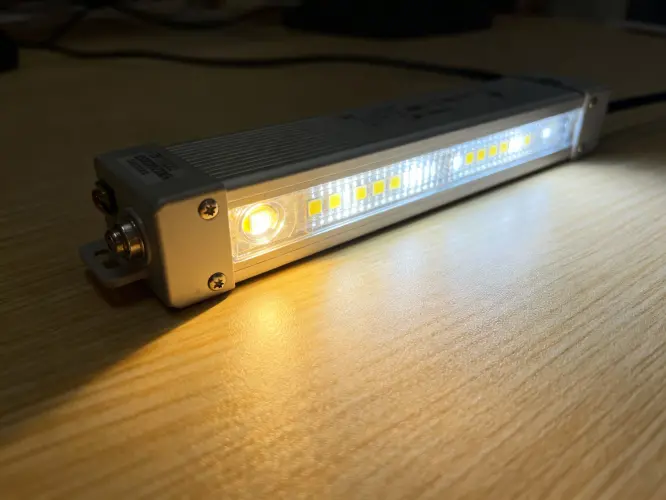
LEDs are not simply efficient; their tunability, compact size, and optical precision give designers tools that previous lighting technologies never could.
Modern LED capabilities that elevate ambience
Tunable CCT + Dim-to-Warm
LEDs can shift from crisp 3500K for tasks to warm 2700K or even 1800K for evening ambience — without the heat of halogens.Precise optics
TIR lenses, asymmetric wall-washers, and narrow accent beams offer sculptural light that defines form and texture.Miniaturized, low-glare trims
Recessed micro-apertures keep ceilings visually “quiet,” letting materials and architecture take center stage.Ultra-stable color consistency
High-quality LEDs maintain color within tight MacAdam steps for tens of thousands of hours.Flicker-free, smooth dimming
Advanced LED drivers deliver stable, low-flicker performance down to 0.1%, essential for comfort and luxury dining, hotels, and residencies.Smart/connected control systems
Open protocols like DALI-2, BLE Mesh, e PoE ensure integration across larger lighting ecosystems.
Core Design Principles for Luxury Lighting
Premium ambience is crafted through a careful mix of composition and restraint. LED fixtures are simply tools — the artistry lies in how they’re applied.
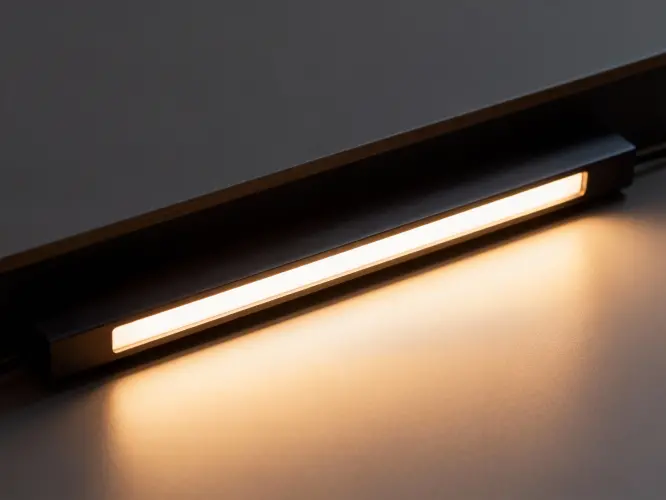
The modern playbook
| Principle | Target | How to Achieve It |
|---|---|---|
| Layering | 3–4 layers | Cove + downlight + accent + decorative |
| Contrast | 1:5–1:10 | 300–500 lx ambient; 1000–2000 lx focal |
| Controllo dell'abbagliamento | UGR ≤16 | Deep regress trims, 30° cut-off |
| CCT strategy | Warm for intimacy | Tunable white for flexible environments |
| Dimming curves | Soft, slow fades | Logarithmic dimming at 0.1–1% |
Luxury lighting feels intentional — never accidental, never harsh.
Applying Luxury Lighting Across Project Types
Each environment has its own emotional goal. Lighting should match the narrative of the space, not just its function.
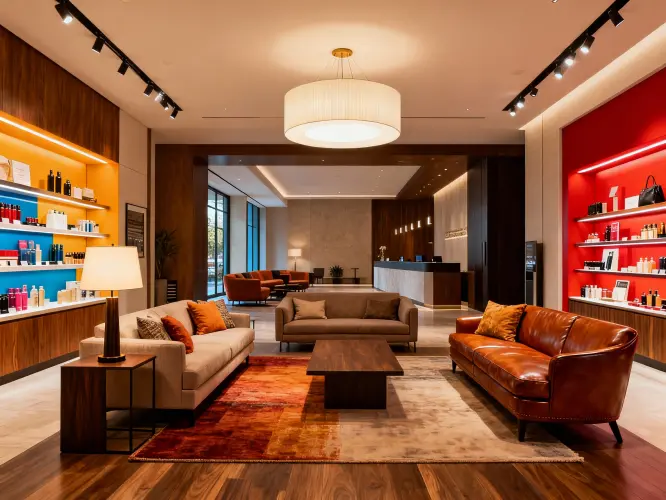
Quick application patterns
Residential living
- 2700K base, 3000K accents
- Low-glare trims
- Dim-to-warm for evening relaxation
Cucine
- 3000–3500K
- Shielded under-cabinet linear light
- Clean vertical illumination for clarity
Vendita al dettaglio boutique
- TM-30 Rf≥90, Rg ~100–105
- Crisp beams for merchandise
- Wall-wash for brand storytelling
Hotel lobbies
- 3000K warm welcome
- Emphasis on verticals and textured surfaces
- Concealed sources for elegance
Ristoranti
- 2700K base layer
- High R9 LEDs for appetizing reds
- Tight table spots to create personal islands
Common Mistakes That Break the Luxury Effect
Even good fixtures can fail when used poorly.
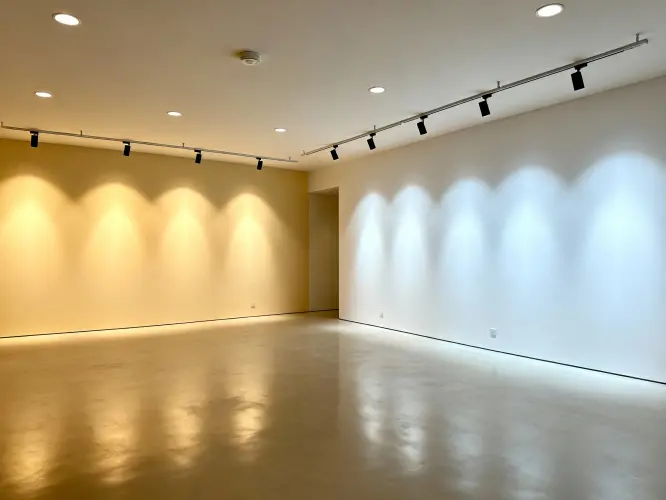
Frequent pitfalls
- Flat, uniform lighting — destroys depth
- Mismatched CCT across batches — looks cheap
- Visible glare sources — creates harshness
- Overuse of downlights — creates “ceiling acne”
- Abrupt dimming steps — breaks the emotional flow
- Uncoordinated control systems — scenes feel inconsistent
Each mistake has a simple cure: fewer fixtures, better optics, and intentional contrast.
Tecolite’s LED Solutions for Premium Interiors
Premium design only materializes when the luminaires protect your intent — from concept to installation.
Tecolite develops high-CRI, TM-30-calibrated, low-glare luminaires engineered for modern hospitality, retail, and luxury residential projects. Our products are built for consistency, comfort, and meticulous optical control.
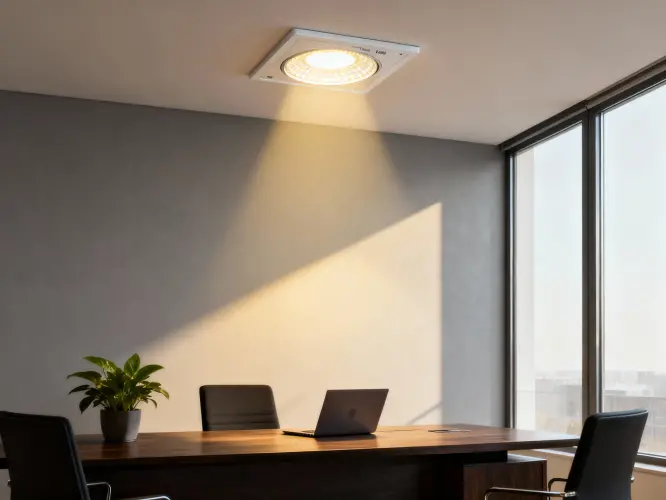
Highlights from the Tecolite portfolio
| Categoria | Key Features | Ideal Use |
|---|---|---|
| Recessed Downlights | UGR ≤16, 0.1% dimming, 10°–60° TIR beams | Lobbies, lounges |
| Linear Wall-Washers | High uniformity, asymmetrical optics | Gallery walls, retail |
| Texture Grazers | Architectural accenting | Stone, wood, façade features |
| Track Accent Lights | High CBCP, lockable aim | Art, merchandise |
| Decorative Pendants | Warm-dim, CRI 95+ | Bars, dining |
| Control Systems | Native DALI-2 scenes | Whole-project cohesion |
We encourage designers to request TM-30 reports, SPD plots, UGR data, and MacAdam color consistency for full confidence in specification.
Conclusion: Light Is the Signature of Luxury
A premium interior is not defined by fixtures but by how light interacts with surfaces, people, and emotions. With thoughtful layering, controlled contrast, honest color, and smooth dimming, LED technology becomes a subtle but powerful instrument of ambience.
Luxury is not louder light — it is controlled, quiet, and intentional light.