Lampadine GU10 con fascio regolabile: Vantaggi, Applicazioni & Guida all'Angolo del Fascio
Per decenni, i faretti a fascio fisso sono stati la scelta standard per l'illuminazione d'accento. Progettisti, appaltatori e distributori di illuminazione selezionavano tipicamente un angolo del fascio specifico—come 24°, 36° o 55°—in base alle esigenze del progetto.
Sebbene questo approccio funzioni, crea anche un problema comune:
Cosa succede quando l'angolo del fascio scelto si rivela sbagliato?
Un faro troppo stretto può creare punti luce intensi e sgradevoli. Un fascio troppo ampio può ridurre il contrasto e non riuscire a evidenziare l'oggetto desiderato. In molti casi, l'unica soluzione è sostituire la lampada con una versione a diverso angolo di fascio.
Man mano che i progetti di illuminazione moderna diventano più dinamici e orientati al design, i professionisti cercano sempre più una soluzione più flessibile.
È qui che le lampadine GU10 a fascio regolabile stanno cambiando le regole del gioco.
Invece di impegnarsi su un singolo angolo del fascio, i faretti GU10 a fascio regolabile permettono agli utenti di passare da un angolo all'altro grazie a un semplice meccanismo di rotazione della lente. Una singola lampada può fornire distribuzioni del fascio strette, medie o ampie, rendendola adatta a una gamma più ampia di applicazioni.
Di conseguenza, le lampadine GU10 a fascio regolabile stanno rapidamente sostituendo i faretti a fascio fisso nei negozi al dettaglio, hotel, gallerie, progetti residenziali e spazi commerciali.
Risposta rapida: cos'è una lampadina GU10 a fascio regolabile?
Una lampadina GU10 a fascio regolabile consente agli utenti di modificare l'angolo del fascio dopo l'installazione.
Invece di acquistare versioni separate da 24°, 36° e 55°, una singola lampada può fornire molteplici distribuzioni del fascio attraverso una lente ottica frontale rotante.
Le applicazioni tipiche includono:
- Illuminazione per esposizioni commerciali
- Illuminazione alberghiera
- Gallerie d'arte
- Musei
- Illuminazione d'accento residenziale
- Illuminazione a spot commerciale
Per i lighting designer, gli appaltatori e i distributori, la tecnologia a fascio regolabile offre maggiore flessibilità, meno SKU e una messa in servizio del progetto più semplice.
Cos'è una Lampadina GU10 con Fascio Regolabile?
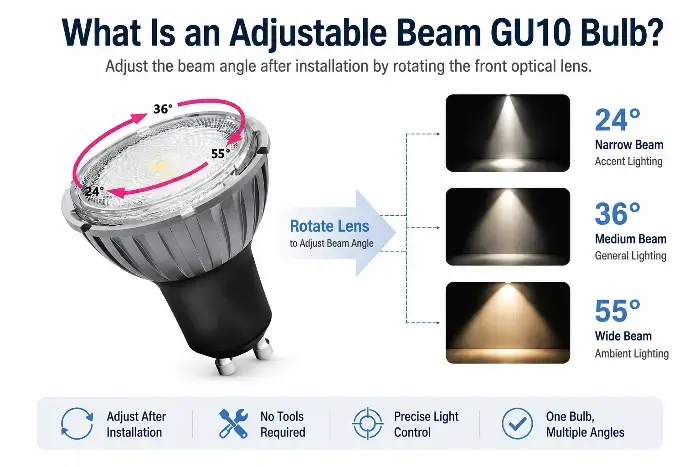
Una lampadina GU10 a fascio regolabile è un faro che consente agli utenti di modificare l'angolo del fascio dopo l'installazione.
A differenza delle tradizionali lampadine GU10 che forniscono una sola distribuzione del fascio fissa, i modelli a fascio regolabile consentono più angoli di fascio da una singola lampada.
Ad esempio, un GU10 a fascio regolabile può offrire:
| Angolo del fascio | Applicazione Tipica |
|---|---|
| 24° | Illuminazione d'Accento |
| 36° | Illuminazione generale per esposizioni |
| 55° | Illuminazione Ambientale |
La regolazione si ottiene ruotando la lente ottica anteriore.
Questo semplice design meccanico permette agli utenti di cambiare la distribuzione del fascio senza sostituire la lampada o modificare il dispositivo.
Perché i faretti a fascio fisso creano problemi
I faretti a fascio fisso hanno una limitazione fondamentale:
L'angolo del fascio è bloccato al momento dell'acquisto.
Se i requisiti del progetto cambiano, solitamente è necessario sostituire la lampada.
Sfida 1: La Selezione dell'Angolo del Fascio È Difficile
Scegliere l'angolo del fascio corretto richiede una pianificazione accurata.
Diversi fattori influenzano il risultato finale:
- Altezza del soffitto
- Posizione di montaggio
- Distanza del bersaglio
- Superfici riflettenti
- Rivestimenti interni
Anche i lighting designer esperti spesso necessitano di aggiustamenti dopo l'installazione.
Con le lampade a fascio fisso, correggere questi problemi significa tipicamente sostituire i prodotti.
Sfida 2: Complessità dell'inventario
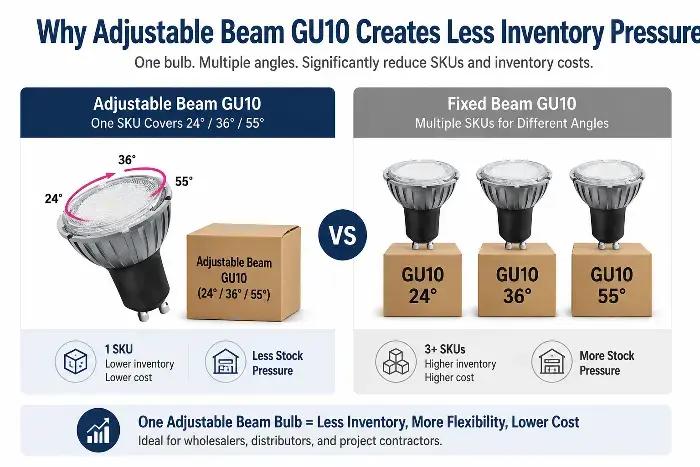
I distributori e gli appaltatori spesso tengono a magazzino più versioni dello stesso prodotto con diversi angoli di fascio.
| Tipo di prodotto | Conteggio SKU |
|---|---|
| 24° GU10 | 1 |
| GU10 36° | 1 |
| GU10 55° | 1 |
Ciò aumenta:
- Costi di inventario
- Requisiti di Spazio Magazzino
- Complessità di previsione
- Rischi di Sovrascorta
Un GU10 a fascio regolabile può sostituire diversi SKU a fascio fisso con un unico prodotto.
Sfida 3: Cambiamenti di Progetto Durante i Lavori
I progetti commerciali moderni evolvono frequentemente.
Esempi includono:
- Allestimenti retail che cambiano stagionalmente
- Ristrutturazioni alberghiere
- Aggiornamenti del layout del ristorante
- Modifiche all'esposizione della galleria
I faretti a fascio fisso spesso mancano della flessibilità necessaria per adattarsi a questi cambiamenti.
Le lampadine GU10 a fascio regolabile risolvono questo problema consentendo di modificare la distribuzione della luce senza sostituire la lampada.
Fascio Regolabile GU10 vs Fascio Fisso GU10
Una delle ragioni principali per cui la tecnologia a fascio regolabile sta guadagnando popolarità è la sua flessibilità operativa.
| Caratteristica | Fascio Regolabile GU10 | Fascio Fisso GU10 |
|---|---|---|
| Flessibilità dell'angolo del fascio | ✓ | ✗ |
| Requisiti di Inventario | Basso | Alto |
| Adattabilità del Progetto | Alto | Basso |
| Efficienza di Commissioning | Più veloce | Più Lento |
| Costo a Lungo Termine | Più basso | Più alto |
| Numero di SKU Richiesti | Uno | Multipli |
Per distributori, appaltatori e project manager, ciò può ridurre significativamente la complessità dell'inventario e della manutenzione.
Perché il GU10 a Fascio Regolabile Sta Diventando la Scelta Preferita
Maggiore Flessibilità di Illuminazione
Il vantaggio principale della tecnologia a fascio regolabile è la flessibilità.
Invece di acquistare lampade separate per diverse applicazioni, gli utenti possono adattare l'angolo del fascio secondo necessità.
Ad esempio:
Un negozio al dettaglio potrebbe inizialmente utilizzare un fascio di 55° per le esposizioni generali dei prodotti.
Successivamente, un display promozionale potrebbe richiedere un'enfasi più forte.
Il fascio può essere semplicemente regolato a 24° senza cambiare la lampada.
Riduzione dei Requisiti di Inventario
Un GU10 a fascio regolabile può svolgere il ruolo di diverse lampade tradizionali a fascio fisso.
I vantaggi includono:
- Meno SKU
- Acquisti semplificati
- Riduzione del rischio di inventario
- Costi di magazzino inferiori
Commissioning e messa a punto più semplici
Il design dell'illuminazione raramente termina quando l'installazione è completata.
Molti progetti richiedono regolazioni in loco.
Tradizionalmente, ottenere l'effetto di illuminazione desiderato può comportare:
- Sostituzione delle lampade
- Riordinare prodotti
- Revisione dei layout
Le lampadine GU10 a fascio regolabile semplificano questo processo.
Ruotando la lente, gli installatori possono ottimizzare la distribuzione della luce durante il commissioning.
Come l'Angolo di Fascio Cambia la Copertura dell'Illuminazione
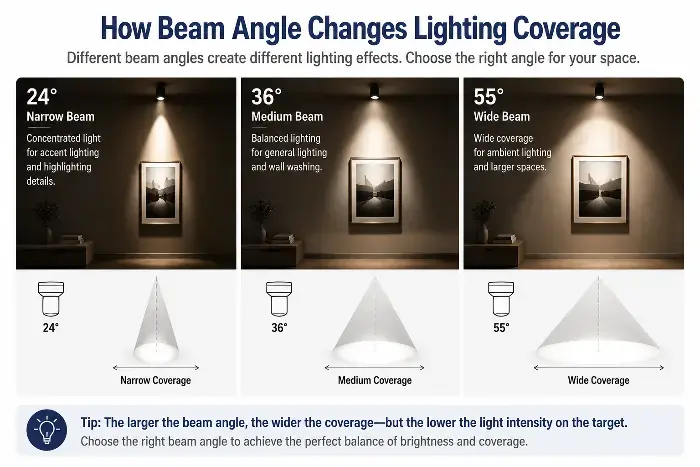
L'angolo del fascio influisce significativamente sulla distribuzione della luce.
La seguente tabella mostra la copertura approssimativa del fascio alle altezze del soffitto comuni.
| Angolo del fascio | Soffitto 2.5m | Soffitto di 3m | Miglior utilizzo |
|---|---|---|---|
| 24° | 1,06 m | 1.27m | Opere d'arte, esposizioni |
| 36° | 1.62m | 1.95m | Scaffalature, pareti caratteristiche |
| 55° | 2.60m | 3.12m | Illuminazione ambientale |
Questo dimostra perché la tecnologia a fascio regolabile offre una preziosa flessibilità per diversi scenari illuminotecnici.
Come Scegliere l'Angolo di Fascio LED Corretto
24° vs 36° vs 55°: Quando Usare Ogni Angolo di Fascio?
Angolo di Fascio 24°
Migliore per
- Opere d'arte
- Esposizioni di gioielleria
- Prodotti di lusso al dettaglio
- Dettagli architettonici
Caratteristiche
- Forte concentrazione
- Alto contrasto
- Impatto visivo drammatico
Un fascio di 24° concentra la luce in un'area più piccola, creando un'enfasi potente.
Angolo di Fascio 36°
Migliore per
- Scaffalature per la vendita al dettaglio
- Ambienti dell'ospitalità
- Pareti di risalto
- Illuminazione d'accento generale
Caratteristiche
- Copertura bilanciata
- Buon comfort visivo
- Prestazioni versatili
Molti progettisti illuminotecnici considerano 36° l'angolo di fascio più versatile per faretti.
Angolo di Fascio 55°
Migliore per
- Soggiorni
- Camere d'albergo
- Ristoranti
- Spazi commerciali aperti
Caratteristiche
- Copertura più ampia
- Effetto di illuminazione più morbido
- Uniformità visiva migliorata
Un fascio più ampio crea un'atmosfera più rilassata riducendo il contrasto eccessivo.
Angoli di Fascio Consigliati in Base all'Altezza del Soffitto
Altezza del Soffitto: 2,5–3 m
Consigliato:
- 24° per opere d'arte
- 36° per scaffali espositivi
- 55° per illuminazione ambientale
Altezza del Soffitto: 3–4m
Consigliato:
- 24° per esposizioni focali
- 36° per pareti d'accento
- 55° per illuminazione generale
Altezza del soffitto: Oltre 4m
Consigliato:
- Angoli di fascio stretti
- Illuminazione spot ad alta intensità
La selezione dell'angolo del fascio dovrebbe sempre considerare le dimensioni del bersaglio e la distanza di montaggio.
Perché CRI98 è Importante nell'Illuminazione Regolabile
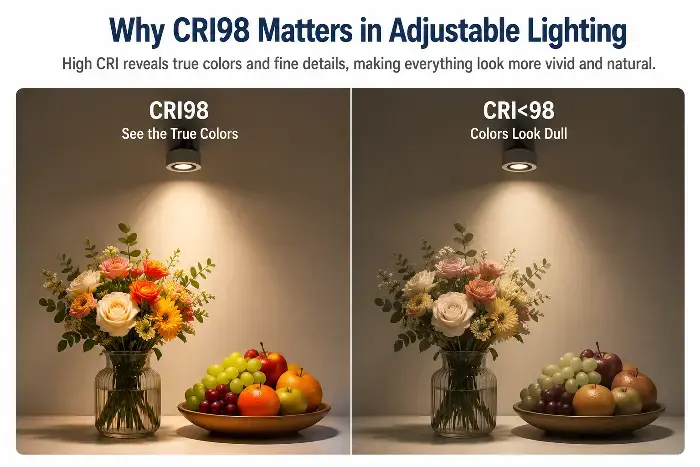
La flessibilità del fascio è solo una parte del design illuminotecnico di successo.
La resa cromatica è altrettanto importante.
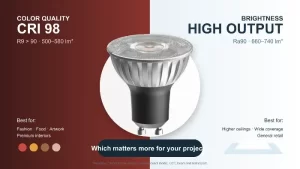
Il farettto GU10 con fascio regolabile qui discusso offre un CRI98 valutazione.
CRI (Indice di resa cromatica) misura quanto accuratamente i colori appaiono sotto una fonte luminosa rispetto a una fonte di riferimento naturale.
Secondo la Illuminating Engineering Society, l'illuminazione ad alto CRI è particolarmente preziosa in ambienti retail, hospitality, museali e di esposizione, dove l'accuratezza del colore influenza direttamente l'esperienza visiva.
Confronto CRI
| Livello CRI | Applicazione Tipica |
|---|---|
| CRI80 | Illuminazione Generale di Base |
| CRI90 | Illuminazione di alta qualità |
| CRI95+ | Illuminazione di alta gamma per display |
| CRI98 | Illuminazione Professionale Critica per il Colore |
Un CRI più elevato aiuta a garantire che:
- I prodotti appaiono più attraenti
- Le opere d'arte appaiono naturali
- Le finiture interne mantengono una rappresentazione accurata dei colori
CRI90 vs CRI98: Qual è la Differenza?
I vantaggi del dimmeraggio TRIAC
Un altro motivo per cui le lampadine GU10 a fascio regolabile stanno guadagnando popolarità è la compatibilità con i sistemi di dimmeraggio esistenti.
Molti progetti commerciali e residenziali utilizzano già dimmer TRIAC.
Una lampadina GU10 dimmerabile TRIAC consente agli utenti di:
- Regolare i livelli di luminosità
- Crea diverse atmosfere
- Migliora il comfort visivo
- Ridurre il consumo energetico
Combinare la tecnologia del fascio regolabile con la capacità di dimmerazione offre un maggiore controllo sia sulla distribuzione della luce che sull'intensità luminosa.
Sistemi di Dimmerazione LED Spiegati
Applicazioni per faretti GU10 con fascio regolabile
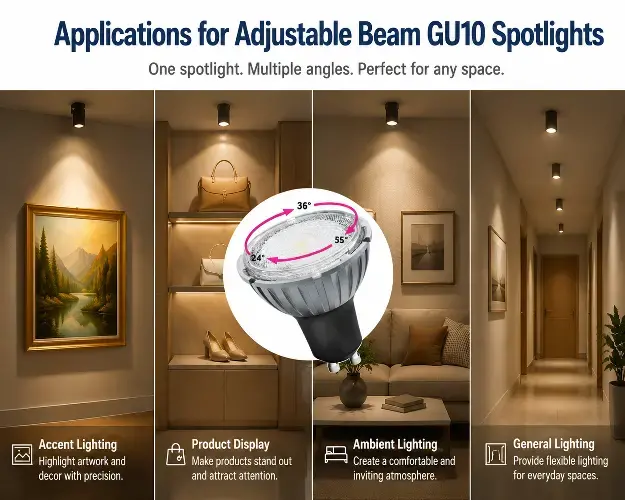
Illuminazione per il retail
Gli ambienti retail cambiano frequentemente l'esposizione dei prodotti.
I vantaggi includono:
- Migliore evidenziazione della merce
- Illuminazione espositiva flessibile
- Costi di manutenzione ridotti
Guida alla progettazione dell'illuminazione retail
Illuminazione per l'Ospitalità
Gli hotel richiedono un'illuminazione che bilanci estetica e funzionalità.
I faretti con fascio regolabile aiutano a creare:
- Camere per gli ospiti confortevoli
- Illuminazione dinamica per atri
- Illuminazione flessibile per ristoranti
Gallerie d'arte e musei
Le opere d'arte spesso cambiano posizione.
Gli angoli del fascio regolabili facilitano l'ottimizzazione dell'illuminazione per diverse esposizioni mantenendo la coerenza visiva.
Illuminazione Residenziale
Le case moderne utilizzano sempre più faretti a incasso nei design minimalisti.
Le lampadine GU10 con fascio regolabile offrono ai proprietari di casa un maggiore controllo sull'illuminazione degli spazi.
Chi dovrebbe scegliere le lampadine GU10 a fascio regolabile?
Le lampadine GU10 con fascio regolabile sono ideali se:
✅ Cambiate frequentemente le esposizioni
✅ Volete ridurre gli SKU di inventario
✅ Avete bisogno di flessibilità del fascio dopo l'installazione
✅ Progettate spazi al dettaglio o di ospitalità
✅ Hai bisogno di una lampada per molteplici applicazioni
✅ Vuoi una messa in servizio del progetto più semplice
I faretti a fascio regolabile sono il futuro?
Diverse tendenze del settore supportano la crescente adozione della tecnologia a fascio regolabile:
- Design degli interni flessibile
- Spazi multiuso
- Requisiti di inventario ridotti
- Maggiore personalizzazione
- Esperienza utente migliorata
La tecnologia GU10 a fascio regolabile si allinea perfettamente a queste tendenze.
Piuttosto che vincolare gli utenti a una singola soluzione di illuminazione, offre la flessibilità necessaria per ambienti mutevoli e requisiti di progetto in evoluzione.
Domande frequenti
La regolazione dell'angolo del fascio richiede attrezzi?
No.
L'angolo del fascio può essere regolato semplicemente ruotando la lente ottica anteriore.
Le lampadine GU10 a fascio regolabile possono sostituire più lampade a fascio fisso?
Sì.
Un GU10 con fascio regolabile 24°–36°–55° può spesso sostituire diverse versioni a fascio fisso.
Cambiare l'angolo del fascio influisce sulla luminosità?
L'output in lumen rimane simile, ma la concentrazione della luce cambia.
Fasci più stretti creano livelli di lux più elevati sulla superficie target.
Una GU10 a fascio regolabile è migliore di un faretto zoomabile?
Per la maggior parte delle applicazioni architettoniche e commerciali, le lampadine GU10 a fascio regolabile offrono una soluzione più semplice e pratica mantenendo prestazioni ottiche costanti.
Le lampadine GU10 a fascio regolabile possono essere utilizzate nell'illuminazione a binario?
Sì.
Sono adatte a molti sistemi di illuminazione a binario che utilizzano portalampade GU10.
Which beam angle is best for retail displays?
24° is often preferred for strong product emphasis, while 36° provides a more balanced presentation.
Are adjustable beam GU10 bulbs suitable for hotels?
Assolutamente.
They offer flexibility for guestrooms, lobbies, restaurants, and public spaces.
Do adjustable beam GU10 bulbs support dimming?
Many models do.
The product discussed in this article supports TRIAC dimming for smooth brightness control.
Looking for an Adjustable Beam GU10 Solution?
TECO’s Adjustable Beam GU10 Spotlight combines:
- Selectable 24° / 36° / 55° beam angles
- Easy front-lens adjustment
- 7.5W high-efficiency performance
- TRIAC dimming compatibility
- CRI98 color rendering
- 2700K / 3000K / 4000K options
- Professional-grade lighting quality
Whether you’re developing a retail project, hospitality installation, gallery lighting system, or residential application, our adjustable beam GU10 solution helps deliver greater flexibility with fewer SKUs and improved lighting control.
Contact TECO Today
If you’re looking for OEM, ODM, or project-specific adjustable beam GU10 solutions, our team can help you select the right specifications for your market and application.
Conclusione
Fixed beam spotlights have served the lighting industry well for many years, but modern projects increasingly demand greater flexibility.
Adjustable beam GU10 bulbs address many of the limitations associated with traditional fixed beam lighting by allowing users to adapt light distribution without replacing lamps.
With selectable 24°, 36°, and 55° beam angles, TRIAC dimming compatibility, CRI98 color rendering, and a simple lens rotation mechanism, adjustable beam GU10 technology offers a practical solution for retail, hospitality, gallery, commercial, and residential lighting applications.
As designers, contractors, and distributors continue seeking more adaptable lighting solutions, adjustable beam GU10 bulbs are rapidly becoming the smarter alternative to fixed spotlights.
Riferimenti
- Illuminating Engineering Society — Lighting Fundamentals and Beam Angle Concepts
- U.S. Department of Energy — LED Lighting Resources
- National Institute of Standards and Technology — Color Rendering Research
- LightingEurope — Lighting Application Guidance