Enclosed Fixture Rated LED Bulbs: Heat, Lifespan and Safe Replacement Rules
Aggiornato: 10 settembre 2026
An enclosed fixture rated LED bulb is designed to tolerate the higher heat trapped inside sealed or poorly ventilated luminaires. Standard LED bulbs may still light up in an enclosed fixture, but heat can shorten driver life, shift color, reduce lumen output and create warranty problems. For commercial projects, the replacement decision should include fixture ventilation, ambient temperature, operating hours and maintenance cost.
| Fixture condition | Risk with standard LED | Buyer action |
|---|---|---|
| Sealed globe or lantern | Heat buildup and early driver failure | Use enclosed-fixture-rated LED only |
| Downlight with limited airflow | Lumen depreciation and unstable life | Check thermal rating and lamp dimensions |
| Long daily operating hours | Higher maintenance and callback cost | Request lifespan and warranty evidence |
For B2B sourcing, ask for thermal design details, test conditions, fixture compatibility notes and stable batch supply rather than relying only on wattage equivalence.
Introduzione
Il fatto che le lampadine si brucino prematuramente all'interno di apparecchi chiusi raramente è solo un problema della lampada. Nella maggior parte dei progetti commerciali, si tratta di un problema di gestione termica a livello di sistema. La lampada, l'alimentatore, la cavità dell'apparecchio, la temperatura ambiente, le ore di funzionamento, l'orientamento dell'installazione e l'accesso per la manutenzione interagiscono tutti tra loro.
Questo diventa un problema costoso nell'ospitalità, nella vendita al dettaglio, nei corridoi, nelle trombe delle scale, nei bagni, nelle lanterne da parete esterne e nelle aree pubbliche dove gli apparecchi funzionano per molte ore e l'accesso è difficile. Una lampada che funziona in modo accettabile all'aria aperta potrebbe guastarsi molto prima una volta installata in un apparecchio sigillato o scarsamente ventilato. Il risultato non è solo il costo di sostituzione, ma anche la rilavorazione della manodopera, l'attrezzatura di accesso, le operazioni interrotte e il rischio di reputazione evitabile.
Molti acquirenti cercano termini come "lampadina LED classificata per apparecchi chiusi", "lampadina LED per apparecchi chiusi" o "le lampadine LED possono essere usate in apparecchi chiusi" perché l'etichetta sulla confezione non è sempre abbastanza chiara. "Classificata per apparecchi chiusi" è un punto di partenza importante, ma non descrive i limiti termici effettivi, il margine di progetto dell'alimentatore, l'orientamento dell'installazione o la differenza tra superare un test di base e sopravvivere alle condizioni reali del progetto.
Sintesi Esecutiva
"Apparecchio chiuso classificato" significa che una lampada a LED è progettata per tollerare temperature interne più elevate all'interno di apparecchi chiusi, ma le prestazioni dipendono ancora dal design dell'apparecchio, dal calore ambientale, dalla qualità del driver, dalla potenza, dalle ore di funzionamento e dalla validazione termica. Per l'affidabilità commerciale, la verifica termica conta più delle sole dichiarazioni di imballaggio.
In termini pratici:
- Non si deve dare per scontato che le lampadine LED standard siano sicure in apparecchi chiusi.
- Le lampadine a LED classificate per apparecchi chiusi sono più tolleranti al calore, non immuni al calore.
- La temperatura del driver e del condensatore può essere importante quanto la qualità del chip LED.
- La durata nominale e quella reale sul campo possono essere molto diverse.
- Per i grandi progetti, i test pilota nell'apparecchio reale sono molto più sicuri che affidarsi solo alle diciture sull'etichetta.

prestazioni termiche della lampada a LED classificata per apparecchi chiusi
Cos'è un apparecchio chiuso?
Realtà in Cantiere / Commerciale
Un apparecchio chiuso è qualsiasi apparecchio in cui la lampada funziona all'interno di un involucro con flusso d'aria limitato.1 Nella pratica, ciò include lampade a soffitto con vetro, apparecchi da parete decorativi, faretti sigillati, lanterne esterne, apparecchi per bagno e molti apparecchi per corridoi o trombe delle scale. In cantiere, questi apparecchi sono spesso scelti per l'aspetto, la protezione dall'ingresso di corpi estranei, il controllo dell'abbagliamento o la sicurezza, mentre il comportamento termico della lampada viene considerato solo dopo l'inizio dei guasti.
Per i team di manutenzione, gli apparecchi chiusi sono un'applicazione a rischio più elevato perché la sostituzione delle lampade spesso richiede scale, accesso al soffitto, chiusure delle aree ospiti o lavoro fuori orario. Se viene installato il LED sbagliato in un intero progetto, il costo si moltiplica rapidamente.
Approfondimento e Soluzione Ingegneristica
Le lampade LED generano meno calore radiante rispetto alle alogene, ma l'elettronica e la giunzione LED producono comunque calore che deve essere condotto e dissipato.2 In un apparecchio aperto, la convezione naturale aiuta a rimuovere quel calore. In un apparecchio chiuso, l'aria calda rimane intrappolata attorno al corpo della lampada e ai componenti del driver, aumentando significativamente la temperatura operativa.
Il punto critico è che la durata di vita del LED dipende fortemente dalla temperatura. La temperatura di giunzione del package LED e la temperatura interna dei condensatori elettrolitici nel driver aumentano entrambe all'interno di un involucro confinato.3 Una volta che queste temperature superano i limiti di progetto, la diminuzione del flusso luminoso accelera, lo scarto cromatico può aumentare e il guasto dell'alimentatore diventa più probabile.
| Caratteristica | Apparecchio Aperto | Apparecchio chiuso | Impatto sulla Manutenzione / ROI |
|---|---|---|---|
| Flusso d'aria | Relativamente libero | Limitato | Stress termico maggiore nell'uso in ambienti chiusi |
| Temperatura del driver | Più basso | Più alto | Durata del driver più breve se il margine di progettazione è debole |
| Temperatura di giunzione LED | Più gestibile | Elevata | Perdita di lumen più rapida e guasto precoce |
| Frequenza di sostituzione | Più basso | Più alto se non corrisponde | Più manodopera e interruzione del servizio |
Nota di Fabbrica
Dal punto di vista della produzione, "chiuso" non è una classificazione estetica. È una condizione operativa termica. Una lampada che supera i controlli elettrici di base nei test all'aria aperta può ancora diventare instabile una volta installata in una cavità sigillata con temperatura ambiente elevata.
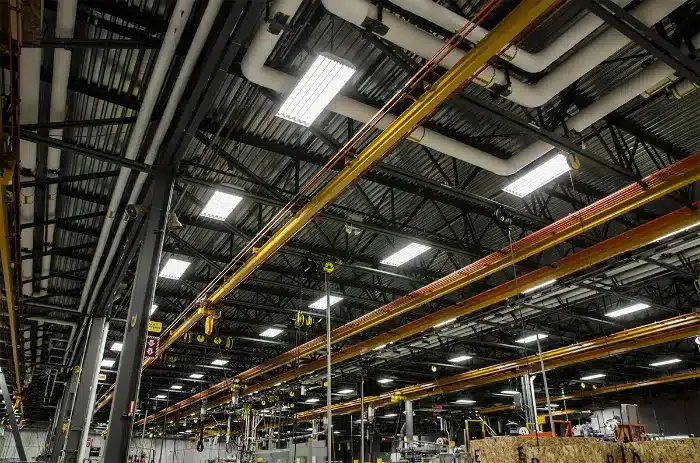
accumulo di calore LED in apparecchi commerciali chiusi
Perché le lampadine LED si guastano negli apparecchi chiusi
Realtà in Cantiere / Commerciale
Quando i LED si guastano in apparecchi chiusi, il modello di guasto spesso appare inizialmente incoerente. Alcune lampade sfarfallano, altre si affievoliscono visibilmente, altre cambiano colore e altre smettono di funzionare del tutto. In cantiere, ciò viene spesso scambiato per instabilità di tensione o incoerenza casuale del prodotto. In molti casi, la causa principale comune è l'accumulo di calore.
Per i contraenti, questo crea una situazione pericolosa durante la consegna. Un progetto potrebbe superare l'installazione iniziale, per poi presentare guasti entro pochi mesi, portando a reclami, richiami di intervento e risoluzione dei problemi apparecchio per apparecchio.
Approfondimento e Soluzione Ingegneristica
Le ragioni principali per cui le lampadine LED si guastano negli apparecchi chiusi sono:
Temperatura eccessiva dell'alimentatore
L'alimentatore LED converte la tensione di rete in una corrente di uscita regolata.4 Negli spazi chiusi, il driver funziona più caldo, specialmente quando si utilizzano involucri compatti con dissipazione del calore limitata. La vita del condensatore diminuisce rapidamente con l'aumentare della temperatura.Elevated LED junction temperature
Higher junction temperature reduces light output over time and accelerates material degradation in the LED package.Poor thermal path
If the lamp housing, PCB, thermal interface, and outer shell do not transfer heat effectively, internal heat remains concentrated around sensitive components.Long operating hours
Enclosed fixtures in corridors, lobbies, lift areas, stairwells, and exterior pathways often operate far longer than residential use assumptions. Even a "rated" lamp may fail early if designed around light-duty operating patterns.High ambient temperature
Ceiling voids, decorative glass fittings, bathrooms, and sun-exposed outdoor enclosures can push internal temperatures beyond normal lab assumptions.
| Failure Driver | Mechanism | Typical Field Result | Impatto sulla Manutenzione / ROI |
|---|---|---|---|
| Driver overheating | Capacitor and IC stress | Flicker, intermittent startup, or no output | Early replacement and service calls |
| LED overheating | Junction degradation | Faster lumen depreciation | Visible performance drop before failure |
| Weak thermal design | Heat concentration | Inconsistent life across batches | Reduced trust in product line |
| Long daily runtime | Accelerated aging | Earlier-than-expected burnouts | Higher lifetime lamp cost |
Nota di Fabbrica
During hotel commissioning, premature LED failures in enclosed fittings are often traced not to the LED chips themselves, but to thermal stress on the driver section. This is why driver layout, capacitor grade, ripple-current margin, and heat dissipation path matter more than headline wattage claims.
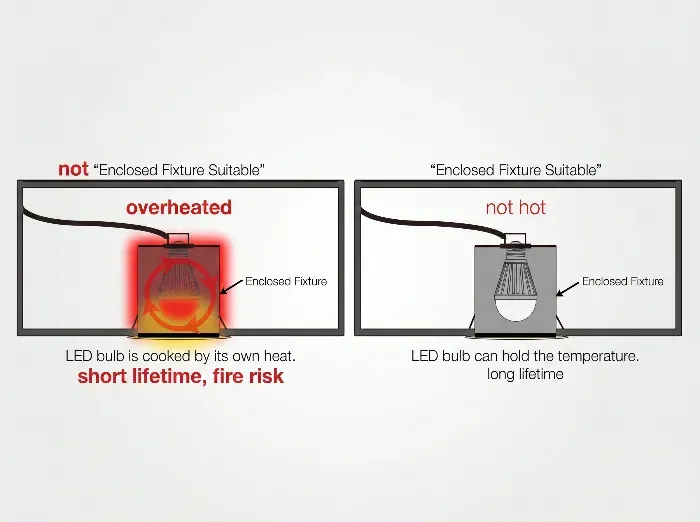
LED driver overheating in enclosed fixture
What Does "Enclosed Fixture Rated" Mean?
Realtà in Cantiere / Commerciale
Buyers often assume that "enclosed fixture rated" guarantees full lifespan in any closed luminaire. That assumption causes avoidable claims. The label only indicates that the lamp is intended for use in enclosed fixtures under defined conditions. It does not mean every sealed fitting, every ambient temperature, every wattage level, and every operating profile is equally safe.
In commercial projects, this distinction matters because fixture geometry varies widely. A small decorative globe, a deep recessed can, a bathroom cover, and a sealed outdoor wall lantern do not create the same thermal environment.
Approfondimento e Soluzione Ingegneristica
"Enclosed fixture rated" generally means the lamp has been designed and tested to operate in a more heat-restrictive environment than a standard open-fixture lamp. Typical design upgrades may include:
- Better heat sink structure
- Higher-temperature driver components
- Improved thermal interface materials
- More conservative current setting
- Lower internal power density
- Thermal protection or thermal derating behavior5
However, the market uses this term broadly. One manufacturer may apply robust thermal derating, while another may only meet a minimum compliance threshold. The packaging does not usually show the actual thermal test conditions, maximum case temperature, installation orientation, or expected life at elevated ambient.
A more useful engineering interpretation is this: enclosed-rated lamps are not immune to heat; they are simply more tolerant of heat within defined limits.
Nota di Fabbrica
From a manufacturing perspective, the reliable way to evaluate enclosed-rated products is not by printed wording alone, but by thermal validation under realistic operating temperature. Burn-in, elevated ambient aging, in-fixture temperature measurement, and batch verification reveal far more than carton claims.
What Happens If You Use the Wrong LED?
Realtà in Cantiere / Commerciale
Using a non-enclosed-rated LED inside a closed fixture may not cause immediate failure. That is exactly why the mistake is common. The installation appears acceptable at day one, but thermal aging starts immediately. By the time failures become visible, the project is already occupied and access becomes more difficult.
In hospitality and commercial environments, this leads to scattered failures that damage visual consistency and increase maintenance scheduling complexity.
Approfondimento e Soluzione Ingegneristica
If the wrong LED is used in an enclosed fixture, the most common outcomes are:
- Rapid lumen loss
- Flicker during warm operation
- Color inconsistency over time
- Intermittent shutdown from thermal protection
- Guasto del driver prima della vita nominale
- Aumento della diffusione dei guasti per lotto sul sito
Il problema chiave è che la durata nominale indicata sulla confezione si basa solitamente su specifiche ipotesi termiche. Una volta che la lampada è installata in un ambiente più caldo, la vita effettiva dei componenti diminuisce. Per i condensatori elettrolitici, una stima ingegneristica ampiamente utilizzata è che la vita si raddoppi approssimativamente per ogni riduzione di 10°C della temperatura di esercizio, o si dimezzi approssimativamente per ogni aumento di -10°C, entro i limiti del progetto del componente.6 In termini pratici, una lampada pubblicizzata per lunga durata può fornirne solo una frazione sotto il calore sostenuto dell'involucro.
| Scelta dell'installazione | Condizione termica | Risultato probabile | Impatto sulla Manutenzione / ROI |
|---|---|---|---|
| LED standard in apparecchio aperto | Moderato | Durata normale | Ciclo di manutenzione stabile |
| LED standard in apparecchio chiuso | Alto | Rischio di guasto precoce | Costo della manodopera e della sostituzione più elevato |
| LED con valutazione per ambienti chiusi in involucro mite | Controllato | Durata migliorata | Migliore prevedibilità della manutenzione |
| LED con valutazione per ambienti chiusi in involucro severo | Molto alta | Durata ancora ridotta | Richiede una verifica termica, non un'ipotesi |
Nota di Fabbrica
Nei grandi progetti alberghieri, il costo maggiore di solito non è la differenza di prezzo della lampada. È il costo degli accessi ripetuti, del coordinamento della sostituzione e della perturbazione delle aree ospiti dopo che una scelta errata della lampada è stata distribuita su centinaia di apparecchiature chiuse.
Non tutti i LED "Classificati per Ambienti Chiusi" sono uguali
Realtà in Cantiere / Commerciale
È qui che iniziano molti problemi di approvvigionamento. Due prodotti possono entrambi dichiararsi "valutati per apparecchi chiusi", ma comportarsi in modo molto diverso sul campo. Uno può sopravvivere a lunghe ore di funzionamento in corridoi; l'altro può degradarsi rapidamente nella stessa applicazione.
Per i distributori e gli acquirenti di progetti, ciò crea una falsa equivalenza durante il confronto dei prodotti. Il risultato è spesso la selezione in base al costo unitario piuttosto che al margine termico.
Approfondimento e Soluzione Ingegneristica
Le differenze tra i LED classificati per ambienti chiusi derivano tipicamente da:
- Topologia del driver e valutazione della temperatura dei componenti
- Specifica della durata del condensatore e margine della corrente di ripple
- Massa e efficienza del materiale del dissipatore termico
- Geometria della lampada e percorso del flusso d'aria interno
- Densità di corrente operativa
- Strategia di protezione termica
- Coerenza del processo di assemblaggio
- Qualità dell'invecchiamento e controllo del lotto in uscita
Una lampada compatta con un output luminoso aggressivo può funzionare molto più calda di un design con output leggermente inferiore ma con migliore margine termico. Sulla carta, entrambi possono apparire simili. Nell'uso in ambienti chiusi, non invecchiano allo stesso modo.
| Caratteristica | LED base classificato per ambienti chiusi | LED robusto classificato per ambienti chiusi | Impatto sulla Manutenzione / ROI |
|---|---|---|---|
| Componenti dell'alimentatore | Margine standard | Margine di alta temperatura | Tasso di guasto sul campo inferiore |
| Progettazione termica | Conformità minima | Percorso termico progettato | Funzionamento stabile più lungo |
| Strategia di output | Spinta massima del lumen | Lumen bilanciati vs temperatura | Maggiore coerenza della durata |
| Validazione | Dichiarazione limitata | Elevated ambient and aging verification | Lower site risk |
| Coerenza del lotto | Variabile | Controllato | More predictable maintenance planning |
Nota di Fabbrica
From a manufacturing perspective, enclosed-fixture reliability depends heavily on process discipline. Solder quality, thermal compound application, driver spacing, and aging control all affect whether a lamp survives real enclosed operation or only passes a nominal specification.
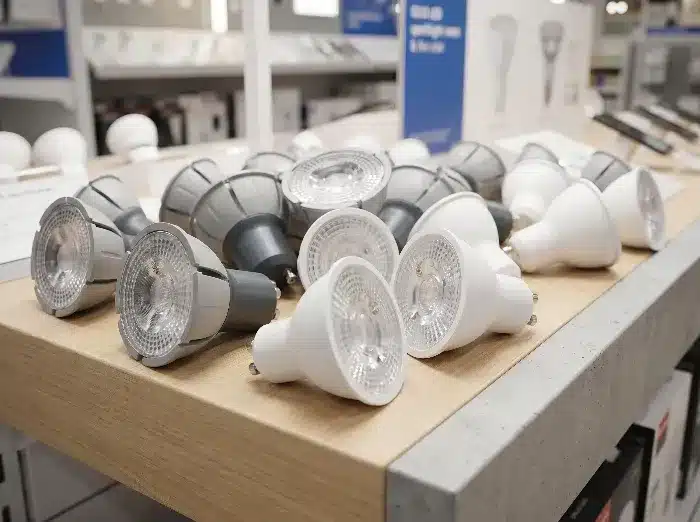
enclosed rated LED comparison for commercial use
How to Choose the Right LED for Enclosed Fixtures
Realtà in Cantiere / Commerciale
Selecting the right lamp before purchase is far less expensive than replacing failed lamps after occupancy. This is especially important in stairwells, facade lanterns, guest corridors, bathrooms, public areas, and decorative ceiling fixtures where maintenance access is restricted or disruptive.
Approfondimento e Soluzione Ingegneristica
For commercial evaluation, use these criteria:
Confirm explicit enclosed-fixture suitability
Do not assume all LED lamps are suitable for enclosed use.Review operating environment
Consider ambient temperature, fixture cavity size, ventilation level, orientation, and daily runtime.Check wattage against enclosure size
Higher wattage in a small enclosed volume raises internal temperature quickly.Ask for thermal or aging validation
Request evidence of elevated-temperature testing, not only nominal life claims.Evaluate driver design
In enclosed applications, driver robustness often determines service life more than LED chip branding.Verify consistency across batches
Stable thermal behavior requires consistent materials and assembly, not just one good sample.Run a pilot installation
For larger projects, test a sample batch in the actual luminaire before full rollout.
For retrofit spotlight projects, product families such as Lampadine LED GU10, MR16 LED bulbs, ES111 LED spotlights, e LED PAR bulbs should be reviewed against the actual fixture cavity, wattage, beam requirement, dimming system, and operating hours before bulk purchase.
| Selection Factor | What to Check | Perché è importante | Impatto sulla Manutenzione / ROI |
|---|---|---|---|
| Enclosed suitability | Explicit rating | Avoid misuse | Fewer early failures |
| Thermal validation | Aging and temperature data | Confirms real tolerance | Lower claim risk |
| Driver robustness | Component grade and design margin | Main life determinant | Maggiore affidabilità |
| Fixture match | Lamp size vs enclosure | Controls heat buildup | Longer service interval |
| Pilot test | Site simulation | Confirms compatibility | Avoids project-wide rework |
Nota di Fabbrica
During hotel commissioning, the safest approach is always fixture-specific verification. A lamp may perform well in one enclosed fitting and poorly in another if cavity volume, glass cover design, installation orientation, or ambient heat changes the thermal condition.
Real Lifespan vs Rated Lifespan
Realtà in Cantiere / Commerciale
Rated lifespan is often used in purchasing decisions, but maintenance teams live with real lifespan. These are not the same. A lamp may be marketed at 15,000 or 25,000 hours, yet fail much earlier in a sealed fitting operating every night.
This gap creates frustration because the packaging may be technically true under defined test conditions, while the site condition is far harsher.
Approfondimento e Soluzione Ingegneristica
Rated lifespan is usually determined under controlled laboratory conditions. Real lifespan depends on:
- Internal operating temperature
- Switching frequency
- Runtime profile
- Mains quality
- Fixture enclosure design
- Ambient heat
- Component tolerance spread
- Driver and capacitor stress
For LED products, it is also important to separate lumen maintenance from whole-lamp reliability. LM-80 data is used for LED packages, arrays, or modules, and TM-21 projections estimate LED lumen maintenance. These methods are useful, but they do not by themselves prove the lifetime of the complete lamp, because the driver, capacitors, optics, solder joints, and housing materials can also determine failure.
ENERGY STAR lamp specifications provide useful reference points for elevated-temperature evaluation. For example, many lamps are tested at 45°C +/- 5°C, while directional lamps above 20 W may be tested at 55°C +/- 5°C. Some qualification paths also reference 10 samples per model, commonly split between base-up and base-down operation unless the lamp is restricted to a specific position. These are useful benchmarks, not a guarantee that every enclosed fixture is covered.
A more practical B2B question is: what is the expected service life in this exact luminaire, at this ambient temperature, in this installation orientation, under this duty cycle?
Nota di Fabbrica
From a manufacturing perspective, lifespan claims become meaningful only when linked to application conditions. For enclosed commercial fittings, accelerated aging, temperature-rise verification, in-fixture testing, and driver component review are more useful than headline lifetime figures on retail-style packaging.
Best Solutions for Enclosed Fixtures
Realtà in Cantiere / Commerciale
The best solution depends on how severe the enclosure is and how difficult maintenance access will be. In high-access-cost areas, the priority should be stable operation rather than maximum initial efficacy on paper.
Approfondimento e Soluzione Ingegneristica
The most reliable solutions for enclosed fixtures typically include:
- LED lamps specifically engineered for enclosed use
- Lower thermal loading through moderate wattage selection
- Fixtures with improved ventilation where design permits
- Integrated LED luminaires with system-level thermal management
- Driver-on-board or remote-driver designs where appropriate
- Pre-project thermal verification for long-hour applications
For projects with strict maintenance targets, integrated luminaires often outperform retrofit lamps because the thermal path is designed as one system rather than as a lamp adapted to many fixture types. However, retrofit enclosed-rated lamps remain practical when legacy fixture retention is required.
Where the project allows fixture replacement, reviewing compatible apparecchi di illuminazione together with the lamp specification can make thermal control easier than changing the bulb alone.
| Soluzione | Caso d'Uso Migliore | Strength | Impatto sulla Manutenzione / ROI |
|---|---|---|---|
| Enclosed-rated retrofit LED | Existing fixtures retained | Lower upgrade cost | Good if thermal match is verified |
| Lower wattage enclosed-rated lamp | Small sealed fixtures | Reduced heat stress | Longer replacement interval |
| Better ventilated fixture | New installation | Improved thermal condition | Lower long-term failure risk |
| Integrated LED luminaire | Full project redesign | System-level thermal control | Best long-term stability |
Nota di Fabbrica
In large hospitality projects, the most cost-effective decision is often to reduce thermal stress slightly rather than push for the highest lumen package. A modest reduction in watt density can improve service life more than most buyers expect.
Common Mistakes to Avoid
Realtà in Cantiere / Commerciale
Most enclosed-fixture failures come from a short list of repeat mistakes. These are usually preventable during specification and purchasing, yet expensive once the site is occupied.
Approfondimento e Soluzione Ingegneristica
Gli errori comuni includono:
- Assuming all LEDs are suitable for enclosed fixtures
- Treating "enclosed rated" as equal across all brands
- Ignoring ambient temperature and runtime
- Choosing highest lumen output without thermal review
- Relying only on packaging claims
- Skipping pilot testing in the actual luminaire
- Comparing unit price without including replacement labor cost
- Ignoring installation orientation, especially base-up operation in small housings
These mistakes shift the focus from total system cost to initial purchase cost, which is rarely the right metric in commercial environments.
Nota di Fabbrica
From a manufacturing perspective, the most expensive failures are predictable ones: undersized thermal design, overdriven output, weak driver margin, and product selection made without considering the actual fixture cavity and operating hours.
FAQ
Can LED bulbs be used in enclosed fixtures?
Yes, but only when the LED bulb is rated for enclosed fixtures and the fixture condition is within the lamp’s thermal capability. Standard LED bulbs may overheat in sealed or poorly ventilated luminaires.
What does "not for use in totally enclosed luminaires" mean?
It means the lamp should not be installed inside a fully enclosed or mostly sealed fixture. The manufacturer is warning that heat buildup may shorten life or create an unsuitable operating condition.
Do enclosed fixture rated LED bulbs last as long as regular LED bulbs?
They can last longer than standard LEDs inside enclosed fixtures, but actual life depends on fixture design, ambient temperature, wattage, driver quality, and operating hours. The rating improves suitability; it does not guarantee full package life in every enclosure.
Why do LED bulbs flicker in enclosed fixtures?
Flicker can come from driver overheating, capacitor aging, dimmer incompatibility, or voltage issues. In enclosed fixtures, heat-related driver stress is a common cause.
Is a lower watt LED better for enclosed fixtures?
Often, yes. Lower wattage usually produces less heat, which can improve reliability in small sealed fixtures. The lamp still needs to meet the required light level and be rated for the application.
How should commercial buyers verify enclosed LED reliability?
Ask for elevated-temperature testing, in-fixture temperature data, driver component review, lumen maintenance trend, and pilot installation results. For large projects, do not rely on packaging claims alone.
Conclusion: Business Value
For enclosed fixtures, LED reliability depends on heat control more than label wording. "Enclosed fixture rated" is a necessary starting point, but not a complete guarantee. Real performance comes from thermal design margin, driver robustness, application matching, and consistent manufacturing control.
For commercial projects, the business value is clear: fewer premature failures, less maintenance disruption, lower access cost, lower warranty risk, and more predictable lifetime system cost.
Raccomandazione di Ingegneria B2B
For large projects with specific dimming, operating-hour, or maintenance requirements, request the full load schedule and fixture list. The Teco engineering team can review fixture conditions, simulate likely thermal risk, test samples under realistic operating conditions, verify thermal and compatibility risk before mass production, and reduce avoidable site failures.
For project-specific evaluation, buyers can contact the Teco team with the fixture list, lamp schedule, dimming requirement, and expected daily operating hours.
Note a piè di pagina
Enclosed fixture: a luminaire in which the lamp operates within a closed or substantially sealed housing that restricts airflow. ↩
LED junction: the active semiconductor region inside the LED where electrical energy is converted into light; its temperature strongly affects performance and lifespan. ↩
Electrolytic capacitor: a common driver component used for filtering and energy storage; service life decreases significantly as operating temperature rises. ↩
LED driver: the electronic circuit that converts input power into controlled output suitable for operating LEDs safely and consistently. ↩
Thermal derating: the practice of reducing electrical stress or output as temperature rises in order to protect components and maintain reliability. ↩
The 10°C / 2x capacitor-life rule is a common engineering estimate for aluminum electrolytic capacitors, not a universal guarantee. Actual life depends on capacitor series, core temperature, ripple current, voltage stress, and manufacturer data. ↩