フィリップス電球 vs ODM LED電球:大量購入の比較
大量のLED購入の決定は、書面上では単純に見えることが多い。一方は長い歴史を持つグローバルブランド、もう一方は低コストとカスタマイズを提供するODM工場。実際には、誤った選択は購入者を高コスト、供給の硬直性、または隠れた運用リスクに縛り付ける可能性があります。.
本当の問いは、フィリップスとODMのLED電球のどちらが「優れているか」ではなく、どちらの選択肢があなたの大量購入モデル、リスク許容度、長期的な供給戦略に適合するかです。.
この記事では、 公式フィリップスブランドLED電球 と 合法的なODM製造LED電球 (偽造品や無許可製品ではありません)。各モデルの動作方法、各モデルが最も効果を発揮する場面、および専門バイヤーがコスト、リスク、管理のバランスを取るためのハイブリッド調達戦略を構築する方法を説明します。.
この比較が対象とする(および対象としない)読者
この記事は以下の読者向けに書かれています:
- B2B大口購入者
- 卸売業者と販売代理店
- プロジェクト調達チーム
- プライベートブランドおよびOEM/ODMブランド
それは 対象外 対象:
- 小売消費者
- 一度きりの住宅購入者
- 価格のみを重視するオンラインショッパー
分析の焦点は 構造的な調達決定, 、個々の製品レビューではありません。.
フィリップスとODM LED電球の核心的な違い

フィリップスのシステム主導型ブランドモデルとODMバイヤー主導型LED電球モデルのコアな違い(コスト構造やカスタマイズの柔軟性を含む)の視覚的分解。.
フィリップスとODM LED電球は根本的に異なる供給哲学に基づいて構築されています。.
フィリップスはブランドおよびシステム制御モデルを代表し、ODM LED電球は製造主導、バイヤー制御モデルを代表します。.
一目でわかる構造の違い
| 側面 | フィリップス LED電球 | ODM LED電球 |
|---|---|---|
| ビジネスモデル | ブランドおよびシステムプロバイダー | 製造パートナー |
| 製品管理 | ブランド定義 | バイヤー定義 |
| カスタマイズ | 非常に限られている | 高い |
| 単価 | 高い | 低から中程度 |
| 供給の柔軟性 | 低 | 高い |
| リスク所有権 | 主にブランド | 主にバイヤー |
これらの違いは、価格設定、リードタイムの挙動、ライフサイクルの安定性、および販売後の責任に影響を与えます。.
製品を管理するのは誰ですか?
フィリップスの場合:
- 製品仕様は固定されている
- 変更はブランド主導です
- 購入者は既存のSKUから選択
ODMの場合:
- 購入者が仕様を定義します
- 工場は要件を実行
- 購入者は長期的な継続性を管理します
この管理の変化が 最も重要な単一要素 大口購入者向け。.
双方にとっての「大量」の意味
フィリップスにとって、大口購入は以下を意味します:
- 数量割引
- 標準化された物流
- 限定的な交渉
ODMサプライヤーにとって、大口購入は以下を意味します:
- 長期生産
- コスト最適化
- より深い技術的連携
同じ言葉が、非常に異なる調達結果につながります。.
フィリップスブランドの利点(安定性、システムサポート、アフターサービス)

フィリップスのブランド優位性を示すインフォグラフィックススライド。小売およびオフィス環境での製品取り扱いと、コスト構造およびカスタマイズ制限の比較を表示。.
フィリップスがベンチマークブランドである理由があります。.
フィリップスLED電球は、コストやカスタマイズよりも、安定性、システム互換性、ブランドに裏打ちされた信頼性が重視される場面で最も優れた性能を発揮します。.
ブランドの安定性と市場での受容性
フィリップスが提供するもの:
- 世界的に認められたブランド信頼
- 一貫した知覚品質
- 保守的な調達環境での強い受容性
公共または機関の入札では、ブランド認知度だけで承認の障壁を低減できます。.
システム互換性とエコシステムサポート
フィリップスの製品は、以下の製品とうまく統合されます:
- ビル管理システム
- 照明制御プラットフォーム
- 標準化されたプロジェクト文書
これは、技術的に複雑なプロジェクトにおける不確実性を低減します。.
文書化とコンプライアンスの確信
フィリップスが提供するもの:
- 標準化されたデータシート
- 安定した認証維持
- 予測可能なコンプライアンス行動
これは、規制市場で活動する購入者の内部コンプライアンス作業負荷を軽減します。.
アフターサービスと保証対応
フィリップスのグローバル構造は以下をサポートします:
- 明確な保証プロセス
- 地域サービスチャネル
- 定義された故障対応責任
これは、強力な内部技術チームを持たない購入者にとって価値があります。.
トレードオフ
これらの利点は価格に組み込まれています。.
購入者は以下の費用を支払います:
- ブランド間接費
- グローバルインフラストラクチャ
- 移転されたオペレーショナルリスク
このコスト構造は、価格主導の大量購買における競争力を制限します。.
ODM LED電球の利点(コスト、カスタマイズ、柔軟性)

ODM LED電球の主な利点を紹介するスライド。倉庫におけるコスト優位性、仕様を通じた買い手主導のカスタマイズ、製造環境内での長期的な供給柔軟性を含む。.
ODM LED電球は異なるロジックで動作します。.
ODMサプライヤーは、買い手がコスト効率、仕様管理、長期的な供給の柔軟性を求める分野で優れています。.
規模によるコスト優位性
ODMの価格メリット:
- 工場直送生産
- 低いマーケティング間接費
- 長期的な製造効率
安定したSKUの場合、時間の経過とともに節約が大幅に蓄積されます。.
ベースライン能力としてのカスタマイズ
ODMサプライヤーは買い手が以下を定義することを可能にします:
- ルーメン出力
- 色温度
- ビーム角
- CRIレベル
- 調光動作
- 包装とラベリング
これにより、不要な機能に支払う代わりに市場特化の最適化が可能になります。.
サプライチェーンの柔軟性
ODM工場は以下が可能です:
- 生産を買い手の予測に合わせる
- プライベートブランドの継続性を支援
- 管理された変更プロセスを管理
これは繰り返し注文と長期計画をサポートします。.
製品ライフサイクル管理
ODMの主な利点は ライフサイクルの安定性.
買い手は以下が可能です:
- 同じモデルを数年維持する
- 強制的な製品変更を回避
- 一貫したフィールド性能を維持
これは卸売業者とリピート注文プログラムにとって重要です。.
トレードオフ
ODMは責任を買い手に移行します。.
買い手は以下を管理する必要があります:
- 仕様の明確さ
- 互換性テスト
- サプライヤー規律
ODMは準備された買い手に報い、消極的な買い手を露呈します。.
アプリケーションシナリオ:どのオプションが最適か?
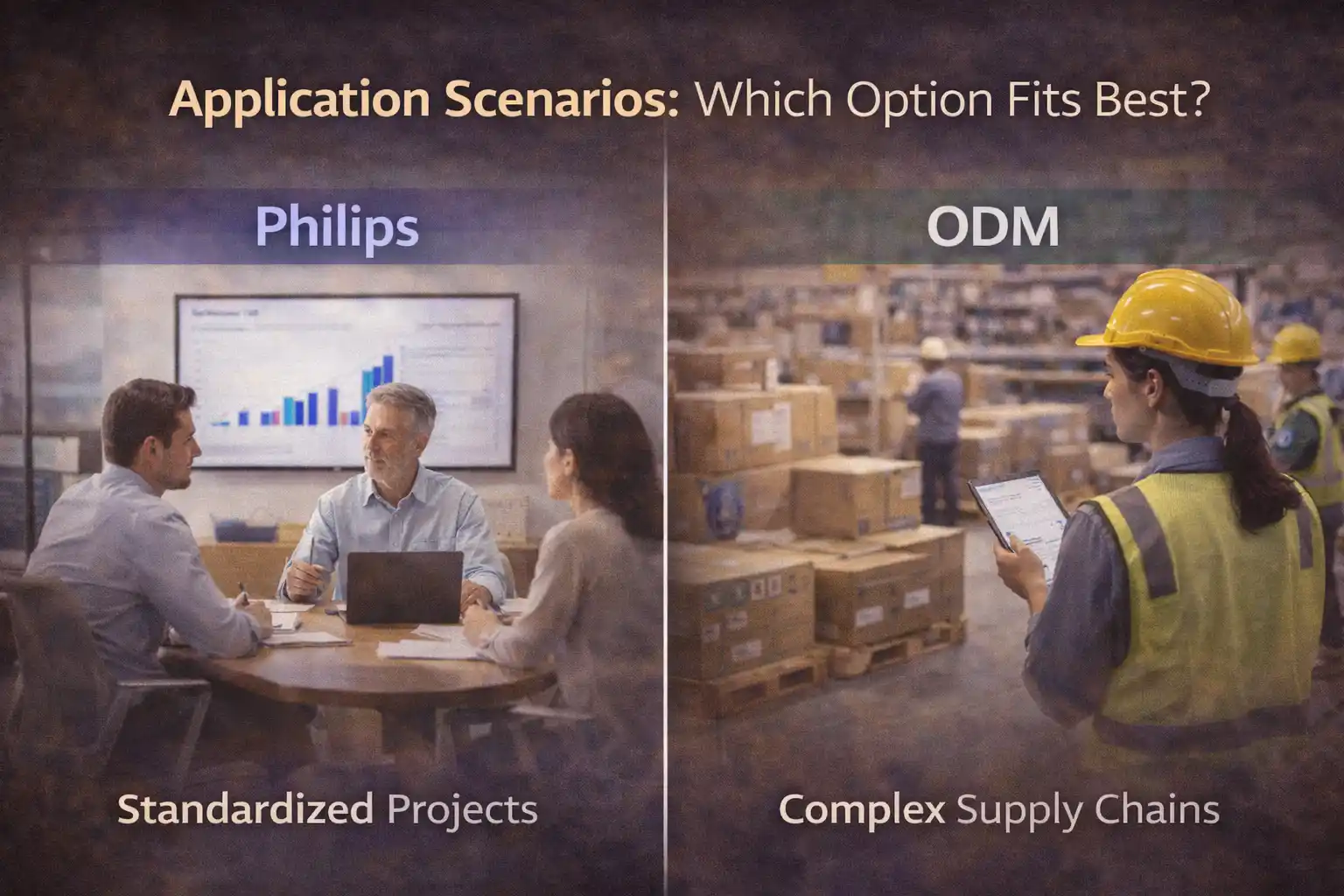
オフィス環境における標準化プロジェクトのためのフィリップスと、産業倉庫環境における複雑なサプライチェーンのためのODMソリューションを対比するインフォグラフィック。.
異なる環境は異なる強みを増幅します。.
フィリップスまたはODM LED電球の適合性は、アプリケーションの文脈に大きく依存します。.
ホテルと接客業
- フィリップス:高級またはブランド主導型ホテルで強み
- ODM: 中規模チェーンとコスト感度の高い特性に強い
一般的な実践:
Philips in public areas, ODM in guest rooms.
Commercial spaces
- Philips: standardized corporate offices
- ODM: retail chains and regional developments
Residential developments
ODM usually outperforms due to:
- lower per-unit cost
- stable repeat supply
- long-term availability
Philips is often used selectively in premium units.
Large-scale projects
- Philips reduces integration risk
- ODM reduces financial exposure
The deciding factor is who carries technical responsibility.
Cost vs Risk Analysis Over Time
Bulk buyers must evaluate more than unit price.
The real decision is how cost savings compare to operational and technical risk over time.
Time-horizon comparison
| ファクター | Philips | ODM |
|---|---|---|
| Initial unit cost | 高い | 低 |
| Cost control (12–36 months) | 限定的 | 強い |
| Product continuity | Brand-controlled | Buyer-controlled |
| Risk visibility | 低 | High but manageable |
Experienced buyers often prefer visible, controllable risk.
Hybrid Procurement Strategy: A Practical Middle Path
Many professional buyers avoid choosing one side exclusively.
Hybrid sourcing combines Philips and ODM strengths while controlling exposure.
Typical hybrid structures
- Philips for reference or critical zones
- ODM for volume deployment
Why hybrid sourcing works
It balances:
- brand credibility
- cost efficiency
- long-term control
Hybrid strategies are common among mature buyers, not indecisive ones.
Final Recommendations
There is no universal answer—only a correct process.
Choose based on how your business actually operates, not on brand emotion or unit price alone.
- Choose Philips when brand trust and system certainty are critical
- Choose ODM when volume, cost control, and lifecycle stability matter
- Combine both when perception and economics must coexist
The biggest mistake is choosing out of habit.
結論
Philips LED bulbs and ODM LED bulbs serve fundamentally different bulk purchasing needs. The better option depends on whether your priority is brand-backed stability, cost-efficient customization, or a structured hybrid of both.
Teco supports B2B buyers evaluating ODM LED bulbs as part of long-term, cost-controlled procurement strategies.
We specialize in:
- ODM GU10, MR16, and LED bulb programs
- stable specifications and repeat production
- bulk purchasing optimization
- hybrid sourcing alongside global brands
Our role is not to replace brands blindly, but to help buyers choose the right supply structure for each application.
メール: [email protected]
ウェブサイト: www.tecolite.com
Tell me your purchasing model, volume, and risk tolerance.
I will help you decide whether Philips, ODM, or a hybrid strategy fits your bulk LED procurement best.