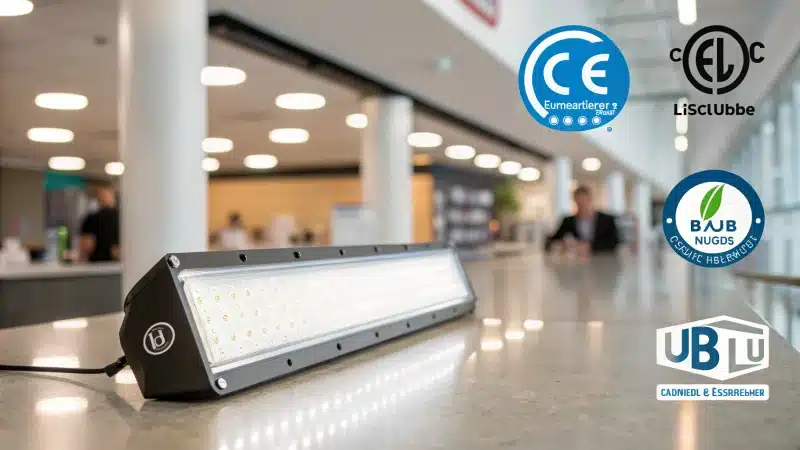
B2B LED照明の世界では、製品認証は単なるチェック項目ではなく、品質と適合性の基盤です。.
B2B LED照明購入における製品認証は、安全性と性能基準への適合を確保し、品質と信頼性の保証を提供するために不可欠です。認証製品は規制要件を満たし、法的リスクを軽減し、市場競争力を高めます。.
認証の基本的な必要性を理解するだけでは十分と思われるかもしれませんが、さらに深く掘り下げると、それが購買決定や業務効率にどのように深く影響するかが明らかになります。私たちの探求は、リスク管理、サプライヤーの信頼性、市場アクセスへのより広範な影響についての洞察を提供します。.
[claim claim=”認証済みLED照明はB2B市場での法的リスクを軽減します。” istrue=”true” explanation=”認証により製品が規制基準を満たし、法的問題を最小限に抑えます。”]
[claim claim=”非認証LEDは市場競争力が高い。” istrue=”false” explanation=”認証製品は品質と適合性が保証されているため、より競争力があります。”]
LED照明の主要な認証は何ですか?
適切なLED照明を選ぶことは複雑な場合があり、特に安全性と性能を保証する様々な認証があります。これらの認証を理解することで、品質の高い購入に向けた情報に基づいた意思決定が可能になります。.
主要なLED照明認証には以下が含まれます CE 欧州基準向け、, RoHS 有害物質規制のため、, UL 安全性のため、エネルギー効率のためのEnergy Starなどがあります。これらの認証は製品の適合性、安全性、性能を保証します。.
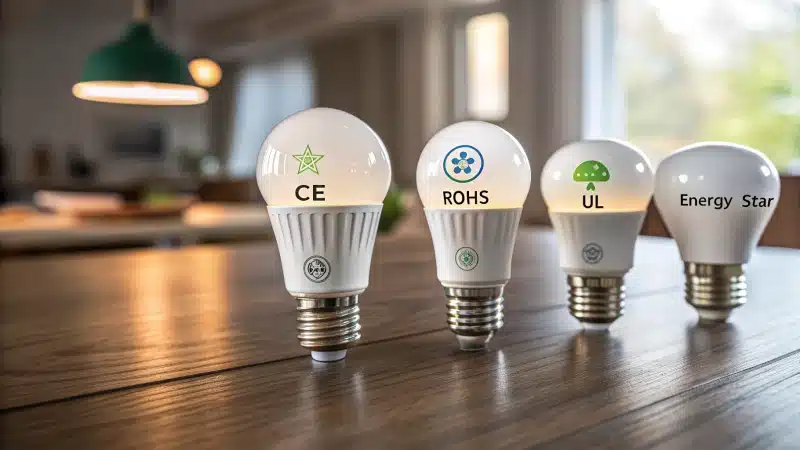
LED照明認証の理解
LED照明認証は、製品が安全性、効率性、性能に関する特定の基準を満たしていることを保証する上で極めて重要です。これらの認証は品質保証の証として機能し、消費者と企業が情報に基づいた意思決定を行うのに役立ちます。.
CE 認証
その CE 認証1 は欧州基準への適合を示します。欧州経済領域内で販売される製品には必須であり、健康と安全要件を満たしていることを保証します。.
RoHS コンプライアンス
その RoHS 認証2 は、電気電子機器における有害物質の使用を制限します。これにより、LED照明が環境に優しく、安全に使用できることが保証されます。.
UL 認証
アンダーライターズ・ラボラトリーズ(UL)は、製品が試験を受け、高い安全基準を満たしていることを示す安全認証を提供します。これは特に電気的および火災安全において重要です。.
Energy Star
その Energy Star3 ラベルはエネルギー効率の高い製品を示します。この認証を持つLEDライトは、性能を維持しながら大幅なエネルギー節約を提供します。.
グローバル認証の違い
地域によって様々な認証が必要です。例えば、英国はBrexit後にUKCAマークを使用し、米国は主に UL およびEnergy Star認証。.
| 地域 | 主要な認証 |
|---|---|
| ヨーロッパ | CE, RoHS |
| アメリカ | UL, 、Energy Star |
| カナダ | CSA, 、Energy Star |
| 中東 | SASO、ECAS |
| 韓国 | KC認証 |
企業にとっての重要性
B2B取引において、これらの認証を理解することは極めて重要です。認証は、コンプライアンス違反に伴うリスクを軽減し、世界市場へのアクセスを確保するのに役立ちます。認証済み製品は信頼性と 品質保証4.
パッケージ上の可視マークを通じて認証を常に確認するか、サプライヤーに文書を要求することを忘れないでください。第三者試験機関も、製品が必要な基準に適合していることを確認できます。.
これらの認証を認識することで、企業は特定の地域要件と品質期待を満たすLED照明を自信を持って購入できます。.
[claim claim=”CE認証は米国で必須です。” istrue=”false” explanation=”CE認証は米国ではなく、欧州で必要です。”]
[claim claim=”Energy Starはエネルギー効率の高いLEDライトを示します。” istrue=”true” explanation=”Energy Star認証は製品がエネルギー効率であることを保証します。”]
認証要件は世界でどのように異なりますか?
相互接続された世界において、製品認証を乗り切ることは困難な場合があります。異なる国々は安全性と品質を確保するために独自の基準を課しています。これらの違いを理解することは、国際的に事業を展開しようとする企業にとって極めて重要です。.
認証要件は、様々な規制と基準のため、世界的に異なります。各地域には、製品の安全性、環境保護、品質を確保するための特定の基準があります。これらの違いは、市場アクセスとコンプライアンス戦略に影響を与えます。.
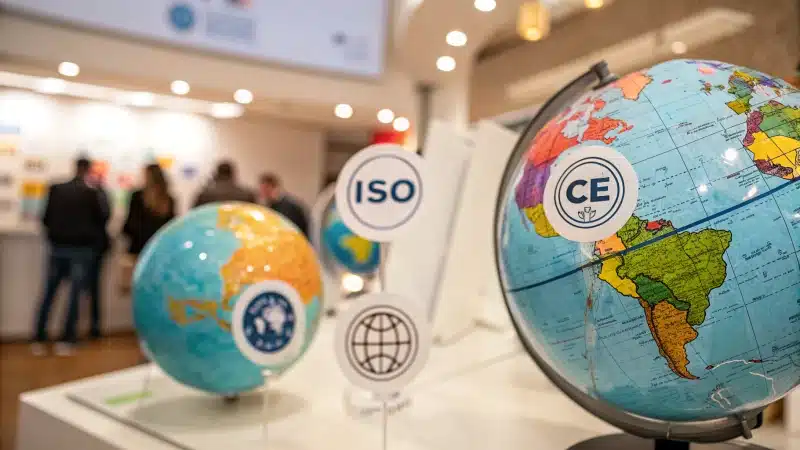
地域別認証概要
グローバルな認証を理解するには、特定の地域とその基準を検討する必要があります。例えば、欧州連合は CE マークは健康と安全のコンプライアンスを示し、一方アメリカでは UL 安全基準の認証。.
| 地域 | Key Certification | 説明 |
|---|---|---|
| EU | CE | Ensures product health, safety, environmental protection |
| US | UL | Guarantees electrical and fire safety |
| Asia | KC | Korean standard for safety and environment |
Europe: Harmonized Standards
Europe’s certification landscape is characterized by harmonized standards across member states. The CE mark is pivotal in this framework, representing compliance with European directives5. The RoHS directive further restricts hazardous substances in electronics.
North America: Diverse Requirements
In the US, certifications like UL and Energy Star are crucial for safety and efficiency. Meanwhile, Canada relies on CSA standards for similar purposes. The FCC ensures that products do not interfere with communication signals.
Asia: Stringent Regulations
Asian markets have varied certification needs. Japan’s PSE certification focuses on electrical safety, while South Korea’s KC mark addresses both safety and environmental criteria.
Middle East & Africa: Emerging Standards
Countries like Saudi Arabia require SASO certification to ensure product quality. The UAE’s ECAS certification aligns with regional harmonization6, enhancing cross-border trade within the Gulf.
Latin America: Growing Importance
Latin American countries are increasingly prioritizing certification. Mexico’s NOM certification is essential for product safety and quality, aligning with their energy efficiency goals7.
Navigating these diverse requirements demands strategic planning. Companies must remain vigilant about updates to avoid non-compliance issues when expanding globally.
[claim claim=”The CE mark is mandatory for all products in the EU.” istrue=”false” explanation=”The CE mark is required only for specific product categories, not all.”]
[claim claim=”UL certification is used for safety standards in the US.” istrue=”true” explanation=”UL certification ensures electrical and fire safety compliance in the US.”]
What Role Do Certifications Play in Risk Management?
Certifications in risk management offer professionals a way to validate their skills, increase credibility, and open up career opportunities. They are crucial for ensuring consistent and up-to-date practices within the field.
Certifications in risk management validate expertise, enhance professional credibility, and often lead to career advancement. They assure employers and clients of a practitioner’s commitment to maintaining industry standards.

Enhancing Professional Credibility
Certifications like Certified Risk Manager (CRM) and Risk Management Professional (RMP) signal a commitment to high standards. They demonstrate that professionals have undergone rigorous training and evaluation.
例: A risk manager with a CRM certification is often perceived as more knowledgeable and credible. This increases trust among stakeholders and clients.
Career Advancement Opportunities
Holding a certification can unlock doors to higher-level positions. Employers often view certified professionals as more qualified for leadership roles due to their specialized knowledge.
例: Earning a 認証8 could be the deciding factor in securing a promotion or a new job offer.
Assurance of Industry Standards
Certifications ensure that professionals adhere to current standards and best practices. They require continuing education, which keeps individuals updated on the latest industry trends and regulatory changes.
| 認証 | Issuing Body | 重点項目 |
|---|---|---|
| CRM | The National Alliance | Strategic risk planning |
| RMP | PMI | Project risk management |
Building a Professional Network
Certified individuals often become part of exclusive professional networks. These networks can provide ongoing support, resources, and opportunities for collaboration.
例: Joining a professional network9 can lead to mentorship opportunities and access to industry events.
Increasing Marketability
In a competitive job market, certifications make candidates stand out. They demonstrate a proactive approach to personal and professional development, appealing to potential employers.
例: A 認証10 in risk management can differentiate your resume from others in the application pool.
Cost vs. Benefit Analysis
While obtaining a certification involves costs—such as exam fees and study materials—the long-term benefits often outweigh these initial expenses. Certified professionals tend to earn higher salaries and have better job security.
例: An analysis of certification costs11 versus increased earning potential can provide valuable insights for decision-making.
[claim claim=”Certifications guarantee higher salaries in risk management.” istrue=”false” explanation=”While certifications can lead to higher salaries, they do not guarantee it.”]
[claim claim=”Risk management certifications enhance professional credibility.” istrue=”true” explanation=”Certifications like CRM and RMP signal commitment to high standards.”]
How Can Businesses Verify LED Lighting Certifications?
Navigating the world of LED lighting certifications can be daunting for businesses. Ensuring compliance and authenticity is crucial for quality and safety. How can you effectively verify these certifications?
Businesses can verify LED lighting certifications by checking certification marks on products, requesting official documents from suppliers, and using independent third-party testing labs to validate claims.

Understanding Certification Marks
One of the first steps in verifying LED lighting certifications is examining the certification marks12 on product packaging. These marks indicate compliance with specific standards, such as UL for safety or Energy Star for efficiency.
Requesting Supplier Documentation
Businesses should request formal certification documents from their suppliers. These documents often include test reports and compliance certificates that demonstrate adherence to relevant standards. It’s critical to ensure these documents are from reputable testing organizations.
Utilizing Third-Party Testing Labs
Engaging third-party testing labs can add an additional layer of verification. These labs provide unbiased evaluations of whether the LED products meet the claimed certifications. For instance, a product with a CE mark can be validated through independent labs in Europe.
Comparing Certification Standards
Understanding the different certification standards across regions is vital. For example, a product certified under RoHS13 standards in Europe might require additional certifications like FCC in the United States.
| 地域 | 主要な認証 |
|---|---|
| ヨーロッパ | CE, RoHS |
| アメリカ | UL, Energy Star, FCC |
| カナダ | CSA, 、Energy Star |
| 中東 | SASO (Saudi Arabia), ECAS (UAE) |
Businesses should be aware of these distinctions to ensure compliance across different markets.
Importance of Ongoing Verification
Certification verification shouldn’t be a one-time task. Regular audits and checks ensure that the products continue to meet compliance requirements over time. This is especially crucial as standards and regulations evolve.
By understanding and utilizing these methods, businesses can confidently verify LED lighting certifications, ensuring compliance and maintaining quality standards across their product offerings.
[claim claim=”UL certification ensures LED safety compliance.” istrue=”true” explanation=”UL is a recognized standard for ensuring product safety, including LEDs.”]
[claim claim=”RoHS standards apply to LED lighting in the USA.” istrue=”false” explanation=”RoHS is primarily a European directive, not mandatory in the USA.”]
結論
Product certification is vital in B2B LED lighting purchases, ensuring compliance with safety standards, enhancing product reliability, and reducing legal risks while improving market competitiveness.
Learn how CE certification ensures compliance with European health and safety standards. ↩
Understand RoHS’s role in limiting hazardous substances for safer LED products. ↩
Discover how Energy Star certification leads to energy savings and efficiency. ↩
Explore how certifications ensure LED product reliability and performance. ↩
Understand CE compliance for exporting products to Europe, a critical market access requirement. ↩
Explore ECAS certification to ensure products meet UAE and GCC standards, facilitating smoother trade. ↩
Learn about NOM certification to ensure energy-efficient products comply with Mexican regulations. ↩
Discover how CRM certification enhances your qualifications and career prospects in risk management. ↩
Learn about the networking benefits that come with earning a risk management certification. ↩
Explore how certifications can improve your job market competitiveness. ↩
Understand the financial advantages versus costs of obtaining a certification. ↩
Discover various certification marks used in LED lighting, helping you identify compliant products easily. ↩
Learn about RoHS certification, crucial for ensuring LED lights are free from hazardous substances. ↩