在B2B LED照明领域,产品认证不仅仅是一个勾选框——它是质量和合规的基石。.
在B2B LED照明采购中,产品认证对于确保符合安全和性能标准至关重要,提供了质量和可靠性的保证。认证产品满足法规要求,降低法律风险并增强市场竞争力。.
虽然理解认证的基本需求似乎已足够,但深入探究会发现它们如何深刻影响采购决策和运营效能。我们的探索揭示了认证在风险管理、供应商可靠性和市场准入方面更广泛的影响。.
[claim claim=”认证的LED灯在B2B市场中降低法律风险。” istrue=”true” explanation=”认证确保产品符合监管标准,最小化法律问题。”]
[claim claim=”未认证的LED产品在市场上更具竞争力。” istrue=”false” explanation=”认证产品因质量保证和合规性而更具竞争力。”]
LED照明中的关键认证有哪些?
选择合适的LED照明可能很复杂,特别是各种认证确保安全和性能。了解这些认证有助于为高质量采购做出明智决策。.
关键的LED照明认证包括 CE 针对欧洲标准,, RoHS 针对有害物质限制,, UL 针对安全性,以及能源之星针对能效。这些认证确保产品合规、安全和性能。.
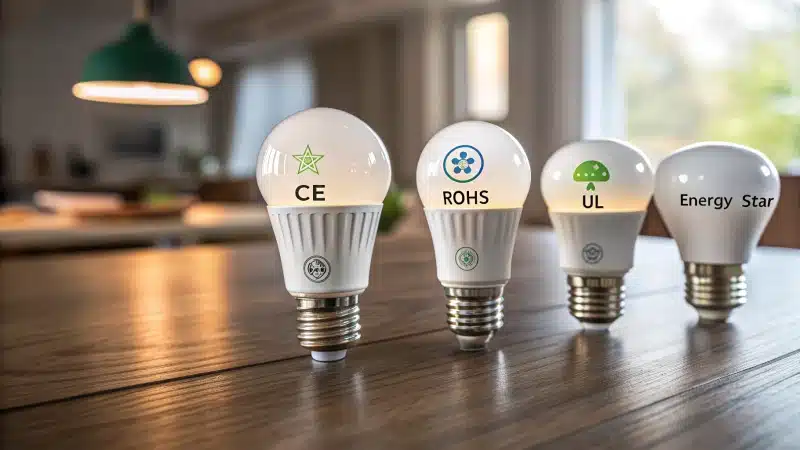
理解LED照明认证
LED照明认证对于确保产品满足特定的安全、效率和性能标准至关重要。这些认证作为质量保证的标志,帮助消费者和企业做出明智的决策。.
CE 认证
该 CE 认证1 表示符合欧洲标准。对于在欧洲经济区内销售的产品是强制性的,确保它们满足健康和安全要求。.
RoHS 合规性
该 RoHS 认证2 限制在电气和电子设备中使用有害物质。这确保了LED灯环保且使用安全。.
UL 认证
美国保险商实验室(UL)提供安全认证,表明产品经过测试并符合高标准的安全要求。这对于电气和火灾安全尤为重要。.
能源之星
该 能源之星3 标签表示节能产品。带有此认证的LED灯在保持性能的同时提供显著的节能效果。.
全球认证差异
不同地区需要不同的认证。例如,英国在脱欧后使用UKCA标志,而美国则主要依赖 UL 和能源之星认证。.
| 地区 | 关键认证 |
|---|---|
| 欧洲 | CE, RoHS |
| 美国 | UL, 、能源之星 |
| 加拿大 | CSA, 、能源之星 |
| 中东 | SASO、ECAS |
| 韩国 | KC认证 |
对企业的重要性
对于B2B交易,了解这些认证至关重要。它们有助于降低与不合规相关的风险,并确保进入全球市场。认证产品表明其可靠性和 质量保证4.
记住始终通过包装上的可见标志验证认证,或向供应商索取文件。第三方测试实验室也可以确认产品是否符合必要标准。.
通过了解这些认证,企业可以放心购买符合其特定地区要求和质量期望的LED照明产品。.
[claim claim=”CE认证在美国是强制性的。” istrue=”false” explanation=”CE认证在欧洲是必需的,而非美国。”]
[claim claim=”能源之星表示节能的LED灯。” istrue=”true” explanation=”能源之星认证确保产品节能。”]
全球认证要求如何变化?
在一个互联的世界中,驾驭产品认证可能令人望而生畏。不同国家实施独特的标准以确保安全和质量。理解这些差异对于旨在国际运营的企业至关重要。.
由于不同的法规和标准,全球的认证要求存在差异。每个地区都有确保产品安全、环境保护和质量的具体标准。这些差异影响市场准入和合规策略。.
区域认证概览
理解全球认证需要考察特定地区及其标准。例如,欧盟强制要求 CE 标志表示健康和安全性合规,而美国使用 UL certification for safety standards.
| 地区 | Key Certification | 说明 |
|---|---|---|
| 欧盟 | CE | Ensures product health, safety, environmental protection |
| 美国 | UL | Guarantees electrical and fire safety |
| Asia | KC | Korean standard for safety and environment |
Europe: Harmonized Standards
Europe’s certification landscape is characterized by harmonized standards across member states. The CE mark is pivotal in this framework, representing compliance with European directives5. The RoHS directive further restricts hazardous substances in electronics.
North America: Diverse Requirements
In the US, certifications like UL and Energy Star are crucial for safety and efficiency. Meanwhile, Canada relies on CSA standards for similar purposes. The FCC ensures that products do not interfere with communication signals.
Asia: Stringent Regulations
Asian markets have varied certification needs. Japan’s PSE certification focuses on electrical safety, while South Korea’s KC mark addresses both safety and environmental criteria.
Middle East & Africa: Emerging Standards
Countries like Saudi Arabia require SASO certification to ensure product quality. The UAE’s ECAS certification aligns with regional harmonization6, enhancing cross-border trade within the Gulf.
Latin America: Growing Importance
Latin American countries are increasingly prioritizing certification. Mexico’s NOM certification is essential for product safety and quality, aligning with their energy efficiency goals7.
Navigating these diverse requirements demands strategic planning. Companies must remain vigilant about updates to avoid non-compliance issues when expanding globally.
[claim claim=”The CE mark is mandatory for all products in the EU.” istrue=”false” explanation=”The CE mark is required only for specific product categories, not all.”]
[claim claim=”UL certification is used for safety standards in the US.” istrue=”true” explanation=”UL certification ensures electrical and fire safety compliance in the US.”]
What Role Do Certifications Play in Risk Management?
Certifications in risk management offer professionals a way to validate their skills, increase credibility, and open up career opportunities. They are crucial for ensuring consistent and up-to-date practices within the field.
Certifications in risk management validate expertise, enhance professional credibility, and often lead to career advancement. They assure employers and clients of a practitioner’s commitment to maintaining industry standards.

Enhancing Professional Credibility
Certifications like Certified Risk Manager (CRM) and Risk Management Professional (RMP) signal a commitment to high standards. They demonstrate that professionals have undergone rigorous training and evaluation.
示例: A risk manager with a CRM certification is often perceived as more knowledgeable and credible. This increases trust among stakeholders and clients.
Career Advancement Opportunities
Holding a certification can unlock doors to higher-level positions. Employers often view certified professionals as more qualified for leadership roles due to their specialized knowledge.
示例: Earning a 认证8 could be the deciding factor in securing a promotion or a new job offer.
Assurance of Industry Standards
Certifications ensure that professionals adhere to current standards and best practices. They require continuing education, which keeps individuals updated on the latest industry trends and regulatory changes.
| 认证 | Issuing Body | Key Focus |
|---|---|---|
| CRM | The National Alliance | Strategic risk planning |
| RMP | PMI | Project risk management |
Building a Professional Network
Certified individuals often become part of exclusive professional networks. These networks can provide ongoing support, resources, and opportunities for collaboration.
示例: Joining a professional network9 can lead to mentorship opportunities and access to industry events.
Increasing Marketability
In a competitive job market, certifications make candidates stand out. They demonstrate a proactive approach to personal and professional development, appealing to potential employers.
示例: A 认证10 in risk management can differentiate your resume from others in the application pool.
Cost vs. Benefit Analysis
While obtaining a certification involves costs—such as exam fees and study materials—the long-term benefits often outweigh these initial expenses. Certified professionals tend to earn higher salaries and have better job security.
示例: An analysis of certification costs11 versus increased earning potential can provide valuable insights for decision-making.
[claim claim=”Certifications guarantee higher salaries in risk management.” istrue=”false” explanation=”While certifications can lead to higher salaries, they do not guarantee it.”]
[claim claim=”Risk management certifications enhance professional credibility.” istrue=”true” explanation=”Certifications like CRM and RMP signal commitment to high standards.”]
How Can Businesses Verify LED Lighting Certifications?
Navigating the world of LED lighting certifications can be daunting for businesses. Ensuring compliance and authenticity is crucial for quality and safety. How can you effectively verify these certifications?
Businesses can verify LED lighting certifications by checking certification marks on products, requesting official documents from suppliers, and using independent third-party testing labs to validate claims.

Understanding Certification Marks
One of the first steps in verifying LED lighting certifications is examining the certification marks12 on product packaging. These marks indicate compliance with specific standards, such as UL for safety or Energy Star for efficiency.
Requesting Supplier Documentation
Businesses should request formal certification documents from their suppliers. These documents often include test reports and compliance certificates that demonstrate adherence to relevant standards. It’s critical to ensure these documents are from reputable testing organizations.
Utilizing Third-Party Testing Labs
Engaging third-party testing labs can add an additional layer of verification. These labs provide unbiased evaluations of whether the LED products meet the claimed certifications. For instance, a product with a CE mark can be validated through independent labs in Europe.
Comparing Certification Standards
Understanding the different certification standards across regions is vital. For example, a product certified under RoHS13 standards in Europe might require additional certifications like FCC in the United States.
| 地区 | 关键认证 |
|---|---|
| 欧洲 | CE, RoHS |
| 美国 | UL, Energy Star, FCC |
| 加拿大 | CSA, 、能源之星 |
| 中东 | SASO (Saudi Arabia), ECAS (UAE) |
Businesses should be aware of these distinctions to ensure compliance across different markets.
Importance of Ongoing Verification
Certification verification shouldn’t be a one-time task. Regular audits and checks ensure that the products continue to meet compliance requirements over time. This is especially crucial as standards and regulations evolve.
By understanding and utilizing these methods, businesses can confidently verify LED lighting certifications, ensuring compliance and maintaining quality standards across their product offerings.
[claim claim=”UL certification ensures LED safety compliance.” istrue=”true” explanation=”UL is a recognized standard for ensuring product safety, including LEDs.”]
[claim claim=”RoHS standards apply to LED lighting in the USA.” istrue=”false” explanation=”RoHS is primarily a European directive, not mandatory in the USA.”]
结论
Product certification is vital in B2B LED lighting purchases, ensuring compliance with safety standards, enhancing product reliability, and reducing legal risks while improving market competitiveness.
Learn how CE certification ensures compliance with European health and safety standards. ↩
Understand RoHS’s role in limiting hazardous substances for safer LED products. ↩
Discover how Energy Star certification leads to energy savings and efficiency. ↩
Explore how certifications ensure LED product reliability and performance. ↩
Understand CE compliance for exporting products to Europe, a critical market access requirement. ↩
Explore ECAS certification to ensure products meet UAE and GCC standards, facilitating smoother trade. ↩
Learn about NOM certification to ensure energy-efficient products comply with Mexican regulations. ↩
Discover how CRM certification enhances your qualifications and career prospects in risk management. ↩
Learn about the networking benefits that come with earning a risk management certification. ↩
Explore how certifications can improve your job market competitiveness. ↩
Understand the financial advantages versus costs of obtaining a certification. ↩
Discover various certification marks used in LED lighting, helping you identify compliant products easily. ↩
Learn about RoHS certification, crucial for ensuring LED lights are free from hazardous substances. ↩