調節可能ビームGU10電球:利点、用途、ビームアングルガイド
数十年にわたり、固定ビームスポットライトはアクセント照明の標準的な選択肢でした。デザイナー、請負業者、照明ディストリビューターは通常、プロジェクトの要件に基づいて24°、36°、55°などの特定のビーム角度を選択していました。.
このアプローチは機能しますが、同時に一般的な問題も生み出します:
選択したビーム角が間違っていた場合、どうなりますか?
狭すぎるスポットライトは過度なホットスポットを生み出す可能性があります。広すぎるビームはコントラストを低下させ、意図した対象物を強調できない場合があります。多くの場合、唯一の解決策は異なるビーム角度のバージョンのランプに交換することです。.
現代の照明プロジェクトがよりダイナミックでデザイン重視になるにつれ、専門家はより柔軟なソリューションを求めるようになっています。.
ここで調光可能なビームGU10電球がゲームチェンジャーとなっています。.
単一のビーム角度に固定される代わりに、調光可能なビームGU10スポットライトは、シンプルなレンズ回転機構を使用して複数のビーム角度を切り替えることができます。一本のランプで狭い、中間、広いビーム分布を提供し、より広範な用途に適しています。.
その結果、調整可能なビームGU10電球は、小売店、ホテル、ギャラリー、住宅プロジェクト、商業スペースで固定ビームスポットライトを急速に置き換えています。.
クイックアンサー:調光可能なビームGU10電球とは?
調節可能ビームGU10電球は、設置後にユーザーがビーム角を変更できるようにします。.
24°、36°、55°の別々のバージョンを購入する代わりに、回転式のフロント光学レンズを備えた単一のランプで複数のビーム分布を提供できます。.
典型的な用途には以下が含まれます:
- 小売ディスプレイ照明
- ホテル照明
- 美術館
- 博物館
- 住宅用アクセント照明
- 商業用スポットライティング
照明デザイナー、請負業者、ディストリビューターにとって、調光可能なビーム技術はより大きな柔軟性、より少ないSKU、そしてより簡単なプロジェクトの試運転を提供します。.
調整可能ビームGU10電球とは何ですか?
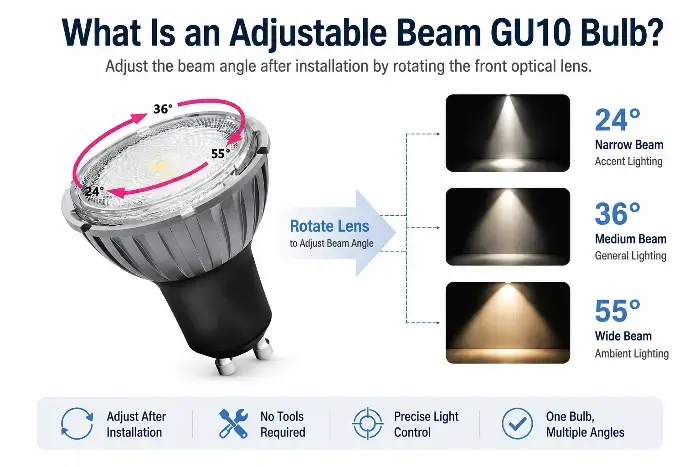
調節可能ビームGU10電球は、設置後にユーザーがビーム角を変更できるスポットライトです。.
単一の固定ビーム分布のみを提供する従来のGU10電球とは異なり、調光可能なビームモデルは一本のランプから複数のビーム角度を可能にします。.
例えば、調節可能ビームGU10は以下を提供する場合があります:
| ビーム角 | 典型的な用途 |
|---|---|
| 24° | アクセント照明 |
| 36° | 一般的なディスプレイ照明 |
| 55° | 環境照明 |
調整は、前面光学レンズを回転させることで実現されます。.
このシンプルな機械設計により、ユーザーはランプの交換や器具の改造なしにビーム分布を変更できます。.
固定ビームスポットライトが課題を生む理由
固定ビームスポットライトには一つの根本的な制限があります:
ビーム角度は購入時に固定されます。.
プロジェクトの要件が変更された場合、通常はランプを交換する必要があります。.
課題1:ビーム角度の選択が困難
適切なビーム角を選択するには、慎重な計画が必要です。.
最終結果にはいくつかの要因が影響します:
- 天井高
- 取り付け位置
- ターゲット距離
- 反射面
- 内装仕上げ
経験豊富な照明デザイナーでさえ、設置後に調整が必要になることがよくあります。.
固定ビームランプの場合、これらの問題を修正するには通常、製品の交換が必要です。.
課題2:在庫の複雑さ
ディストリビューターや請負業者は、同じ製品の複数のビーム角度バージョンを在庫することがよくあります。.
| 製品タイプ | SKU数 |
|---|---|
| 24° GU10 | 1 |
| 36° GU10 | 1 |
| 55° GU10 | 1 |
これにより増加します:
- 在庫コスト
- 倉庫スペースの要件
- 予測の複雑さ
- 過剰在庫のリスク
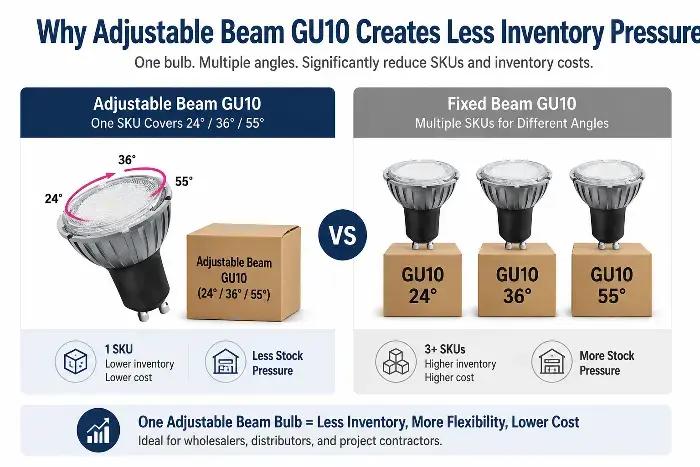
調整可能なビームGU10は、複数の固定ビームSKUを単一の製品で置き換えることができます。.
課題3: プロジェクト中のデザイン変更
現代の商業プロジェクトは頻繁に進化します。.
例には以下が含まれます:
- 小売ディスプレイの季節的な変化
- ホテルの改装
- レストランのレイアウト更新
- ギャラリー展示の変更
固定ビームのスポットライトは、これらの変化に適応するために必要な柔軟性をしばしば欠いています。.
調整可能なビームGU10電球は、ランプを交換することなく光の配分を変更できることでこの問題を解決します。.
調整可能ビームGU10対固定ビームGU10
調整可能ビーム技術が人気を集めている主な理由の一つは、その運用の柔軟性です。.
| 特徴 | 調整可能なビームGU10 | 固定ビームGU10 |
|---|---|---|
| ビーム角度の柔軟性 | ✓ | ✗ |
| 在庫要件 | 低 | 高い |
| プロジェクトの適応性 | 高い | 低 |
| 試運転効率 | より速く | 遅い |
| 長期的なコスト | 低い | より高い |
| 必要なSKU数 | 一つ | 複数 |
卸売業者、請負業者、プロジェクトマネージャーにとって、これは在庫とメンテナンスの複雑さを大幅に軽減することができます。.
なぜ調整可能ビームGU10が好ましい選択肢となっているのか
より大きな照明の柔軟性
調整可能なビーム技術の最大の利点は柔軟性です。.
異なる用途に別々のランプを購入する代わりに、ユーザーは必要に応じてビーム角度を調整できます。.
例:
小売店では、最初に55°ビームを一般的な商品ディスプレイに使用することがあります。.
後日、プロモーションディスプレイにより強い強調が必要になる場合があります。.
ランプを交換せずに、ビームを単純に24°に調整することができます。.
在庫要件の削減
1つの調整可能なビームGU10は、複数の従来の固定ビームランプの役割を果たすことができます。.
利点には以下が含まれます:
- SKU数の削減
- 購入の簡素化
- 在庫リスクの低減
- 倉庫コストの削減
より簡単な試運転と微調整
照明デザインは、設置が完了した時点で終わることはほとんどありません。.
多くのプロジェクトでは現場での調整が必要です。.
従来、望ましい照明効果を得るには以下の方法が含まれる場合があります:
- ランプの交換
- 製品の再注文
- レイアウトの修正
調整可能なビームのGU10電球はこのプロセスを簡素化します。.
By rotating the lens, installers can optimize light distribution during commissioning.
How Beam Angle Changes Lighting Coverage
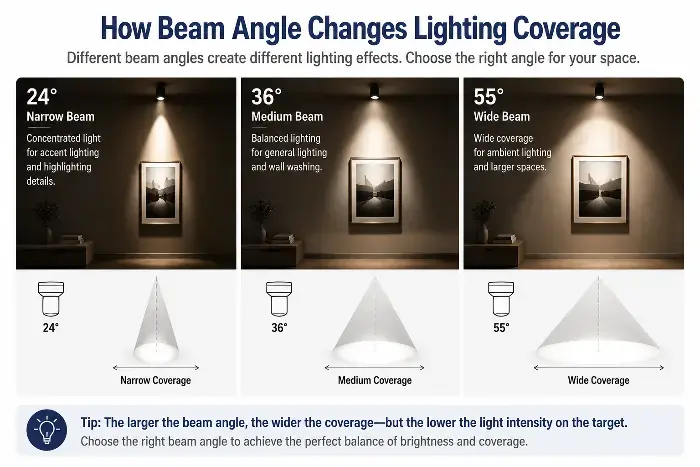
Beam angle significantly affects how light is distributed.
The following table shows approximate beam coverage at common ceiling heights.
| ビーム角 | 2.5m Ceiling | 3m Ceiling | Best Use |
|---|---|---|---|
| 24° | 1.06m | 1.27m | Artwork, displays |
| 36° | 1.62m | 1.95m | Shelving, feature walls |
| 55° | 2.60m | 3.12m | Ambient lighting |
This demonstrates why adjustable beam technology provides valuable flexibility for different lighting scenarios.
How to Choose the Right LED Beam Angle
24° vs 36° vs 55°: When Should Each Beam Angle Be Used?
24° Beam Angle
最適用途
- 美術品
- Jewelry displays
- Luxury retail products
- Architectural details
Characteristics
- Strong focus
- High contrast
- Dramatic visual impact
A 24° beam concentrates light into a smaller area, creating powerful emphasis.
36° Beam Angle
最適用途
- Retail shelving
- Hospitality environments
- Feature walls
- General accent lighting
Characteristics
- Balanced coverage
- Good visual comfort
- Versatile performance
Many lighting designers consider 36° the most versatile spotlight beam angle.
55° Beam Angle
最適用途
- Living rooms
- Hotel guestrooms
- Restaurants
- Open commercial spaces
Characteristics
- Wider coverage
- Softer lighting effect
- Improved visual uniformity
A wider beam creates a more relaxed atmosphere while reducing harsh contrast.
Recommended Beam Angles by Ceiling Height
Ceiling Height: 2.5–3m
Recommended:
- 24° for artwork
- 36° for display shelving
- 55° for ambient lighting
Ceiling Height: 3–4m
Recommended:
- 24° for focal displays
- 36° for feature walls
- 55° for general lighting
Ceiling Height: Above 4m
Recommended:
- Narrow beam angles
- Higher-intensity spotlighting
Beam angle selection should always consider target size and mounting distance.
Why CRI98 Matters in Adjustable Lighting
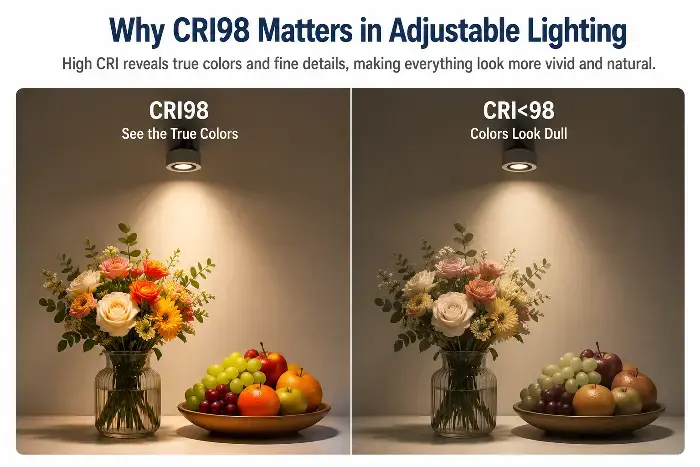
Beam flexibility is only part of successful lighting design.
Color rendering is equally important.
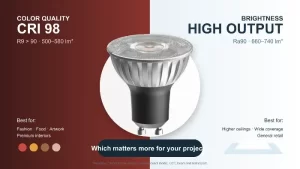
The adjustable beam GU10 spotlight discussed here offers a CRI98 rating.
CRI (Color Rendering Index) measures how accurately colors appear under a light source compared with a natural reference source.
According to the Illuminating Engineering Society, high-CRI lighting is particularly valuable in retail, hospitality, museum, and display environments where color accuracy directly affects visual experience.
CRI Comparison
| CRI Level | 典型的な用途 |
|---|---|
| CRI80 | Basic General Lighting |
| CRI90 | Premium Lighting |
| CRI95+ | High-End Display Lighting |
| CRI98 | Professional Color-Critical Lighting |
Higher CRI helps ensure that:
- Products appear more attractive
- Artwork looks natural
- Interior finishes retain accurate color representation
CRI90 vs CRI98: What’s the Difference?
The Benefits of TRIAC Dimming
Another reason adjustable beam GU10 bulbs are gaining popularity is compatibility with existing dimming systems.
Many commercial and residential projects already use TRIAC dimmers.
A TRIAC dimmable GU10 allows users to:
- 輝度レベルを調整する
- Create different moods
- Improve visual comfort
- Reduce energy consumption
Combining adjustable beam technology with dimming capability provides greater control over both light distribution and light intensity.
Applications for Adjustable Beam GU10 Spotlights
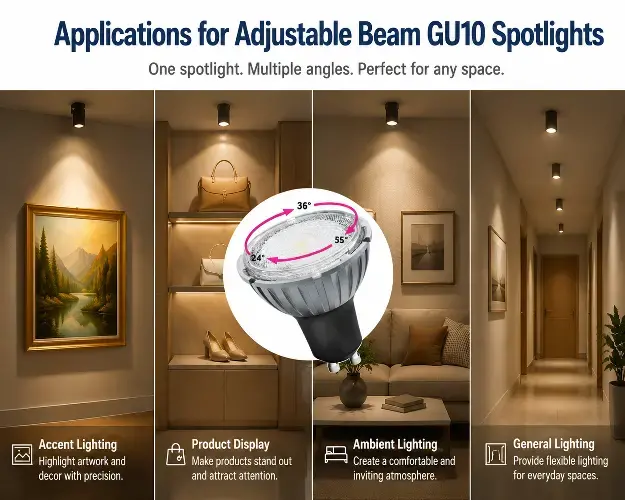
小売店照明
Retail environments frequently change product displays.
利点には以下が含まれます:
- Improved merchandise highlighting
- Flexible display lighting
- Reduced maintenance costs
ホスピタリティ照明
Hotels require lighting that balances aesthetics and functionality.
Adjustable beam spotlights help create:
- Comfortable guest rooms
- Dynamic lobby lighting
- Flexible restaurant illumination
Art Galleries and Museums
Artwork often changes location.
Adjustable beam angles make it easier to optimize lighting for different exhibits while maintaining visual consistency.
Residential Lighting
Modern homes increasingly use recessed spotlights in minimalist designs.
Adjustable beam GU10 bulbs provide homeowners with greater control over how spaces are illuminated.
Who Should Choose Adjustable Beam GU10 Bulbs?
Adjustable beam GU10 bulbs are ideal if:
✅ You frequently change displays
✅ You want to reduce inventory SKUs
✅ You need beam flexibility after installation
✅ You design retail or hospitality spaces
✅ You require one lamp for multiple applications
✅ You want easier project commissioning
Are Adjustable Beam Spotlights the Future?
Several industry trends support the growing adoption of adjustable beam technology:
- Flexible interior design
- Multi-purpose spaces
- Reduced inventory requirements
- Greater customization
- Improved user experience
Adjustable beam GU10 technology aligns perfectly with these trends.
Rather than locking users into a single lighting solution, it provides the flexibility needed for changing environments and evolving project requirements.
よくある質問
Does adjusting the beam angle require tools?
No.
The beam angle can be adjusted simply by rotating the front optical lens.
Can adjustable beam GU10 bulbs replace multiple fixed beam lamps?
Yes.
A 24°–36°–55° adjustable beam GU10 can often replace several fixed beam versions.
Does changing the beam angle affect brightness?
The lumen output remains similar, but light concentration changes.
Narrower beams create higher lux levels on the target surface.
Is an adjustable beam GU10 better than a zoomable spotlight?
For most architectural and commercial applications, adjustable beam GU10 bulbs offer a simpler and more practical solution while maintaining consistent optical performance.
Can adjustable beam GU10 bulbs be used in track lighting?
Yes.
They are suitable for many track lighting systems using GU10 bulb holders.
Which beam angle is best for retail displays?
24° is often preferred for strong product emphasis, while 36° provides a more balanced presentation.
Are adjustable beam GU10 bulbs suitable for hotels?
Absolutely.
They offer flexibility for guestrooms, lobbies, restaurants, and public spaces.
Do adjustable beam GU10 bulbs support dimming?
Many models do.
The product discussed in this article supports TRIAC dimming for smooth brightness control.
Looking for an Adjustable Beam GU10 Solution?
TECO’s Adjustable Beam GU10 Spotlight combines:
- Selectable 24° / 36° / 55° beam angles
- Easy front-lens adjustment
- 7.5W high-efficiency performance
- TRIAC dimming compatibility
- CRI98 color rendering
- 2700K / 3000K / 4000K options
- Professional-grade lighting quality
Whether you’re developing a retail project, hospitality installation, gallery lighting system, or residential application, our adjustable beam GU10 solution helps deliver greater flexibility with fewer SKUs and improved lighting control.
Contact TECO Today
If you’re looking for OEM, ODM, or project-specific adjustable beam GU10 solutions, our team can help you select the right specifications for your market and application.
結論
Fixed beam spotlights have served the lighting industry well for many years, but modern projects increasingly demand greater flexibility.
Adjustable beam GU10 bulbs address many of the limitations associated with traditional fixed beam lighting by allowing users to adapt light distribution without replacing lamps.
With selectable 24°, 36°, and 55° beam angles, TRIAC dimming compatibility, CRI98 color rendering, and a simple lens rotation mechanism, adjustable beam GU10 technology offers a practical solution for retail, hospitality, gallery, commercial, and residential lighting applications.
As designers, contractors, and distributors continue seeking more adaptable lighting solutions, adjustable beam GU10 bulbs are rapidly becoming the smarter alternative to fixed spotlights.
参考文献
- Illuminating Engineering Society — Lighting Fundamentals and Beam Angle Concepts
- U.S. Department of Energy — LED Lighting Resources
- National Institute of Standards and Technology — Color Rendering Research
- LightingEurope — Lighting Application Guidance