Effective retail lighting does far more than illuminate a space. It guides customer movement, highlights key products, and shapes how shoppers perceive your brand.
In modern retail environments, one proven approach is combining GU10 LED spotlights と linear LED lighting (such as 8ft LED shop lights) to achieve both visual impact and functional brightness.
This guide explains how these two lighting types work together, where each performs best, and how to design a balanced retail lighting layout.
Quick Answer: How to Light a Retail Store
- 使用 linear LED lights for general illumination (300–800 lux)
- 使用 GU10 spotlights for accent lighting (3:1–5:1 contrast)
Combine both to create layered lighting
Retail lighting should balance uniform brightness + focused highlights to improve product visibility and customer engagement.
Why Lighting Strategy Matters in Retail Spaces
From a retail lighting design perspective, relying on a single type of fixture often leads to poor results:
- Too uniform → flat and uninteresting
- Too focused → dark aisles and poor visibility
A layered lighting approach—combining ambient lighting そして accent lighting—is widely recommended in commercial lighting design.
According to the Illuminating Engineering Society, effective retail lighting should create visual hierarchy and guide attention to key merchandise areas.
出典: https://ies.org
What Are GU10 LED Spotlights Used for in Retail Lighting?
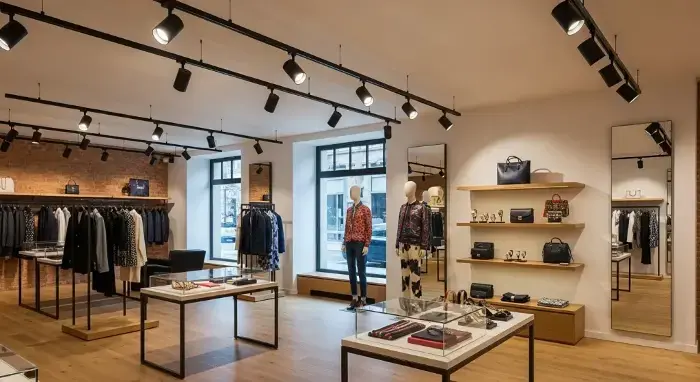
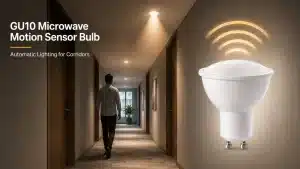
GU10 LED spotlights are compact, directional light sources used primarily for accent lighting.
Common applications:
- Highlighting featured products
- Illuminating mannequins and displays
- Creating focal points
- Enhancing product textures and colors
Advantages of GU10 LED Spotlights
- 集光照明 → directs attention precisely
- Flexible installation → track, recessed, adjustable
- Energy efficient → replaces halogen
- Visual impact → improves merchandising
What Are Linear LED Lights Used For?
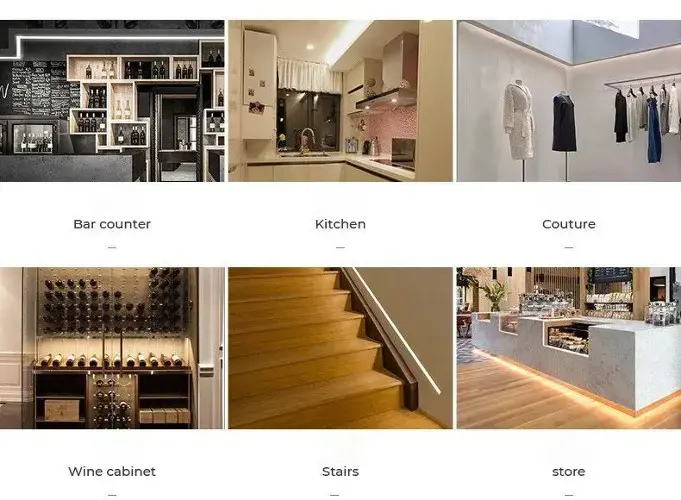
Linear LED lights provide uniform general lighting across large retail spaces.
Typical uses:
- Aisles and walkways
- Shelf lighting
- Open floor layouts
- Warehouse-style retail
Benefits of Linear LED Lighting in Retail
- Uniform brightness → reduces shadows
- High efficiency → lower operating cost
- Comfortable environment → improves customer dwell time
GU10 Spotlights vs Linear LED Lighting
| 特徴 | GU10 Spotlights | Linear LED Lights |
|---|---|---|
| Lighting role | Accent | General |
| Beam control | Narrow–medium | Wide |
| 目的 | Highlight products | Illuminate space |
| 効果 | High contrast | Uniform brightness |
The most effective retail designs combine both layers.
How to Design a Balanced Retail Lighting Layout
1. Start with General Lighting
Use linear LED lighting to establish a consistent brightness level across the store.
Retail environments typically require:
- 300–1000 lux, depending on store type
Reference: EN 12464-1
2. Add Accent Lighting
Use GU10 spotlights to highlight:
- Promotions
- Featured products
Display walls
Accent lighting creates contrast and visual interest.
3. Choose the Right Color Temperature
- 2700K–3000K: fashion, lifestyle, boutique
- 3500K–4000K: supermarkets, electronics
4. Use Dimmable Lighting
Dimming allows:
- Day/night adjustment
- Seasonal campaigns
- Energy savings
5. Optimize Fixture Placement
- Even spacing for linear lights
- Adjustable angles for GU10 spotlights
- Avoid glare and harsh shadows
Quick Decision Rules (Highly Practical)
- If ceiling height < 3 m → use 36°–60° for general lighting
- If highlighting products → use 15°–30° GU10 spotlights
If store is large format → prioritize linear lighting for efficiency
Always design lighting based on target area, not fixture type.
Where This Lighting Combination Works Best
This layered approach is widely used in:
- Fashion stores
- Supermarkets
- Electronics retail
- Showrooms
According to IES retail lighting guidelines, vertical illumination and contrast significantly influence customer perception and sales performance.
出典: https://ies.org
避けるべき一般的な間違い
- Using only one lighting type
- Over-lighting or under-lighting
- Ignoring accent lighting
Poor fixture placement
Fix: Always combine ambient + accent lighting
要点まとめ
- Retail lighting should combine general + accent lighting
- Linear LED lights provide efficiency and coverage
- GU10 spotlights create focus and contrast
- Proper layout improves both visibility and sales performance
You May Also Read
- LED Beam Angle Guide
- MR16 vs GU10 LED Comparison
- Retail Lighting Design Tips
結論
Combining GU10 LED spotlights と linear LED lighting is one of the most effective strategies for modern retail environments.
This approach:
- Improves product visibility
- Enhances store aesthetics
- Increases customer engagement
- Reduces energy and maintenance costs
For retailers and project planners, a well-designed lighting system is not just about illumination—it is a key driver of commercial performance.
If you are planning a retail lighting project, selecting the right combination of fixtures is critical.
Explore professional-grade GU10 spotlights and high-efficiency linear LED lighting solutions tailored for retail environments.