日光、温かい光、赤色光:それぞれが概日リズムをどのようにサポートするか
For architects, lighting designers, hospitality operators, and residential planners, “good lighting” is often framed in terms of illuminance, visual comfort, and energy efficiency. Yet, lighting also acts as a physiological input that shifts alertness, sleep timing, cognitive performance, and hormonal regulation. Understanding how different light spectra interact with the circadian system is increasingly relevant for projects that target occupant health, better sleep, or enhanced guest experience.
この記事では、 daylight, warm light, amber light, and red light influence the circadian system, how each wavelength is suited for different times of day, and what lighting strategies can be applied in residential and hospitality environments. The focus is not on theoretical models, but on actionable approaches that link spectral properties to human outcomes.
1. Light Spectrum and Biological Signaling

The circadian system responds to specific wavelengths of light rather than brightness alone. This distinction explains why two light sources with identical illuminance levels can produce very different physiological responses.
1.1 Spectral composition matters
Light is composed of wavelengths that the brain interprets through a group of non-visual photoreceptors, particularly 本質的に光感受性を持つ網膜神経節細胞(ipRGCs), which are most sensitive to energy around 480 nm (blue-cyan region).
Research shows:
- Blue-rich light supports alertness and cognitive performance
- Long-wavelength light (red) produces minimal circadian stimulation
- Broad warm white light can facilitate a relaxation transition
A simplified reference table:
| Spectrum | Approx. Peak Wavelength | Biological Outcome |
|---|---|---|
| Daylight | 460–480 nm | Alertness, cognitive activation |
| Warm white | Broad low-blue | Relaxation, evening transition |
| 琥珀色 | 580–600 nm | Low stimulation, relaxation |
| 赤 | 620–700 nm | Minimal melatonin suppression |
Blue light exposure at night has been shown to suppress melatonin significantly, while long-wavelength red light has negligible effect on melatonin production.
Source: Harvard Medical School, “Blue light has a dark side”
https://health.harvard.edu/staying-healthy/blue-light-has-a-dark-side
1.2 Why CCT does not predict circadian impact
Correlated color temperature (CCT) describes visual appearance, not spectral power distribution (SPD). Two luminaires labeled “3000K” can have very different spectral content, melanopic ratios, and physiological outcomes.
For circadian design, metrics based on spectrum, such as melanopic equivalent daylight illuminance (m-EDI), are more informative than CCT alone.
2. Daylight and Human Alertness

Indoor environments often lack the intensity and spectral composition of daylight. This creates biological conditions that resemble “permanent dusk,” even when spaces are visually bright.
2.1 Strength, variability, and directionality
Outdoor sunlight can exceed 100,000 lux at midday. Indoor electric lighting typically ranges from 100–500 lux.
Source: International Commission on Illumination (CIE)
https://cie.co.at/
Daylight also varies continuously throughout the day in:
- Spectrum
- Intensity
- Direction
- Contrast
The circadian system relies on these changes to coordinate physiology.
2.2 Physiological effects of daylight exposure
Blue-rich daylight in the morning and early afternoon supports:
| 効果 | Response |
|---|---|
| メラトニン抑制 | Enables waking state |
| Cortisol alignment | Improves energy regulation |
| Dopamine activity | Supports mood and motivation |
| ipRGC activation | Aligns biological clocks |
Lack of daylight exposure can lead to:
- Low morning alertness
- Afternoon fatigue
- Delayed sleep timing
- Mood disturbances
Studies on office workers show improved cognitive performance and mood when daylight or daylight-mimicking lighting is present during work hours.
Source: American Academy of Sleep Medicine, 2017
https://aasm.org/
2.3 Implications for indoor lighting
To support alertness, daytime environments may benefit from:
- Higher illuminance (300–500 lux horizontal, higher vertical levels when possible)
- Blue-rich white light (4000K–5000K)
- Exposure at eye level, not only downward illumination
- Wider spatial distribution rather than narrow “spot illumination”
3. Warm Light (2700K–3000K) and Evening Transition

The evening period represents a transition rather than an abrupt shift from brightness to darkness. Warm-spectrum lighting can support visual comfort and relaxation while maintaining adequate visibility.
3.1 Why warm light is appropriate during evening hours
Warm white lighting typically contains:
- Lower blue content
- Higher red/yellow content
- Lower melanopic impact
This supports the body’s progression toward sleep without removing functional lighting.
Biological rationale:
| Characteristic | Response |
|---|---|
| Reduced short-wave energy | Less melatonin disruption |
| Moderate intensity | Lower cognitive arousal |
| Warm spectrum | Relaxation signaling |
3.2 Practical considerations
Warm lighting is useful for spaces where people remain active in the evening:
- Living rooms
- キッチン
- Hotels and hospitality lounges
Recommended attributes:
| パラメータ | Range |
|---|---|
| CCT | 2700K〜3000K |
| CRI | ≥90 for residential hospitality |
| Illuminance | 50–150 lux for ambient |
4. Amber and Red Light at Night
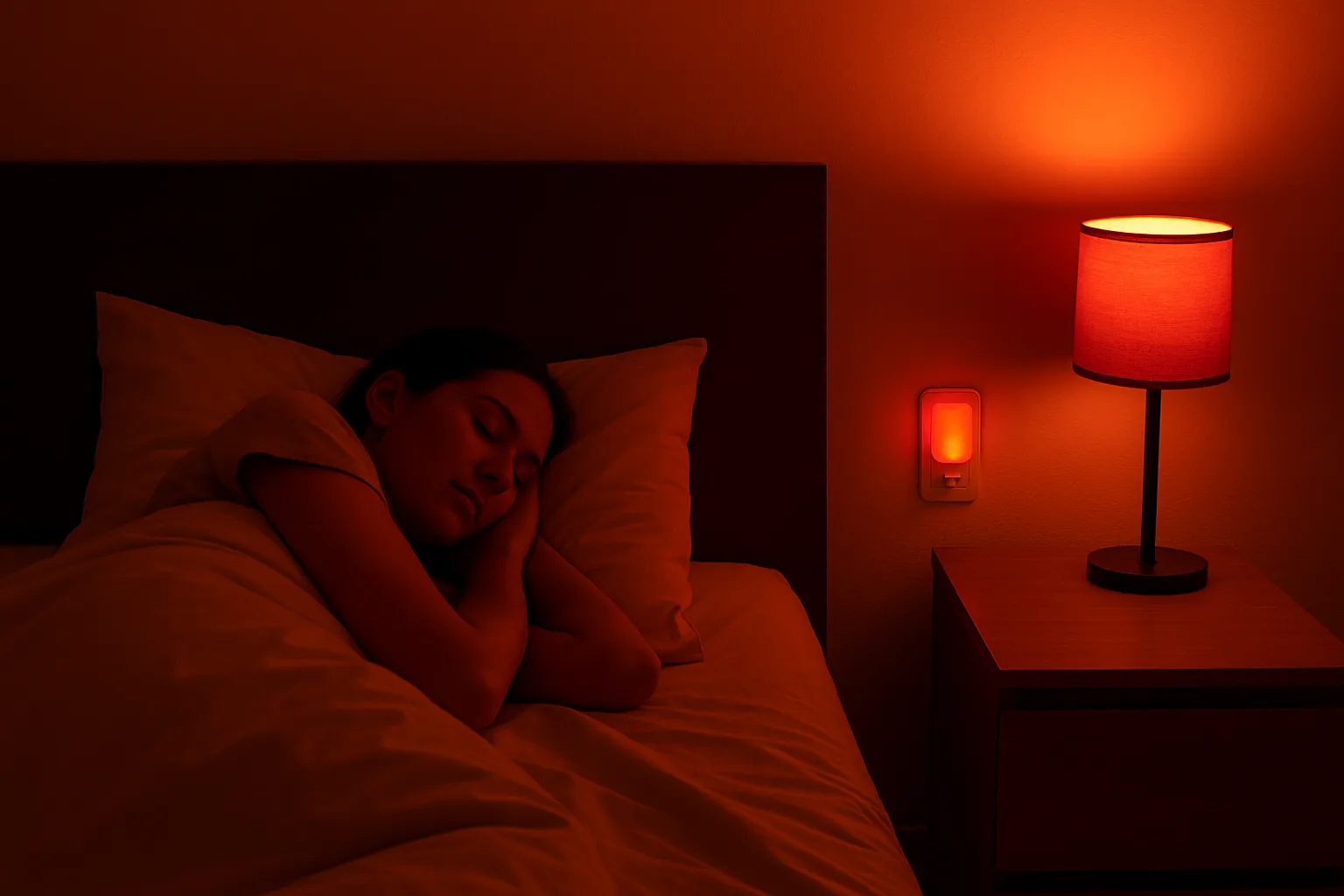
Amber and red light are often grouped together, but their biological effects differ substantially.
4.1 Amber light (580–600 nm)
Amber light reduces blue content while retaining enough visibility for reading or movement. However, it still has measurable impact on circadian regulation, especially at higher intensities.
4.2 Red light (620–700 nm)
Red light produces:
- Minimal ipRGC activation
- Negligible melatonin suppression
- Limited biological stimulation
Studies suggest that long-wavelength red light has minimal circadian effect, even when used at night.
Source: Brainard et al., 2001
https://pubmed.ncbi.nlm.nih.gov/11781290/
4.3 Nighttime application strategies
| ライトタイプ | Best Use Window | Typical Purpose |
|---|---|---|
| Warm light | Evening | Relax and transition |
| 琥珀色 | Pre-sleep | Low-impact task lighting |
| 赤 | Nighttime | Navigation, bedrooms, bathrooms |
4.4 Where red lighting is useful
- Corridor lighting in hotels
- Bathrooms used after bedtime
- Nursery night lighting
- Healthcare environments
At night, low intensity rather than brightness is the design priority, but spectral content remains relevant even at low lux levels.
5. Why White Light at Night Causes Problems
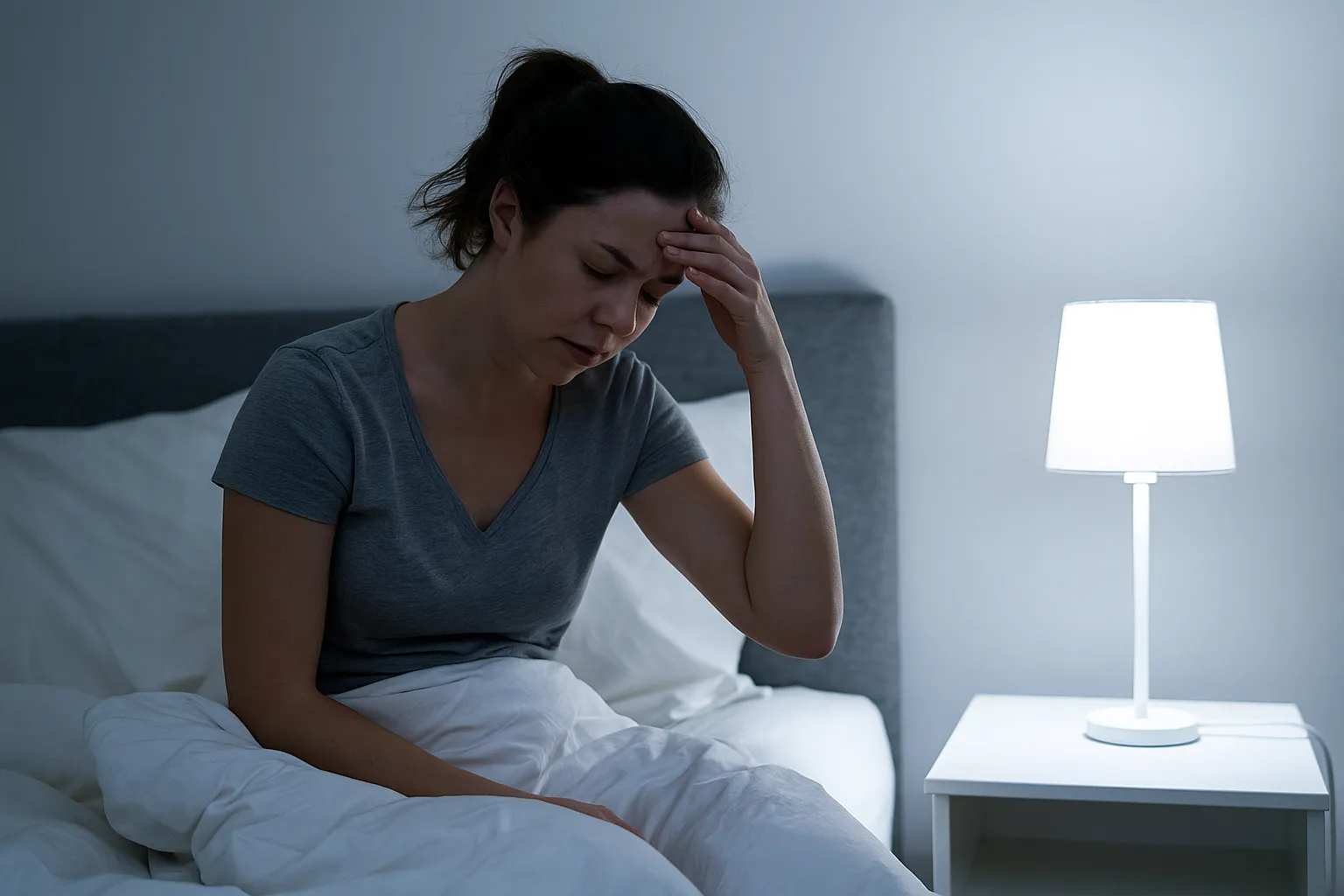
White light is spectrally broad by design. Even at low brightness, it emits short-wavelength energy that activates non-visual photoreceptors.
5.1 Biological sensitivity to low light
Studies indicate that melatonin can be disrupted by extremely low levels of light, as low as a few lux.
Source: Journal of Clinical Endocrinology & Metabolism (2015)
https://pubmed.ncbi.nlm.nih.gov/
Nighttime lighting may therefore benefit from:
- Removing short-wave energy
- Lowering illuminance below approximately 5 lux
- Restricting exposure duration
5.2 Where white light disrupts sleep
| Environment | Risk |
|---|---|
| Bedrooms | Sleep fragmentation |
| Bathrooms | Sleep reactivation |
| Hospitals | Prolonged recovery |
| ホテル | Reduced satisfaction |
The aim is not to eliminate visibility, but to prevent unnecessary circadian activation.
6. Time-Based Lighting Strategy

Human light needs vary across the day. A single static spectrum cannot meet visual and biological requirements simultaneously.
6.1 Recommended daily profile
| Time | ライト | 目的 |
|---|---|---|
| Morning | Daylight or blue-rich white | Initiate alertness |
| Afternoon | Neutral white | Stabilize performance |
| Evening | Warm white | De-escalate arousal |
| Night | Red light | Protect sleep |
This general pattern reflects broad biological patterns observed in human physiology.
6.2 Why static lighting fails
Static lighting systems assume:
- Constant performance needs
- Constant circadian state
However, evening sleep cycles are different from daytime task cycles. Lighting that supports both states usually requires differentiated spectral control.
7. Practical Implementation in Residential and Hospitality Projects

The biological principles above can be translated into practical design specifications.
7.1 Residential bedrooms
| パラメータ | Recommendation |
|---|---|
| Daytime | Access to daylight or 4000K–5000K |
| Evening | 2700K, <150 lux |
| Night | ≤5 lux, red light if needed |
7.2 Residential bathrooms
- Avoid white light at night
- Use dedicated red or amber sources
- Provide low-level task lighting
7.3 Hotels (guest rooms)
| Period | Strategy |
|---|---|
| Day | Bright, neutral white |
| Evening | Warm, dimmable |
| Night | Low-level position lighting |
Low-level orientation lighting reduces the risk of sleep disruption.
7.4 Hospitals and elderly care
- Use daylight-like light during day shifts
- Minimize short-wave energy at night
- Favor indirect distribution
7.5 Nurseries and children’s rooms
- Warm spectrum during evening
- Red light for nighttime navigation
This can reduce bedtime resistance and night-time arousal.
8. Product-Level Considerations for OEM/ODM Buyers
When selecting LED products for circadian-aligned environments, specification should consider:
| Attribute | Relevance |
|---|---|
| SPD profile | Determines biological effect |
| CCT range | Enables time-based control |
| Dimming curve | Prevents color shift plateaus |
| Flicker performance | Reduces discomfort |
| Beam control | Reduces glare |
| CRI | Supports visual comfort |
Spectral tunability is beneficial but not mandatory; dedicated spectra for day/evening/night can be implemented with simpler systems.
結論
Daylight, warm light, amber light, and red light serve different biological purposes throughout the daily cycle. Indoor environments that use a single static spectrum risk conflicting with human physiology, whereas environments that change spectrum and intensity throughout the day can support alertness, sleep quality, mood, and overall wellbeing.
The goal is not to create “sleep lighting” or “energizing lighting,” but to align light cues with predictable human rhythms, using spectrum and intensity strategically rather than generically.
If your project requires LED spotlights or luminaires optimized for daytime, evening, or nighttime use, we offer:
- OEM/ODM manufacturing
- Custom spectral tuning (daylight, warm, amber, red)
- Hospitality and residential-grade optical systems
- Dimmable and low-flicker driver solutions
Share your specification requirements and intended applications, and our engineering team can help develop workable options for pilot runs or full-scale production.
メール: [email protected]
ウェブサイト: www.tecolite.com