LED調光可能MR16電球の選び方?
最終更新日:2026年3月3日
This article explains the key technical differences between MR16 base types, input voltage, and dimming compatibility, helping you avoid common installation and performance issues.
Overview
MR16 LED bulbs are a popular choice for recessed and track lighting because they offer significant advantages over traditional halogen lamps:
- Higher energy efficiency
- 長寿命
- 低い発熱量
Are they dimmable? Yes — but not all MR16 LED bulbs are compatible with all dimmers.
Selecting the correct combination of lamp, transformer, and dimmer is critical to achieving stable and flicker-free performance.
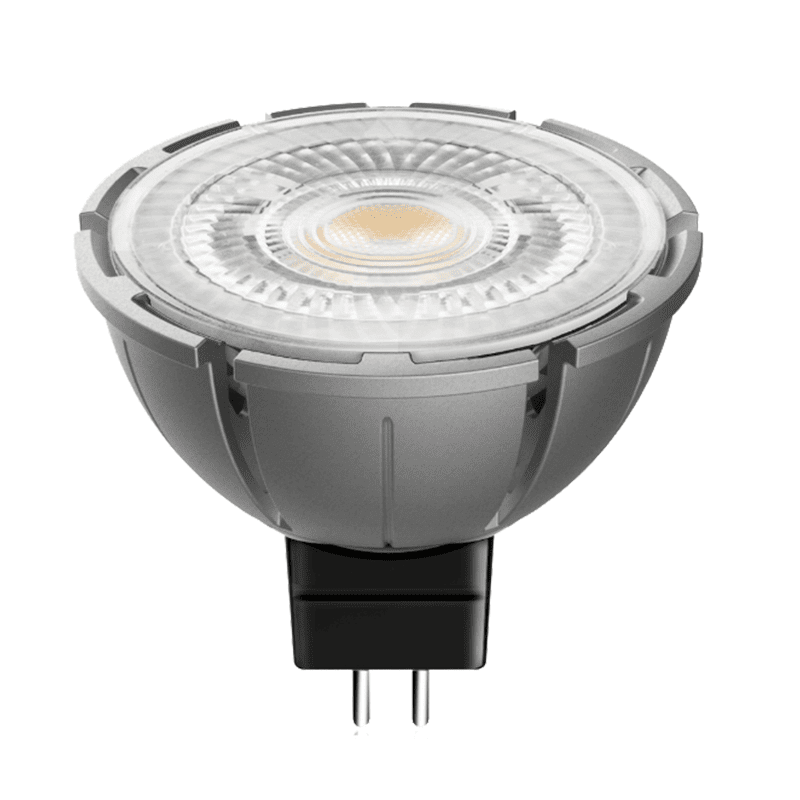
Detailed view of an advanced LED MR16 spotlight bulb showcasing its precision design and construction.
In this guide, we explain the essential technical factors you must understand before choosing a dimmable MR16 LED bulb.
What Are Dimmable MR16 LED Bulbs?
MR16 refers to the lamp form factor:
- MR = Multifaceted Reflector
- 16 = 16 eighths of an inch (≈50 mm diameter)
These lamps are commonly used for:
- アクセント照明
- Display lighting
- Task lighting
- Retail spotlighting
A dimmable MR16 LED bulb contains a driver circuit that allows light output to adjust in response to a compatible dimming signal.
Unlike halogen lamps, LEDs cannot dim simply by reducing voltage. The internal LED driver must correctly interpret the phase-cut waveform from the dimmer.
What Is the Pin Base of MR16 Bulbs?
MR16 describes the shape — not the electrical interface.
Most Common MR16 Base: GU5.3
- Two-pin base
- 5.3 mm pin spacing
- Designed for low-voltage operation
- Typically 12V AC or DC

MR16 Pin Base
GU10 Is Different
Although GU10 lamps may look similar in size, they are technically not MR16.
- Twist-lock base
- Operates at 120V or 230V mains voltage
- Does not require a transformer
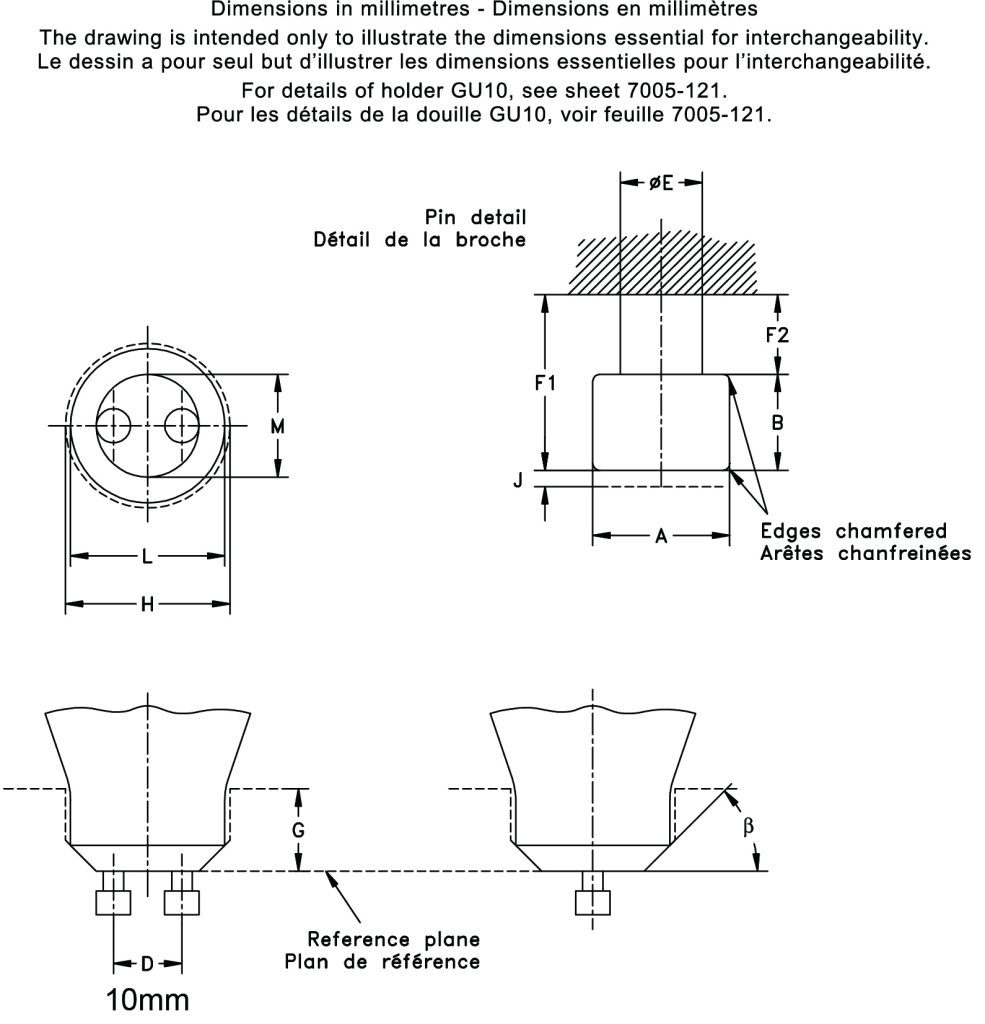
GU10 Pin Base
What Is the Input Voltage of an MR16 LED Bulb?
Most MR16 LED lamps with GU5.3 base operate at:
12V Low Voltage (AC or DC)
This means performance depends heavily on:
- Transformer type
- Driver quality
- 最小負荷要件
- Dimmer compatibility
⚠️ Important:
Not all MR16 LEDs are compatible with traditional electronic transformers.
If replacing halogen MR16 lamps with LED versions, the existing transformer may need to be replaced.
Key Parameters When Choosing a Dimmable MR16 Spotlight
Not all MR16 LED bulbs are dimmable. Even when labeled dimmable, compatibility issues may occur.
Common problems include:
- ちらつき
- Buzzing
- 調光範囲が限られている
- Lamp dropout at low brightness
To avoid these issues, verify the following:
1. Input Voltage: 12V or 120V/230V?
- GU5.3 → 12V low voltage system
- GU10 → 120V / 230V mains system
The dimmer must match the electrical system.
Low-voltage MR16 systems require compatible transformers and dimmers.
2. Dimmer Wattage Compatibility
LED load calculation must include:
- Total LED wattage
- Inrush current
- Transformer behavior
例:
If using a 200W dimmer, keeping LED load under 70W–100W provides safe headroom.
Operating too close to maximum capacity may cause:
- Electrical stress
- フリッカー
- Shortened dimmer lifespan
3. Leading-Edge vs Trailing-Edge Dimmers
Two primary dimming technologies:
Leading-Edge (Forward Phase / TRIAC)
- Cuts front portion of AC waveform
- Common and low cost
- May cause flicker or buzzing with some LED drivers
Trailing-Edge (Reverse Phase)
- Cuts rear portion of waveform
- Smoother dimming
- Better compatibility with LED drivers
- Generally more expensive
For MR16 LED systems, trailing-edge dimmers typically deliver superior performance.
If unsure, choose a universal dimmer compatible with both load types.
Dimming Range and Performance Considerations
A high-quality dimmable MR16 LED should offer:
- Smooth dimming from 100% down to low levels
- 目に見えるちらつきなし
- No audible noise
- Stable color temperature
- High CRI consistency across dimming range
Poor-quality bulbs may:
- Shut off before reaching low dim levels
- Shift color temperature
- Flicker at certain brightness settings
Premium brands provide full-range dimming with stable performance.
Transformer Compatibility
For 12V MR16 systems, the transformer must:
- Support LED loads
- Meet minimum load requirements
- Be compatible with phase-cut dimming
Electronic transformer compatibility lists are often available from manufacturers.
Consult technical documentation before installation.
Final Recommendations
To achieve optimal MR16 dimming performance:
- Confirm base type (GU5.3 vs GU10)
- Verify input voltage
- Check transformer compatibility
- Select correct dimmer type
- Ensure sufficient dimmer headroom
- Choose high-CRI, full-range dimmable LED lamps
High-quality MR16 LED solutions provide:
- Stable brightness control
- エネルギー効率
- 長寿命
- Consistent color rendering
Selecting the correct system components ensures reliable installation and professional lighting performance.