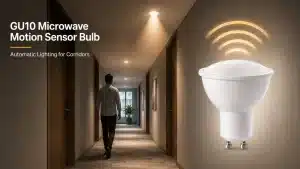
LED Bulb Driver Quality: Why Flicker, Dimming and Lifespan Depend on the Driver
Many LED bulb buyers compare visible specifications first: wattage, lumen output, beam angle, CCT, CRI and price. These are useful, but they do not explain why two bulbs with similar labels can behave very differently after installation.
The hidden difference is often the LED driver. The driver converts incoming power into controlled output for the LED source. It affects current stability, flicker, dimming behavior, heat, lifetime, electrical noise and batch consistency. For importers, distributors, lighting brands, contractors and project buyers, driver quality is not a small internal detail. It is one of the main reasons a bulb either performs reliably or creates complaints after delivery.
This article explains how LED bulb driver quality affects real project performance, what can go wrong in commercial installations, and what buyers should check when choosing an LED bulb manufacturer in China for wholesale or project orders.

LED bulb quality inspection in a lighting factory
Why LED Bulb Driver Quality Matters
An LED chip produces light, but the driver decides how safely and consistently that chip is powered. If the current is unstable, a good LED package can still flicker, overheat, age quickly or behave badly with dimmers.
This is why wattage alone is a weak buying standard. Two GU10 bulbs may both be marked 7W, but one may use a more stable driver, better ripple control, stronger protection components and a more consistent production BOM. The other may look acceptable during a quick sample check but create field problems after a few months.
In real projects, driver-related issues often appear as:
- visible flicker or camera banding
- buzzing during dimming
- unstable low-end dimming
- brightness difference between batches
- early failure in compact fixtures
- complaints after hotel, retail or residential handover
For B2B buyers, the cost is rarely just the failed lamp. Replacement labor, customer complaints, delayed installation, returned stock and damaged brand reputation often cost more than the price difference between a basic driver and a better one.
Driver quality should therefore be reviewed together with optical design, thermal structure, certification documents, packaging and production consistency. A supplier that cannot explain the driver solution clearly may not be suitable for stable project supply.
How Driver Design Affects Lifespan and Heat
LED bulb lifetime is a system result. A 25,000-hour or 40,000-hour claim means little if the driver, LED source, thermal path and internal components are not designed to work together under real operating conditions.
The first issue is current regulation. LEDs are sensitive to current changes. If the driver output is unstable, the LED source and electronic components experience more electrical stress. The lamp may still turn on, but long-term lumen maintenance and reliability can suffer.
The second issue is heat. Compact lamps such as GU10, MR16, G9 and small E27 bulbs have limited internal space. Poor driver efficiency can add heat inside the lamp body. When heat accumulates, capacitors, ICs, solder joints, resistors and LED chips may age faster. This is especially important in recessed downlights, enclosed fixtures, track spots and ceiling applications with weak airflow.
The third issue is component selection. Capacitor grade, driver IC quality, surge components, PCB layout and soldering consistency are not visible from the outside, but they affect long-term stability. A common procurement risk is that the approved sample uses one driver component set, while bulk production quietly changes to another. The product may still look the same, but flicker, dimming range, heat and lifetime may change.
For commercial orders, buyers should ask whether the supplier controls the approved BOM before mass production. If the driver IC, capacitor, inductor, protection device or circuit layout changes, the buyer should be informed and the sample should be tested again.
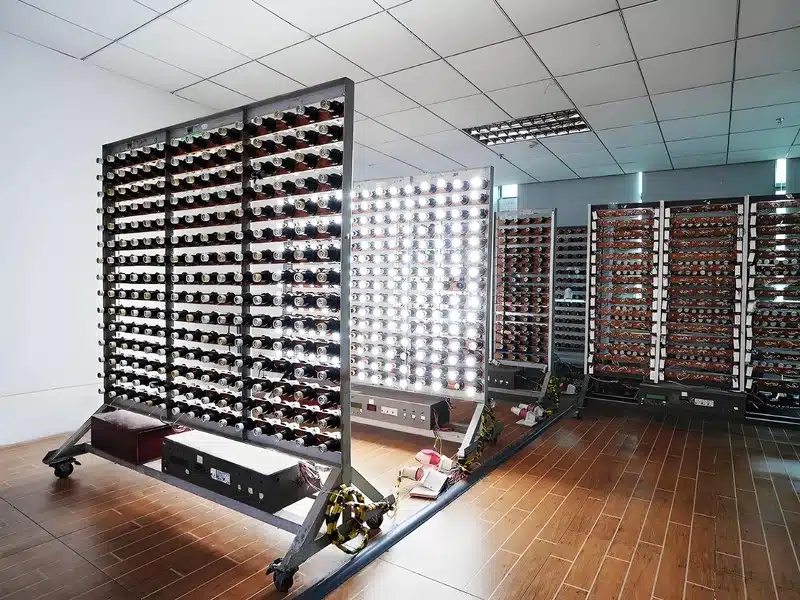
LED bulb aging test for driver heat and lifespan reliability
Flicker, Dimming and Driver Compatibility
Flicker is one of the fastest ways for buyers to notice weak driver design. It may be caused by poor ripple control, unstable current output, unsuitable dimming logic, low-quality components or driver-dimmer mismatch. In some spaces, flicker is visible to the eye. In others, it appears as camera banding, unstable video, or visual fatigue over time.
This is why modern specifications often look beyond simple "flicker-free" marketing language. Metrics such as percent flicker, flicker index, Pst LM and SVM are used in lighting discussions and certification programs to describe temporal light behavior more clearly.12
Dimming is even more sensitive. A dimmable label does not guarantee good behavior with every control system. Depending on the product architecture, LED bulbs may use phase-cut dimming, PWM dimming, dim-to-warm control, wireless smart control, or external-driver systems such as 0-10V and DALI. Each method requires a suitable driver solution.
Triac dimming is particularly easy to underestimate. Many retrofit projects contain mixed leading-edge and trailing-edge dimmers. A bulb may work well with one dimmer but flicker, buzz, flash or drop out with another. Industry standards such as NEMA SSL 7A were created because phase-cut dimming compatibility between LED light engines and dimmers is a real system-level issue, not just a lamp label problem.3
This is also why MR16 projects can be difficult. In some installations, flicker or failure is caused by the interaction between the LED driver, transformer, dimmer and load condition, not by one component alone. Buyers working with low-voltage retrofit projects can also review MR16 LED compatibility issues before bulk replacement.
For dimmable LED bulbs, the practical question is not "Is it dimmable?" The better question is: "Which dimmer types were tested, what is the low-end behavior, and does the supplier have real compatibility data?"
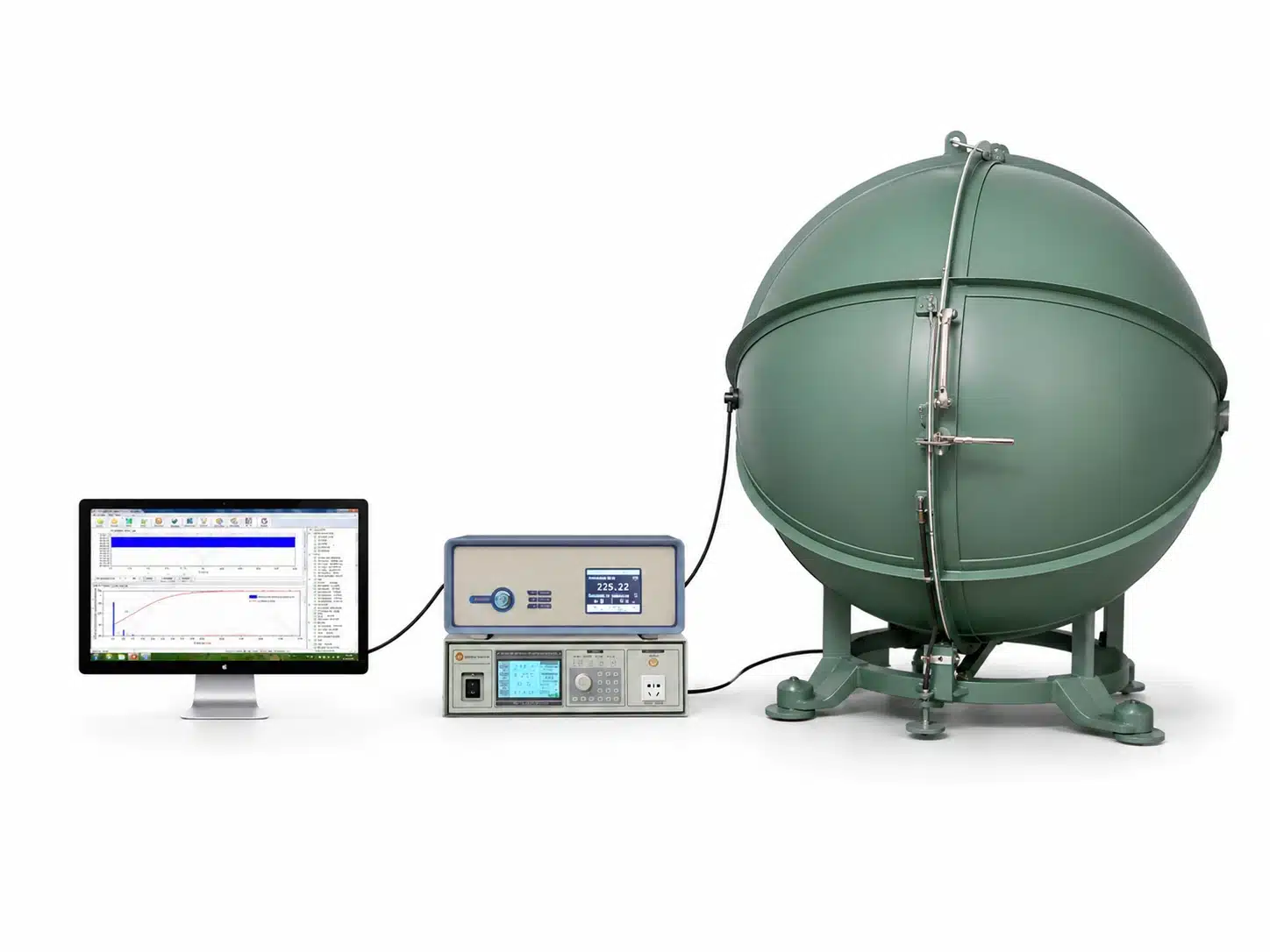
LED bulb flicker and dimming performance concept
What B2B Buyers Should Check Before Bulk Orders
A good sample is useful, but it is not enough. Driver quality should be evaluated through measurable tests and production controls before bulk orders, especially for GU10, MR16, G9, PAR and other compact lamps used in retail, hospitality and residential projects.
Buyers should ask for practical test data, not only sales descriptions. Useful checkpoints include output current stability, power factor, THD, driver efficiency, flicker percentage, Pst LM, SVM, temperature rise, Tc point, surge protection, dimming range, low-end stability, aging test duration and approved BOM consistency.
For project orders, testing should also include real use conditions. If the lamp will be used in a recessed frame, test it in a similar thermal environment. If it will be used with a dimmer, test the actual dimmer type. If it will be installed in a hotel corridor, retail shelf or restaurant ceiling, do not judge only from a loose lamp on a bench.
The table below gives a practical purchasing checklist.
| Check Point | What Buyers Should Confirm | Por Que É Importante |
|---|---|---|
| Output current stability | Stable output under normal voltage and load | Reduces electrical stress |
| Power factor / THD | Suitable electrical performance for the market | Helps avoid project compliance problems |
| Flicker data | Percent flicker, Pst LM, SVM where required | Improves visual comfort and camera performance |
| Driver efficiency | Lower internal loss | Reduces heat inside compact bulbs |
| Temperature rise | Case temperature or Tc point under real use | Supports lifetime claims |
| Dimming range | Smooth dimming from high to low levels | Avoids customer complaints |
| Low-end stability | No flashing, drop-out, buzzing or sudden jumps | Critical for hotels, restaurants and homes |
| Aging test | Enough burn-in before shipment | Helps screen early failures |
| Approved BOM | Bulk production matches approved samples | Protects batch consistency |
| Technical support | Supplier can review dimmers, transformers and fixtures | Reduces retrofit risk |
For buyers sourcing lâmpadas LED GU10 ou MR16 LED bulbs, this checklist is more useful than comparing wattage alone. Driver design, thermal behavior and dimming compatibility often decide whether the project feels stable after installation.
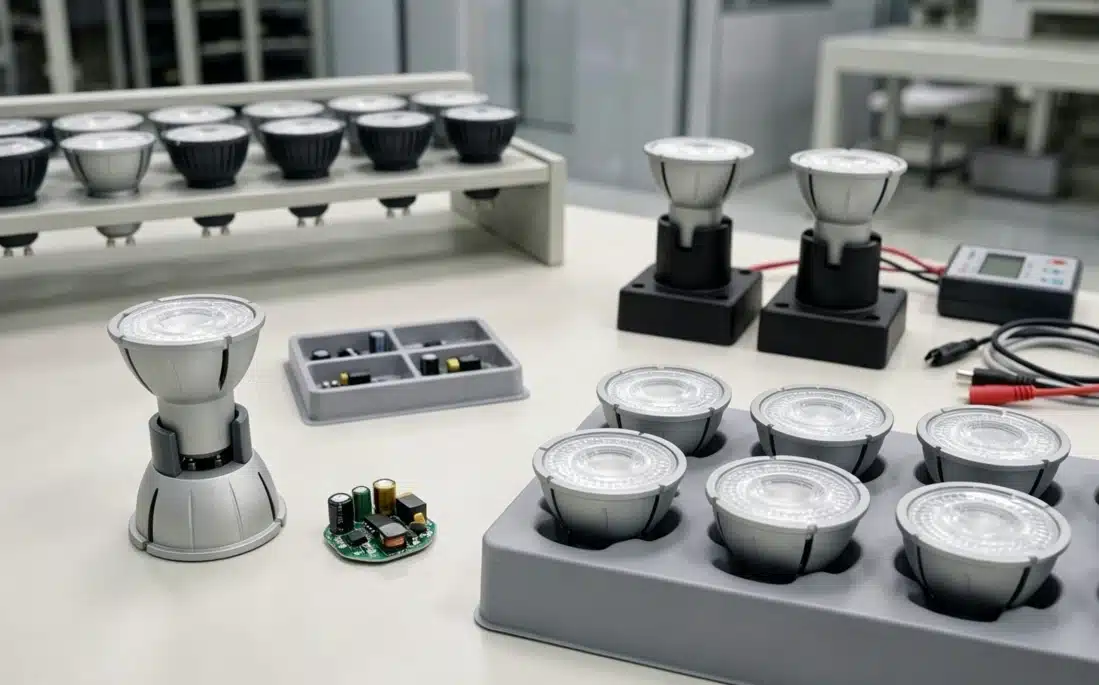
LED bulb driver quality checklist for wholesale orders
Factory Note: Sample Approval Is Not the End
One common problem in LED bulb sourcing is that buyers approve a sample but do not lock the driver BOM. Later, the bulk order may use a different capacitor, IC, PCB layout or protection component because of cost pressure or material availability. The lamp may still pass a basic power-on check, but dimming, heat, flicker or lifetime behavior can shift.
This is why engineering buyers should treat sample approval as the beginning of quality control, not the end. The supplier should keep approved driver components, aging procedures, test limits and inspection standards consistent during mass production.
For dimmable products, sample testing should include low-end dimming, restart behavior, noise, heat, and repeated switching. For retail or hospitality projects, it is also worth checking a small mockup before final procurement. A mockup can reveal issues that a datasheet will not show, such as beam appearance, camera banding, dimmer behavior or fixture heat buildup.
TECO reviews driver performance together with optical performance, heat dissipation, certification documents, packaging and batch consistency. For project or wholesale orders, buyers can share the lamp type, fixture condition, dimmer model, transformer type, target market and quantity before procurement so the engineering team can check whether the product choice is suitable.

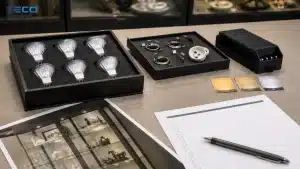
LED bulb sample approval and BOM consistency review before mass production
FAQ
How can buyers check LED driver quality?
Buyers can review electrical test data, flicker results, dimming compatibility, temperature-rise performance, aging test records and approved BOM consistency. For dimmable bulbs, testing with real dimmers is especially important.
Does the LED driver affect bulb lifespan?
Yes. The driver affects current stability, heat generation, component stress and protection behavior. A poor driver can shorten bulb life even if the LED chip itself is good.
Can a poor LED driver cause flickering?
Yes. Poor ripple control, unstable output, weak dimming design or unsuitable driver-dimmer matching can cause visible flicker, camera banding, flashing or unstable brightness.
Why do dimmable LED bulbs behave differently with different dimmers?
Dimmers use different control methods and electrical characteristics. A dimmable LED bulb must be matched with the right driver design and tested with real dimmers.
What should importers ask suppliers before bulk LED bulb orders?
Importers should ask about driver design, flicker testing, dimming range, low-end stability, thermal performance, aging tests, certification matching and whether the approved driver BOM will remain unchanged during bulk production.
Notas de rodapé
IEEE 1789-2015 discusses modulation frequencies in LED lighting and dimming applications, including potential flicker-related health considerations. See IEEE 1789-2015. ↩
ENERGY STAR lamp specifications include reporting of flicker-related metrics such as percent flicker, flicker index, Pst and SVM. See ENERGY STAR Lamps V2.1 Final Specification. ↩
NEMA SSL 7A covers basic compatibility requirements for phase-cut dimming with solid-state lighting. See NEMA SSL 7A scope document. ↩