
Low-voltage lighting systems are widely used in RVs, boats, off-grid cabins, and solar-powered homes. However, many users experience flickering, buzzing, unstable dimming, or premature bulb failure after switching to LED lighting. In most cases, these issues are not caused by the LED bulbs themselves, but by improper dimmer compatibility, wiring practices, or voltage instability.
High-quality 12V dimmable LED bulbs are designed to solve these problems. When properly selected and installed, they provide smooth dimming, long service life, and significantly lower energy consumption compared to halogen or incandescent bulbs.
This step-by-step guide explains how to install high-quality 12V dimmable LED bulbs in low-voltage systems, with a focus on system compatibility, safety, and long-term reliability. The guidance is based on recommendations from recognized authorities such as the U.S. Department of Energy (DOE), Illuminating Engineering Society (IES), ENERGY STAR, and the Lighting Research Center (LRC).
Why High-Quality 12V Dimmable LED Bulbs Are Ideal for Low-Voltage Systems
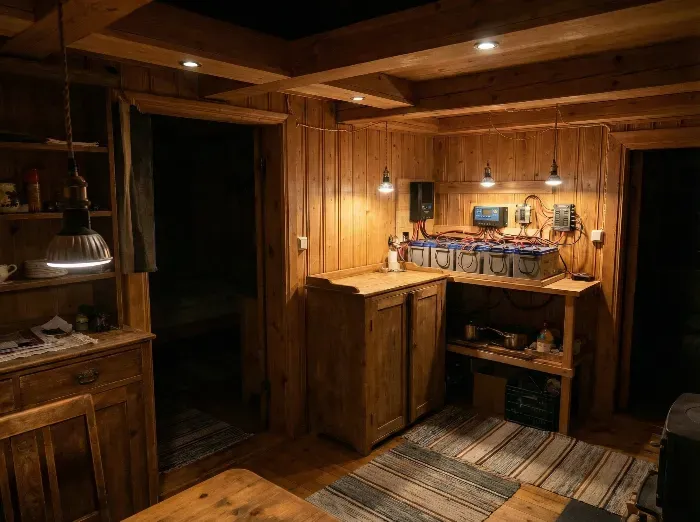
Low-voltage systems impose different electrical conditions than standard residential AC circuits. Voltage fluctuations, limited power supply, and DC operation require LED bulbs with properly designed drivers.
De acordo com o U.S. Department of Energy, LED lamps typically use 75–85% less energy and last 10–25 times longer than incandescent or halogen lamps when operated within their designed electrical range.¹ These advantages are especially valuable in 12V systems where battery capacity and maintenance access are limited.
High-quality 12V dimmable LED bulbs are preferred because they offer:
- Stable operation across typical 12V system ranges (approximately 10.5–14.4V)
- Compatibility with PWM-based low-voltage dimmers
- Lower heat generation in confined fixtures
- Long rated lifetimes (25,000–50,000 hours)
Key Technical Characteristics of High-Quality 12V Dimmable LED Bulbs
Not all 12V LED bulbs are suitable for dimming or low-voltage operation. The following characteristics determine whether a bulb will perform reliably.
Driver Design and Dimming Method
High-quality 12V dimmable LED bulbs use pulse-width modulation (PWM) or constant-current drivers optimized for DC systems. The Lighting Research Center (RPI) notes that dimming performance depends primarily on driver–dimmer compatibility, and mismatched components are a leading cause of flicker in low-voltage LED systems.
Lumen Output and Efficiency
Brightness should be evaluated in lumens, not wattage equivalence.
| Aplicação Típica | Recommended Lumen Range |
|---|---|
| RV interior lighting | 400–600 lm |
| Boat cabin lighting | 300–500 lm |
| Task or reading areas | 500–800 lm |
| Iluminação de destaque | 200–400 lm |
High-quality 12V dimmable LED bulbs typically deliver 80–100 lumens per watt, em comparação com 15–20 lm/W for halogen lamps.
Color Quality (CRI and Color Temperature)
The DOE recommends a CRI of 80 or higher for general lighting to ensure accurate color rendering.³ For enclosed or living spaces, color temperatures between 2700K and 3000K are commonly preferred to reduce visual fatigue.
Thermal Management and Build Quality
Poor heat dissipation shortens LED lifespan. Quality bulbs use aluminum heat sinks and are designed to keep LED junction temperatures below 85°C, consistent with LM-80 and TM-21 testing methodologies.
Tools and Preparation Before Installation

Proper preparation significantly reduces installation issues and long-term failures.
Essential Tools
| Tool | Objetivo |
|---|---|
| Digital multimeter | Verify voltage stability |
| Wire strippers (14–18 AWG) | Clean electrical connections |
| Insulated screwdrivers | Safe work in confined spaces |
| Heat-shrink tubing or electrical tape | Secure connections |
| PWM-compatible 12V dimmer | Smooth dimming control |
A National Electrical Manufacturers Association (NEMA) emphasizes that mismatched dimmers are a common source of LED performance problems in low-voltage systems.
Pre-Installation Checks
Before installing any 12V dimmable LED bulb:
- Disconnect the battery or power source
- Measure system voltage (target range: 11–14V)
- Confirm bulb base compatibility (e.g., MR16 GU5.3, E26 12V)
- Verify dimmer type and current rating
- Inspect wiring for corrosion or loose connections
A American Boat & Yacht Council (ABYC) recommends corrosion protection and secure wiring for marine low-voltage systems.
Step-by-Step Installation of 12V Dimmable LED Bulbs
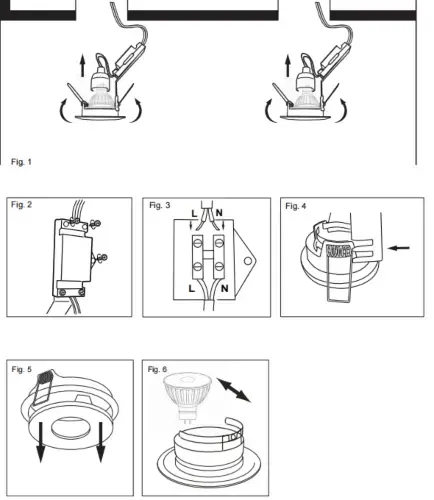
Step 1: Power Isolation and Safety
Disconnect the negative terminal of the battery or isolate the circuit breaker. The NFPA 70E standard confirms that de-energizing circuits is the most effective way to reduce electrical hazards during maintenance.
Step 2: Remove Existing Bulbs
Allow halogen bulbs to cool before removal. Note wiring polarity, especially in DC systems where polarity reversal can prevent LED operation.
Step 3: Install the 12V Dimmable LED Bulb
- Match positive and negative leads correctly
- Use appropriate connectors or terminals
- Avoid overtightening bulb bases
- Ensure airflow around the bulb housing
Step 4: Dimmer Integration
Install the PWM dimmer inline with the positive lead. Avoid AC TRIAC dimmers unless explicitly rated for DC LED systems.
Step 5: Testing and Calibration
Restore power and test:
- Full brightness stability
- Smooth dimming from 100% to low levels
- Absence of audible noise or flicker
A IES recommends gradual dimming tests to verify compatibility before finalizing installation.
Common Problems and Practical Solutions
| Problema | Likely Cause | Recommended Solution |
|---|---|---|
| Flicker at low dim levels | Dimmer incompatível | Replace with PWM DC dimmer |
| Ruído de zumbido | Insufficient electrical load | Add load resistor |
| No illumination | Polarity reversed | Correct wiring polarity |
| Short bulb life | Voltage spikes | Install DC voltage stabilizer |
| Uneven dimming | Mixed bulb types | Use identical LED models |
Cost, Energy, and Lifecycle Considerations
Although high-quality 12V dimmable LED bulbs have higher upfront costs, total cost of ownership is significantly lower.
| Métrica | Halogen 12V | 12V Dimmable LED |
|---|---|---|
| Typical lifespan | ~2,000 hours | 25.000–50.000 horas |
| Power consumption | 35–50W | 5–8W |
| Heat output | Muito alto | Baixo |
| Maintenance frequency | Frequent | Minimal |
ENERGY STAR reports that LED upgrades can achieve payback periods of 1–2 years in continuous-use applications.
When 12V Dimmable LED Bulbs May Not Be Appropriate
12V dimmable LED bulbs may not be ideal when:
- Voltage regulation is unstable and unfiltered
- Extremely high-output lighting is required
- Existing dimmers cannot be replaced
In such cases, integrated LED luminaires or regulated power systems may be more suitable.
Conclusão
Installing high-quality 12V dimmable LED bulbs is not simply a bulb replacement—it is a system-level upgrade. When drivers, dimmers, wiring, and voltage stability are properly matched, low-voltage lighting becomes efficient, reliable, and comfortable for long-term use.
By following a structured installation process and selecting components based on verified standards, users can avoid common dimming problems and achieve predictable lighting performance in RV, marine, and off-grid environments.
Planning a 12V dimmable LED lighting project for RVs, boats, or off-grid systems?
Share your application details, dimmer type, and power source with our technical team. We help professionals and system integrators specify stable, flicker-free 12V LED solutions designed for long-term performance—not trial-and-error installations.
Notas de rodapé
- National Electrical Manufacturers Association (NEMA), Lighting Controls,
https://www.nema.org/standards - American Boat & Yacht Council (ABYC), Electrical Systems,
https://abycinc.org/standards/ - NFPA 70E, Electrical Safety in the Workplace,
https://www.nfpa.org/codes-and-standards

 English
  French
  German
  Italian
  Spanish
  Portuguese
  Arabic
  Russian
  Japanese
  Chinese