探秘浙江LED照明供应链:为何其主导LED灯泡制造
许多全球买家仍将中国视为单一的制造板块。实际上,中国的LED照明产业建立在强大的区域专业化基础之上。这一点在浙江体现得尤为明显。.
浙江不仅是另一个生产基地。它是LED灯泡制造变得稳定、可重复且可扩展,以适应长期出口市场的关键原因之一。.
浙江之所以主导LED灯泡制造,是因为其供应链围绕一致性、机械可靠性和出口纪律而发展——而非快速的产品更新或短期趋势。.
对于为欧洲、中东或其他受监管市场采购标准化LED灯泡(如GU10、MR16、A60及其他通用照明灯具)的买家而言,理解浙江的供应链逻辑往往比比较工厂价格清单更为重要。.
浙江LED照明产业集群的形成
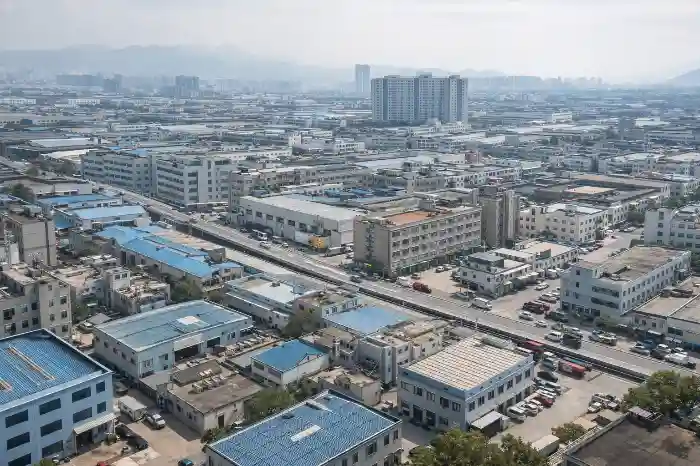
这张图片从俯视角度捕捉了一个密集的城市街区,包含多层建筑、工厂、停满汽车的街道以及周围雾气笼罩的山峰。.
浙江在LED灯泡制造领域的强大并非偶然。其照明产业源于数十年的硬件、电气和机械生产积累。.
浙江的LED照明产业集群由传统的电气和机械工业演变而来,为标准化灯泡制造奠定了天然基础。.
LED产业前的工业根基
在LED照明兴起之前,浙江已是以下产品的主要生产基地:
- 电气元件
- 接线设备和连接器
- 开关与插座
- 压铸金属部件
- 小型家用电器
这些产业与LED灯泡制造共享关键特征:
- 可重复的组装流程
- 严格的公差控制
- 机械一致性
- 长生产周期
当LED进入市场时,浙江的工厂无需重塑其运营逻辑。它们将现有的工业纪律适应于新的光源。.
地理集中与专业化
宁波、绍兴、杭州和嘉兴等城市在短途运输距离内形成了密集的供应商网络。这种邻近性实现了:
- 快速物料采购
- 稳定的分包商关系
- 低物流摩擦
与受快速电子产品迭代驱动的地区不同,浙江的产业集群倾向于 流程连续性优于快速变革.
从一开始就具备出口导向思维
浙江制造商进入LED照明行业时,海外市场是其首要关注点。早期客户包括:
- 欧洲进口商
- 日本贸易公司
- 中东分销商
这些买家要求一致的规格、可重复的文档和较长的产品生命周期。因此,浙江工厂围绕可靠性而非频繁重新设计来构建生产系统。.
为何这段历史至今仍具意义
供应链具有记忆性。在长期出口压力下形成的工厂倾向于抵制不必要的变革,优先确保文件准确性,并保护稳定的客户项目。这种传承的纪律解释了为何浙江至今仍在LED灯泡制造领域占据主导地位。.
产品重点:LED灯泡(GU10、MR16、A60)

生产线展示员工在现代自动化设备的制造工厂中组装和检查LED灯泡。.
浙江的实力并非在所有照明品类中均匀分布,而是集中在稳定性最为关键的领域。.
浙江专注于LED灯泡制造,因为灯泡生产更看重工艺纪律和热一致性,而非快速的功能创新。.
为什么灯泡与浙江的制造基因相契合
LED灯泡需求:
- 稳定的驱动器性能
- 可控的热通路
- 精密机械组装
- 严格的分类控制
- 可预测的寿命性能
这些要求与浙江的工业方法天然契合。.
Compared with luminaires, bulbs are highly standardized, price-sensitive, and compliance-driven. Small deviations can create large downstream problems for importers and brand owners.
GU10 and MR16 as core categories
GU10 and MR16 spotlights represent the strongest overlap between Zhejiang capability and global demand.
These products are:
- compact and thermally sensitive
- heavily scrutinized for dimming behavior
- highly visible when failures occur
Zhejiang factories invest heavily in:
- aluminum housing consistency
- thermal interface control
- driver matching
- aging and burn-in processes
These details matter more than marketing features.
A60 and general-service bulbs
For E27 and A60 bulbs, Zhejiang excels in:
- lumen stability over time
- batch-to-batch color consistency
- conservative wattage claims
- long production continuity
Many buyers underestimate how disruptive frequent bulb changes can be. Zhejiang factories typically freeze BOMs, avoid opportunistic component substitutions, and maintain the same models for years—benefiting wholesalers and private-label brands alike.
Intentional avoidance of trend-driven products
Zhejiang is less aggressive in RGB bulbs, app-controlled lamps, and short-cycle smart lighting. This is not a weakness, but a strategic choice.
Bulb manufacturing favors predictable behavior over novelty.
Supply Chain Advantages for Bulb Manufacturing
Zhejiang’s dominance is not built on a single factory, but on how the entire supply chain behaves.
Zhejiang’s LED bulb supply chain is optimized for repeatable output, component continuity, and long-term supplier alignment.
Tight upstream control
Factories typically rely on fixed LED chip suppliers, long-term driver partners, and stable housing vendors. Supplier changes are rare and deliberate, reducing requalification cycles and certification risks.
Mechanical and thermal discipline
Thermal performance is treated as a core reliability factor. Emphasis is placed on:
- die-cast aluminum quality
- consistent wall thickness
- uniform surface treatment
This improves lumen maintenance, color stability, and driver lifespan.
Conservative engineering philosophy
Engineering teams focus on incremental optimization rather than experimental redesign. Product life cycles are extended quietly, frustrating trend-driven buyers but reassuring professional ones.
Embedded quality control
Quality assurance is integrated throughout the process—material inspection, in-line checks, and aging tests—rather than relying solely on final inspection. This significantly reduces field failures, especially for dimmable GU10 and MR16 products.
Export readiness
Zhejiang’s logistics infrastructure supports stable shipping schedules and high-volume export. Factories are familiar with EU documentation, CB reports, and RoHS workflows, reducing friction for buyers serving regulated markets.
Cost Structure and Production Consistency
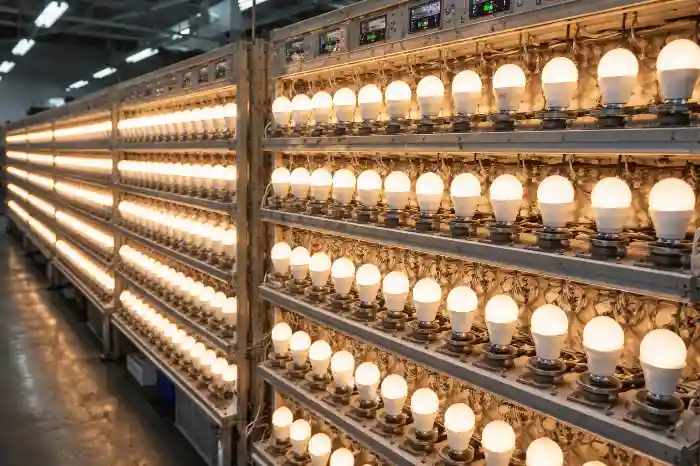
Rows of illuminated LED bulbs arranged on metal frames in a modern production line setting with control panels nearby.
Many buyers assume Guangdong is always cheaper. In practice, the comparison is more nuanced.
Zhejiang’s cost advantage lies in predictability and reduced downstream risk rather than the lowest unit price.
Labor and operational stability
Zhejiang typically offers moderate labor costs, lower employee turnover, and better retention. This supports consistent workmanship and reduces quality variability.
BOM continuity reduces hidden costs
Frequent component changes create hidden expenses: retesting, recertification, returns, and customer complaints. Zhejiang factories reduce these risks by maintaining stable BOMs and inventory buffers.
Production rhythm and yield
Factories favor longer production runs, fewer SKUs, and higher yields. This improves planning accuracy and delivery reliability—critical for B2B programs.
Behavior during volatility
During shortages or logistics disruptions, Zhejiang suppliers are more likely to protect existing orders and specifications rather than renegotiate aggressively. For long-term buyers, this reliability matters.
Ideal Buyer Profiles for Zhejiang Manufacturers

Images depicting shoppers and workers handling energy-efficient LED bulbs in modern retail and industrial warehouse environments.
Zhejiang is not the right fit for every buyer. It is ideal for those whose priorities align with its strengths.
Zhejiang manufacturers suit buyers who value consistency, compliance, and long-term supply continuity.
They work particularly well for:
- private-label brand owners
- wholesalers and distributors
- hospitality and project buyers
- importers serving regulated markets
Buyers focused on rapid cosmetic updates or smart-feature experimentation may find Guangdong better aligned with their strategy.
Supply chain alignment determines partnership success.
结论
Zhejiang dominates LED bulb manufacturing because its supply chain prioritizes mechanical reliability, component continuity, and export discipline—qualities that matter most in GU10, MR16, and A60 production.
Working with Zhejiang-Based LED Supply Chains
Teco operates its manufacturing base in Zhejiang, focusing on long-term LED bulb programs for GU10, MR16, and general-service lamps supplied to global B2B markets.
We support stable supply, verified compliance, and predictable delivery for buyers serving Europe, the Middle East, North America, and Asia.
If you are sourcing LED bulbs from Zhejiang and want to understand whether this supply chain fits your business model, we help validate sourcing decisions before procurement—not after installation.