色温如何影响情绪与工作效率
执行摘要: 色温(CCT)不仅是外观,更是性能调控。暖光(≈2700–3000 K)有助于放松与恢复;中性光(≈3500–4000 K)平衡协作;冷光(≈4000–5000 K及以上)提升警觉性与视觉精度。当您将适合任务的CCT与充足的 眼睛处的垂直照度, ,强大的 色彩质量 (TM-30),以及 低闪烁 驱动器性能(IEEE 1789;Pst LM/SVM),您可以在工作场所、零售、教育、医疗保健和生产环境中显著提升舒适度、专注度和成果。.
引言
如果工作感觉迟缓、会议拖沓、创造力停滞,问题可能不在于您的团队——而可能在于您的照明。照明不仅是美学;它是 循证设计 塑造人们感受与表现的因素。本文将色温科学与实际规格及可立即应用的调试步骤联系起来——附有标准及真实案例研究。.
您将学到什么
- CCT如何影响大脑的视觉与非视觉通路
- 哪些CCT波段适合常见任务和行业
- 如何设定可量化目标(EML/黑视素等效日光照度、TM-30、Pst LM/SVM、UGR)
- 如何部署 可调白光 符合人体节律的场景
理解色温
相关色温(CCT) 描述光源以开尔文(K)为单位的感知冷暖度:
- 暖色调: ≈2700–3000 K(琥珀色感觉)
- 中性: ≈3500–4000 K(平衡)
- 冷色调: ≈5000–6500 K(偏蓝,提神)
CCT是一种 起点, ,并非全部。感知与生物效应取决于光的 光谱功率分布(SPD) 和 显色性 特性。对于色彩质量,应超越CRI并采用 TM-30 (保真度 Rf 与色域 Rg)以预测颜色在人脸、食物、织物和饰面上的呈现效果(IES TM-30).
两盏4000 K的灯具可能感觉不同:红光成分更强的光谱功率分布(SPD)感觉更温暖、更柔和,而蓝光增强的SPD则感觉更清晰、更提神。.
快速选择指南
| 目标用途 | 建议色温值 | 色彩质量 | 备注 |
|---|---|---|---|
| 休息室/休闲区 | 2700–3000 K | TM-30 Rf ≥ 85, Rg ~ 100 | 放松与恢复 |
| 开放式办公室 | 3500–4000 K | TM-30 Rf ≥ 85 | Balanced focus, low eye strain |
| Focus Booths | 4000–5000 K | TM-30 Rf ≥ 85 | Cooler for sustained attention |
| Labs / Production | 5000–6500 K | TM-30 Rf ≥ 85–90 | High acuity & vigilance |
| Retail Apparel / Skin | 3000–3500 K | TM-30 Rf ≥ 90, Rg ≈100 | Accurate, flattering color |
Actionable habits
- Specify CCT bands, not single points (e.g., 3500–4000 K), to leave room for tuning.
- 要求提供 SPD plots 和 TM-30 data in submittals; don’t rely on CCT alone.
- Pair CCT with dimming to manage brightness and perception together.
The Science: Light and the Brain

Light drives two pathways:
- Visual system (rods and cones): acuity and color perception.
- Non-visual system (intrinsically photosensitive retinal ganglion cells with melanopsin): circadian timing, melatonin, cortisol, mood, and alertness.
Blue-enriched spectra in the morning advance alertness; warmer spectra later in the day preserve melatonin to protect sleep. To quantify biologically effective light, use melanopic metrics such as Equivalent Melanopic Lux (EML) 或 melanopic EDI as defined by CIE S 026/E:2018 (CIE S 026) and targeted in the WELL Building Standard v2 (Light) (WELL v2—Light).
Stimulus → response (design cues)

| Stimulus | Brain Response | Design Takeaway |
|---|---|---|
| Blue-enriched morning light | Increased alertness, suppressed melatonin | Use cooler CCT and higher vertical illuminance after start-of-day |
| Warm evening light | Relaxation, preserved melatonin | Transition toward 2700–3000 K late afternoon |
| 高 vertical illuminance | Stronger circadian cueing | 灯光 at the eye matters—design for vertical lux, not just desk lux |
| Low flicker (TLM) | Reduced stress, headache risk | Specify drivers meeting IEEE 1789 and verify Pst LM/SVM in scenes |
Practical rule of thumb: Provide cooler, higher melanopic stimulus in the first half of the workday and warmer, lower stimulus toward the end—tuned to tasks, age groups, and local daylight.
Psychological Effects by CCT

CCT gently nudges emotion and behavior:
- Warm (2700–3000 K): Social warmth, relaxation, hospitality tone
- Neutral (3500–4000 K): Balanced tempo for collaboration
- Cool (5000–6500 K): Vigilance, precision, and task orientation
Mood mapping
| Desired State | CCT | Complementary Controls | Risks |
|---|---|---|---|
| Calm / Decompress | 2700–3000 K | Lower brightness, soft contrasts | Under-stimulation if overused |
| Social / Collaborative | 3500–3800 K | Moderate brightness, color-rich SPD | “Flat” if SPD lacks red content |
| Focus / Deep Work | 4000–5000 K | Higher brightness, low glare | Fatigue if too cool for too long |
| Precision / QC | 5000–6500 K | High vertical illuminance | Sterile feel if overapplied |
Context matters: Age, culture, and task difficulty modulate preferences. Gather occupant feedback and correlate with actual performance metrics.
How Lighting Influences Productivity
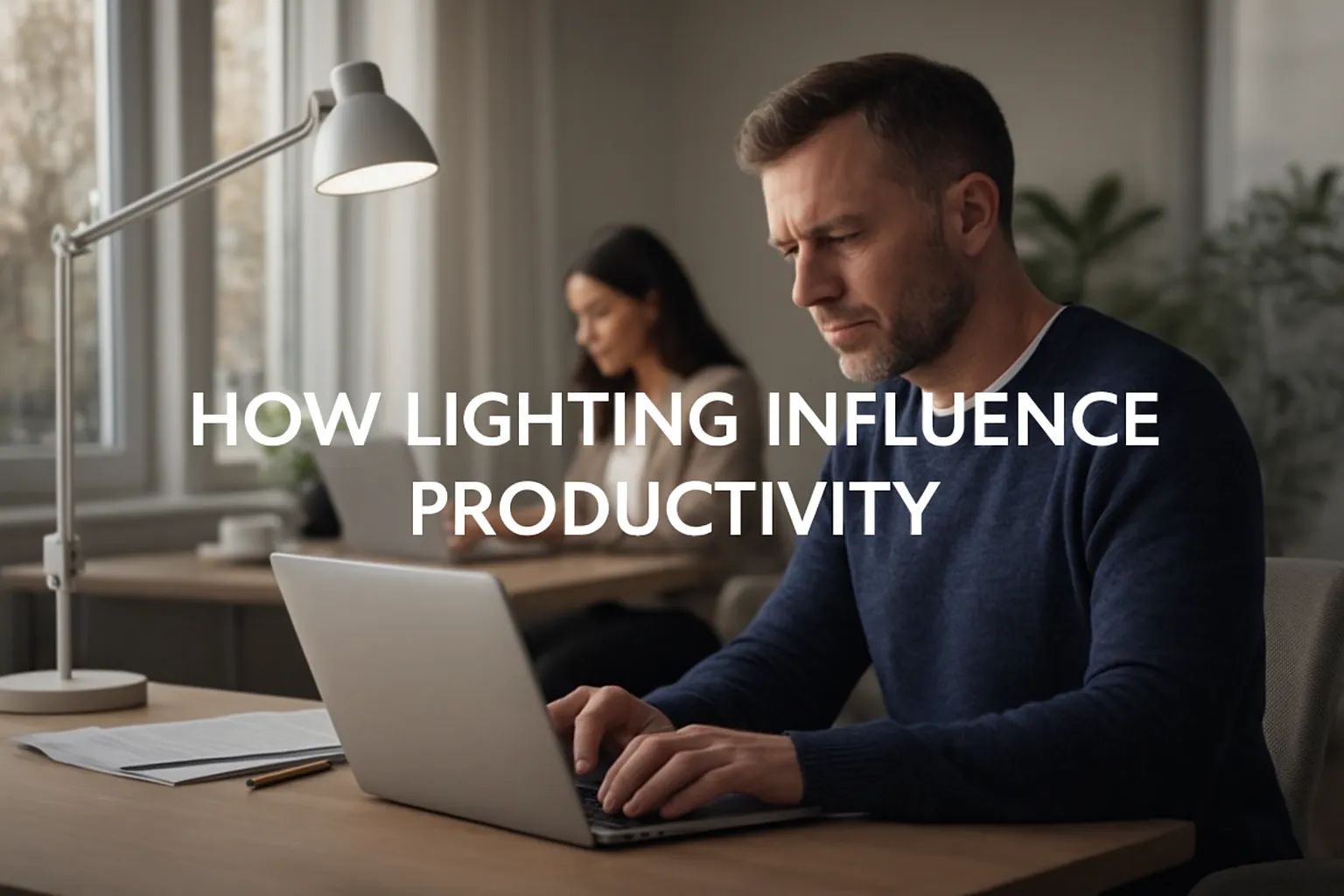
Performance improves when you combine appropriate spectrum, adequate vertical illuminance, 、以及 time-of-day scheduling.
Day-part framework for offices
| Time Block | Task Emphasis | CCT | Vertical Illuminance at Eye | Rationale |
|---|---|---|---|---|
| 8–11 AM | Deep work | 4000–5000 K | Higher (per WELL v2 targets) | Capitalize on prime focus window |
| 11–2 PM | Collaboration | 3500–4000 K | 中等 | Balance energy and social tone |
| 2–4 PM | Precision tasks | 4000–5000 K | 更高 | Counteract afternoon dip |
| 4–6 PM | Wrap-up | 3000–3500 K | 降低 | Reduce strain, prep for evening rest |
Techniques that work
- 层次 task-ambient strategies (cooler task light with neutral ambient).
- Set scenes with both CCT 和 illuminance changes—perception depends on both.
- Track KPIs: task completion time, error rate, perceived fatigue, and satisfaction.
Applications by Industry
Each sector has unique visual and emotional demands. Tune CCT and scenes to real workflows and outcomes.
| Industry | Primary Goals | CCT Guidance | 备注 |
|---|---|---|---|
| Healthcare | Recovery + staff vigilance | Patient 2700–3500 K; Staff 4000–5000 K | Day-part scenes; protect sleep cycles |
| Education | Engagement + comprehension | 3500–4500 K | Glare control; cooler before tests |
| Manufacturing | Accuracy + safety | 5000–6500 K | High vertical illuminance; low flicker |
| Retail | Desire + authenticity | 3000–4000 K | TM-30 Rf ≥ 90 for skin/fabric rendering |
| 酒店照明 | Comfort + brand tone | 2700–3200 K | Layered scenes; neutral in task zones |
Deep considerations
- Healthcare: Use warmer night scenes to reduce melatonin suppression in patient areas; keep staff areas alerting when needed.
- Retail: Choose SPDs that flatter skin and textiles; color is your merchandising tool.
- Manufacturing: Blue-enriched light improves vigilance—verify 闪烁 under actual dim levels.
Integrating Tunable White
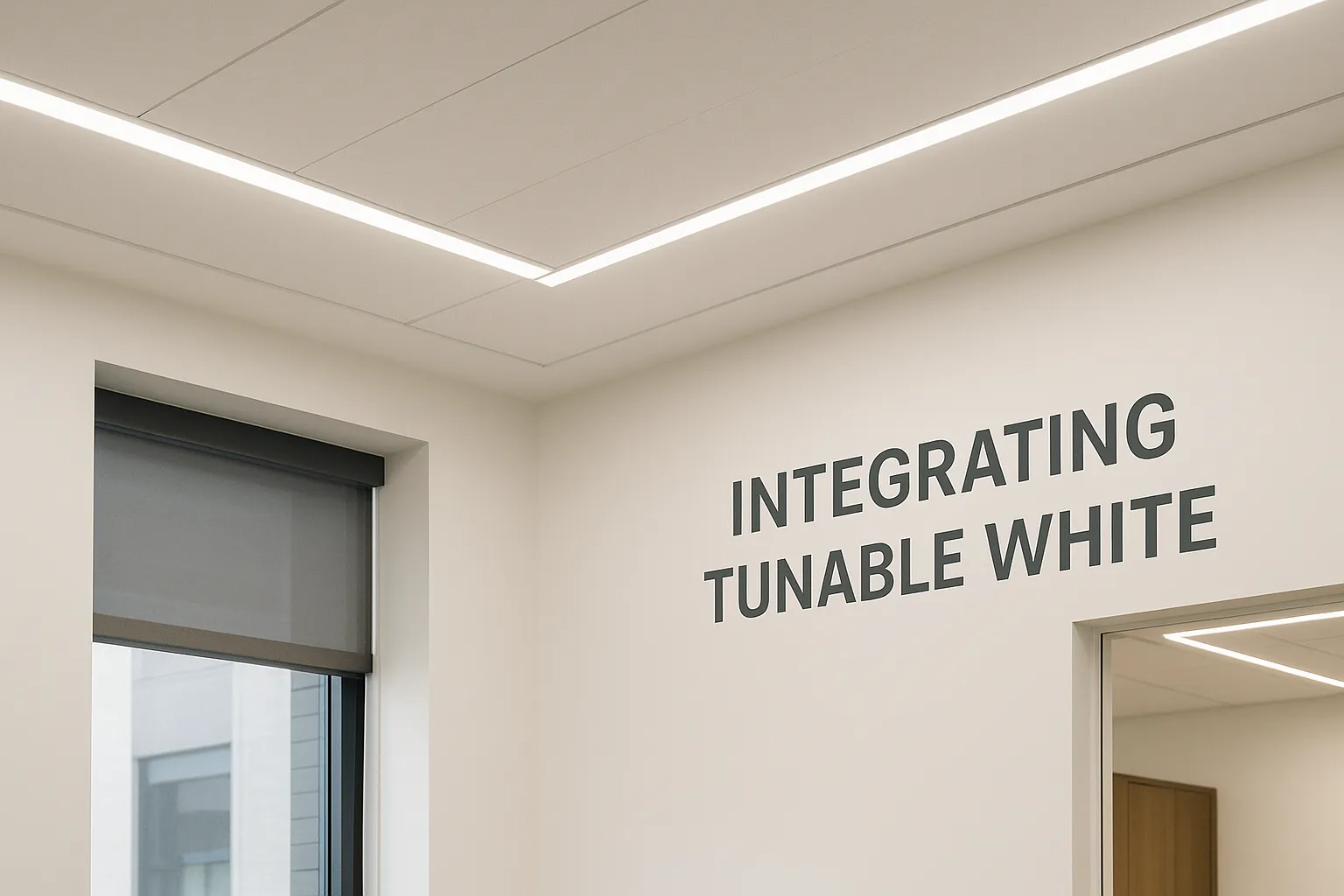
Static CCT forces compromises. Tunable white lets you align spectrum and brightness with time, task, and people—without changing hardware later.
System architecture
- Fixtures: Warm and cool LED channels, well-mixed optics.
- Drivers: Constant-current, 混合调光 or high-frequency PWM to land in IEEE 1789’s low-risk region (IEEE 1789-2015).
- Controls: DALI-2 (DT8: Tc) or interoperable platforms for stable, repeatable scenes (DALI联盟).
Commissioning that holds up in the field
- Define scenes: e.g., Focus AM (≈4200–4800 K, higher vertical), Collaborate Midday (≈3600–4000 K, moderate vertical), Wind-down (≈3000–3300 K, lower vertical).
- Measure & verify: CCT within ±150–200 K at task plane; vertical illuminance at eye meets WELL v2 targets; temporal light modulation compliant (Pst LM ≤ 1.0, SVM ≤ 0.9) under operating dim levels (not only full output). EU flicker metrics appear in the Single Lighting Regulation; verify using accepted methods (EU Ecodesign/Label portal, EU SLR references via Commission pages).
- 互操作性: Validate device lists (drivers, controllers, sensors) and ensure RF/wireless gateways are both thermally 和 电磁兼容性-isolated from power electronics.
Case Study: Workplace Redesign (Internal Pilot)

A 12,000 ft² office upgraded from static 3500 K to 可调白光 with day-part scenes:
- Morning (Focus): 4200–4800 K with higher vertical illuminance
- Midday (Collab): 3600–4000 K, moderate vertical
- Late day (Wind-down): 3000–3300 K, reduced vertical
Outcomes (internal pilot report):
- Task completion: +18% speed in morning focus blocks
- Quality: −12% measured error rate in precision tasks
- Wellbeing: −22% self-reported afternoon fatigue
Notes: Results are specific to one site with supporting change management and glare control; your outcomes will vary with task type, cohort, and baseline lighting.
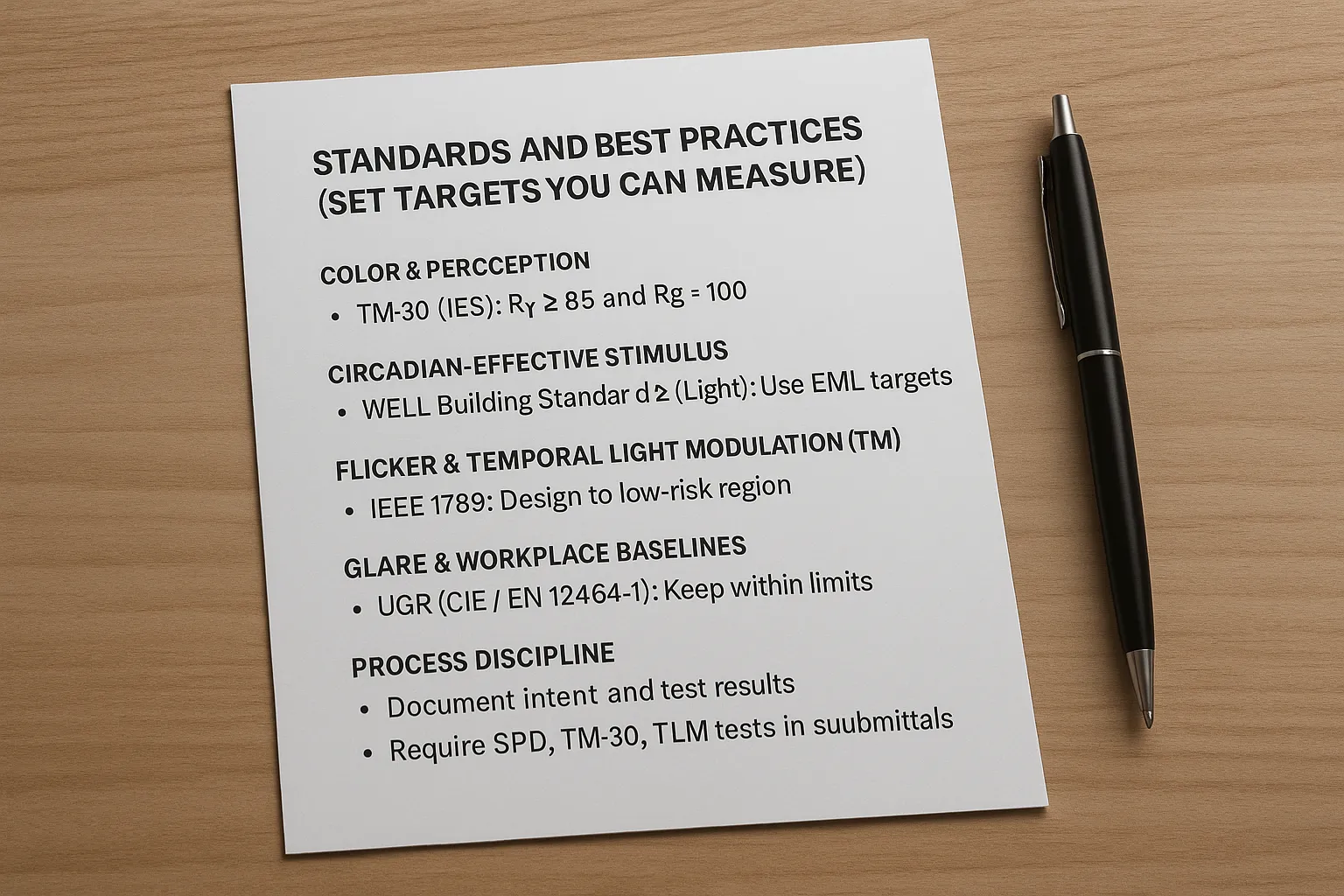
Standards and Best Practices (Set Targets You Can Measure)
Color & perception
- TM-30 (IES): Specify Rf (fidelity) and Rg (gamut) targets by space type; Rf ≥ 85 and Rg ≈ 100 is a robust baseline for most offices and retail (IES TM-30).
Circadian-effective stimulus
- WELL Building Standard v2 (Light): 使用 EML targets and measure 眼睛处的垂直照度 to commission scenes; apply task-appropriate values and daylight integration (WELL v2—Light).
- CIE S 026: Consider melanopic EDI for more rigorous α-opic analysis (CIE S 026).
Flicker & temporal light modulation (TLM)
- IEEE 1789: Design to the low-risk region via hybrid dimming or sufficiently high PWM. Validate with instrumentation, not just driver datasheets (IEEE 1789-2015).
- EU Pst LM / SVM: In European projects, verify Pst LM ≤ 1.0 和 SVM ≤ 0.9 at scene levels, consistent with Single Lighting Regulation test methods (see Commission guidance pages on Ecodesign/Label).
Glare & workplace baselines
- UGR (CIE / EN 12464-1): Keep glare within recommended limits for indoor workplaces; measure at representative viewer positions.
Process discipline
- Document intent, require SPD, TM-30, flicker/TLM tests in submittals, conduct mockups, 、以及 measure after installation. Treat scenes as performance specifications, not just settings.
Balancing Science and Aesthetics
Data guides performance; design carries emotion and brand. Use materials and color palettes to provide warmth so the CCT can remain functional for tasks. Co-design scenes with stakeholders, prototype in representative spaces, and iterate with feedback plus real metrics.
| Constraint | Scientific Need | Aesthetic Move | Result |
|---|---|---|---|
| Afternoon slump | Cooler spectrum, higher vertical | Warm materials & accents | Energized yet inviting |
| Color-critical tasks | High fidelity (high Rf) | Neutral backgrounds | Accurate perception |
| Recovery zones | Warm spectrum, low contrast | Textural comfort cues | Calm, restorative feel |
Conclusion & Next Steps
CCT steers mood; timing drives performance. Design scenes—not just specs—so spaces can shift from focus to collaboration to recovery as the day unfolds. Align CCT with human biology (WELL v2; CIE S 026), verify color quality (TM-30), control glare (UGR), and prove low flicker (IEEE 1789; Pst LM/SVM) at operating dim levels. That’s how lighting becomes a measurable lever for productivity and wellbeing.
Want help translating this into your project?
Teco Lighting’s engineering team can map tasks to CCT/EML, define tunable-white scenes, verify flicker and color metrics, and deliver commissioning documents aligned to WELL v2 and IEEE 1789.
👉 Book a 30-minute review: [email protected]