如何在中国识别可靠的LED灯泡制造商:完整采购指南
Introduction: The Strategic Importance of Choosing the Right Manufacturing Partner
For commercial engineering firms and lighting contractors, selecting the right LED bulb manufacturer in China can define the long-term success of every project. From hotel and office lighting to retail and urban infrastructure, lighting quality directly impacts energy efficiency, sustainability goals, and end-user experience.
China now accounts for more than 80% of global LED lighting production, according to the International Energy Agency (IEA, 2024). Yet, while the country is home to world-class manufacturers, the market also includes countless small factories and trading companies offering substandard products at unsustainably low prices.
For B2B procurement teams, the goal isn’t to find the cheapest supplier — it’s to find the most reliable one. This comprehensive guide explains how commercial contractors and engineering firms can identify trustworthy LED bulb manufacturers in China through eight essential criteria, verified practices, and real-world insights.
1. Understanding What Reliability Means in the LED Supply Chain
A “reliable” LED manufacturer is not just a company that delivers on time — it’s a partner capable of ensuring product consistency, technical compliance, and traceable production quality over multiple project cycles.
For commercial projects, reliability translates to:
- Consistent photometric performance across batches (CCT, CRI, lumen output)
- Compliance with safety and energy regulations (UL, CE, RoHS, ERP)
- Scalable production capacity to meet project timelines
- Transparent communication and technical documentation
- Long-term warranty support and spare parts availability
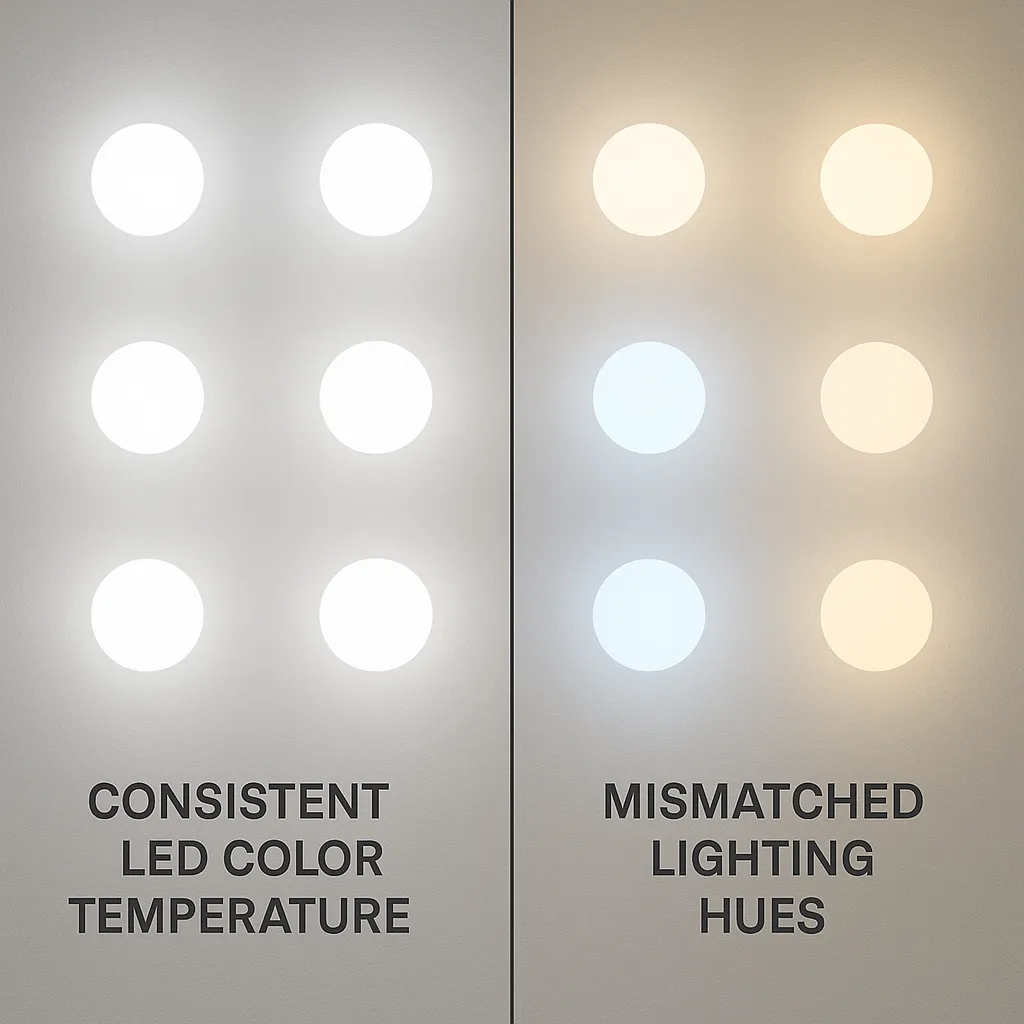
Poor supplier selection can cause major downstream issues: inconsistent color temperature across floors, early product failure, warranty disputes, and expensive reinstallation costs.
根据 LightingEurope (2023), over 30% of commercial lighting project delays in Europe were linked to poor supplier performance or unreliable components.
2. Verify Compliance When Choosing a LED Bulb Manufacturer in China
The Foundation of Trust
A professional LED bulb manufacturer should hold valid international certifications, demonstrating compliance with electrical safety, photobiological safety, and environmental standards.
Essential Certifications for Key Markets
| 市场 | Required Certifications |
|---|---|
| Europe & UK | CE, RoHS, ERP |
| North America | UL, ETL, FCC, Energy Star |
| 中东 | SASO, GCC, G-Mark, CB |
| Australia / New Zealand | SAA, RCM |

Verification Process
- Request certificate copies with serial numbers and verify them on the issuing body’s website.
- Check issue and expiry dates — outdated or revoked certificates are a red flag.
- Ask the manufacturer to share third-party lab test reports (e.g., TUV Rheinland, Intertek).
Reliable factories treat certification as part of their engineering culture — not a marketing checkbox.
来源: TÜV Rheinland Product Safety Standards
3. Assess Manufacturing Capabilities of a Reliable LED Supplier
Beyond a Factory Visit: Understanding True In-House Capability
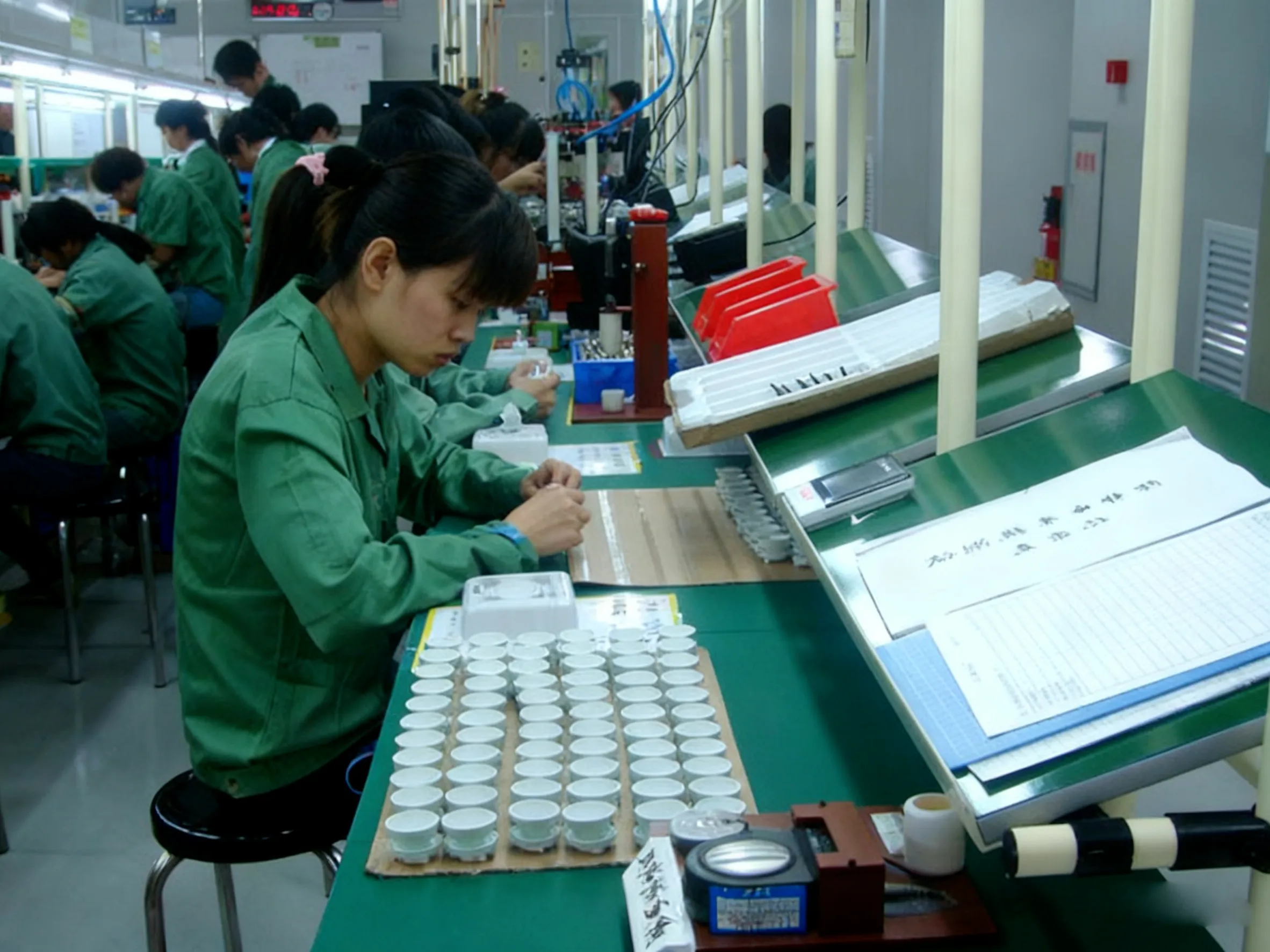
Many companies in China act as trading intermediaries, outsourcing production to smaller workshops. Genuine manufacturers invest heavily in automation, SMT assembly, and reliability testing.
What to Look for in a True Manufacturer
- Automated assembly lines with robotic soldering for LED boards
- Aging test rooms (8–24 hours) to detect early failure rates
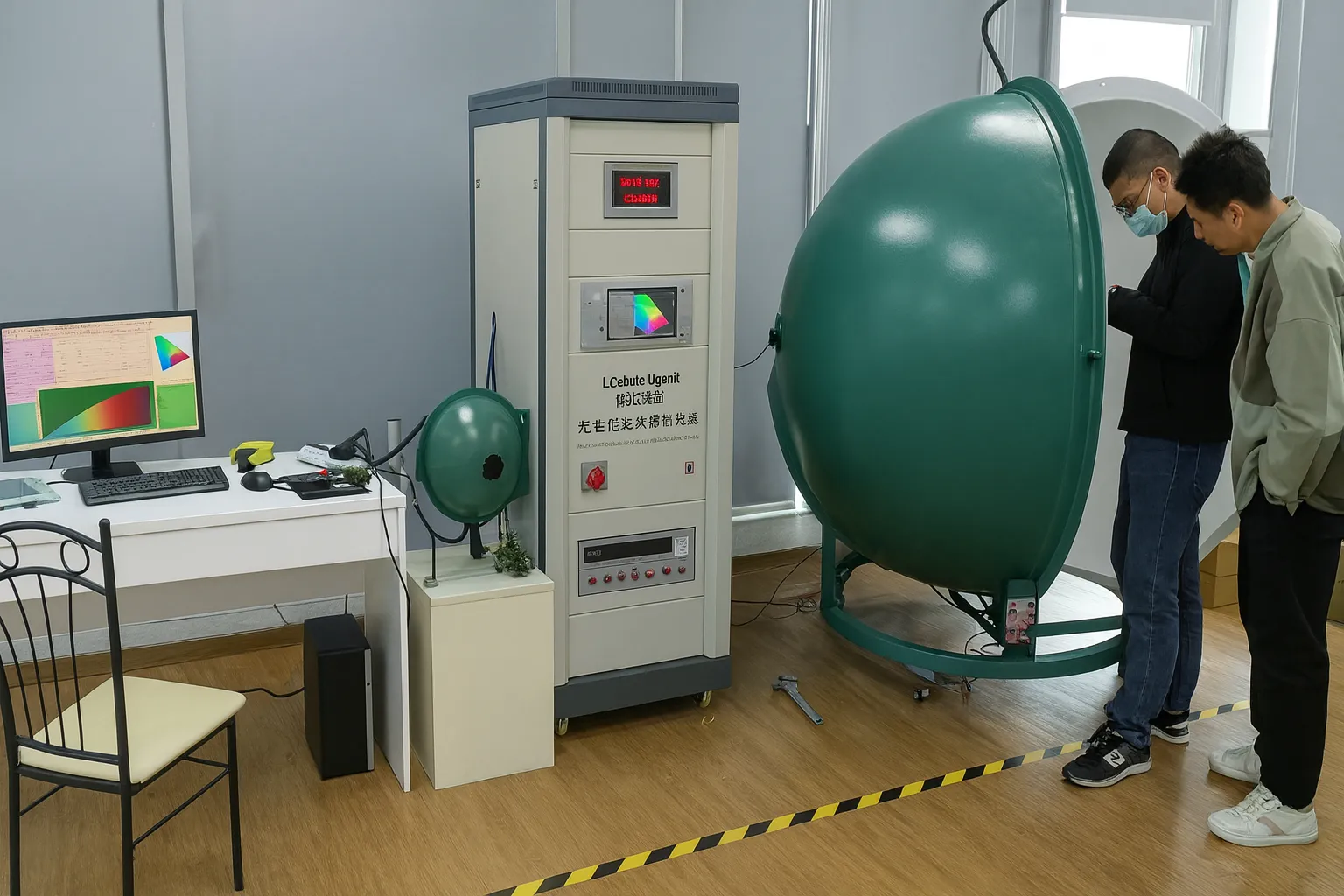
- Integrated optical and electrical labs (for CRI, PF, lumen, CCT testing)
- Dust-free assembly environments for LED drivers and PCBs
- In-house SMT production and molding workshops
If a supplier hesitates to share factory videos, live virtual tours, or third-party audit reports, it’s often a sign they are resellers, not producers.
Tip: Request a video showing the production date and current day’s newspaper — a simple authenticity test.
4. Evaluate Product Quality and Technical Performance
What Defines a High-Quality LED Bulb for Commercial Use
Lighting quality impacts architectural aesthetics, human comfort, and operational efficiency. Engineering firms should request detailed photometric data and component-level documentation before mass procurement.
Key Parameters
| 公制 | Ideal Range | 说明 |
|---|---|---|
| 显色指数(CRI) | Ra ≥ 90 | Ensures true color accuracy in workspaces |
| 功率因数 (PF) | ≥ 0.9 | Improves energy efficiency and power stability |
| CCT Tolerance | ±100K | Maintains uniform lighting appearance |
| 发光效能 | 100–120 lm/W | Balances performance and lifespan |
| 热管理 | Aluminum die-cast housing | Prevents overheating and color shift |
Professional suppliers should provide IES文件, LM-80 / TM-21报告, and a driver compatibility list (Triac, 0–10V, DALI).
来源: U.S. Department of Energy – LED Performance Metrics
5. Test Supplier Communication and Technical Competence
The Hidden Indicator of Manufacturing Discipline
Communication quality reflects a company’s internal organization. A professional LED bulb manufacturer responds within 24 hours, provides complete documentation, and can explain technical details fluently.
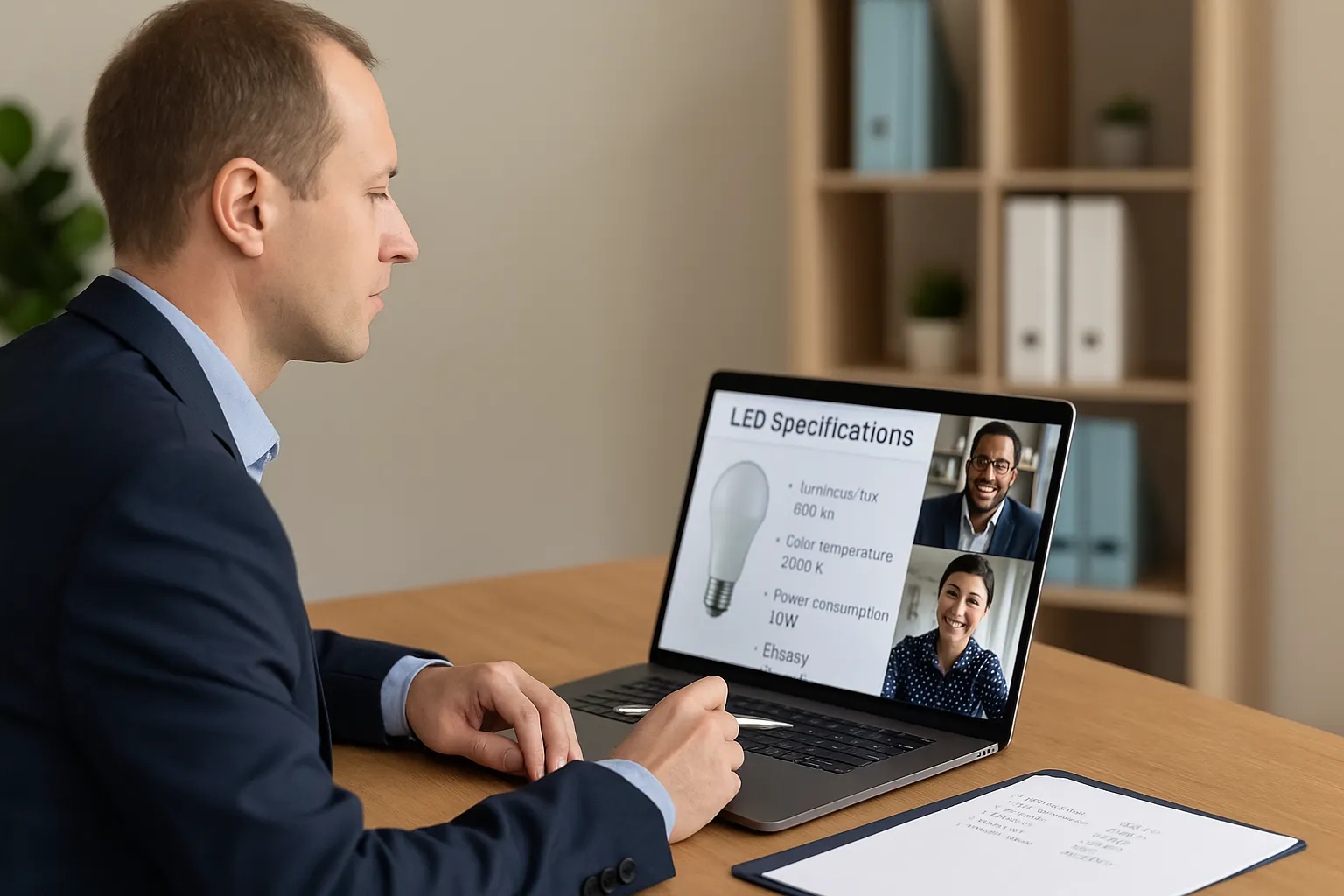
Observe the following:
- Responsiveness: Timely answers to engineering queries.
- Technical knowledge: Ability to explain optics, CCT deviations, and dimming protocols.
- Documentation management: Consistent naming, revision tracking, and file control.
- Language clarity: Fluent, professional English from technical sales teams.
Companies that provide incomplete or vague answers often indicate weak internal coordination — a major risk for complex, deadline-driven engineering projects.
6. Evaluate Warranty, After-Sales Service, and Reference Projects
Warranty is a Promise of Engineering Integrity
A professional manufacturer supports its claims with a clear and enforceable warranty policy. Typical standards for commercial-grade LED bulbs include:
- 3–5 years warranty for aluminum die-cast housings
- Free replacement or credit note for verified defects (≥1% batch failure)
- After-sales service team for international support
要求提供 reference projects — especially in your target regions or industry verticals.
示例:
- Hotel lighting retrofit projects in Dubai
- Office lighting systems for Fortune 500 headquarters in Singapore
- Public infrastructure lighting in the UK or Saudi Arabia
Such references demonstrate both product reliability 和 project management capability.
来源: Statista – Global Commercial Lighting Market Data, 2024
7. Compare Pricing with Full Transparency
Avoid the Low-Price Trap
Price alone is not a reliable benchmark. Many low-cost offers are achieved by cutting corners on LED chips, driver components, or thermal protection — all of which increase long-term costs through maintenance and replacements.
Core Pricing Drivers
- LED chip brand (e.g., Samsung, Nichia, San’an)
- Driver type (isolated vs. non-isolated)
- Material (aluminum vs. plastic-aluminum housing)
- Certification and warranty period
- Dimming compatibility (Triac / DALI / 0–10V)
Best Practices for Procurement Teams
- Request a BOM-level quotation (Bill of Materials).
- Run a small pilot order for aging and lumen depreciation tests.
- Compare total landed cost, not just FOB prices — including warranty, shipping, and after-sales support.
Transparent manufacturers will openly discuss cost structures and quality trade-offs.
8. Spot Common Red Flags Before You Commit
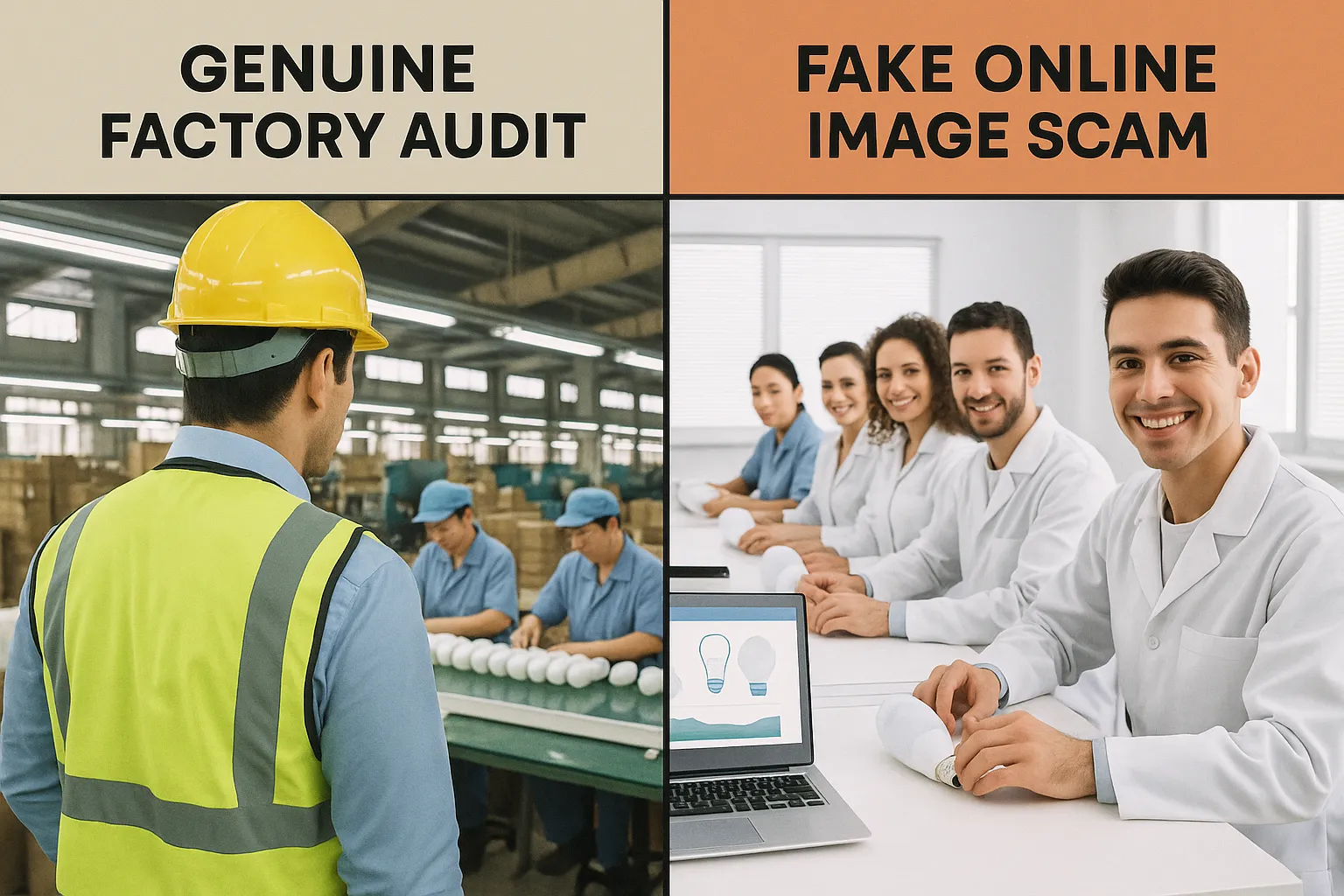
Even experienced procurement teams can fall into traps when sourcing from new suppliers. Be vigilant against these signals:
- ❌ No valid business license or mismatched company name
- ❌ Factory images reused from other websites
- ❌ Evasive responses or avoidance of video verification
- ❌ Unrealistically low quotes or instant price cuts
- ❌ Inconsistent warranty terms or no reference projects
Pro Tip: A supplier that refuses third-party inspection or pre-shipment verification is rarely trustworthy. Use established inspection agencies such as SGS 或 AsiaInspection (QIMA).
9. The Future of LED Manufacturing in China
The Chinese LED industry is evolving rapidly. Manufacturers are integrating IoT-enabled smart lighting, human-centric illumination, 、以及 eco-efficient production under ISO9001 and ISO14001 frameworks.
根据 MarketsandMarkets (2025), , smart lighting segment in China is growing at a CAGR of 20.5%, driven by commercial retrofits and green building initiatives.
The best manufacturers are no longer just suppliers — they are engineering partners, offering complete lighting solutions from design simulation to DIALux analysis and energy optimization.
For global engineering firms, partnering with forward-thinking Chinese manufacturers means access to:
- Advanced COB and SMD LED technologies
- Smart controls integration (DALI2, Zigbee, Bluetooth Mesh)
- Sustainable materials and recyclability compliance
- Scalable production for multi-region projects
Conclusion: Partnering for Performance and Trust
Selecting a reliable LED bulb manufacturer in China is not a one-time procurement decision — it’s a strategic partnership that influences the long-term performance, safety, and reputation of your projects.
By systematically evaluating certification integrity, production capability, quality control, communication standards, after-sales service, and transparent pricing, commercial contractors can confidently build lasting supply chains that meet both engineering precision 和 client expectations.
At Teco, we specialize in helping global engineering firms identify, audit, and collaborate with certified Chinese LED manufacturers — ensuring your projects achieve maximum lighting efficiency, visual comfort, and lifecycle reliability.
Ready to secure a trusted LED manufacturing partner in China?
Contact Teco for a free sourcing consultation — ensure your next project is powered by quality, not risk.