什么灯光能让钻石闪耀?珠宝店照明设计指南
最后更新于2026年3月3日
专业珠宝店照明设计指南
珠宝店的照明不仅是装饰——它直接决定了钻石如何闪耀、宝石如何展现深度,以及顾客如何感知价值。.
在专业零售照明设计中,珠宝照明被视为精密光学环境,而不仅仅是普通照明。.
如需快速解答:
- 使用 显色指数 ≥ 95 适用于高端钻石展示
- 选择 4000K–5000K 以增强火彩与对比度
- 应用 15°–25° 窄光束角 用于突出闪耀效果
- 保持 重点光与环境光比例 3:1
- 谨慎控制眩光与玻璃反射
本指南阐释珠宝照明的技术原理及其在实际零售项目中的应用方法。.
1. 钻石为何闪耀:光学原理
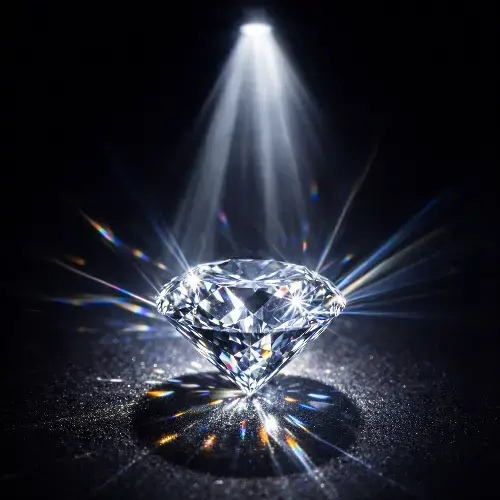
清澈的钻石在聚光灯束照射下,于深色底面上映出棱镜般的光芒与细微反射。.
钻石因以下原因闪耀 折射、反射与色散 光线穿过其刻面。.
要使珠宝闪耀,照明必须提供:
- 高强度
- 强烈对比
- 恰当的入射角度
- 精准的色彩还原
在实际零售安装中,当出现以下情况时,闪耀效果会减弱:
- 环境光主导重点照明
- 色温过于偏暖
- 光束角度过宽
- 显色指数不足
闪耀并非偶然——而是精心设计的成果。.
2. 色温:开尔文如何影响光彩
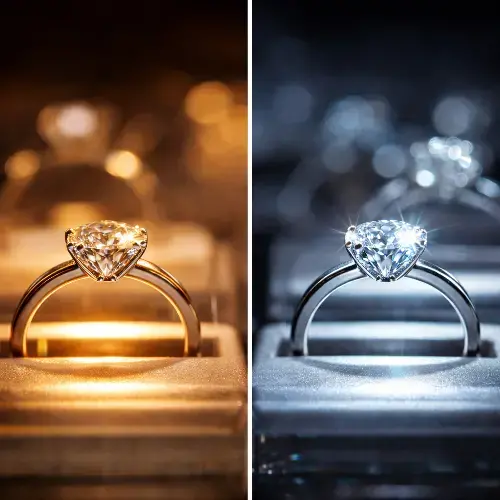
珠宝环境中钻石戒指的对比展示,分别采用暖黄光与冷白光照明,以演示照明条件如何影响感知的璀璨度与颜色。.
色温(CCT)影响感知亮度与对比度。.
按珠宝类型推荐的色温
| 珠宝类型 | 建议色温值 | 原因 |
|---|---|---|
| 钻石 | 4000K–5000K | 增强光彩与火彩 |
| 铂金 / 银 | 4000K | 清晰明净的反射 |
| 混合宝石 | 3500K–4000K | 均衡展示 |
| 黄金 | 2700K–3000K | 暖色调增强丰富感 |
| 玫瑰金 | 2700K–3000K | 保留温暖色调 |
在高端精品店项目中,设计师常在钻石展示区使用4000K重点照明,同时保持3000K环境照明以维持店铺氛围的温馨感。.
这种分层设计增强了视觉层次感。.
3. 显色指数与光谱质量:为何≥95至关重要
显色指数(CRI)衡量的是光源相对于参考光源还原色彩的准确度。.
For jewelry environments:
- CRI 90 is minimum acceptable
- CRI 95+ is recommended for premium retail
High CRI prevents gemstones from appearing flat or gray.
According to professional retail lighting practice guidelines from the Illuminating Engineering Society (IES), accurate color rendering is critical in merchandise evaluation environments.
Low CRI lighting can distort perceived gemstone saturation, reducing visual appeal.
In field experience, upgrading from CRI 80 to CRI 95 frequently produces noticeable improvement in diamond clarity perception.
4. Beam Angle: Controlling Focus and Contrast
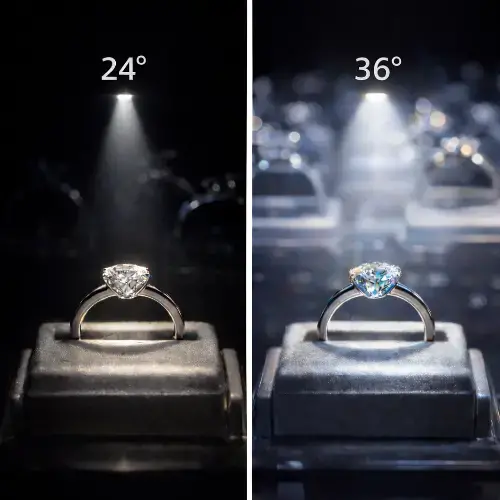
Beam angle determines light concentration.
Recommended Beam Angles
| 应用 | 光束角度 | 目的 |
|---|---|---|
| Diamond spotlighting | 15°–20° | Maximum sparkle contrast |
| Showcase trays | 20°–30° | Controlled highlight |
| General display | 30°–40° | 均衡覆盖 |
| Ambient lighting | 40°–60° | Background illumination |
In retail installations, changing from 36° to 20° beam angle often significantly increases perceived brilliance because narrower beams increase contrast across diamond facets.
However, overly narrow beams must be positioned carefully to avoid glare hotspots.
5. Light Layering Strategy (Professional Approach)
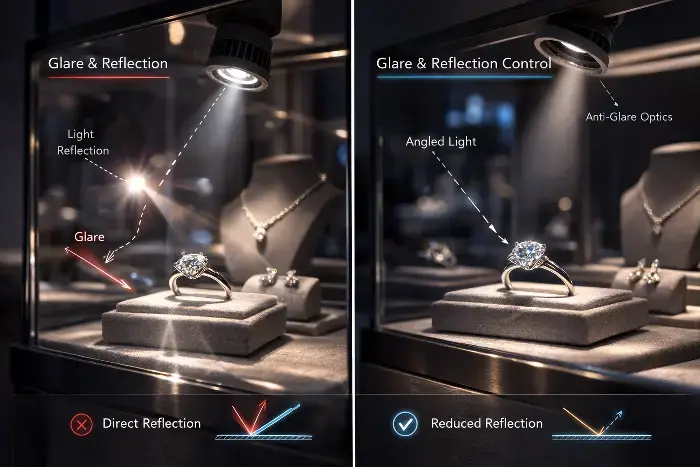
Visual comparison illustrating how specialized lighting and controlled beam angles help minimize glare and unwanted reflections in jewelry showcases for clearer product presentation.
Professional jewelry lighting follows a layered hierarchy.
1. Ambient Lighting
- Provides base illumination
- 3000K–4000K depending on brand identity
- Should not overpower displays
2. Accent Lighting
- 3:1 brightness ratio compared to ambient
- Narrow beam, high intensity
- Enhances sparkle and visual focus
3. Display Case Lighting
- Integrated mini spotlights or high-CRI strips
- Controlled angle to reduce reflection
- Even distribution across trays
Maintaining this hierarchy preserves contrast and luxury perception.
6. Glare and Reflection Control
Glass display cases introduce reflection challenges.
Professional mitigation techniques include:
- Positioning fixtures at 30°–35° angle relative to glass
- Avoiding direct vertical downlight reflection
- Using anti-glare optics
- Shielded trim or deep baffle design
Poor glare control reduces visual comfort and may discourage customer engagement.
7. LED Advantages in Jewelry Retail
LED lighting provides optical precision required in jewelry environments:
- High CRI availability
- Stable color consistency
- Precise beam control
- Minimal radiant heat
- Long operational life (25,000–50,000 hours)
Low heat emission protects delicate stones and prevents showcase overheating.
8. Common Jewelry Lighting Mistakes (Observed in Real Projects)
- Using 2700K spotlighting on diamonds
- Allowing ambient light to exceed accent intensity
- Mixing inconsistent color temperatures in one showcase
- Installing wide beam angles for sparkle applications
- Ignoring flicker performance in dimmable systems
Inconsistent lighting design often reduces perceived product value more than actual product quality.
9. Dimming and Scene Control
Luxury retail increasingly uses dimmable LED systems.
优势包括:
- Scene-based display highlighting
- Time-based brightness adjustments
- Seasonal merchandising flexibility
- Enhanced luxury perception
Smooth, flicker-free dimming is essential.
Low-frequency modulation can reduce visual comfort.
10. Security and After-Hours Considerations
Security lighting should:
- Activate via motion sensor
- Maintain minimum illumination level
- Avoid excessive glare into storefront glass
Balanced security design protects merchandise without disrupting visual presentation.
11. Professional Design Summary
For optimal jewelry lighting performance:
- 使用 显色指数 ≥ 95
- 选择 4000K–5000K for diamond sparkle
- 应用 15°–25° beam angles
- Maintain 3:1 accent-to-ambient ratio
- Control glare and reflection
- Keep color temperature consistent within showcases
Jewelry lighting is an engineered optical system — not simply a decorative choice.
When properly specified, lighting enhances brilliance, elevates perceived value, and strengthens customer confidence in purchase decisions.
Designing jewelry lighting requires careful coordination of:
光束角度
色温
显色性能
眩光控制
Dimming compatibility
If you are planning a jewelry retail project and need technical guidance on selecting optical LED solutions, professional evaluation before installation can significantly reduce redesign costs and performance inconsistencies.
Our engineering team supports retail lighting projects with:
High-CRI optical spotlight recommendations
Beam angle optimization guidance
Showcase lighting layout suggestions
Dimming and glare control consultation
For technical discussion or specification support, contact our team with your project details.