ما هي الإضاءة الصديقة للنوم؟ دليل عملي لغرف النوم والفنادق
Summary:
Sleep-friendly lighting is not simply warm white lighting. A better design considers light spectrum, blue-light exposure, circadian response, dimming stability, flicker control, glare, color rendering, and how the space is used at night. For bedrooms, hotels, lounges, corridors, and wellness-style interiors, ultra-warm and low-blue-light lighting can help create a softer and calmer evening environment.
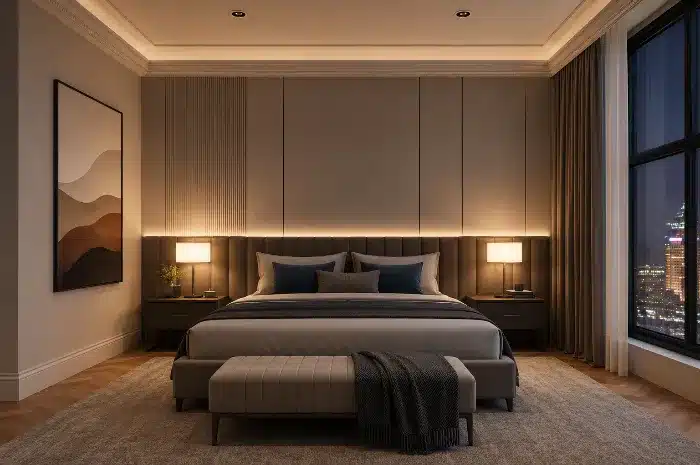
Hotel bedroom with soft ultra-warm lighting
Why Is Sleep-Friendly Lighting More Than Warm White?
Many people think sleep-friendly lighting simply means choosing a warm white lamp. This is only partly true.
A 2700K or 3000K LED lamp may look warm to the human eye, but the actual spectrum can still contain a strong blue energy peak. This is common in many standard phosphor-converted LED lamps, where a blue LED chip is used as the base light source and phosphor is used to create the final white light.
That means a lamp can look yellowish or warm while still containing blue-rich energy that may not be ideal for evening or night-time spaces.
Professional sleep-friendly lighting should not be judged only by visible color temperature. It should also consider spectrum control, blue-light reduction, dimming stability, flicker, glare, color rendering, and the time of use.
The key question is not only:
“Is the light warm?”
A better question is:
“Does this lighting design reduce unnecessary night-time stimulation while still providing enough visual comfort for real spaces?”
How Does Light Affect Circadian Rhythm?
Human beings follow a 24-hour biological rhythm, often called the circadian rhythm. Light is one of the main external signals that helps the body distinguish day from night.
During the day, brighter and cooler light can support alertness and activity. At night, however, strong blue-rich light may send a daytime-like signal to the body. This is why lighting for bedrooms, hotel rooms, lounges, and night-time corridors should not be designed in the same way as office or retail task lighting.
One important concept is melatonin suppression. Certain wavelengths of light can stimulate the retina and affect the body’s natural preparation for rest. This does not mean all light at night is bad. It means evening lighting should be softer, warmer, lower in intensity, and lower in blue-rich energy.
Another important concept is melanopsin. Melanopsin-sensitive retinal cells are especially responsive to blue light around 440–460 nm. This range is closely related to circadian stimulation. For sleep-friendly lighting, spectrum design matters more than visible warmth alone.
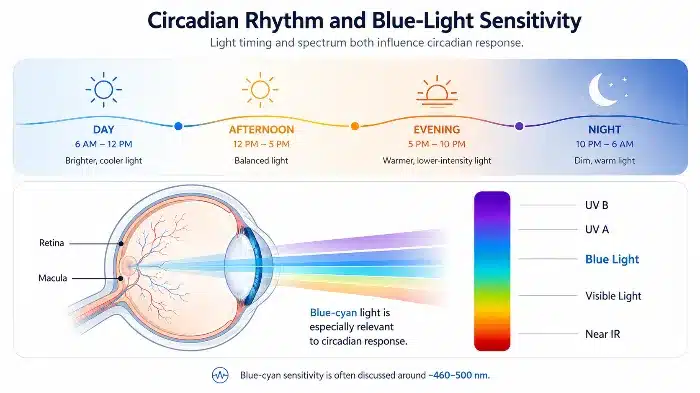
Educational graphic showing circadian rhythm and blue-light sensitivity
Why Does the 450 nm Blue Peak Matter?
One common problem with ordinary warm white LED lamps is the blue pump around 450 nm.
A lamp may look warm because the final mixed light has a low color temperature. However, if the 450 nm blue peak remains strong, the light may still create more biological stimulation than expected during evening use.
For professional buyers, this is where the difference between marketing and engineering becomes clear. A basic warm white lamp may only change the visible color appearance. A more serious sleep-friendly lighting product should focus on spectrum control and reducing unnecessary short-wavelength blue energy in night-time scenes.
For hotels, wellness projects, senior living spaces, and high-end residential interiors, spectrum data can be more useful than broad marketing words such as “healthy light” or “better sleep light.”
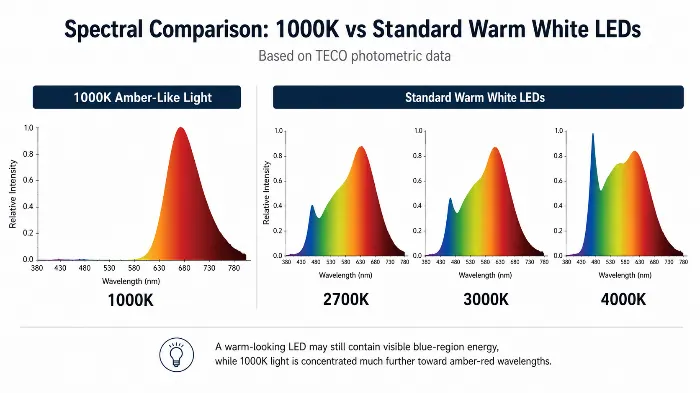
Spectrum comparison between standard warm white LED and 1000K amber-like light
What Role Does 1000K Light Play in Night-Time Spaces?
1000K light is much warmer than standard residential or commercial lighting. It is closer to amber light or candlelight than normal white light.
This kind of light is useful when the goal is not high brightness, but a calm night-time atmosphere. It can help create a soft visual environment for evening scenes, bedside areas, hotel rooms, corridors, lounges, restaurants, bars, and relaxation-focused interiors.
A 1000K light source is not meant to replace all general lighting. It works better as a night scene, wind-down mode, ambience light, or part of a wider human-centric lighting plan.
For example, a hotel room may still need normal warm white lighting for cleaning, reading, or daily use. But when the guest wants a softer night mode, a 1000K ultra-warm light can create a calmer atmosphere than standard white lighting.
For project buyers, the value of 1000K is not only its warm appearance. It can serve as a dedicated night-scene light source within a layered lighting design, especially when the project needs both normal functional lighting and a separate low-stimulation evening mode.
Why Is Deep Dimming Important?
Sleep-friendly lighting is not only about color temperature. Brightness control is just as important.
A lamp may have the right warm color, but if it cannot dim low enough, the room may still feel too bright at night. High-quality sleep-friendly lighting often requires very low brightness levels, sometimes down to 1% or even 0.1%, while still keeping the light stable.
This is where many lighting systems fail.
At low brightness levels, poor dimming may cause visible flicker, invisible flicker, low-frequency ripple, buzzing noise, unstable output, or sudden brightness jumps. These problems become more obvious in bedrooms and hotel rooms because people are more sensitive to light quality in dark environments.
This is why “dimmable” is not enough as a product claim. Buyers should also care about dimming depth, dimmer compatibility, driver quality, and low-brightness stability.
Why Does Flicker-Free Performance Matter?
Flicker is another important factor in sleep-friendly lighting.
Some flicker is visible, but some is not easy to see with the eye. Even invisible flicker may still cause discomfort for some users during long-term exposure, especially in low-brightness scenes.
A professional sleep-friendly lighting design should reduce flicker risk through better driver design and proper dimming control. High-frequency or analog dimming methods are often used to improve stability, especially at low brightness levels.
For B2B projects, “flicker-free” should not be used as a casual marketing word. If the project is sensitive, buyers should ask for flicker test data, dimmer compatibility information, or actual project testing.
For bedrooms, hotels, serviced apartments, and wellness spaces, stable low-level dimming can be more important than maximum brightness.
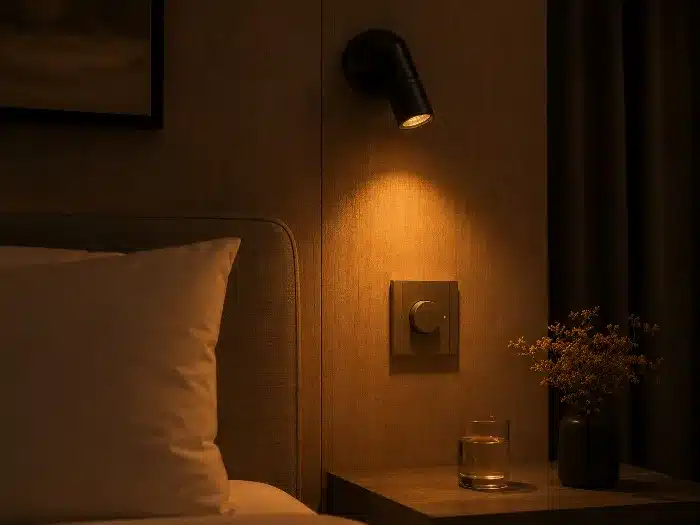
Stable dimming scene for bedroom lighting
Is Amber or Red Light Better for Night Lighting?
Amber and red LED technologies are often used for night lighting because they naturally contain less blue-rich energy than higher-CCT white light.
However, there is a trade-off.
Pure red or amber light can reduce blue-light stimulation, but it may also distort color appearance. A room lit only by narrow-spectrum red or amber light can feel unnatural. It may not be suitable for reading, dressing, cleaning, hospitality rooms, or daily use.
This is why sleep-friendly lighting needs balance.
الهدف ليس فقط تقليل الضوء الأزرق. يجب أن يظل الضوء قابلاً للاستخدام. لا تزال جودة عرض الألوان مهمة. في المساحات العملية، خاصة غرف النوم والفنادق، يمكن أن يساعد أداء CRI وTM-30 وR9 وتوازن الطيف العام في الحفاظ على تجربة بصرية أكثر طبيعية.
يجب أن تبدو مصباح الليل الجيد دافئًا، وتشعر بالنعومة، وتظل تسمح للناس برؤية المساحة بشكل مريح.
ما هي الميزات التقنية التي يجب أن يتحقق منها المشترون؟
يجب اختيار الإضاءة الصديقة للنوم بمعايير قابلة للقياس، وليس بلغة صحية غامضة. يمكن لقائمة المراجعة التالية أن تساعد مشتري المشاريع في مقارنة المنتجات بشكل أكثر احترافية.
| نقطة تفتيش المشتري | لماذا يهم | الأدلة الموصى بها |
|---|---|---|
| التحكم في الطيف | قد لا يزال المصباح ذو المظهر الدافئ يحتوي على طاقة غنية باللون الأزرق. | تقرير الطيف أو شرح تصميم الضوء الأزرق المنخفض |
| ذروة اللون الأزرق 450 نانومتر | قد تظل مضخات اللون الأزقي القياسية للثنائيات الباعثة للضوء نشطة حتى عندما يبدو الضوء دافئًا. | مقارنة ذروة اللون الأزرق أو بيانات توزيع الطيف |
| حساسية الميلانوبسين | النطاق 440-460 نانومتر يرتبط ارتباطًا وثيقًا بتنشيط الإيقاع اليومي. | المقاييس المتعلقة بالميلانوبسين أو نسبة M/P إذا كانت متاحة |
| درجة حرارة اللون فائقة الدفء | الضوء الدافئ جدًا يساعد في خلق أجواء ليلية أكثر هدوءًا. | خيارات درجة حرارة لونية مئوية فائقة الدفء مثل 1000 كلفن، 1800 كلفن، أو الكهرماني |
| التخفيت العميق | المشاهد الليلية غالبًا ما تتطلب مستويات سطوع منخفضة جدًا. | قدرة تخفيت مستقرة 1% أو 0.1% إذا تطلب المشروع ذلك |
| التحكم في الوميض | التخفيض السيئ قد يسبب إزعاجًا بصريًا. | بيانات اختبار الوميض أو قائمة المخفتات المتوافقة |
| التحكم في الوهج | الوهج المباشر القاسي غير مريح في غرف النوم ومساحات الاستخدام الليلية. | بصريات مناسبة، تركيبات مدمجة، موزعات، أو تصميم إضاءة غير مباشر |
| تجسيد اللون | قد يشوه الضوء شديد الدفء الألوان. | CRI، TM-30، R9، أو بيانات جودة لون أخرى |
| السلامة الضوئية الحيوية | قد تتطلب المشاريع الاحترافية أدلة على السلامة. | IEC/EN 62471 أو وثائق RG0 إذا كانت متاحة |
| التحقق من المشروع | يحتاج المشترون من شركة إلى شركة إلى دليل، وليس ادعاءات صحية عامة. | تقارير الطيف، اختبارات التخفيت، نسبة M/P، أو اختبارات النموذج الأولي للمشروع |
أين تكون الإضاءة الصديقة للنوم أكثر فائدة؟
لا حاجة للإضاءة الصديقة للنوم في كل مكان. إنها أكثر قيمة في المساحات المستخدمة خلال ساعات المساء أو الليل.
لماذا تحتاج غرف النوم إلى إضاءة ليلية أكثر ليونة؟
تحتاج غرف النوم إلى إضاءة دافئة ومنخفضة الشدة لروتين ما قبل النوم، والاستخدام بجانب السرير، والحركة ليلاً. قد تبدو الإضاءة البيضاء القوية محفزة للغاية، خاصة عند استخدامها قبل الراحة أو خلال الليل.
يجب أن يتجنب تصميم الإضاءة لغرفة النوم الصديقة للنوم الوهج المباشر، والسطوع المفرط، والضوء الغني بالأزرق القوي. يجب أن يخلق بيئة ناعمة مع السماح بالرؤية الأساسية.
لماذا الفنادق مناسبة للإضاءة الصديقة للنوم؟
الفنادق هي واحدة من أقوى مجالات التطبيق للإضاءة الصديقة للنوم.
تحتاج غرفة الفندق إلى مشاهد إضاءة مختلفة: وضع التنظيف، وضع القراءة، إضاءة دافئة عامة، إضاءة الحمام، ووضع الليل. يجب أن يشعر وضع الليل بالهدوء، والفخامة، والراحة، دون جعل الغرفة مظلمة تماماً.
يمكن للإضاءة فائقة الدفء ذات الضوء الأزرق المنخفض أن تساعد في خلق تجربة ضيف أكثر راحة، خاصة في غرف النوم، ومناطق السرير، والممرات، والصالات، ومناطق الفنادق ذات الطابع الصحي.
ماذا عن الممرات ومناطق الحركة الليلية؟
تحتاج الممرات ومناطق الحركة إلى وضوح الرؤية، ولكن ليس بالضرورة سطوعاً عالياً ليلاً.
بالنسبة للفنادق، والشقق المفروشة، ومساحات المعيشة لكبار السن، والمشاريع السكنية، يمكن للإضاءة الدافئة منخفضة الشدة أن تدعم التوجيه بلطف. الهدف هو مساعدة الناس على التحرك بأمان دون تعريضهم لإضاءة بيضاء قاسية.
هنا أيضًا يصبح التحكم في الوهج مهماً. قد يظل المصباح بدرجة حرارة لونية مئوية مناسبة يسبب إزعاجاً إذا تسبب التركيب في وهج مباشر.
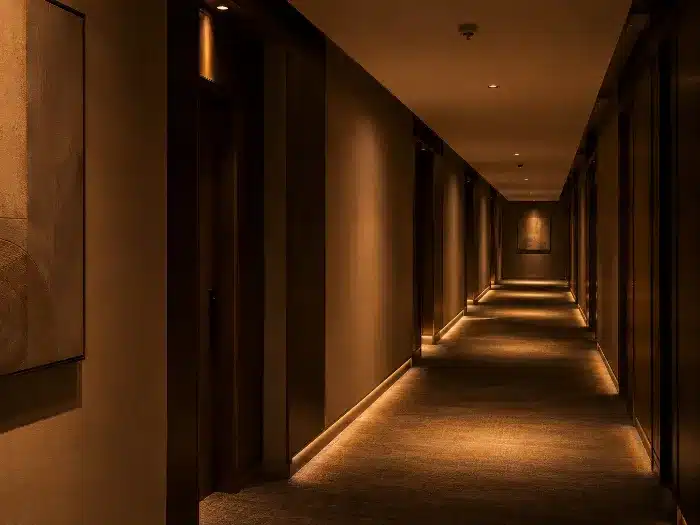
Corridor or hotel night mode lighting with low-intensity warm light
How Is Sleep-Friendly Lighting Different from Dim-to-Warm?
Dim-to-Warm lighting changes color temperature as brightness is reduced. It is useful for hospitality, residential, and restaurant lighting because it creates a warmer atmosphere at lower brightness.
But Dim-to-Warm is not automatically sleep-friendly.
A Dim-to-Warm product may still contain blue-rich energy depending on the LED design. It may also have poor dimming stability at low brightness.
Sleep-friendly lighting goes further. It considers spectrum design, melanopsin response, blue-light reduction, deep dimming, flicker control, glare control, color rendering, and measurable evidence.
ببساطة:
Dim-to-Warm is a lighting effect. Sleep-friendly lighting is a design strategy.
A complete sleep-friendly lighting solution may include Dim-to-Warm, amber light, low-blue-light spectrum design, deep dimming, smart schedules, indirect lighting, and glare-controlled fixtures.
How Can 1000K GU10 Bulbs Fit into Sleep-Friendly Lighting Design?
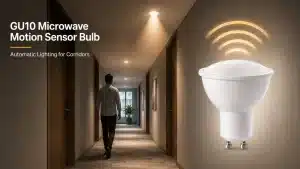
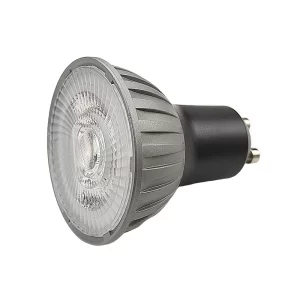
For projects that already use GU10 fixtures, a 1000K GU10 bulb can be a practical way to introduce ultra-warm night-time lighting without redesigning the entire fixture system.
Instead of replacing the whole lighting layout, project buyers can use 1000K GU10 bulbs in selected night-use zones, such as bedrooms, hotel rooms, corridors, bedside areas, lounges, or relaxation spaces.
This type of product is especially useful when the project needs a replaceable lamp format, ultra-warm night ambience, compatible GU10 fixtures, dimming control, usable color rendering, multiple beam angle options, and lower-maintenance LED performance.
For product-specific selection, TECO provides a dedicated GU10 1000K amber LED bulb for projects that need ultra-warm ambience in a replaceable GU10 format. Detailed parameters such as CCT, luminous flux, dimming type, beam angle, and compatibility should be checked on the product page or confirmed with the TECO team before project specification.
What Mistakes Should Buyers Avoid?
Sleep-friendly lighting is becoming a popular topic, but the market also contains vague and exaggerated claims. Buyers should be cautious when a product only uses emotional words without technical explanation.
Avoid products that only claim:
“better sleep”
“healthy light”
“wellness lighting”
“low blue light”
“flicker-free”
“human-centric”
These terms are not enough by themselves. A stronger product description should explain the engineering basis behind the claim.
Buyers should ask:
What is the CCT?
Is there spectrum data?
Is the blue peak reduced?
What dimming method is used?
Does it dim stably at low brightness?
Is there flicker data?
What is the CRI or TM-30 result?
Is there M/P Ratio data?
Is IEC/EN 62471 photobiological safety information available?
This approach helps separate real lighting engineering from vague marketing language.
How Should Sleep-Friendly Lighting Be Specified for B2B Projects?
For lighting brands, distributors, hotels, contractors, and project buyers, sleep-friendly lighting should be specified as a combination of product performance and application design.
A good specification may include:
intended application area
CCT or spectrum requirement
blue-light reduction target
dimming depth
flicker requirement
glare control method
زاوية الشعاع
color rendering requirement
fixture compatibility
safety or testing documentation
This is especially important for hotels, senior living projects, wellness spaces, and high-end residential interiors where comfort and reliability matter.
الإضاءة الصديقة للنوم ليست مجرد مصباح واحد. إنها نهج تصميم كامل يجمع بين مصدر الضوء، السائق، المخفت، التركيبة، البصريات، التخطيط، وسلوك المستخدم.
الخلاصة: ما الذي يجعل الإضاءة صديقة للنوم حقاً؟
الإضاءة الصديقة للنوم ليست هي نفسها الإضاءة البيضاء الدافئة العادية. إنها نهج أكثر اكتمالاً يجمع بين علم الأحياء الضوئي، التحكم في الطيف، جودة التعتيم، التحكم في الوميض، تقليل الوهج، تجسيد الألوان، والأدلة القابلة للقياس.
للمساحات الليلية مثل غرف النوم، الفنادق، الصالات، الممرات، غرف الاسترخاء، المطاعم، والشقق المفروشة، يمكن للإضاءة فائقة الدفء ذات الضوء الأزرق المنخفض أن تساعد في خلق بيئة بصرية أكثر نعومة وهدوءاً.
يمكن لمصباح LED GU10 بدرجة حرارة 1000 كلفن أن يكون جزءاً عملياً من هذه الاستراتيجية عندما يحتاج المشروع إلى شكل GU10 قابل للاستبدال، أجواء فائقة الدفء، توافق مع التعتيم، وإضاءة ليلية مريحة.
أقوى منتجات الإضاءة الصديقة للنوم ليست تلك التي تقدم أكبر ادعاءات صحية. بل هي تلك التي يمكنها شرح طيفها، أداء التعتيم، جودة اللون، القيمة التطبيقية، والأدلة الداعمة بوضوح.
هل تحتاج إلى دعم لمشاريع إضاءة الفنادق، غرف النوم، أو الاسترخاء؟ اتصل بـ TECO لمناقشة خيارات إضاءة GU10 الكهرمانية، بيانات الطيف، توافق المخفتات، اختبار العينات، ومتطلبات اختيار المشروع.
الأسئلة الشائعة
هل الإضاءة الصديقة للنوم هي نفسها الإضاءة البيضاء الدافئة؟
لا. تشير الإضاءة البيضاء الدافئة عادةً إلى درجة حرارة اللون المرئية، مثل 2700 كلفن أو 3000 كلفن. تأخذ الإضاءة الصديقة للنوم في الاعتبار المزيد من العوامل، بما في ذلك الطيف، محتوى الضوء الأزرق، جودة التعتيم، الوهج، الوميض، وتوقيت التطبيق.
لماذا تعتبر درجة حرارة 1000 كلفن مفيدة للإضاءة الليلية؟
ضوء 1000 كلفن أقرب إلى اللون الكهرماني أو ضوء الشموع منه إلى الضوء الأبيض القياسي. يمكنه خلق أجواء ليلية أكثر نعومة وأقل كثافة لغرف النوم، الفنادق، الصالات، ومناطق الاسترخاء.
هل يمكن للإضاءة الصديقة للنوم تحسين النوم؟
لا ينبغي وصفه كعلاج طبي أو ضمان لحل مشاكل النوم. وصف أفضل وأكثر أمانًا هو أن الإضاءة الصديقة للنوم تساعد في خلق بيئة مسائية أقل تحفيزًا عن طريق تقليل السطوع القاسي والضوء الغني بالأزرق.
لماذا يهم الميلانوبسين؟
تستجيب خلايا الشبكية الحساسة للميلانوبسين بقوة للضوء الأزرق حول الطول الموجي 440-460 نانومتر. لهذا السبب يجب أن تأخذ الإضاءة الصديقة للنوم في الاعتبار تصميم الطيف، وليس الدفء المرئي فقط.
ما الذي يجب على المشترين التحقق منه قبل اختيار مصباح صديق للنوم؟
يجب على المشترين التحقق من تصميم الطيف، درجة حرارة اللون المترابط، تقليل الضوء الأزرق، عمق التعتيم، أداء الوميض، التحكم في الوهج، بيانات مؤشر تجسيد اللون أو TM-30، نسبة M/P إذا كانت متاحة، ومعلومات السلامة البيولوجية الضوئية IEC/EN 62471.
المراجع
يوفر CIE S 026 إطاراً لمقاييس الإضاءة الحساسة للميلانوبسين: https://files.cie.co.at/CIE_S_026_Tutorial2021_information.pdf
تناقش هارفارد هيلث العلاقة بين التعرض للضوء الأزرق والنوم: https://www.health.harvard.edu/healthy-aging-and-longevity/blue-light-has-a-dark-side
المعاهد الوطنية للصحة / مركز المكتبة الطبية الوطنية يشرحان الميلانوبسين وتأثيرات الضوء غير البصرية: https://pmc.ncbi.nlm.nih.gov/articles/PMC4699304/
يُستخدم IEC 62471 بشكل شائع لتقييم السلامة البيولوجية الضوئية: https://webstore.iec.ch/en/publication/7076