مقدمة: لماذا وميض LED يمثل خطرًا حقيقيًا للمشروع
وميض LED هو أحد أكثر المشاكل شيوعًا في مشاريع الإضاءة التجارية.
يمكن أن يؤدي إلى:
- عدم استقرار الضوء المرئي
- تداخل الكاميرا في بيئات البيع بالتجزئة
- انزعاج في المكاتب وأماكن الضيافة
- مخاطر السلامة في البيئات ذات الآلات المتحركة
في كثير من الحالات، ما يبدو كوميض هو في الواقع التأثير الوميضي—ظاهرة مختلفة يمكن أن تشوه إدراك الحركة.
فهم الفرق ضروري من أجل:
- اختيار سائقات LED متوافقة
- تلبية معايير الامتثال الدولية
- تجنب التأخيرات المكلفة في التشغيل
فهم الفرق أمر بالغ الأهمية لاختيار سائقات LED وأنظمة التعتيم المتوافقة. لفهم أعمق لتوافق التعتيم، راجع دليلنا حول أنظمة الإضاءة LED القابلة للتعتيم.
الومياب مقابل تأثير الومياب الوامض
| ميزة | وميض | تأثير الاستروبوسكوبي |
|---|---|---|
| سبب | تقلبات شدة الضوء | التفاعل مع الحركة |
| إدراك | عدم الاستقرار المرئي (ثابت) | وهم الحركة |
| المقاييس الرئيسية | PF / FI / Pst LM | SVM |
| مخاطرة | إجهاد العين، انزعاج | خطر على السلامة |
ما هو ومياب LED؟
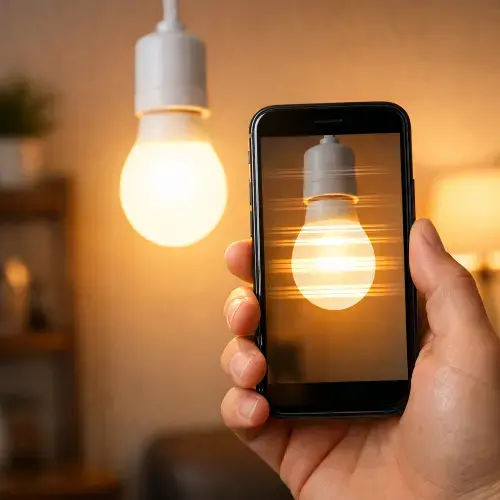
في داخل دافئ الإضاءة، تعكس شاشة هاتف ذكي وهج مصباح LED من المصابيح المعلقة القريبة، محاطة بنباتات منزلية وأرفف خشبية.
يشير وميض LED إلى تعديل الضوء الزمني, ، حيث يختلف إخراج الضوء بمرور الوقت بسبب تموج الكهرباء أو عدم استقرار السائق.
وفقًا لـ IEEE، يعتمد خطر الوميض على التردد وعمق التعديل (انظر IEEE 1789-2015).
مقاييس ومؤشرات الومياب الرئيسية
- نسبة الوميض (PF)
- مؤشر الومياب (FI)
نسبة الوميض = (L_max − L_min) / (L_max + L_min) × 100%
توصية IEEE:
- مخاطرة منخفضة: <10% تعديل (100–2000 هرتز)
- مفضل: <5% في البيئات الحساسة
رؤية هندسية
في التركيبات التجارية الحقيقية لـ GU10، أكثر من 80% من مشاكل الوميض تسببها عدم التوافق بين المخفت والسائق بدلاً من جودة شريحة LED.
ما هو التأثير الوميضي؟
ال التأثير الوميضي يحدث عندما يتفاعل الضوء المعدل مع الأجسام المتحركة، مما يخلق أوهاماً بصرية.
أمثلة:
- مراوح دوارة تبدو ثابتة
- أحزمة النقل تبدو أبطأ أو معكوسة
- حركة الآلة تُساء تفسيرها
مُعرَّف من قبل اللجنة الكهروتقنية الدولية (IEC) في IEC TR 63158:2018
(https://webstore.iec.ch/publication/29994)
مقياس رئيسي: SVM (مقياس وضوح الوهج)
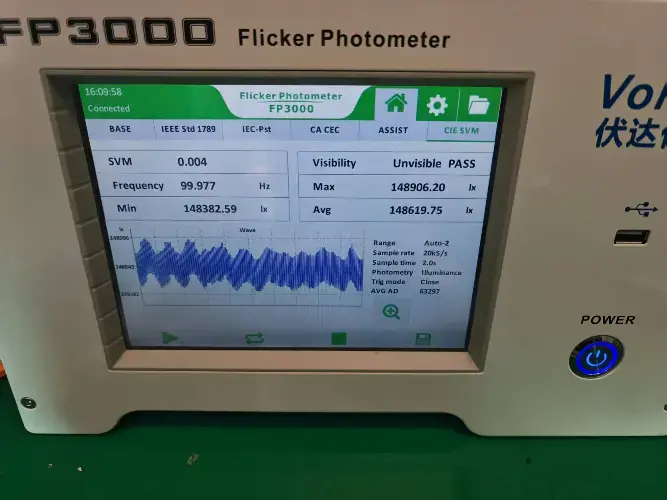
واجهة مقياس الوميض FP3000 تعرض بيانات القياس في الوقت الفعلي، بما في ذلك رسوم الموجات، نطاق التردد من 95.77 هرتز إلى 148.60 هرتز، وضوابط اختبار الوميض المرئي وغير المرئي.
- SVM ≤ 0.4 → مقبول (متطلب EU ErP)
SVM < 0.2 → مستوى منخفض المخاطر موصى به
في اللوائح الأوروبية الحديثة (اللائحة (الاتحاد الأوروبي) 2019/2020)،,
SVM ≤ 0.4 هو عتبة الامتثال الرئيسية لمنتجات LED.
الوميض قصير المدى (Pst LM) في أنظمة LED
بالإضافة إلى PF و SVM، يجب أن تأخذ أنظمة الإضاءة التجارية في الاعتبار:
Pst LM (شدة الوميض قصير المدى)
محدد في IEC 61000-3-3
ما يقيسه Pst LM
- يقيم تأثير تقلب الجهد على استقرار الإضاءة
- يعكس أداء على مستوى النظام, ، ليس فقط تصميم السائق
عتبة رئيسية
- Pst LM = 1.0 → حد الإدراك
- Pst LM < 1.0 → مقبول لأنظمة الإضاءة العامة
لماذا يهم
غالبًا ما تنتج قيم Pst العالية من:
- إمداد طاقة غير مستقر
- مخفتات غير متوافقة
- تغير كبير في الحمل
توصية هندسية
- تأكد Pst LM < 1.0
- التحقق من توافق التعتيم
- استخدم سائقيين بتنظيم إدخال مستقر
لماذا تومض مصابيح LED في التركيبات التجارية؟
في المشاريع الواقعية، عادة ما يكون الوميض ناتجًا عن عدم تطابق النظام وليس فشل المنتج.
الأسباب الشائعة
عدم توافق المخفت
- عدم تطابق TRIAC
تيار التموج في السائق
- ترشيح غير كافٍ
عدم استقرار الجهد
- شائع في المباني الكبيرة
عدم استقرار التعتيم منخفض المستوى
- أقل من 20–30% سطوع
كيفية إصلاح وميض LED ومشاكل الوهج
1. اختيار السائق
- استخدم سائقيين بتيار ثابت
- تيار التموج <5% موصى به
- Use capacitors rated ≥105°C for stability
2. Dimming System Matching
- Verify minimum load of dimmer
- Prefer trailing-edge dimmers for LED systems
3. Increase PWM Frequency
- Recommended: >20 kHz
- Eliminates visible flicker
4. System-Level Validation
- Verify Pst LM < 1.0
- Check voltage fluctuation behavior
5. Specify Compliance Metrics
- PF < 10%
- FI < 0.08
- SVM ≤ 0.4
Many flicker issues originate from incompatible dimming systems.
You can learn more in our guide on LED dimmer compatibility and common mistakes
LED Flicker Troubleshooting Checklist
- Check dimmer compatibility (TRIAC vs LED driver)
- Verify driver ripple current (<5%)
- Measure Pst LM (<1.0)
- Confirm SVM value (≤0.4 for EU compliance)
Test across full dimming range (10–100%)
This checklist helps reduce commissioning issues and field failures.
Risks in Industrial and Commercial Environments
In environments with motion:
- flicker → fatigue and discomfort
- stroboscopic effect → safety hazards
According to World Health Organization, low-frequency flicker may contribute to headaches and visual strain.
Example Risk Scenario
- 10 Hz modulation
600 RPM machinery
Can appear stationary → serious safety risk
Referenced in EU Machinery Directive 2006/42/EC
Testing Methods and Standards
Key standards include:
- IEEE 1789-2015
- IEC 61000-3-3
- IEC TR 63158
* CIE TN 006:2016
Typical Testing Methods
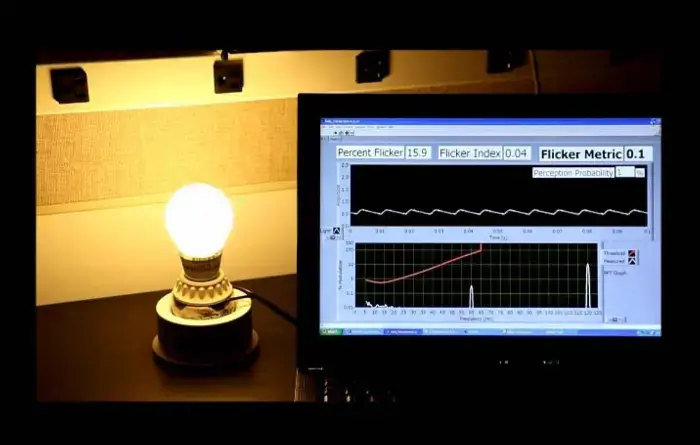
Illuminated incandescent bulb setup with an adjacent screen showing waveform graphs used to analyze light flicker index and related performance metrics in a laboratory environment.
- Oscilloscope waveform analysis
- FFT frequency analysis
- High-speed camera motion testing
Why It Matters in Retail and Hospitality
In commercial spaces:
- flicker → reduces visual comfort
- stroboscopic → disrupts perception
According to Illuminating Engineering Society (see IES RP-29-16):
lighting quality directly affects customer experience and dwell time
Cost Consideration in Commercial Projects
Flicker-free drivers may increase upfront cost by approximately 5–10%, but can significantly reduce:
- maintenance frequency
- replacement costs
- customer complaints
Quick Answers for Specifiers
Q: What is the difference between flicker and stroboscopic effect?
A: Flicker is brightness variation; stroboscopic effect is motion illusion.
Q: What is the key EU requirement?
A: SVM ≤ 0.4 (ErP regulation)
Q: What is acceptable flicker level?
A:
- PF < 10%
- FI < 0.08
- Pst LM < 1.0
Q: How to verify supplier claims?
A:
- Request third-party reports (UL / ETL)
- Verify PF / SVM / Pst LM data
Conclusion: Engineering Value
Flicker and stroboscopic effects directly impact:
- safety
- الراحة
- system reliability
A properly specified system ensures:
- compliance
- stable performance
- reduced lifecycle cost
توصية هندسية بين الشركات
For commercial lighting projects:
- verify PF / FI / SVM / Pst LM
- ensure driver-dimmer compatibility
- validate system performance before installation
Early validation helps avoid:
- commissioning delays
- warranty claims
- rework costs