ما هو المحول الإلكتروني؟ مبدأ العمل، التوافق مع LED وتطبيقات MR16
آخر تحديث في 3 مارس 2026
تُستخدم المحولات الإلكترونية على نطاق واسع في أنظمة الإضاءة منخفضة الجهد، خاصةً لمصابيح الهالوجين من نوع MR16 ومصابيح LED. ومع ذلك، فإن العديد من المثبتين والمشترين يسيئون فهم كيفية عملها - والأهم من ذلك، متى يجب أو لا يجب استخدامها.
يشرح هذا الدليل:
- ما هو المحول الإلكتروني
- كيف يعمل (مبدأ التبديل عالي التردد)
- الاختلافات بين المحولات الإلكترونية والمغناطيسية
- مخاطر التوافق مع مصابيح LED
- متطلبات الحد الأدنى للحمل
- اعتبارات التعتيم
- معايير السلامة ذات الصلة
إذا قمت بتحديد أو تركيب إضاءة منخفضة الجهد، فإن فهم هذه العوامل يمكن أن يمنع الوميض، والسخونة الزائدة، والتعطل المبكر.
ما هو المحول الإلكتروني؟

محول TECO الإلكتروني موضوع في غلاف أبيض، يعرض معلومات النموذج، نطاق قدرة 6–30 واط، وعلامات متعددة للأمان والمطابقة.
إن محول إلكتروني هو جهاز تحويل طاقة عالي التردد يقوم بخفض جهد الشبكة (عادة 110 فولت أو 220 فولت تيار متردد) إلى جهد منخفض (شائعاً 12 فولت تيار متردد) لتطبيقات الإضاءة.
على عكس المحولات المغناطيسية التقليدية، تعمل المحولات الإلكترونية بترددات تبديل عالية (عادة 20 كيلوهرتز–40 كيلوهرتز)، مما يسمح لها أن تكون أصغر حجماً وأخف وزناً.
وفقاً للجنة الكهروتقنية الدولية (IEC)، يجب أن تلتزم المحولات المستخدمة في أنظمة الإضاءة بمعايير السلامة مثل IEC 61558 (سلامة المحولات، المفاعلات، وحدات إمداد الطاقة)
المصدر: https://webstore.iec.ch/publication/6109
كيف يعمل المحول الإلكتروني؟
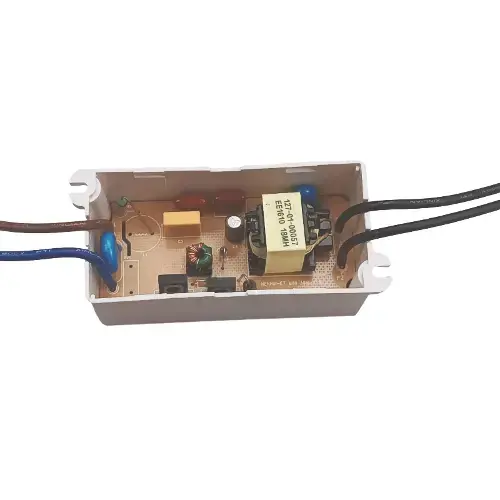
افتح الوحدة الإلكترونية في غلاف أبيض، مع عرض مكونات اللوحة المطبوعة مثل المحول، والمكثفات، والمقاومات، والأسلاك المستخدمة في تطبيقات تشغيل مصابيح LED.
تستخدم المحولات الإلكترونية دائرة تبديل عالية التردد بدلاً من قلب حديدي ثقيل.
خطوات العمل الأساسية:
- يتم تقويم التيار المتردد الرئيسي إلى تيار مستمر.
- يتم تحويل التيار المستمر بتردد عالٍ (عشرات الكيلوهرتز).
- محول فيرايت صغير يقوم بخفض الجهد.
- يقدم الخرج تيار متردد منخفض الجهد مناسب لمصابيح الهالوجين.
نظراً لأنها تعمل بتردد عالٍ، يمكن أن يكون قلب المحول أصغر بكثير من المحول المغناطيسي التقليدي بتردد 50/60 هرتز.
لماذا يهم التردد العالي
- حجم أصغر
- أخف وزناً
- كفاءة أعلى
- استخدام أقل للمواد
ومع ذلك، فإن التردد العالي يؤدي أيضاً إلى مشكلات توافق – خاصة مع أحمال LED.
المحول الإلكتروني مقابل المحول المغناطيسي: الاختلافات الرئيسية
| ميزة | محول إلكتروني | محول مغناطيسي |
|---|---|---|
| تردد التشغيل | 20–40 كيلوهرتز | 50/60 هرتز |
| الحجم والوزن | مضغوط وخفيف الوزن | أكبر وأثقل |
| متطلبات الحمل الأدنى | نعم | عادة لا |
| الكفاءة | أعلى | معتدل |
| التوافق مع مصابيح LED | محدود (يعتمد على التصميم) | Often more stable |
| Dimming Compatibility | Must match dimmer type | More forgiving |
Magnetic transformers use laminated iron cores and operate directly at mains frequency. While heavier, they are often more tolerant of low-wattage LED loads.
Electronic Transformer vs LED Driver (Important Distinction)
Many people confuse electronic transformers with LED drivers.
They are NOT the same.
| معامل | محول إلكتروني | مشغل LED |
|---|---|---|
| Output Type | 12V AC | DC (Constant Current or Constant Voltage) |
| Designed For | Halogen lamps | LEDs |
| Load Sensitivity | عالية | Controlled |
| Flicker Risk with LED | Common | Minimal (if quality driver) |
Most electronic transformers were originally designed for halogen MR16 lamps — not LED retrofits.
For LED installations, a dedicated LED driver is generally the more stable solution.
Reference: U.S. Department of Energy – LED Driver Reliability
https://www.energy.gov/eere/ssl/led-driver-reliability
Minimum Load Requirement (Critical Issue)
One of the most common causes of flicker is the minimum load requirement.
Electronic transformers often specify a load range, for example:
20W – 60W
If the connected LED load is below the minimum threshold, the transformer may:
- وميض
- Shut down intermittently
- Produce audible noise
- Overheat
Halogen lamps naturally meet minimum load requirements. LED replacements often do not.
This is why replacing 50W halogen MR16 with 5W LED MR16 can cause instability when using old electronic transformers.
Why Do MR16 LEDs Flicker with Electronic Transformers?
Common causes:
- Insufficient load
- منظم الإضاءة غير متوافق
- High-frequency interference
- Non-stabilized output waveform
- Transformer designed for resistive load (halogen), not electronic load (LED)
IEEE Std 1789-2015 discusses flicker and modulation risks in lighting systems.
المصدر: https://ieeexplore.ieee.org/document/7118618
Applications of Electronic Transformers
Electronic transformers are still widely used in:
- MR16 halogen track lighting
- Recessed low-voltage fixtures
- إضاءة العرض
- Landscape lighting
- Retail accent lighting
They are suitable when:
- Load meets minimum requirement
- Halogen lamps are used
- تم تركيب المخفتات المتوافقة
Dimming Compatibility
تتطلب المحولات الإلكترونية مخفتات قطع طور متوافقة.
نوعان رئيسيان:
- الحافة الأمامية (TRIAC)
- الحافة الخلفية (ELV)
استخدام المخفت الخاطئ يمكن أن يسبب:
- طنين
- وميض
- نطاق تخفيف محدود
يجب التحقق من توافق التعتيم على مستوى النظام — المحول + المصباح + المخفت.
متى يجب استخدام محول إلكتروني؟
استخدم المحول الإلكتروني عندما:
✔ تشغيل مصابيح الهالوجين MR16
✔ الحمل يلبي الحد الأدنى من الواط
✔ الوزن والحجم أمران بالغا الأهمية
✔ تم تأكيد توافق المخفت المناسب
تجنب المحول الإلكتروني عندما:
✘ استخدام مصابيح LED MR16 مرتدة منخفضة الواط
✘ مطلوب تخفيف عميق
✘ الحمل يتغير بشكل متكرر
✘ الاستقرار أمر بالغ الأهمية (عرض الضيافة / البيع بالتجزئة المتميز)
في مشاريع LED، عادةً ما تكون مشغلات LED ذات التيار الثابت أو الجهد الثابت أكثر موثوقية.
اعتبارات السلامة والامتثال
يجب أن تلتزم المحولات الإلكترونية المستخدمة في أنظمة الإضاءة بما يلي:
- IEC 61558 (سلامة المحولات)
- EN 61347 (معدات التحكم بالمصابيح)
- اللوائح الكهربائية المحلية
يمكن أن يؤدي اختيار المحول غير المناسب إلى:
- ارتفاع درجة الحرارة
- تقليل عمر المصباح الافتراضي
- الضوضاء الكهربائية
- مخاطر السلامة
الأسئلة المتداولة (FAQ)
هل يمكنني استخدام محول إلكتروني مع لمبة LED MR16؟
أحياناً، ولكن فقط إذا:
- حمل LED يلبي الحد الأدنى المطلوب
- لمبة LED مُوسومة بأنها “متوافقة مع المحول الإلكتروني”
- تم التحقق من نظام التعتيم
خلاف ذلك، فإن سائق LED أكثر أماناً.
ما الفرق بين المحولات الإلكترونية والمغناطيسية؟
تعمل المحولات الإلكترونية بتردد عالي وتكون مدمجة. تعمل المحولات المغناطيسية بتردد التيار الرئيسي وتكون أثقل ولكن غالباً ما تكون أكثر استقراراً مع أحمال LED.
لماذا تومض لمبة LED 12 فولت لدي بعد استبدال الهالوجين؟
السبب المحتمل:
- عدم تطابق الحمل الأدنى
- عدم توافق التعتيم
- عدم استقرار الموجة عالية التردد
هل المحولات الإلكترونية أكثر كفاءة؟
عمومًا نعم، بسبب التشغيل عالي التردد وتقليل الفقد في القلب.
الخلاصة
أحدثت المحولات الإلكترونية ثورة في الإضاءة منخفضة الجهد بتقليل الحجم وتحسين الكفاءة. ومع ذلك، فقد صُممت في الأصل لأحمال الهالوجين.
عند استخدامه مع مصابيح LED الحديثة المركبة، يجب تقييم التوافق بعناية – خاصة الحد الأدنى للحمل، ونوع التعتيم، واستقرار الموجة.
فهم الفرق بين المحولات الإلكترونية والمحولات المغناطيسية ومشغلات LED أمر ضروري لتصميم نظام إضاءة موثوق.
هل تحتاج مساعدة في اختيار حل الطاقة المناسب؟
إذا كنت تحدد إضاءة LED من نوع MR16 أو GU10 أو منخفضة الجهد للمشاريع التجارية أو التجزئة، فإن اختيار حل الطاقة الصحيح أمر بالغ الأهمية.
تدعم تيكو مشتري الأعمال التجارية من خلال:
- سائقات LED متوافقة مع MR16
- إرشادات توافق المحول الإلكتروني
- التحقق من نظام التعتيم
- دعم هندسي قبل النشر الجماعي
أخبرنا بنوع الحمل، والواط، ومتطلبات التعتيم.
سنُساعدك في اختيار حل يعمل في الميدان — وليس فقط على الورق.
الموقع الإلكتروني: https://www.tecolite.com
البريد الإلكتروني: [email protected]