
Architectural Lighting Design: Principles, Techniques, and Applications in Modern Buildings
Introduction
Architectural lighting design is not simply about adding luminaires to a building. In commercial and hospitality projects, it is a system-level discipline that affects visual hierarchy, façade identity, guest experience, safety, maintenance access, and long-term operating cost. When lighting is poorly planned, the result is usually visible on site: uneven façade brightness, glare complaints, hidden architectural details, repeated aiming adjustments, and expensive rework after installation.
For developers, contractors, and lighting distributors, these issues quickly become commercial problems. Improper beam selection, poor fixture placement, or mismatched output levels can delay handover, increase lift access costs, and create ongoing maintenance burdens. A well-engineered architectural lighting scheme, by contrast, uses light to reveal form, material, and spatial depth while maintaining consistency, efficiency, and serviceability across the full project lifecycle.
This guide is written for project buyers, lighting distributors, contractors, developers, and commercial lighting teams selecting LED lighting for hotels, retail buildings, façades, lobbies, entrance canopies, and mixed-use developments. Its focus is not only design intent, but also the specification, installation, verification, and maintenance decisions that determine whether the intended effect survives real project delivery.
Executive Summary
Architectural lighting design uses controlled light distribution, placement, beam selection, glare control, and fixture specification to enhance building form, texture, and spatial perception. For commercial buildings, hotels, façades, lobbies, and entrance canopies, effective LED architectural lighting depends not only on visual design but also on optical control, environmental protection, thermal management, control compatibility, installation detail, and maintenance access.
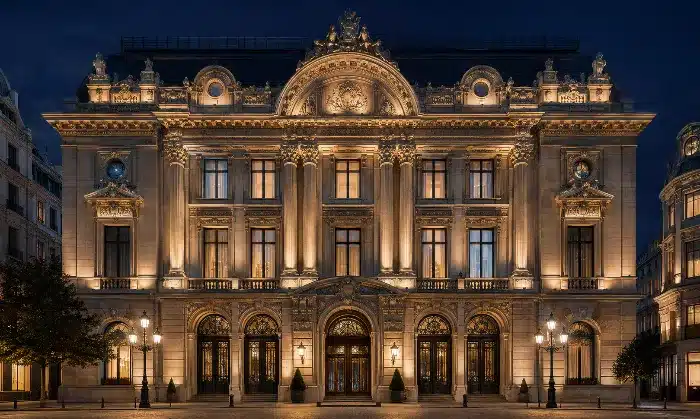
architectural lighting design facade illumination modern building
What Is Architectural Lighting Design?
On-Site / Commercial Reality
In project delivery, architectural lighting design defines how a building is seen after dark and how consistently that effect can be reproduced across the site. If the concept is visually strong but technically weak, commissioning teams spend excessive time correcting beam overlaps, adjusting mounting positions, or replacing fixtures that do not suit the surface or viewing distance. This directly affects labor cost, façade access planning, and final acceptance.
Deep Dive & Engineering Solution
Architectural lighting design is the controlled use of light to enhance a building’s geometry, material texture, depth, and spatial perception. It applies both to exterior and interior architecture, but in modern buildings the most demanding applications are often façades, entrances, canopies, columns, atriums, circulation areas, and feature walls.
The core objective is not maximum brightness. It is visual readability. Light should reveal the architectural intent by controlling contrast ratios1, luminance hierarchy2, shadow definition, and observer viewpoint. For example:
| Design Consideration | Basic Approach | Engineered Approach | Impact on Maintenance / ROI |
|---|---|---|---|
| Brightness | Increase output | Balance output with beam control and spacing | Fewer re-aiming visits and lower overlighting cost |
| Architectural emphasis | Flood entire surface | Highlight key forms, recesses, and textures | Better visual effect with fewer fittings |
| Visual comfort | Ignore viewing angle | Control glare and shield direct source visibility | Fewer complaints and reduced retrofit work |
| System efficiency | Select by wattage only | Evaluate optics, efficacy, and application geometry | Lower energy and replacement cost |
Modern LED lighting systems make this approach more practical because they allow tighter optical control, more stable output, and better integration into architectural surfaces than legacy sources. This enables designers to accentuate building form without excessive energy use, while maintaining visual comfort for occupants and visitors.
Factory Note
From a manufacturing perspective, the most successful architectural lighting projects are not the brightest. They are the ones where optics, housing position, mounting detail, and surface reflectance were all considered before installation. That is what prevents visible striping, dark bands, and repeated site adjustment.
Key Objectives of Architectural Lighting
On-Site / Commercial Reality
In hotels, retail complexes, mixed-use developments, and public buildings, lighting must serve multiple stakeholders at once: architect, operator, contractor, and end user. If the lighting only looks good in renderings but fails in wayfinding, comfort, or maintenance accessibility, the project carries long-term operational penalties.
Deep Dive & Engineering Solution
The main objectives of architectural lighting are to strengthen visual identity, improve spatial perception, reveal material character, support circulation, and maintain operational efficiency. In practical terms, lighting should help the building read correctly at night.
Key objectives include:
-
Enhancing building form
Light can emphasize verticality, depth, rhythm, symmetry, or massing. On façades, this often means selecting beam spreads and aiming angles that reinforce structural lines rather than flatten them. -
Revealing texture and materiality
Stone, concrete, wood, perforated metal, and ribbed panels respond differently to incident light. Proper grazing or angled illumination can reveal relief and finish quality that remain invisible under broad, flat light. -
Improving spatial perception
Architectural lighting shapes how a space feels. Higher vertical illuminance3 can make entrances appear safer and more welcoming, while layered light in lobbies and corridors creates depth and orientation. -
Supporting visual comfort
Light should direct attention without causing discomfort glare4. This is especially critical in hospitality projects where guest-facing areas require both atmosphere and comfort. -
Maintaining energy efficiency
Modern LED systems allow precise output control and effective beam distribution, making it possible to achieve architectural emphasis with lower connected load than traditional broad-distribution methods.
Factory Note
In large hospitality projects, lighting objectives often conflict unless they are ranked early. If visual drama is prioritized without considering viewing angle and maintenance access, the final system may look impressive on opening night but perform poorly over time.
Common Architectural Lighting Techniques
On-Site / Commercial Reality
Many failures in architectural lighting come from applying the wrong technique to the wrong surface. A fixture may be specified correctly in electrical terms but still produce weak visual results if the technique does not match the material, setback, or mounting condition. This is why mock-up validation is often more valuable than theoretical lux calculations alone.
Deep Dive & Engineering Solution
Several architectural lighting techniques are widely used to enhance building surfaces and forms:
Wall Washing
Wall washing provides broad, even illumination across a vertical surface. It is used for smooth façades, lobby walls, circulation spaces, and large background planes where uniformity is more important than texture emphasis.
Grazing Lighting
Grazing places light close to the surface so that shadows reveal relief, joints, or material texture. It is effective for stone walls, ribbed concrete, brick, and decorative cladding, but highly sensitive to fixture alignment and construction tolerances.
Facade Spotlighting
Facade spotlighting uses directional luminaires to emphasize specific architectural features such as columns, cornices, arches, signage zones, and upper-level articulation. It is useful when selective emphasis is preferred over uniform illumination.
Silhouette Lighting
Silhouette lighting creates contrast by backlighting or edge-lighting a feature so its outline stands out against a brighter or darker background. This technique is common in feature screens, parapets, sculptural elements, and architectural cut-outs.
| Technique | Best Use | Visual Effect | Impact on Maintenance / ROI |
|---|---|---|---|
| Wall washing | Smooth vertical planes | Uniform brightness and spatial openness | Predictable results, lower adjustment time |
| Grazing lighting | Textured materials | Strong shadow and surface detail | High visual value, but tighter installation tolerance |
| Facade spotlighting | Feature emphasis | Focused accents and hierarchy | Efficient if beam aiming is stable |
| Silhouette lighting | Edges and forms | Graphic outline and contrast | Can reduce fixture quantity if integrated early |
Modern LED luminaires improve all four techniques because optical systems can be selected more precisely. Instead of relying on excess wattage, designers can use controlled beam shapes, shielding, and spacing to create a stronger effect with less wasted light.
Factory Note
During hotel commissioning, grazing failures usually come from construction deviation rather than fixture defect. If the mounting line is not straight or the wall finish varies too much, even a good luminaire will produce inconsistent shadows. Site coordination matters as much as fixture selection.
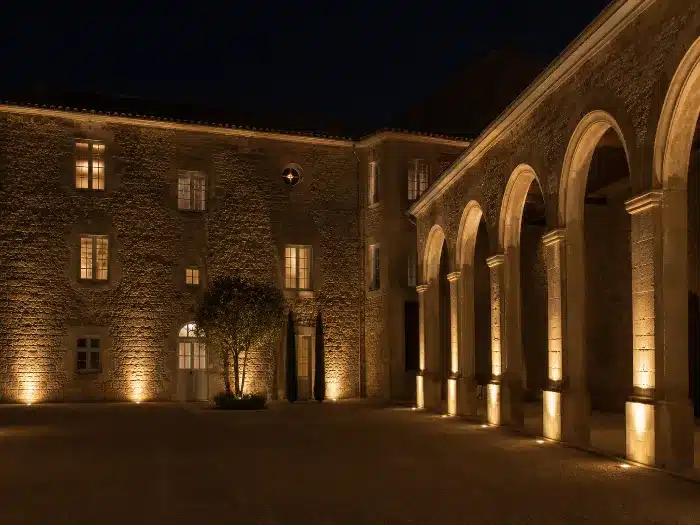
wall washing grazing facade spotlighting silhouette lighting
Facade Lighting Design Strategies
On-Site / Commercial Reality
Facade lighting is one of the most visible parts of a project, so errors are immediately exposed. Uneven brightness, spill light into guestrooms, and overexposed façade zones often lead to client dissatisfaction and post-handover modifications. Access for correction may require boom lifts, rope access, or scaffolding, which escalates cost rapidly.
Deep Dive & Engineering Solution
A sound façade lighting strategy begins with the architecture itself. The designer should first identify which elements deserve emphasis: vertical fins, recessed windows, columns, entrances, rooflines, material transitions, or ornamental details. The lighting system should then support these visual priorities rather than applying uniform output everywhere.
Effective façade strategies typically include:
-
Layered hierarchy
Use a background layer for overall readability, then add accent layers to define key features. -
Controlled contrast
Contrast should support form, not create visual confusion. Excessive hotspotting can flatten depth perception instead of enhancing it. -
Viewpoint-based design
The façade may be seen from street level, vehicle approach, upper floors, or across a plaza. Beam direction and shielding should respond to primary sightlines. -
Integration with building envelope
Fixture recessing, mounting brackets, drainage detail, and service access should be resolved early. A visually clean façade often depends on concealed but maintainable luminaire placement. -
Material-sensitive lighting
Reflective glass, polished metal, and light stone react very differently from matte concrete or textured cladding. The same luminaire can produce completely different results depending on reflectance and surface structure.
Real projects also expose details that drawings often hide. Glass curtain walls can reflect a narrow beam into guestrooms or toward drivers even when the luminaire itself is shielded. On stone façades, the approved sample panel may have a different reflectance or joint depth from the final production batch. Bracket tolerances of only a few degrees can shift long-throw beams away from columns, while cable entries facing upward can collect water despite the luminaire carrying a suitable IP rating.
Outdoor façade lighting should also be reviewed against applicable limits for obtrusive light, light trespass, and source intensity. CIE 150:2017 provides guidance for controlling the adverse effects of outdoor lighting on people and the surrounding environment.5 Local planning, environmental-zone, roadway, and curfew requirements may impose additional limits.
Factory Note
From a manufacturing perspective, façade lighting performs best when the project team confirms actual mounting distance and aiming angle before production release. Small geometric changes on drawings can produce large differences in beam overlap and visual uniformity on site.
Choosing Beam Angles for Architectural Lighting
On-Site / Commercial Reality
Beam angle selection is one of the most common sources of on-site correction. If the beam is too narrow, the façade shows visible hotspots and scalloping. If it is too wide, the architectural feature loses definition and light spills into unwanted areas. Correcting this after installation often means replacing optics or entire fittings.
Deep Dive & Engineering Solution
Beam angle6 determines how light is distributed from the luminaire to the architectural surface. It should be selected based on mounting distance, target size, surface texture, and the intended visual effect.
General engineering logic:
- Narrow beams are suitable for long-throw accents, columns, and precise feature highlighting.
- Medium beams provide balanced emphasis for moderate setbacks and common façade features.
- Wide beams are used for broader surfaces, shorter mounting distances, and more uniform coverage.
| Beam Type | Typical Application | Visual Result | Impact on Maintenance / ROI |
|---|---|---|---|
| ضيق | Columns, details, long setbacks | Strong emphasis, high contrast | High precision, but sensitive to aiming error |
| متوسط | General feature lighting | Balanced coverage and control | Good commissioning flexibility |
| Wide | Wall washing, broad surfaces | Soft and even appearance | Lower hotspot risk if spacing is correct |
Beam angle cannot be chosen in isolation. The effective result also depends on:
- Distance from luminaire to target surface
- Fixture tilt angle
- Surface reflectance
- Fixture spacing
- Mounting height
- Viewer position
In LED architectural lighting, optical consistency across batches is particularly important. Two fixtures with similar wattage but different optical control can produce very different field results. For this reason, beam selection should always be validated with photometric data and, where possible, a site mock-up.
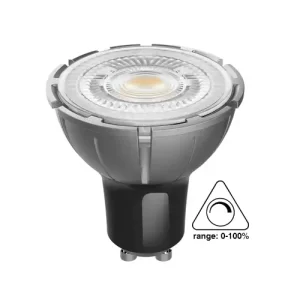
This is also relevant when GU10, MR16, ES111, AR111, or PAR spotlights are used for indoor architectural accents in lobbies, retail areas, hospitality spaces, and feature displays. Similar wattage values can produce different beam edges, spill levels, glare, and aiming results. Exterior façade applications should instead be evaluated as a complete outdoor luminaire system, with the required IP rating, mounting orientation, sealing, drainage, and environmental suitability confirmed separately.
Factory Note
During hotel commissioning, many so-called brightness problems are actually beam angle problems. Increasing wattage rarely solves poor optical matching. Correct beam geometry usually delivers a better result with lower connected load.
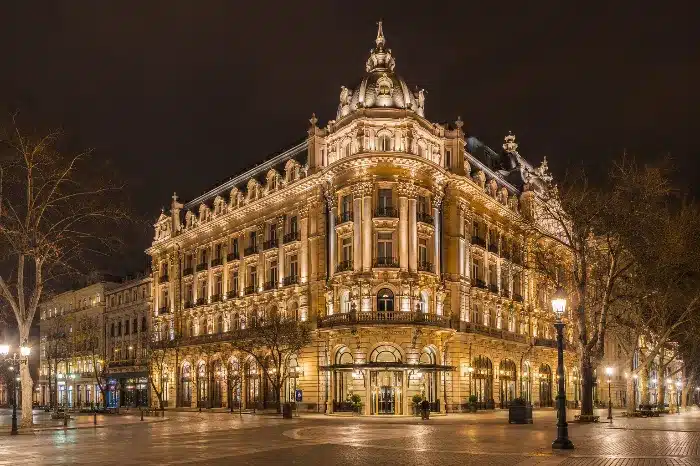
choosing beam angles architectural lighting facade spotlights
Lighting Placement and Installation Considerations
On-Site / Commercial Reality
Even a well-specified fixture can fail visually if placement is wrong. Installation tolerances, bracket depth, cable routing, drainage, and service access all affect final performance. In façade and high-ceiling applications, poor placement creates expensive maintenance exposure because every adjustment may require specialist access equipment.
Deep Dive & Engineering Solution
Lighting placement should be coordinated with architecture, structure, and maintenance planning from the early design stage. Key considerations include:
- Offset from surface
This determines spread, shadow formation, and glare visibility. - Mounting alignment
Uneven fixture spacing is especially visible in grazing and linear wall-washing applications. - Aiming stability
Brackets must resist vibration, wind load, and accidental movement during maintenance. - Ingress protection
Exterior architectural luminaires must be specified with suitable environmental sealing to withstand water and dust exposure. - Thermal management
LED performance and lifetime depend heavily on heat dissipation7. Enclosed cavities and decorative housings can reduce thermal margin if not engineered properly. - Maintenance access
Drivers, connectors, and aiming points should be accessible without major façade dismantling.
An IP code should not be treated as proof that the complete installation is protected. IEC 60529 classifies enclosure protection against access, dust, and water, but the finished system also depends on installation orientation, cable glands, connectors, junction boxes, seals, and drainage.8 A luminaire can remain sealed while water enters through an upward-facing gland or an inadequately protected remote connection. Drip loops, downward-facing cable entries, compatible glands, and serviceable junction boxes should therefore be reviewed as part of the mounting detail.
Thermal expansion and repeated temperature cycling also affect long-term performance. Gaskets can lose compression, aiming brackets can move, and concealed drivers can operate above their intended temperature when façade cavities have limited airflow. In coastal locations, salt exposure makes bracket material, fastener grade, coating preparation, and dissimilar-metal contact part of the lighting specification rather than a separate architectural detail.
| Installation Factor | Poor Practice | Engineered Practice | Impact on Maintenance / ROI |
|---|---|---|---|
| Fixture spacing | Estimated on site | Based on photometric layout | Less rework and better uniformity |
| Mounting bracket | Decorative only | Structural and adjustable | Stable aiming over time |
| Driver access | Hidden without access plan | Serviceable location | Lower maintenance labor cost |
| Exterior sealing | IP rating ignored | Environment-specific selection | Lower failure rate and reduced replacement cycle |
LED Architectural Lighting Fixture Specification Checklist
For project procurement, the luminaire schedule should define enough information to compare suppliers on application performance rather than wattage alone:
| Specification Item | What Should Be Confirmed | Why It Matters |
|---|---|---|
| Photometric data | IES or LDT file for the proposed optic | Supports spacing, aiming, spill-light, and simulation review |
| Beam angle and field distribution | Beam width, field shape, and optical consistency | Prevents hotspots, dark gaps, and poor overlap |
| CCT and color quality | CCT tolerance, CRI, and batch consistency | Protects material appearance and visual continuity |
| Glare control | Shield, snoot, louvre, recess, or cut-off detail | Reduces direct source visibility and complaints |
| Environmental protection | IP rating, installation orientation, glands, connectors, and drainage | Prevents moisture-related failures in the complete system |
| Thermal design | Ambient limit, housing temperature, and driver location | Protects lumen maintenance, color stability, and service life |
| Controls | Verified protocol, driver model, load limits, and compatibility | Avoids flicker, unstable dimming, and commissioning delays |
| Mechanical installation | Bracket range, locking method, fasteners, and corrosion protection | Keeps aiming stable and supports outdoor durability |
| Sample verification | Full-size mock-up using actual material and mounting distance | Reduces mismatch before bulk production |
This checklist is especially important when comparing LED architectural lighting fixtures from different suppliers. Similar wattage and lumen values can produce very different beam shapes, field uniformity, glare levels, color consistency, thermal behavior, and installation results. Supplier comparison should therefore be based on verified application data and project conditions rather than headline electrical ratings alone.
For OEM and project-based lighting orders, TECO states that it can provide adjustable beam-angle options, product specifications, IES photometric files, pre-production samples, dimming compatibility information, and OEM/ODM customization. These services are most useful when the proposed LED bulbs, spotlights, drivers, or lighting fixtures are reviewed against the actual application before bulk production; they should not be treated as automatic approval for an exterior or wet-location installation.
Factory Note
From a manufacturing perspective, the reliability of an architectural luminaire is not only about LED quality. Connector sealing, cable entry, driver temperature, and bracket rigidity are often the real factors that determine site failure rate.
Architectural Lighting Design Examples
On-Site / Commercial Reality
Examples are useful because architectural lighting is highly context-dependent. A technique that works on a textured stone hotel façade may perform poorly on a glass office tower. Project teams need application-based thinking rather than generic fixture selection.
Deep Dive & Engineering Solution
Typical examples include:
Hotel Facade
A hotel façade often benefits from layered lighting. Wall washing can establish the building mass, while narrow-beam spotlights define columns or entrance canopies. Grazing may be used selectively on textured stone surfaces to enhance luxury perception.
Lobby Feature Wall
A lobby feature wall may use grazing lighting to reveal material depth, while concealed linear lighting highlights recesses or cove details. Vertical illumination improves spatial comfort and supports visual focus in arrival zones.
Commercial Tower Podium
A podium façade may combine silhouette lighting on architectural fins with spotlighting on key branding or entrance features. This approach supports identity without uniformly over-lighting the entire building.
Landscape-Integrated Exterior
When architecture and landscape overlap, uplighting of trees, walls, and sculptural surfaces should be coordinated so that one layer does not visually overpower the other. Architectural lighting should maintain hierarchy and avoid visual clutter.
| Project Type | Lighting Priority | Fixture and Installation Consideration |
|---|---|---|
| Hotel façade | Luxury appearance, guest comfort, and controlled spill | Narrow or medium optics, concealed placement, shielding, and guestroom sightline review |
| Retail mall exterior | Brand visibility and clear nighttime hierarchy | Layered façade accents, wall washing, control zoning, and maintainable mounting positions |
| Lobby feature wall | Material texture and arrival atmosphere | Grazing or controlled vertical light, suitable CCT, high color quality, and accurate alignment |
| Commercial tower podium | Identity, scale, and entrance emphasis | Selective accents, silhouette lighting, and coordinated viewing points |
| Outdoor entrance canopy | Safety, visual guidance, and weather resistance | Controlled glare, suitable environmental protection, drainage, and service access |
A useful mock-up should reproduce the real mounting distance, surface material, bracket position, and viewing direction. A tabletop sample or a luminaire aimed at a white wall can confirm basic operation, but it cannot reliably reveal façade reflections, joint shadows, beam overlap, or glare from the primary observer position.
Factory Note
In large hospitality projects, the strongest results usually come from restraint. Selective emphasis on the right architectural elements often creates a more premium appearance than trying to illuminate every surface equally.

architectural lighting design examples hotel facade lobby exterior
Energy Efficiency in Architectural Lighting
Energy efficiency is no longer only a sustainability topic. For commercial operators, it directly affects connected load, running cost, heat management, and maintenance interval. Over-lighting a façade may satisfy an initial visual target but increase operating expense for years.
Modern LED architectural lighting allows designers to achieve stronger visual control with lower power consumption than older lamp technologies. The key advantage is not only efficacy9, but optical precision. When more light reaches the intended surface and less light is wasted, the system becomes both visually effective and electrically efficient.
Energy-efficient architectural lighting depends on:
- Correct beam angle selection
- Proper fixture spacing
- Effective dimming or control zoning
- Avoidance of unnecessary overlighting
- High driver efficiency
- Stable thermal design to preserve LED output over time
| Efficiency Factor | Low-Performance Approach | High-Performance Approach | Impact on Maintenance / ROI |
|---|---|---|---|
| Output planning | Add excess wattage | Match output to visual task | Lower energy cost |
| Optical control | Broad spill light | Precise beam distribution | More usable light per watt |
| Controls | Full output all night | Zoned scheduling and dimming | Reduced operating cost |
| Thermal design | Heat ignored | Controlled junction temperature | Longer service life |
Modern systems also improve visual comfort because precise LED optics can reduce glare and unwanted spill while still highlighting the intended architectural features. This is especially important in mixed-use projects where façade lighting must coexist with guestrooms, offices, or public circulation.
Many energy-saving claims are meaningless without optical context. A lower-watt luminaire with poor beam control can consume less power per fitting but still require more fittings to achieve the target effect. System efficiency must therefore be evaluated at application level rather than from luminaire wattage alone.
Common Architectural Lighting Design Mistakes
Most architectural lighting mistakes become visible only after dark, when correction is hardest and most expensive. Once access equipment is mobilized and handover pressure increases, even minor specification errors can become major commercial issues.
Common mistakes include:
-
Using brightness instead of hierarchy
More light does not automatically improve architecture. Excessive output often destroys depth and produces visual fatigue. -
Ignoring surface texture
Smooth and textured materials require different lighting methods. Applying wall washing to a deeply textured wall may suppress the relief that grazing would reveal. -
Selecting the wrong beam angle
This causes hotspots, dark gaps, or excessive spill. -
Poor fixture placement
Even quality luminaires cannot compensate for incorrect offset, spacing, or tilt. -
Neglecting glare control
Visible bare sources reduce visual comfort and damage the premium perception of the project. -
No maintenance strategy
Concealed fixtures without access planning often become long-term liabilities. -
No mock-up verification
Architectural lighting should be tested against actual materials whenever possible, especially for façade and hospitality applications.
During hotel commissioning, the most expensive mistakes are often not electrical failures. They are visual mismatches discovered too late: the wrong beam spread, an inaccurate mounting line, reflected glare into guestrooms, or emphasis placed on the wrong architectural element. These issues consume site time because every correction requires physical access and renewed nighttime review.
Future Trends in Architectural Lighting
Future-ready architectural lighting is increasingly defined by flexibility, control integration, and maintainable performance. For commercial assets, this matters because buildings now operate under stronger energy, sustainability, and user-experience requirements than in previous project cycles.
Several trends are shaping modern architectural lighting:
-
Higher optical precision
Luminaires are becoming more application-specific, with optics tailored to façade details, narrow reveals, and controlled vertical illumination. -
Integrated controls
Dimming, scheduling, zoning, and scene management are increasingly standard in hospitality and commercial projects, allowing buildings to adapt output by time, event, or occupancy pattern. -
Reduced visual intrusion
Designers increasingly prefer compact, concealed luminaires that preserve daytime architectural appearance. -
Improved thermal and driver engineering
Long-term stability is becoming more important than initial output alone, especially where maintenance access is difficult. -
Sustainability and lifecycle thinking
Specifiers are placing more weight on serviceability, energy use, replacement interval, and total cost of ownership rather than headline lumen values only.
Modern LED systems will continue to expand design possibilities, but the engineering principle remains unchanged: better control of light distribution leads to better architectural outcomes with lower lifetime cost.
The market is moving away from generic façade lighting and toward project-specific optical and mechanical solutions. This is a positive direction because architectural lighting works best when the luminaire, control method, mounting detail, and maintenance plan are matched to the actual building geometry.
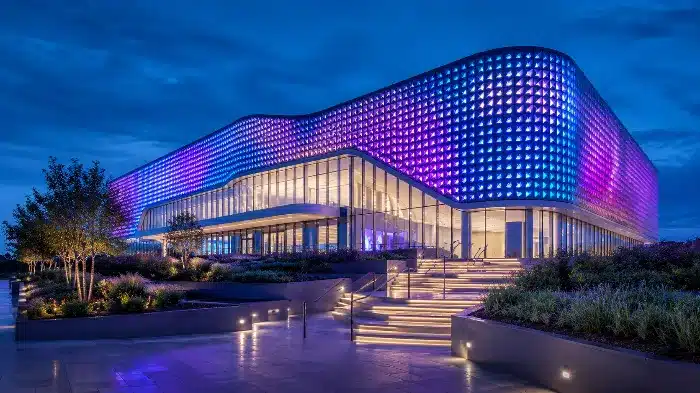
future trends architectural lighting smart led facade systems
Conclusion: Enhancing Architecture Through Light
Architectural lighting design is most effective when it treats light as part of the building language rather than as a separate electrical layer. By controlling beam angle, placement, contrast, and visual hierarchy, designers can enhance form, reveal texture, and improve spatial perception without unnecessary energy use or maintenance burden.
For commercial and hospitality projects, the real value lies in reliability, commissioning efficiency, and long-term service performance. A well-engineered lighting scheme reduces rework, supports visual comfort, and protects the architectural intent long after handover.
B2B Engineering Recommendation
For architectural lighting projects, fixture selection should be reviewed before bulk production against the actual drawings, mounting distance, façade material, target viewing direction, environmental exposure, beam requirement, and control method. Photometric files and full-size samples should be used where the visual or access risk is high.
Project buyers, distributors, contractors, and lighting teams can send façade elevations, reflected ceiling plans, mounting details, target CCT, control requirements, and site photographs to the TECO engineering team for an application review before ordering. Recommendations should be confirmed through photometric assessment, compatibility checks, and project-specific mock-up testing rather than relying on wattage or catalogue beam descriptions alone.
Footnotes
-
Contrast ratio refers to the luminance relationship between brighter and darker areas in a visual scene, affecting emphasis and readability. ↩
-
Luminance hierarchy is the structured arrangement of brightness levels to guide visual attention and define architectural importance. ↩
-
Vertical illuminance is the amount of light falling on a vertical surface, important for facial recognition, wall perception, and spatial clarity. ↩
-
Discomfort glare is visual discomfort caused by excessive brightness or poor source visibility within the observer’s field of view. ↩
-
CIE 150:2017, Guide on the Limitation of the Effects of Obtrusive Light from Outdoor Lighting Installations, provides guidance and recommended limits for controlling adverse effects from outdoor lighting. ↩
-
Beam angle is the spread of light emitted from a luminaire, usually defined by the angle where intensity falls to 50% of peak value. ↩
-
Heat dissipation is the process of transferring thermal energy away from LEDs and drivers to maintain performance and service life. ↩
-
IEC 60529 defines the IP classification system for enclosure protection against access, solid foreign objects, dust, and water. Project suitability still depends on the complete installation detail. ↩
-
Efficacy is the amount of light output produced per unit of electrical power, typically expressed in lumens per watt. ↩

 English
  French
  German
  Italian
  Spanish
  Portuguese
  Arabic
  Russian
  Japanese
  Chinese