LED- vs. Halogen-Spots: Welche sind besser?
Zuletzt aktualisiert am 3. März 2026
Halogen-Spots waren einst der Standard für Akzentbeleuchtung, Einzelhandelsdisplays und Wohnraum-Downlights. Heute dominieren LED-Spots den Markt.
Aber sind Halogenlampen tatsächlich schlechter – oder sind LEDs einfach effizienter?
Dieser Leitfaden bietet einen neutralen, datengestützten Vergleich von LED- vs. Halogen-Spots und behandelt:
- Energieeffizienz
- Lebenserwartung
- Lichtqualität
- Wärme und Sicherheit
- Umweltauswirkungen
- 5-Jahres-Gesamtkosten
Alle Behauptungen werden durch anerkannte Branchenquellen gestützt.
Schneller Vergleich: LED vs. Halogen
| Merkmal | LED-Strahler | Halogenlampe |
|---|---|---|
| Stromverbrauch (Typisches GU10-Äquivalent) | 6–8W | 50–60W |
| Lichtausbeute | 90–150 lm/W | 15–25 lm/W |
| Lebenserwartung | 25.000–50.000 Stunden | 1.000–2.000 Stunden |
| Wärmeabgabe | Niedrig | Sehr hoch |
| Dimmung | Erfordert kompatiblen Treiber | Hervorragende native Dimmung |
| 5-Jahres-Betriebskosten | Niedriger | Deutlich höher |
Datenquellen:
U.S. Department of Energy (DOE) – LED-Beleuchtungsgrundlagen
https://www.energy.gov/eere/ssl/led-lighting
Energy Star Beleuchtungsvergleich
https://www.energystar.gov/products/lighting_fans/light_bulbs
1. Energieeffizienz: Wie viel Strom verbraucht jede?
Halogenlampen erzeugen Licht durch Erhitzen eines Wolframfadens auf hohe Temperaturen (ca. 2.500–3.000°C). Der Großteil der Energie wird in Wärme statt sichtbares Licht umgewandelt.
LEDs nutzen Elektrolumineszenz – Elektronen rekombinieren im Halbleitermaterial und emittieren Licht direkt, mit viel weniger Wärmeverlust.
Laut dem US-Energieministerium:
- LED-Beleuchtung verbraucht mindestens 75% weniger Energie als Glüh- und Halogenbeleuchtung.
- LEDs halten bis zu 25-mal länger als herkömmliche Glühbirnen.
Quelle:
DOE – LED-Beleuchtungsübersicht
https://www.energy.gov/eere/ssl/led-lighting
Praktisch gesprochen:
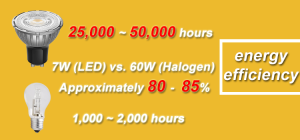
Der Austausch eines 50W-Halogen-Spots durch eine 7W-LED reduziert den Energieverbrauch um etwa 85%.
2. Lebensdauer und Wartung
Halogen-Lebensdauer:
1.000–2.000 Stunden
LED-Lebensdauer:
25.000–50.000 Stunden
Dieser Unterschied beeinflusst die Wartungskosten erheblich – insbesondere bei:
- Einzelhandelsumgebungen
- Gastronomieprojekte
- Hohe Decken
- Gewerbliche Installationen
Häufiger Halogen-Austausch erhöht die Arbeitskosten und Ausfallzeiten.
Source reference:
Energy Star Product Performance Requirements
https://www.energystar.gov/products/lighting_fans/light_bulbs
3. Heat Output and Safety
Halogen bulbs operate at extremely high temperatures:
- Filament temperature: 2,500–3,000°C
- Outer glass temperature: can exceed 200–500°C
High heat increases:
- Burn risk
- Fire hazard
- HVAC load
LED spotlights operate at significantly lower surface temperatures due to higher energy conversion efficiency.
In enclosed fixtures or insulated ceilings, heat accumulation becomes a serious concern with halogen.
4. Light Quality and Color Rendering
One historical advantage of halogen bulbs:
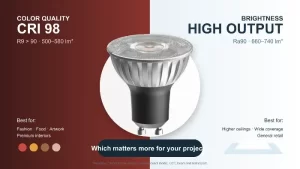
CRI (Color Rendering Index) is naturally close to 100.
LED technology has significantly improved:
- Standard LED CRI: 80–90
- High-end LED CRI: 95+
For professional retail or hospitality projects, high-CRI LEDs now match halogen color fidelity while maintaining efficiency.
CRI definition reference:
Internationale Beleuchtungskommission (CIE)
https://cie.co.at/
Color quality explanation:
DOE – Color Quality of Light
https://www.energy.gov/eere/ssl/color-quality
5. Environmental Impact
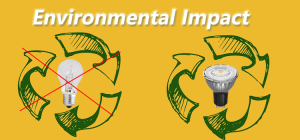
Energy consumption directly influences carbon footprint.
According to the U.S. DOE:
Switching to LED lighting in the U.S. could save hundreds of terawatt-hours of electricity annually, significantly reducing greenhouse gas emissions.
Quelle:
DOE Solid-State Lighting Report
https://www.energy.gov/eere/ssl
Additionally, the European Union has phased out many halogen lamps due to efficiency regulations.
EU Ecodesign Lighting Regulation:
https://energy-efficient-products.ec.europa.eu/ecodesign-and-energy-label/legislative-framework_en
This reflects global regulatory movement away from halogen technology.
6. 5-Year Total Cost Comparison
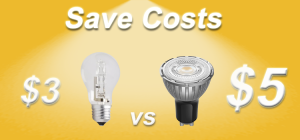
Assume:
- Daily use: 5 hours
- Electricity cost: $0.15 per kWh
Halogen (50W)
Energy use per year:
50W × 5h × 365 = 91.25 kWh
Annual energy cost ≈ $13.69
Plus multiple replacements over 5 years.
LED (7W)
Energy use per year:
7W × 5h × 365 = 12.78 kWh
Annual energy cost ≈ $1.92
Over 5 years, energy savings exceed initial price difference.
Total cost of ownership strongly favors LED.
7. When Might Halogen Still Be Used?
Despite efficiency disadvantages, halogen may still be chosen when:
- Perfect dimming curve is required
- Extremely low upfront cost is critical
- Existing legacy systems are not LED compatible
However, compatibility issues can often be resolved with proper LED driver selection.
8. Professional Recommendation Summary
For most applications in 2026:
LED spotlights offer:
- Dramatically higher efficiency
- Significantly longer lifespan
- Lower operating cost
- Reduced heat risk
- Regulatory compliance
Halogen’s primary advantage — color rendering and dimming smoothness — is now achievable with modern high-CRI dimmable LED systems.
Schlussfolgerung
Halogen bulbs are not “bad” technology — but they are outdated in efficiency-driven environments.
For residential, retail, hospitality, and commercial projects, LED spotlights provide measurable advantages in:
- Energy savings
- Maintenance reduction
- Sicherheit
- Environmental compliance
- Long-term operating cost
Choosing between LED and halogen is no longer primarily about light quality — it is about efficiency and total lifecycle performance.
Upgrading from halogen to LED requires attention to:
- Beam angle equivalency
- Color temperature matching
- Dimming compatibility
- Enclosed fixture heat conditions
- Driver stability
Before large-scale retrofits, technical evaluation can prevent flicker issues, premature failure, or light distribution mismatch.
If you are planning a halogen-to-LED conversion project and require engineering guidance on:
- GU10 or MR16 replacements
- High-CRI spotlight selection
- Dimming system compatibility
- Commercial retrofit specification
Our technical team can assist with optical matching and driver evaluation to ensure smooth transition and long-term reliability.
Provide your existing fixture type, dimmer model, and project scope for professional assessment.