LED与卤素射灯:哪个更胜一筹?
最后更新于2026年3月3日
卤素射灯曾是重点照明、零售展示和住宅筒灯的标准选择。如今,LED射灯已主导市场。.
但卤素灯泡真的更差吗?还是LED只是更高效?
本指南以中立、数据支撑的方式对比LED与卤素射灯,涵盖以下方面:
- 能源效率
- 寿命
- 光质
- 热量与安全
- 环境影响
- 5年总成本
所有声明均得到公认行业来源的支持。.
快速对比:LED vs 卤素灯
| 特点 | LED 射灯 | 卤素灯泡 |
|---|---|---|
| 功耗(典型GU10等效值) | 6–8W | 50–60瓦 |
| 发光效能 | 90–150 流明/瓦 | 15–25 流明/瓦 |
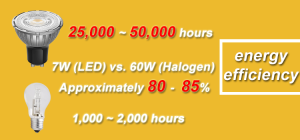
| 寿命 | 25,000–50,000小时 | 1,000–2,000 小时 |
| 热量输出 | 低 | 非常高 |
| 调光性能 | 需兼容驱动器 | 卓越的原生调光 |
| 5年运营成本 | 降低 | 显著更高 |
数据参考:
美国能源部(DOE)– LED照明基础知识
https://www.energy.gov/eere/ssl/led-lighting
能源之星照明对比
https://www.energystar.gov/products/lighting_fans/light_bulbs
1. 能效:每种灯具的功耗是多少?
卤素灯泡通过将钨丝加热至高温(约2,500–3,000°C)产生光线。大部分能量转化为热量而非可见光。.
LED采用电致发光——电子在半导体材料内复合直接发光,热量浪费极少。.
根据美国能源部数据:
- LED照明使用 至少节省75%的能量 相比白炽灯和卤素照明。.
- LED寿命 长达25倍 相比传统灯泡。.
来源:
美国能源部 – LED照明概述
https://www.energy.gov/eere/ssl/led-lighting
实际上:
用7W LED替换50W卤素聚光灯可降低约85%的能耗。.
2. 寿命与维护
卤素灯寿命:
1,000–2,000 小时
LED寿命:
25,000–50,000小时
这一差异显著影响维护成本——尤其是在以下场景:
- 零售环境
- 酒店项目
- 高天花板
- 商业安装
频繁更换卤素灯会增加人工成本和停机时间。.
来源参考:
能源之星产品性能要求
https://www.energystar.gov/products/lighting_fans/light_bulbs
3. 热量输出与安全性
卤素灯泡在极高温度下工作:
- 灯丝温度:2,500–3,000°C
- 外层玻璃温度:可超过200–500°C
高温增加:
- 灼伤风险
- 火灾隐患
- 暖通空调负荷
LED射灯因更高的能量转换效率,工作时表面温度显著更低。.
在封闭式灯具或隔热天花板中,卤素灯的热量积聚成为一个严重问题。.
4. 光质与显色性
卤素灯泡的一项历史优势:
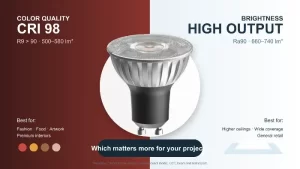
显色指数(CRI)天然接近100。.
LED技术已显著改进:
- 标准LED CRI:80–90
- 高端LED显色指数:95+
针对专业零售或酒店项目,高显色指数LED灯现已达到卤素灯的色彩保真度,同时保持高效能。.
CRI定义参考:
国际照明委员会(CIE)
https://cie.co.at/
色彩质量说明:
DOE – 光的色彩质量
https://www.energy.gov/eere/ssl/color-quality
5. 环境影响
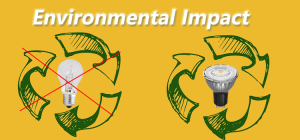
能耗直接影响碳足迹。.
根据美国能源部:
在美国改用LED照明每年可节省数百太瓦时电力,显著减少温室气体排放。.
来源:
美国能源部固态照明报告
https://www.energy.gov/eere/ssl
此外,由于能效法规,欧盟已逐步淘汰许多卤素灯。.
欧盟生态设计照明法规:
https://energy-efficient-products.ec.europa.eu/ecodesign-and-energy-label/legislative-framework_en
这反映了全球法规逐步淘汰卤素技术的趋势。.
6. 五年总成本对比
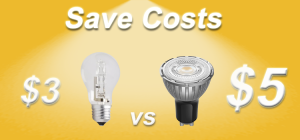
假设:
- 每日使用:5小时
- 电费:每千瓦时$0.15
卤素灯(50W)
每年能源使用量:
50W × 5小时 × 365天 = 91.25千瓦时
年度能源成本 ≈ $13.69
加上5年内的多次更换。.
LED(7W)
每年能源使用量:
7W × 5h × 365 = 12.78 千瓦时
年能源成本 ≈ $1.92
五年内,节能效益超过初始价格差异。.
总体拥有成本明显倾向于LED。.
7. 何时仍可能使用卤素灯?
尽管能效较低,卤素灯在以下情况仍可能被选用:
- 需具备完美的调光曲线
- Extremely low upfront cost is critical
- Existing legacy systems are not LED compatible
However, compatibility issues can often be resolved with proper LED driver selection.
8. Professional Recommendation Summary
For most applications in 2026:
LED spotlights offer:
- Dramatically higher efficiency
- Significantly longer lifespan
- Lower operating cost
- Reduced heat risk
- 法规合规性
Halogen’s primary advantage — color rendering and dimming smoothness — is now achievable with modern high-CRI dimmable LED systems.
结论
Halogen bulbs are not “bad” technology — but they are outdated in efficiency-driven environments.
For residential, retail, hospitality, and commercial projects, LED spotlights provide measurable advantages in:
- Energy savings
- Maintenance reduction
- 安全性
- Environmental compliance
- Long-term operating cost
Choosing between LED and halogen is no longer primarily about light quality — it is about efficiency and total lifecycle performance.
Upgrading from halogen to LED requires attention to:
- Beam angle equivalency
- Color temperature matching
- Dimming compatibility
- Enclosed fixture heat conditions
- Driver stability
Before large-scale retrofits, technical evaluation can prevent flicker issues, premature failure, or light distribution mismatch.
If you are planning a halogen-to-LED conversion project and require engineering guidance on:
- GU10 or MR16 replacements
- High-CRI spotlight selection
- Dimming system compatibility
- Commercial retrofit specification
Our technical team can assist with optical matching and driver evaluation to ensure smooth transition and long-term reliability.
Provide your existing fixture type, dimmer model, and project scope for professional assessment.