Iluminación LED Residencial de Alto Rendimiento: Principios de Diseño, Especificaciones y Decisiones del Mundo Real
La iluminación residencial a menudo se trata como una ocurrencia tardía: elegir una bombilla, enroscarla y esperar que se vea bien. Pero el costo de una iluminación mediocre no es sutil. Mala visibilidad, fatiga ocular, distorsión del color, desorden visual, ambiente inconsistente entre espacios. Y para las casas modernas con diseños abiertos, techos altos y superficies reflectantes, las apuestas son más altas.
La tecnología LED resolvió algunas de las antiguas ineficiencias, pero también introdujo complejidad: compatibilidad del controlador, distribución del haz, uniformidad de CCT, precisión espectral, comportamiento de regulación, cargas térmicas. Un propietario puede no importarle, pero cualquiera que diseñe, suministre o especifique iluminación para proyectos residenciales necesita tomar decisiones que sean consistentes, duraderas y técnicamente defendibles.
Este artículo describe objetivos medibles, flujos de trabajo de diseño prácticos y perspectivas basadas en lo que realmente funciona, no en lo que luce bien en un folleto.
1. Por qué el LED importa en la iluminación residencial
LED no es una moda. Es una mejora en eficiencia, una mejora en control y una mejora en calidad de color.
Números reales:
- 90–120 lm/W para lámparas residenciales comunes
- Vida útil nominal de 25.000 a 50.000 horas (si se gestiona el calor)
- 70–95% menos calor que el halógeno
- 85–95 CRI es alcanzable con una penalización mínima de eficacia
- 15–20% reducción de energía alcanzable únicamente mediante regulación
Estos no son revolucionarios. Pero juntos, remodelan cómo se instala, mantiene y convive con la iluminación.
1.1 Eficiencia, con advertencias
LED es eficiente. Hasta que no lo es.
Controladores deficientes, bajo factor de potencia, alta corriente de arranque, estrangulamiento térmico en luminarias cerradas.
Si desea que los LED realmente ahorren en facturas:
- Objetivo ≥100 lm/W para lámparas residenciales generales
- Factor de potencia ≥0,9 para zonas de alto uso
- Evite luminarias cerradas a menos que estén específicamente clasificadas
Y recuerda: 8 luminarias empotradas funcionando 4 horas/día a 60W frente a 10W no es una diferencia pequeña.
La diferencia de energía anual puede exceder $100–150/año por habitación en regiones de alto costo.
1.2 El confort visual es medible
Aquí es donde el LED realmente cambia el diseño.
No porque sea “suave” o “natural”.
Pero porque permite:
- Espectros controlados
- Color preciso (≥90 CRI; Rf ≥85)
- Regulación de baja parpadeo
- Conformación del haz, no solo del reflector
La mala iluminación es fácil de detectar.
Simplemente rara vez se mide.
1.3 La vida útil está ligada al calor
Las tasas de supervivencia son curvas pronunciadas.
Muchas fallas de LED son fallas del controlador, no fallas del emisor.
Una regla general:
- Luminarias abiertas: bien
- Semicerrado: utilice equivalentes de 15–30W
- Cerrado: utilice lámparas de bajo calor y pocos lúmenes
Si instalas lámparas PAR de 15W en botes de 3” sin flujo de aire, no culpes al LED cuando fallen a las 6,000 horas.
2. Lo que debe lograr la iluminación residencial (funcionalmente)
Los espacios residenciales no son espacios comerciales. Pero cada vez cumplen funciones similares: trabajo, interacción, presentación, presencia digital.
La iluminación debe resolver cuatro problemas simultáneamente:
- Visibilidad (tareas, seguridad, navegación)
- Precisión del color (skin tone, materials, food, art)
- Spatial modeling (layering, depth, contrast)
- Comfort (glare, flicker, CCT dynamics)
Most homes fail 2–4.
Why?
Builders install uniform wide-beam downlights, equal spacing, equal power, equal CCT, and zero control.
The result:
Bright but flat.
Or dim but inconsistent.
Lighting should treat rooms as visual environments, not boxes.
3. A Practical Workflow for Residential Lighting Design
A lighting plan is not picking bulbs.
It’s solving rooms.
Step 1: Define activity zones

Not “living room.”
Zones.
Ejemplos:
- TV zone
- Reading zone
- Dining zone
- Circulation zone
Each needs different light.
Step 2: Set target illuminance
Typical residential targets:
| Space/Task | Target (lux) |
|---|---|
| Living ambient | 150–300 |
| Leyendo | 300–500 |
| Kitchen task | 500–800 |
| Dining | 100–200 |
| Bathroom vanity | 200–400 vertical |
| Bedroom ambient | 50–150 |
| Office desk | 500–800 |
These are not strict.
They’re direction.
Step 3: Assign fixture types

Ejemplos:
- 4” BR retrofit for ambient
- PAR20/30 for accent/task
- Linear under-cabinet for shadow control
- A19 warm-dim for comfort
A room needs more than one.
Step 4: Define beam distributions
Simple rule:
- Ambient: wide beam
- Task: medium beam
- Accent: narrow beam
Numbers:
- Wide: 90–120°
- Medium: 40–60°
- Narrow: 10–25°
Ceiling height matters.
3m ceiling with 120° beams = floor wash, no modeling.
Step 5: Control strategy
- Dimmer per zone
- Scene presets
- Smart scheduling
- Avoid mixing dimmer technologies
Smart bulbs are a last resort.
Not a system.
4. Choosing LED Lamp Formats: What Works Best
Residential lighting rarely uses fixtures with architectural optics. Lamps must compensate.
4.1 A-lamps: comfort, not performance
Best use:
- Dormitorios
- Table lamps
- Lounge seating
Targets:
- 2700K warm-dim
- CRI ≥ 90
- 800–1100 lm
Avoid 5000K A-lamps.
They make wood and skin look dead.
4.2 BR lamps: ambient fill, with compromise

Best use:
- Living rooms with cans
- Pasillos
- Low ceilings
Targets:
- Beam 100–120°
- 800–1200 lm
- 2700–3000K
Downside:
Flat light.
Needs accent lighting to balance.
4.3 PAR lamps: the underrated hero
Best use:
- Countertops
- Art walls
- Dining focal points
- High ceilings
Targets:
- Beam 15–40°
- 600–1200 lm
- 3000–3500K for task
Opinion:
More homes should use PAR beams.
They add geometry.
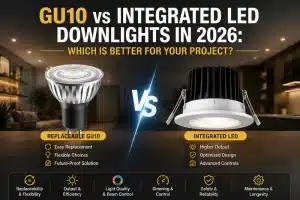
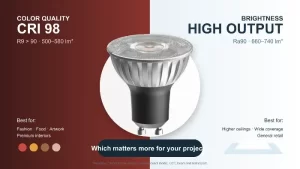
4.4 MR16 / GU10: precise, compact
Best use:
- Tracks
- Niche display
- Accent
Targets:
- Beam 10–36°
- CRI ≥ 95 recommended
GU10 warm-dim makes great evening light.
MR16 + 12V drivers: can be messy.
4.5 Globes (G25): face-based lighting
Best use:
- Bathroom vanity
Goals:
- Vertical illuminance
- Shadow reduction
Avoid top-only ceiling lighting at mirrors.
It adds 10 years to your face.
5. Color Temperature and Spectrum: Real Strategies

Warm looks good.
Cool feels clean.
Neutral balances both.
But that’s not the full story.
5.1 Typical residential targets
| Space | CCT |
|---|---|
| Living | 2700–3000K |
| Cocina | 3000–4000K |
| Dining | 2700K |
| Dormitorio | 2200–2700K |
| Baño | 3000–3500K |
| Oficina | 3500–4000K |
5.2 What is “too cool”?
Opinion:
- 4000K in bedrooms is a mistake.
- 5000K anywhere is rarely justified.
Unless you’re growing plants or doing surgery.
5.3 CRI and TM-30 matter more than CCT
Practical thresholds:
- CRI ≥ 90
- Rf ≥ 85
- Rg 95–105
These numbers affect:
- Skin
- Wood
- Meat
- Art
- Clothing
Residential spaces often display all of these.
5.4 Warm-dim is underrated
Warm-dim solves a simple problem:
- Daytime needs clarity
- Nighttime needs comfort
Going from 3000K → 2200K as you dim feels natural.
Not “smart”.
Just sensible.
6. Beam Angles, Ceiling Heights, and Application Examples
Lighting cannot be separated from geometry.
Case 1: 2.4 m ceiling
BR30, 120° beams
Result: Even wash, limited contrast
Add:
- Two PAR20s with 25° beams on art
- One floor lamp at 2700K warm-dim
Instant depth.
Case 2: 3.0 m ceiling
BR floods underperform
Too much spill
Use:
- PAR30 narrow beams
- Higher candela
- 3000–3500K
Results:
- Surfaces light up
- Faces readable
- No cave effect
Case 3: Long corridor
Even spacing, wide beams = tunnel
Better:
- Alternating beams
- 40–60° beams with scallops
- Low-level floor lighting
Not necessarily practical.
But better.
7. Control Systems That Actually Work
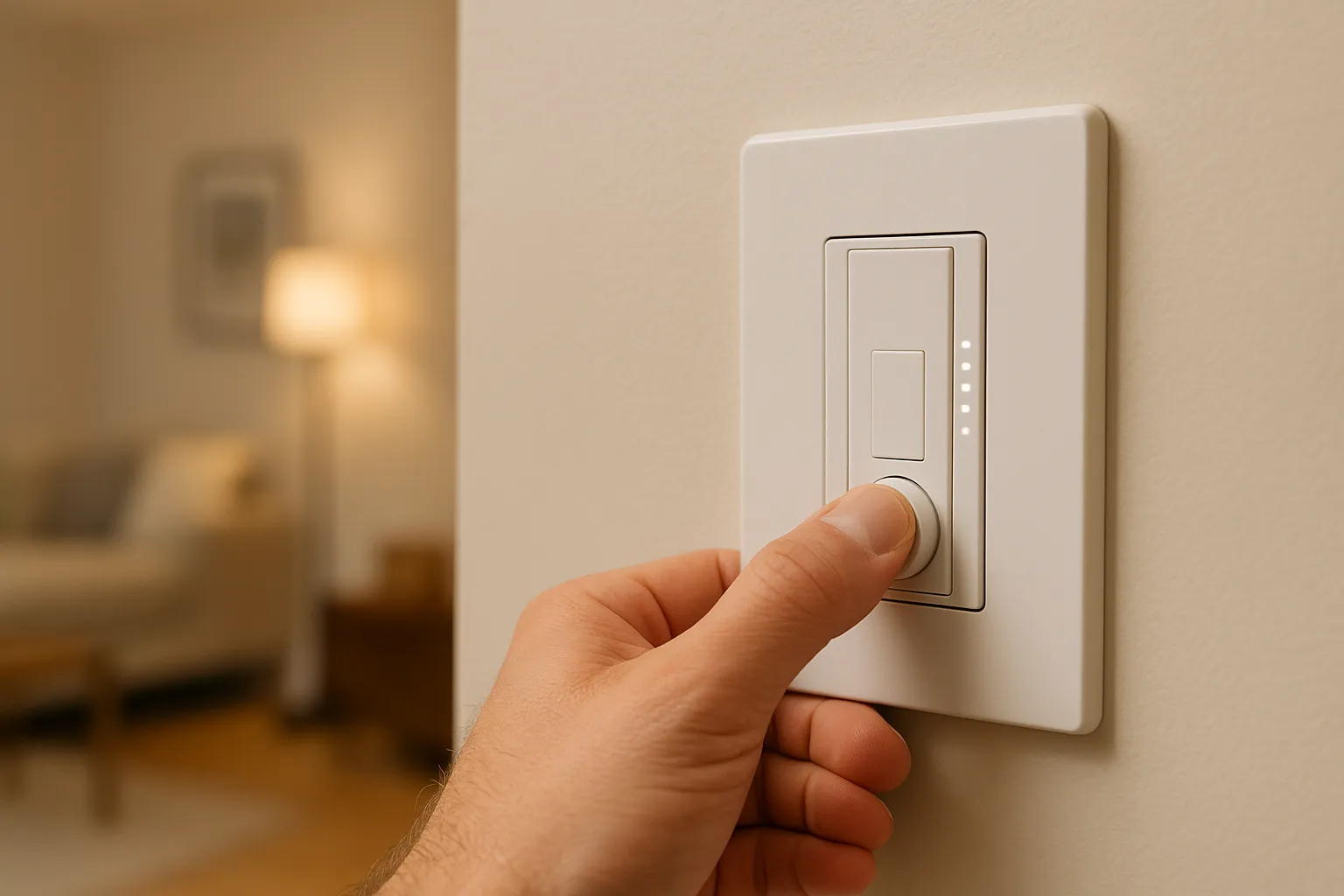
Smart lamps are fine for rentals.
Not for homes with 30+ fixtures.
Better approach:
- Smart dimmers controlling dumb lamps
- Scene presets
- Adaptive scheduling
And avoid mixing:
- TRIAC
- ELV
- 0–10V
- DALI
It creates compatibility problems that look like “flicker”, but are actually “electrical negotiation failures”.
8. Common Residential Lighting Mistakes
Too much uniform light
Kills depth.
Makes rooms feel larger but emptier.
Too many high-beam fixtures
Glare.
Hotspots.
Annoyance.
Overreliance on overhead lighting
Humans communicate at face level.
Light should, too.
Random CCT mixing
2700K next to 4000K?
No.
Ignoring vertical illumination
Vertical surfaces define space.
Horizontal lux is overrated.
9. A Practical Residential Specification Cheat Sheet
Minimum targets
- CRI ≥ 90
- Rf ≥ 85
- PF ≥ 0.9
- Flicker <5% (IEEE-1789 recommended)
- 100–120 lm/W for general use
Beam angles
- Ambient: 90–120°
- Task: 40–60°
- Accent: 10–25°
CCT by category
- Social: 2700K
- Work: 3500–4000K
- Evening: 2200–2700K
Warranty
- 3 years minimum
- 5 years preferred
- Not negotiable for enclosed fixtures
10. A Case Study: Lighting a 90 m² Apartment
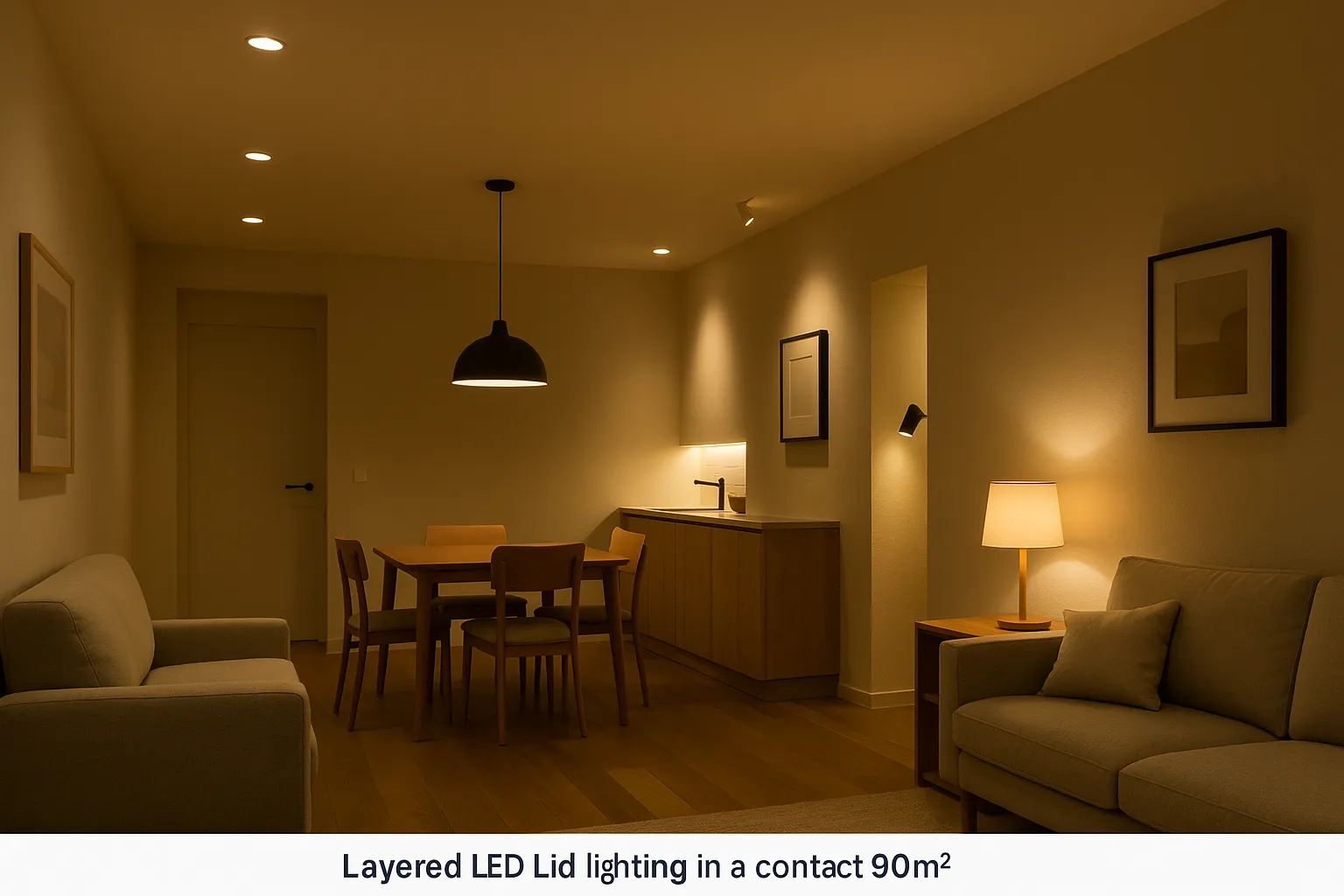
Spaces:
- Living + dining
- Cocina
- 2 bedrooms
- 2 bathrooms
- Office nook
Equipment:
- BR30 ambient: 14 pcs
- PAR20 accent: 6 pcs
- A19 warm-dim: 8 pcs
- Under-cabinet LED linear: 5m
Metrics:
- Average ambient: 200–250 lux
- Accent: 400–600 lux
- Vanity vertical: 250 lux
Cost:
- Retrofit lamps: $500–$800
- Controls: $200–$500
- Total: $700–$1,300
Outcome:
- Cleaner color
- Deeper spaces
- Lower fatigue
- 30–40% lower energy use
Not dramatic.
But noticeable.
11. Final Perspective

Residential lighting is not complicated.
But it is misunderstood.
Most people install too many wide beams.
Not enough directional beams.
Too cool.
Too overhead.
Zero control.
LED gives tools to fix this:
- High CRI
- Controlled beams
- Intelligent dimming
- Low heat
- Efficient lumens
But tools only matter if someone uses them well.
The best residential lighting is not bright.
It’s layered, controlled, color-accurate, and spatially intentional.
Good lighting is quiet.
But unmistakable.
We supply LED solutions with:
High CRI (90–95)
Warm-dim technology
Controlled beam optics (10°–120°)
Low-flicker dimming performance
GU10, PAR20/30, BR, A19 formats
Adecuado para:
Residential fit-outs
Hospitality upgrades
Builder/developer packages
Distributor portfolios
If you need technical datasheets, samples, or pricing, feel free to request them.
Send us your product list or target specifications—
We’ll reply with compatible options and lead times