高性能住宅LED照明:设计原则、技术规范与实际决策
住宅照明常被视为事后考虑——选个灯泡,拧上,希望效果尚可。但平庸照明的代价并非微不足道。视野不佳、眼疲劳、色彩失真、视觉杂乱、空间氛围不统一。而对于拥有开放式布局、高天花板和反光表面的现代住宅,其影响更为显著。.
LED技术解决了部分传统低效问题,但也带来了复杂性:驱动器兼容性、光束分布、色温一致性、光谱精度、调光特性、热负荷。业主或许不在意,但任何为住宅项目设计、供应或指定照明方案者,都需做出一致、耐用且技术可靠的决策。.
本文概述了可衡量的目标、实用设计流程以及基于实际有效而非宣传册美观的视角。.
1. 为何LED在住宅照明中至关重要
LED并非一时潮流。它是能效升级、控制升级与色彩品质升级。.
实际数据:
- 常见家用灯具为90–120流明/瓦
- 额定寿命25,000–50,000小时(若散热管理得当)
- 比卤素灯减少70–95%热量
- 85–95 CRI可在最小光效损失下实现
- 仅通过调光即可实现15–20%的能耗降低
这些并非革命性变化。但结合起来,它们重塑了照明的安装、维护与日常体验。.
1.1 效率,附带注意事项
LED是高效的。直到它不再高效。.
驱动器质量差、功率因数低、浪涌电流高、封闭式灯具内热窒息。.
若希望LED真正节省电费:
- 普通住宅灯具目标光效≥100流明/瓦
- 高频使用区域功率因数≥0.9
- 除非有特定评级,否则避免使用封闭式灯具
请记住:8个嵌入式筒灯每天运行4小时,60W与10W之间的差异不容小觑。.
年度能耗差异可超过 $每房间每年100–150 在高成本地区。.
1.2 视觉舒适度是可测量的
这正是LED真正改变设计之处。.
并非因为它“柔和”或“自然”。.
但因为它允许:
- 可控光谱
- 准确色彩(≥90 CRI;Rf ≥85)
- 低闪烁调光
- 光束塑形,而非仅反射器塑形
劣质照明显而易见。.
只是很少被测量。.
1.3 寿命与热量息息相关
存活率曲线陡峭。.
许多LED故障是驱动器故障,而非发光体故障。.
经验法则:
- 开放式灯具:良好
- 半封闭式灯具:使用15–30W等效功率
- 封闭式:使用低热量、低流明灯具
如果在无气流的3英寸筒灯中安装15W PAR灯,当它们在6,000小时失效时,不要归咎于LED。.
2. 住宅照明应实现的功能目标
住宅空间并非商业空间。但它们日益承担相似的功能——工作、互动、展示、数字存在。.
照明应同时解决四个问题:
- 可见度 (任务、安全、导航)
- 色彩准确度 (skin tone, materials, food, art)
- Spatial modeling (layering, depth, contrast)
- 舒适性 (glare, flicker, CCT dynamics)
Most homes fail 2–4.
Why?
Builders install uniform wide-beam downlights, equal spacing, equal power, equal CCT, and zero control.
The result:
Bright but flat.
Or dim but inconsistent.
Lighting should treat rooms as visual environments, not boxes.
3. A Practical Workflow for Residential Lighting Design
A lighting plan is not picking bulbs.
It’s solving rooms.
Step 1: Define activity zones

Not “living room.”
Zones.
示例:
- TV zone
- Reading zone
- Dining zone
- Circulation zone
Each needs different light.
Step 2: Set target illuminance
Typical residential targets:
| Space/Task | Target (lux) |
|---|---|
| Living ambient | 150–300 |
| Reading | 300–500 |
| Kitchen task | 500–800 |
| Dining | 100–200 |
| Bathroom vanity | 200–400 vertical |
| Bedroom ambient | 50–150 |
| Office desk | 500–800 |
These are not strict.
They’re direction.
Step 3: Assign fixture types

示例:
- 4” BR retrofit for ambient
- PAR20/30 for accent/task
- Linear under-cabinet for shadow control
- A19 warm-dim for comfort
A room needs more than one.
Step 4: Define beam distributions
Simple rule:
- Ambient: wide beam
- Task: medium beam
- Accent: narrow beam
Numbers:
- Wide: 90–120°
- Medium: 40–60°
- Narrow: 10–25°
Ceiling height matters.
3m ceiling with 120° beams = floor wash, no modeling.
Step 5: Control strategy
- Dimmer per zone
- Scene presets
- Smart scheduling
- Avoid mixing dimmer technologies
Smart bulbs are a last resort.
Not a system.
4. Choosing LED Lamp Formats: What Works Best
Residential lighting rarely uses fixtures with architectural optics. Lamps must compensate.
4.1 A-lamps: comfort, not performance
Best use:
- 卧室
- Table lamps
- Lounge seating
Targets:
- 2700K warm-dim
- CRI ≥ 90
- 800–1100 lm
Avoid 5000K A-lamps.
They make wood and skin look dead.
4.2 BR lamps: ambient fill, with compromise

Best use:
- Living rooms with cans
- 走廊
- 低天花板
Targets:
- Beam 100–120°
- 800–1200 lm
- 2700–3000K
Downside:
Flat light.
Needs accent lighting to balance.
4.3 PAR lamps: the underrated hero
Best use:
- Countertops
- Art walls
- Dining focal points
- 高天花板
Targets:
- Beam 15–40°
- 600–1200 lm
- 3000–3500K for task
Opinion:
More homes should use PAR beams.
They add geometry.
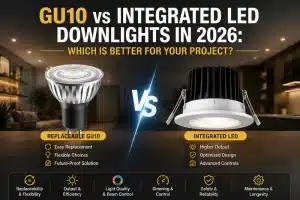
4.4 MR16 / GU10: precise, compact
Best use:
- Tracks
- Niche display
- 强调
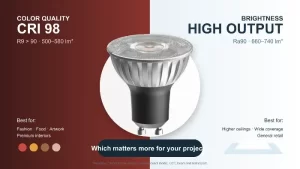
Targets:
- Beam 10–36°
- CRI ≥ 95 recommended
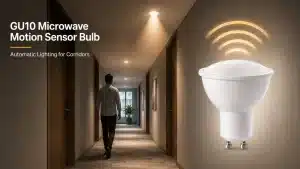
GU10 warm-dim makes great evening light.
MR16 + 12V drivers: can be messy.
4.5 Globes (G25): face-based lighting
Best use:
- Bathroom vanity
Goals:
- Vertical illuminance
- Shadow reduction
Avoid top-only ceiling lighting at mirrors.
It adds 10 years to your face.
5. Color Temperature and Spectrum: Real Strategies

Warm looks good.
Cool feels clean.
Neutral balances both.
But that’s not the full story.
5.1 Typical residential targets
| 空间 | CCT |
|---|---|
| Living | 2700–3000K |
| 厨房 | 3000–4000K |
| Dining | 2700K |
| 卧室 | 2200–2700K |
| 浴室 | 3000–3500K |
| 办公室 | 3500–4000K |
5.2 What is “too cool”?
Opinion:
- 4000K in bedrooms is a mistake.
- 5000K anywhere is rarely justified.
Unless you’re growing plants or doing surgery.
5.3 CRI and TM-30 matter more than CCT
Practical thresholds:
- CRI ≥ 90
- Rf ≥ 85
- Rg 95–105
These numbers affect:
- Skin
- Wood
- Meat
- Art
- Clothing
Residential spaces often display all of these.
5.4 Warm-dim is underrated
Warm-dim solves a simple problem:
- Daytime needs clarity
- Nighttime needs comfort
Going from 3000K → 2200K as you dim feels natural.
Not “smart”.
Just sensible.
6. Beam Angles, Ceiling Heights, and Application Examples
Lighting cannot be separated from geometry.
Case 1: 2.4 m ceiling
BR30, 120° beams
Result: Even wash, limited contrast
Add:
- Two PAR20s with 25° beams on art
- One floor lamp at 2700K warm-dim
Instant depth.
Case 2: 3.0 m ceiling
BR floods underperform
Too much spill
Use:
- PAR30 narrow beams
- Higher candela
- 3000–3500K
Results:
- Surfaces light up
- Faces readable
- No cave effect
Case 3: Long corridor
Even spacing, wide beams = tunnel
Better:
- Alternating beams
- 40–60° beams with scallops
- Low-level floor lighting
Not necessarily practical.
But better.
7. Control Systems That Actually Work
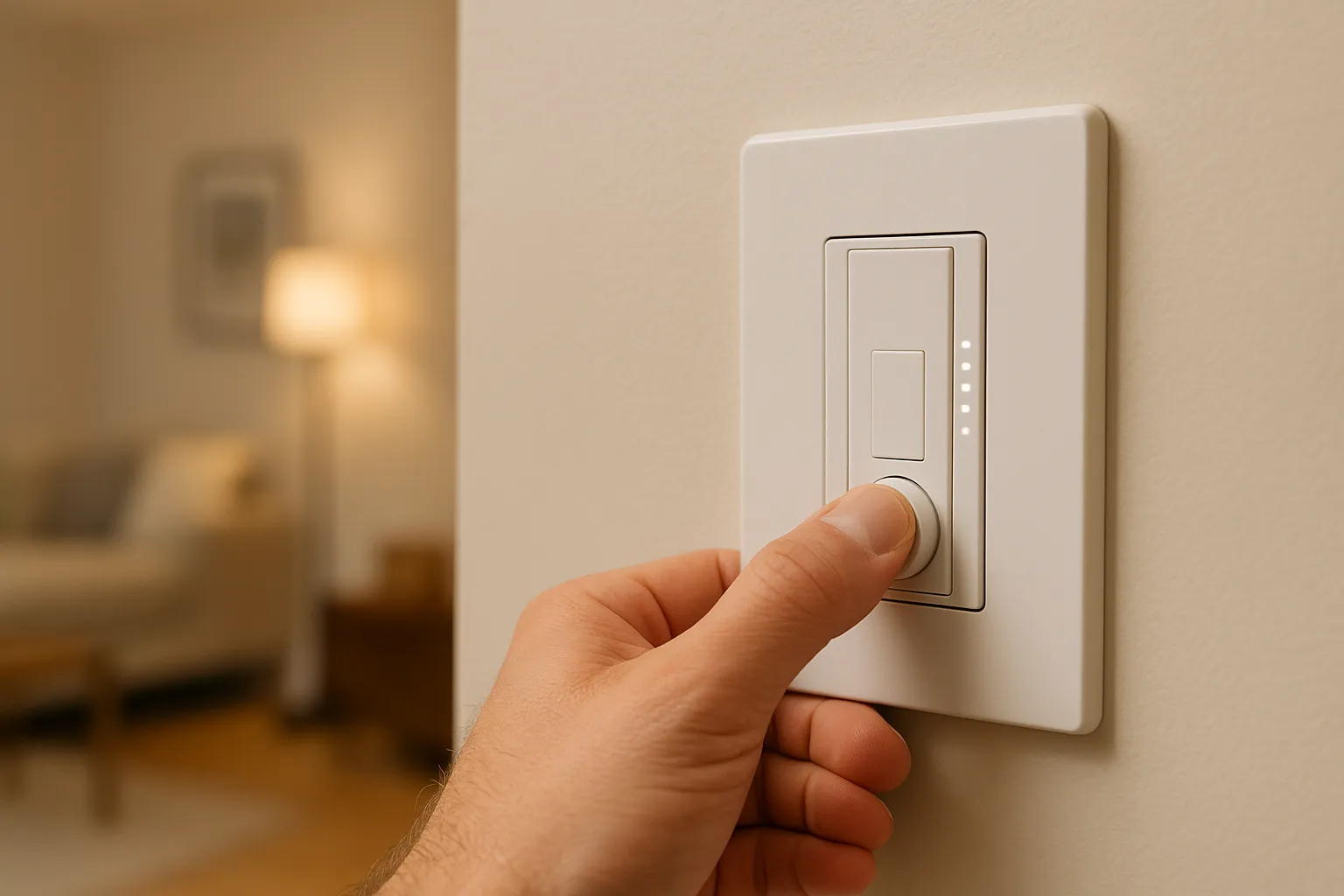
Smart lamps are fine for rentals.
Not for homes with 30+ fixtures.
Better approach:
- Smart dimmers controlling dumb lamps
- Scene presets
- Adaptive scheduling
And avoid mixing:
- TRIAC
- ELV
- 0–10V
- DALI
It creates compatibility problems that look like “flicker”, but are actually “electrical negotiation failures”.
8. Common Residential Lighting Mistakes
Too much uniform light
Kills depth.
Makes rooms feel larger but emptier.
Too many high-beam fixtures
Glare.
Hotspots.
Annoyance.
Overreliance on overhead lighting
Humans communicate at face level.
Light should, too.
Random CCT mixing
2700K next to 4000K?
No.
Ignoring vertical illumination
Vertical surfaces define space.
Horizontal lux is overrated.
9. A Practical Residential Specification Cheat Sheet
Minimum targets
- CRI ≥ 90
- Rf ≥ 85
- PF ≥ 0.9
- Flicker <5% (IEEE-1789 recommended)
- 100–120 lm/W for general use
Beam angles
- Ambient: 90–120°
- Task: 40–60°
- Accent: 10–25°
CCT by category
- Social: 2700K
- Work: 3500–4000K
- Evening: 2200–2700K
保修
- 3 years minimum
- 5 years preferred
- Not negotiable for enclosed fixtures
10. A Case Study: Lighting a 90 m² Apartment
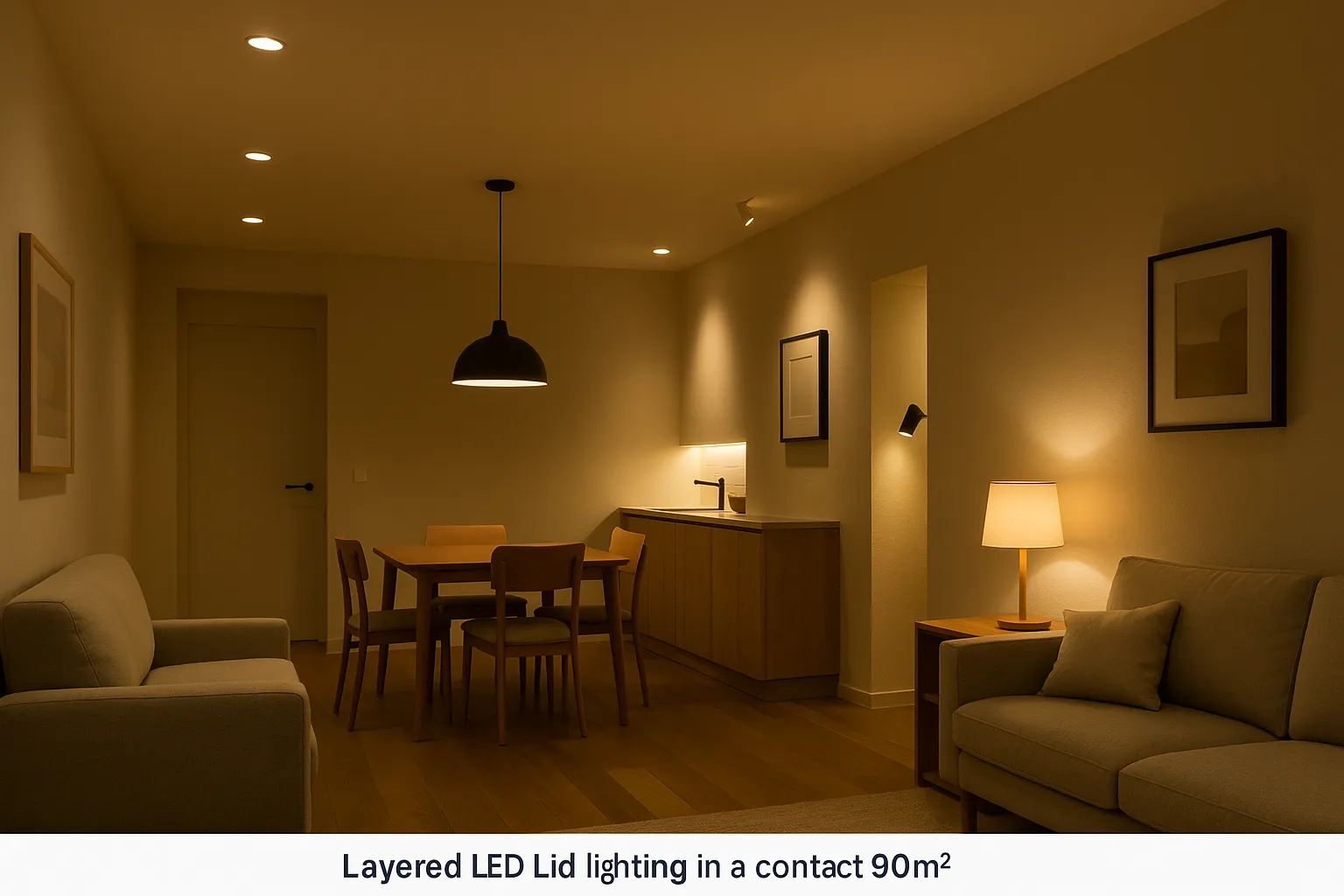
Spaces:
- Living + dining
- 厨房
- 2 bedrooms
- 2 bathrooms
- Office nook
Equipment:
- BR30 ambient: 14 pcs
- PAR20 accent: 6 pcs
- A19 warm-dim: 8 pcs
- Under-cabinet LED linear: 5m
Metrics:
- Average ambient: 200–250 lux
- Accent: 400–600 lux
- Vanity vertical: 250 lux
Cost:
- Retrofit lamps: $500–$800
- Controls: $200–$500
- Total: $700–$1,300
Outcome:
- Cleaner color
- Deeper spaces
- Lower fatigue
- 30–40% lower energy use
Not dramatic.
But noticeable.
11. Final Perspective

Residential lighting is not complicated.
But it is misunderstood.
Most people install too many wide beams.
Not enough directional beams.
Too cool.
Too overhead.
Zero control.
LED gives tools to fix this:
- High CRI
- Controlled beams
- Intelligent dimming
- Low heat
- Efficient lumens
But tools only matter if someone uses them well.
The best residential lighting is not bright.
It’s layered, controlled, color-accurate, and spatially intentional.
Good lighting is quiet.
But unmistakable.
We supply LED solutions with:
High CRI (90–95)
Warm-dim technology
Controlled beam optics (10°–120°)
Low-flicker dimming performance
GU10, PAR20/30, BR, A19 formats
Suitable for:
Residential fit-outs
Hospitality upgrades
Builder/developer packages
Distributor portfolios
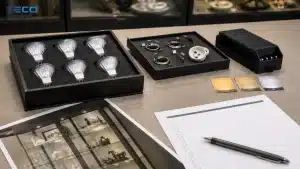
If you need technical datasheets, samples, or pricing, feel free to request them.
Send us your product list or target specifications—
We’ll reply with compatible options and lead times