Qu'est-ce qu'une LED COB ?
Dernière mise à jour le 2 février 2026
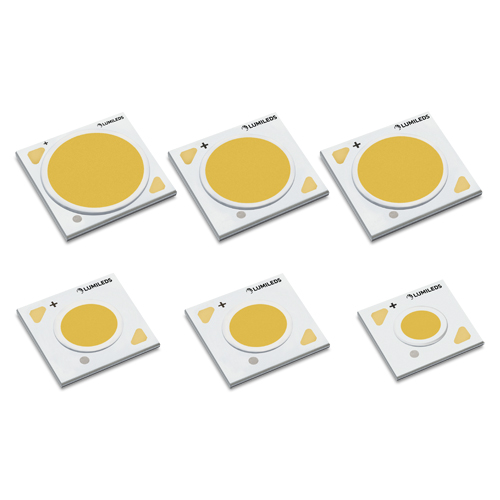
COB (Chip-on-Board) est une technologie LED dans laquelle plusieurs puces LED sont directement emballées sur un substrat en céramique ou en métal pour former un module d'éclairage unique. Par rapport aux emballages LED traditionnels, les LED COB offrent efficacité lumineuse supérieure, sortie de lumière plus uniforme, durée de vie plus longue et structure plus compacte.
En raison de ces avantages, les LED COB ont été largement adoptées dans les applications d'éclairage moderne ces dernières années.
Qu'est-ce qu'une LED SMD ?
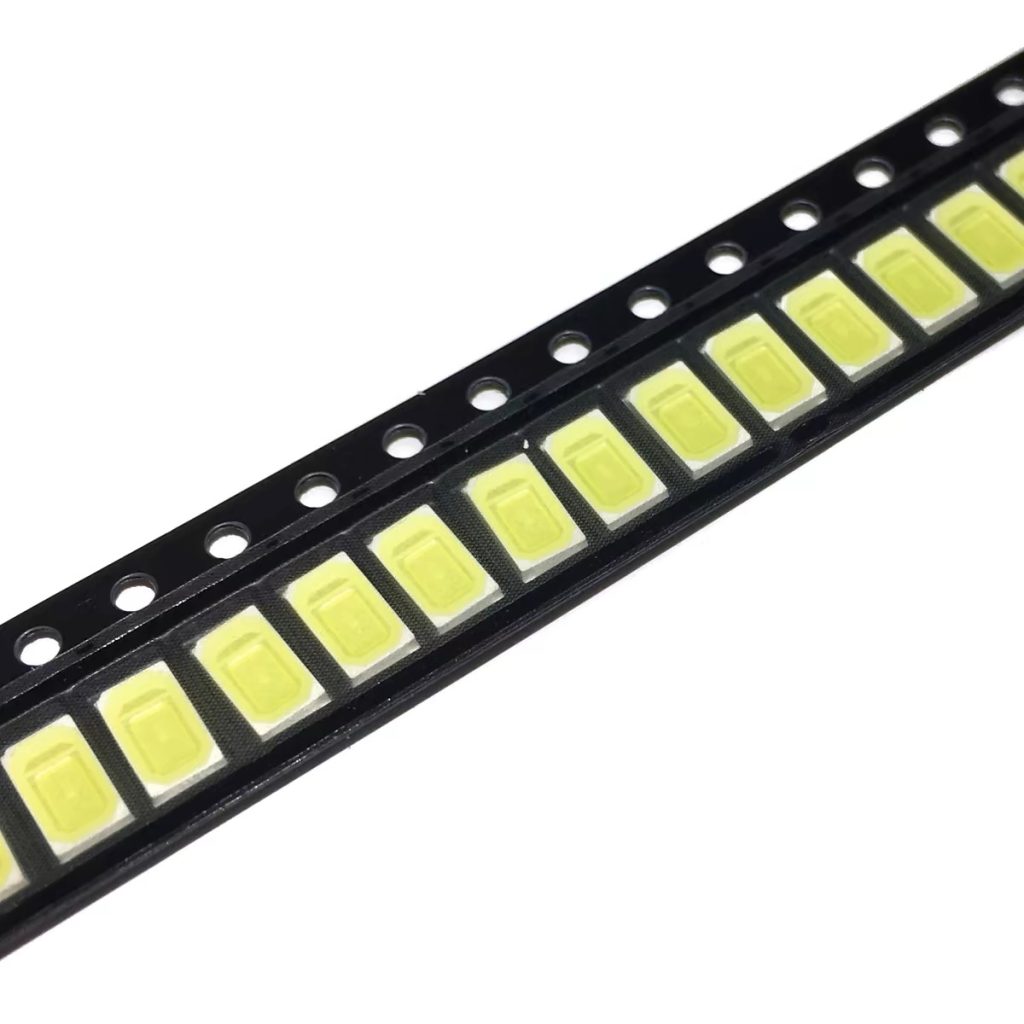
La LED SMD (Dispositif à Montage en Surface) est un type de LED où la puce est encapsulée dans un petit boîtier à montage en surface.
Les LED SMD sont connues pour leur petite taille, faible consommation d'énergie, haute luminosité et conception flexible, ce qui en fait l'une des technologies LED les plus couramment utilisées dans une large gamme de produits d'éclairage.
Principales différences entre les LED COB et les LED SMD
| Type de LED | LED COB | LED SMD |
|---|---|---|
| Luminosité | Plus élevé | Inférieur |
| Durée de vie | Plus longue | Plus court |
| Taille | Plus petit | Plus grand |
| Coût | Plus élevé | Inférieur |
| Efficacité énergétique | Plus efficace | Moins efficace |
Quelle technologie LED est la plus adaptée ?
Les LED COB et SMD ont chacune leurs forces et conviennent à différentes applications.
LED COB
Idéal pour les applications nécessitant forte luminosité, haute efficacité et éclairage uniforme. Ils sont couramment utilisés dans éclairage commercial, éclairage industriel et éclairage résidentiel de haute qualité.LED CMS
Plus rentable et offrir une plus grande flexibilité de conception. Elles sont largement utilisées dans projets soucieux du budget, éclairage extérieur, éclairage décoratif et applications nécessitant de multiples points lumineux.
Inconvénients des puces COB
Malgré leurs avantages, les LED COB présentent également certaines limites :
Coût plus élevé
Le processus de fabrication est plus complexe et nécessite un équipement avancé, ce qui entraîne des coûts de production plus élevés.Défis de dissipation thermique
Plusieurs puces LED sont concentrées dans une zone, ce qui rend la gestion thermique critique. Une mauvaise conception thermique peut réduire la durée de vie et l'efficacité.Difficulté de maintenance
Comme les puces sont intégrées sur une seule carte, le remplacement individuel des puces n'est pas pratique. Le module entier doit généralement être réparé ou remplacé.Limitations du contrôle optique
La mise en forme précise du faisceau et la distribution de la lumière peuvent être plus difficiles par rapport aux conceptions SMD multipoints, en particulier dans les applications nécessitant une optique avancée.
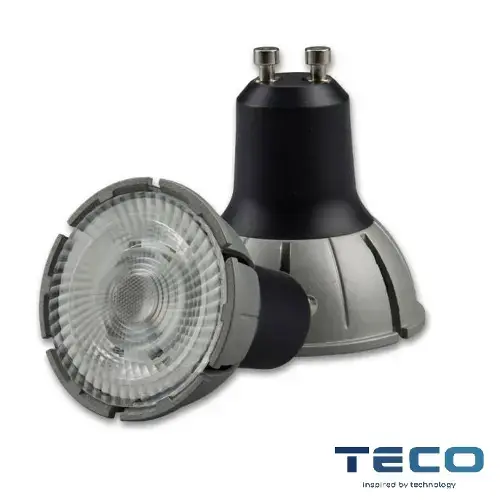
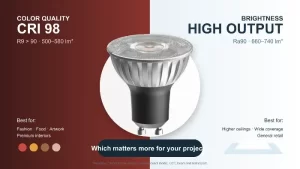
Image du produit montrant les profils avant et latéral de l'ampoule LED TECO GU10, avec une base noire et un large diffuseur transparent.
Technologies alternatives futures aux puces COB
Plusieurs technologies émergentes pourraient partiellement remplacer ou compléter les LED COB à l'avenir :
Mini LED
La taille réduite de la puce permet densité optique supérieure, contrôle de la lumière plus fin, et des performances améliorées dans des designs compacts.Micro LED
Des puces encore plus petites offrent luminosité et précision exceptionnelles, mais les coûts actuels restent élevés et la production de masse est encore en développement.Technologie des points quantiques
Promesses gamme de couleurs plus large et efficacité lumineuse supérieure, bien que la stabilité et le coût nécessitent encore des améliorations.
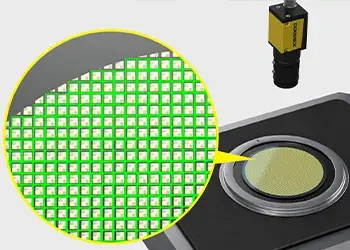
Une caméra de vision industrielle Cognex positionnée à côté d'un filtre maillé LED vert dans un support circulaire, montrée sur une plateforme sombre avec une flèche d'annotation pointant vers le filtre.
Prévisions pour l'avenir des puces COB
La technologie COB reste aujourd'hui une solution robuste dans de nombreux scénarios d'éclairage. Cependant, à mesure que les nouvelles technologies continuent de mûrir, l'industrie de l'éclairage devrait évoluer :
- La technologie COB continuera de s'améliorer en réduction des coûts, gestion thermique et contrôle optique.
- Mini LED et Micro LED entrent progressivement dans les segments d'éclairage haut de gamme et pourraient remplacer les COB dans des applications spécifiques.
- Technologie des points quantiques pourrait s'étendre à davantage de domaines d'éclairage à mesure que les défis techniques sont résolus.
À l'heure actuelle, il est encore trop tôt pour déterminer quelle technologie deviendra finalement le remplacement dominant des LED COB.